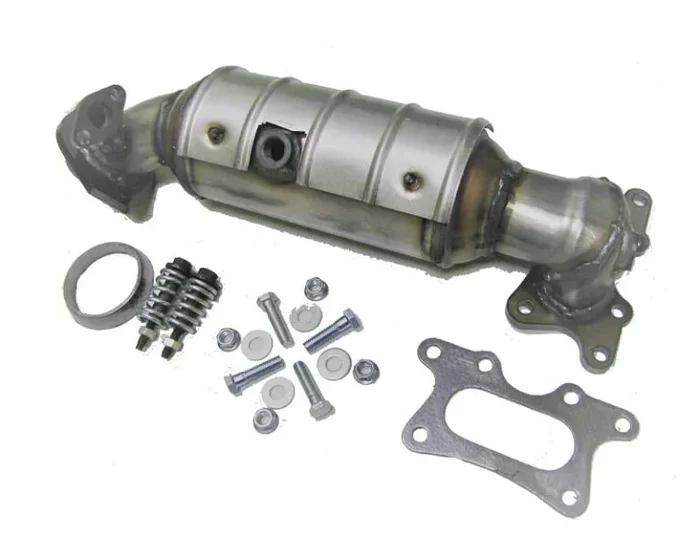
Do Honda Civics Have Catalytic Converters Explained
Yes, every Honda Civic comes equipped with a catalytic converter. This small but vital part sits in the exhaust system and cleans up harmful gases before they leave your car. Without it, your Civic would pollute the air and fail emissions tests. Understanding how your catalytic converter works helps you keep your Honda running smoothly. Let’s break down everything you need to know about the Honda Civic catalytic converter in plain, simple terms.
You park your Honda Civic in the driveway. You lock the doors. You feel safe. But there is a hidden part of your car that thieves target every single day. It is small, valuable, and easy to steal. I am talking about the catalytic converter. If you have ever wondered, do Honda Civics have catalytic converters, the answer is a firm yes. Every single Honda Civic rolling off the assembly line comes with one. And today, I want to walk you through everything you need to know about this critical part.
Your catalytic converter plays a huge role in keeping your car running clean. It sits in the exhaust system and transforms toxic gases into less harmful ones. Without it, your Honda Civic would release dangerous pollutants into the air. It would also fail every emissions test on the planet. So let us dive deep into the world of Honda Civic catalytic converters. We will cover how they work, why they get stolen, what they cost, and how to keep yours safe.
Key Takeaways
- All Honda Civics have catalytic converters: Every model year and trim includes this essential emissions component.
- Catalytic converters reduce harmful exhaust gases: They convert toxic pollutants into less harmful substances before they exit your car.
- Theft is a growing concern: Honda Civics are frequently targeted due to the high scrap value of their catalytic converters.
- Replacement costs vary widely: Expect to pay between $800 and $2,500 depending on your model year and type.
- Warning signs are easy to spot: Rattling sounds, reduced fuel economy, and a lit check engine light all point to converter problems.
- Prevention steps work: Anti-theft devices and parking strategies can significantly reduce your risk of converter theft.
- Regular maintenance extends converter life: Proper engine care keeps your catalytic converter functioning for 100,000+ miles.
📑 Table of Contents
- What Is a Catalytic Converter and Why Does It Matter?
- Do Honda Civics Have Catalytic Converters Across All Models?
- Why Are Honda Civic Catalytic Converters Targeted by Thieves?
- Catalytic Converter Replacement Cost for Honda Civics
- Signs Your Honda Civic Catalytic Converter Is Failing
- How to Protect Your Honda Civic Catalytic Converter
- How Long Does a Honda Civic Catalytic Converter Last?
- Common Mistakes Honda Civic Owners Make With Their Catalytic Converter
- Final Thoughts on Honda Civic Catalytic Converters
What Is a Catalytic Converter and Why Does It Matter?
Let me start with the basics. A catalytic converter is a part of your car’s exhaust system. It looks like a small metal box connected to your exhaust pipe. Inside, it contains precious metals like platinum, palladium, and rhodium. These metals act as catalysts. They trigger chemical reactions that break down harmful gases. Your Honda Civic engine produces exhaust fumes full of bad stuff. Carbon monoxide, nitrogen oxides, and hydrocarbons are all very dangerous. The catalytic converter changes these into carbon dioxide, nitrogen, and water vapor. These are much safer for our environment.
Every car sold in the United States since 1975 has required a catalytic converter. The Environmental Protection Agency set this rule. Honda follows these rules on every Civic they build. Whether you drive a 1996 Honda Civic or a 2024 model, your car has one. The Honda Civic exhaust system relies on this component to work properly. Without it, your engine runs rough, your check engine light comes on, and you release toxic fumes into the air.
How Does It Work in a Honda Civic?
Here is where it gets interesting. When your Honda Civic engine burns fuel, it creates exhaust gases. These gases flow through the exhaust manifold first. Then they enter the catalytic converter. Inside the converter, the gases pass through a honeycomb structure coated with precious metals. This structure creates a large surface area for chemical reactions. The platinum and palladium oxidize carbon monoxide and hydrocarbons. The rhodium reduces nitrogen oxides. All of this happens in milliseconds as your car drives down the road.
Your Honda Civic also has an oxygen sensor near the converter. This sensor measures how much oxygen is in the exhaust. It sends data to your car’s computer. The computer then adjusts the fuel mixture. This keeps your engine running efficiently. Together, the catalytic converter and oxygen sensor form a team. They keep your emissions clean and your engine healthy.
Do Honda Civics Have Catalytic Converters Across All Models?
The short answer is yes. Every Honda Civic ever made has a catalytic converter. But the details change depending on the model year and trim level. Let me break this down for you.
Older Honda Civic Models
If you own a classic Honda Civic from the 1980s or 1990s, you still have a converter. Early models used two-way catalytic converters. They handled carbon monoxide and hydrocarbons. Later models switched to three-way converters. These three-way units handle nitrogen oxides too. The Honda Civic engine has evolved a lot over the decades. But the catalytic converter has remained a constant feature.
Older Honda Civics are actually less targeted by thieves in many cases. Their converters contain less precious metal. Still, they are not immune. If you drive a classic Civic, do not assume you are safe from theft. Every converter has some value on the scrap market.
Modern Honda Civic Models
Newer Honda Civics use advanced catalytic converter technology. The 2016 Honda Civic and later models feature high-efficiency converters. These units meet strict emissions standards. They also use more precious metals to achieve cleaner results. The Honda Civic Si and Type R models have performance-oriented exhaust systems. Even these sportier versions include factory catalytic converters.
The Honda Civic hybrid also has a converter. Hybrid models actually have a slightly different setup. The electric motor assists the gasoline engine. This means the converter sometimes works less hard. But it is still there, doing its important job. Whether you buy a base LX or a top-tier Touring trim, your Honda Civic has a catalytic converter.
Why Are Honda Civic Catalytic Converters Targeted by Thieves?
This is a question many Honda Civic owners ask. And honestly, it is a scary one. Catalytic converter theft has skyrocketed across the country. Why? Because the precious metals inside are worth a lot of money. Scrapy dealers pay good cash for used converters. Honda Civics are among the most stolen vehicles for this part. Let me explain why this happens so often.
The Scrap Metal Value
The precious metals inside a catalytic converter include platinum, palladium, and rhodium. These metals are expensive. Rhodium alone can cost over $10,000 per ounce. Even a small converter contains enough metal to make theft worthwhile. Thieves can sell a single Honda Civic converter for $50 to $250. That might not sound like a lot. But for them, it is easy money. They can steal a converter in under two minutes. All they need is a basic jack and a wrench.
Why Honda Civics Specifically?
Honda Civics sit low to the ground. This makes them easy to crawl under. The converter on a Honda Civic is also easy to access. It is not buried deep in the chassis. Thieves can quickly slide underneath and cut it out. Plus, Honda Civics are some of the most popular cars in America. More Civics on the road means more targets. Thieves know what they are doing. They choose Civics because the job is fast and profitable.
The Honda Civic exhaust system design also contributes to the problem. The converter is positioned in a way that requires minimal effort to remove. Some newer models have converters that are harder to steal. But older models remain vulnerable. If you own a Honda Civic, you need to be aware of this risk.
Catalytic Converter Replacement Cost for Honda Civics
Let us talk money. If your catalytic converter gets stolen or fails, you will face a replacement bill. The catalytic converter replacement cost for a Honda Civic can vary quite a bit. Let me give you a realistic picture.
Factors That Affect the Price
Several things determine how much you will pay. The model year of your Honda Civic matters a lot. Newer models use more precious metals. This makes the converter more expensive. The trim level also plays a role. A high-performance Civic Type R converter costs more than a base LX unit. Labor costs vary by location too. Some shops charge more for the installation work.
Another factor is whether you choose an original Honda part or an aftermarket option. OEM Honda converters are more expensive. But they tend to last longer and fit perfectly. Aftermarket converters are cheaper upfront. However, they may not meet the same quality standards. You need to weigh your options carefully.
Typical Cost Breakdown
On average, a Honda Civic catalytic converter replacement costs between $800 and $2,500. The part itself ranges from $400 to $1,800. Labor adds another $200 to $700. If you have a 2015 Honda Civic or newer, expect to pay on the higher end. Older models from the 2000s might cost less. Hybrid models sometimes fall in the middle range.
Here is a quick comparison to help you understand the costs better:
- 2001-2005 Honda Civic: $800 to $1,200 total
- 2006-2011 Honda Civic: $900 to $1,500 total
- 2012-2015 Honda Civic: $1,000 to $1,800 total
- 2016-2021 Honda Civic: $1,200 to $2,200 total
- 2022-2024 Honda Civic: $1,500 to $2,500 total
These numbers can change based on your location and the shop you choose. Always get multiple quotes before committing. And if your converter was stolen, check with your insurance company. Many policies cover this type of theft.
Signs Your Honda Civic Catalytic Converter Is Failing
A failing catalytic converter is not something you want to ignore. The good news is that your car gives you warning signs. Catching these early can save you from a bigger headache later. Here is what to watch for.
Rattling or Vibrating Sounds
Do you hear a rattling noise coming from under your car? This is one of the most common signs. Inside the converter, the honeycomb structure can break apart. When it does, pieces rattle around. You will notice this sound most when you start the engine. It might also get louder when you accelerate. Do not ignore this noise. A broken converter will only get worse over time.
Reduced Fuel Economy
If your Honda Civic suddenly gets worse gas mileage, check your converter. A failing converter disrupts the exhaust flow. Your engine has to work harder to push exhaust out. This means you burn more fuel at every fill-up. If you find yourself visiting the pump more often, the converter might be to blame. Compare your current fuel economy to what you normally see. A big drop is a red flag.
Check Engine Light
The check engine light is your car’s way of telling you something is wrong. A faulty catalytic converter triggers this light. Your car’s computer runs constant diagnostics. When it detects a problem with the converter, it illuminates the warning. Do not panic when this light comes on. But do get it checked soon. Use an OBD-II scanner to read the error codes. Codes like P0420 or P0430 often point to converter issues.
Rotten Egg Smell
Your Honda Civic should not smell like rotten eggs. If it does, your converter is likely failing. A healthy converter processes sulfur compounds in the exhaust. A bad converter lets sulfur pass through unchanged. This creates that distinctive rotten egg odor. If you smell this inside or outside your car, get it inspected right away.
Failed Emissions Test
If your Honda Civic fails an emissions test, the converter is a prime suspect. The whole job of the converter is to reduce harmful emissions. When it fails, those emissions spike. A failed test means your converter is not doing its job. This is a clear sign that you need to replace or repair it.
How to Protect Your Honda Civic Catalytic Converter
Theft is a real threat. But you can take steps to protect your Honda Civic. Prevention is always better than replacement. Here are some practical tips that actually work.
Install an Anti-Theft Device
Several products are designed specifically to protect catalytic converters. Cat straps and cages wrap around your converter. They make it much harder for thieves to remove. Some devices use tamper-proof bolts. These require special tools to take out. A cage or shield might cost $100 to $300. But it is a small price compared to a $2,000 replacement bill. Ask your mechanic about installing one. Many shops can fit these devices in under an hour.
Park Smart and Stay Aware
Where you park matters more than you think. Park in well-lit areas whenever possible. Garages are the safest option. If you do not have a garage, park near motion-sensor lights. Thieves prefer dark, hidden spots. They do not want to be seen. Make your car a harder target. Park close to walls or fences. This limits access from underneath. Also, consider parking in areas with security cameras. Visible cameras deter thieves quickly.
Engrave Your Converter
Some owners engrave their vehicle identification number on the converter. This makes it easier to track if stolen. It also makes the part less valuable to scrap dealers. Thieves want untraceable parts. An engraved converter slows them down. Ask your local auto shop if they offer this service. It is a simple and inexpensive step.
Use a Security System
A good car alarm can also help. Some modern alarms include vibration sensors. If someone tries to cut your converter, the alarm goes off. Loud sounds scare thieves away. Make sure your alarm is working properly. Replace batteries regularly. Consider upgrading to a system with GPS tracking. If your converter is stolen, GPS can help police recover it.
How Long Does a Honda Civic Catalytic Converter Last?
A well-maintained catalytic converter can last a very long time. Most Honda Civic converters last between 100,000 and 150,000 miles. Some last even longer. But several factors can shorten that lifespan. Let me share what I have learned from years of working with these systems.
Engine misfires are one of the biggest enemies of your converter. When your engine misfires, unburned fuel enters the exhaust. This overheats the converter. Over time, that heat damages the internal structure. Keep your Honda Civic engine well-tuned. Replace spark plugs on schedule. Fix any misfires immediately. This simple habit adds years to your converter’s life.
Oil and coolant leaks also cause problems. If your engine leaks fluids into the exhaust, the converter gets clogged. The honeycomb structure can melt or break down. Regular oil changes and coolant checks help prevent this. Address any leaks the moment you notice them. Do not let small problems become big expenses.
Using the right fuel matters too. Always use the fuel grade recommended by Honda. Low-quality fuel can leave deposits in your exhaust system. Over time, these deposits reach the converter. They reduce its efficiency. Stick with reputable gas stations. Your converter will thank you for it.
Key Takeaways from this section: keep your engine tuned, fix leaks fast, use quality fuel, and your Honda Civic catalytic converter will serve you well for many years.
Common Mistakes Honda Civic Owners Make With Their Catalytic Converter
Every car owner makes mistakes sometimes. But some errors specifically hurt your catalytic converter. Let me share the most common ones. Knowing these helps you avoid costly repairs.
Ignoring the Check Engine Light
This is the number one mistake. When that little light comes on, many people ignore it. They hope it goes away on its own. It rarely does. A small problem today becomes a big problem tomorrow. A failing oxygen sensor, for example, can damage your converter. The sensor sends wrong data to your engine computer. The computer then mixes fuel incorrectly. Rich fuel mixtures burn hot and damage the converter. A $20 sensor replacement can save you a $1,500 converter replacement.
Using Wrong Fuel
Some Honda Civic owners use lower-octane fuel to save money. This is a risky move. Low-octane fuel can cause engine knock. Knock creates excess heat in the exhaust system. That heat damages the catalytic converter over time. Always use the fuel grade Honda recommends for your specific model.
Skipping Regular Maintenance
Your Honda Civic needs routine care. Spark plugs, air filters, and oxygen sensors all need attention. Skipping maintenance causes a chain reaction. Dirty spark plugs cause misfires. Misfires damage the converter. Clogged air filters cause rich fuel mixtures. Rich mixtures overheat the converter. Stay on top of your maintenance schedule. It costs less and saves your converter.
Aftermarket Exhaust Modifications
Some owners love to modify their exhaust system. Aftermarket mufflers and pipes look cool. But they can also cause problems. A poorly designed aftermarket exhaust can reduce converter efficiency. It can also trigger error codes. If you want to modify your exhaust, choose quality parts. Make sure they are compatible with your Honda Civic’s emissions system.
Final Thoughts on Honda Civic Catalytic Converters
So, do Honda Civics have catalytic converters? Absolutely. Every Honda Civic on the road has one. This small component does a massive job. It cleans your exhaust, reduces pollution, and keeps your engine running right. Understanding how it works helps you take better care of your car.
Theft is a real and growing threat. Honda Civics are prime targets because of their accessibility and scrap value. But you can take action. Anti-theft devices, smart parking, and awareness go a long way. If your converter does get stolen or fails, know the replacement costs and options. Being informed puts you in a much better position.
Regular maintenance is your best friend. Keep your engine tuned, use quality fuel, and address warning signs quickly. Your catalytic converter will last for many years. And your Honda Civic will keep running clean and strong. Take care of this part, and it will take care of you and the environment. Your Civic is more than just a car. It is a machine that works hard every day. Give it the care it deserves.
Frequently Asked Questions
How can I tell if my Honda Civic catalytic converter has been stolen?
You will notice a loud rattling sound when you start your car. Your exhaust will sound much louder than normal. You might also see a hole or missing section under your car where the converter used to be. If you suspect theft, get your car inspected immediately and contact local police.
Can I drive my Honda Civic without a catalytic converter?
Technically yes, but you should not. Your car will run rough and produce toxic exhaust fumes. It will also fail emissions tests in most states. Plus, driving without a converter can trigger your check engine light and potentially damage other parts of your exhaust system over time.
How much does it cost to replace a Honda Civic catalytic converter?
Expect to pay between $800 and $2,500 total, depending on your model year and trim. The part itself costs $400 to $1,800, and labor adds $200 to $700. Newer models with advanced converters cost more to replace. Always get multiple quotes from trusted shops.
Why are Honda Civic catalytic converters stolen so often?
Honda Civics sit low to the ground, making the converter easy to access. The converter is also quick and simple to remove with basic tools. Plus, the precious metals inside have high scrap value. Thieves target Civics because the job takes less than two minutes and the payoff is decent.
How long should a Honda Civic catalytic converter last?
A well-maintained Honda Civic catalytic converter typically lasts between 100,000 and 150,000 miles. Regular engine maintenance, quality fuel, and prompt repairs of any engine issues help extend its lifespan significantly. Neglecting maintenance can shorten it considerably.
What can I do to prevent catalytic converter theft on my Honda Civic?
Install an anti-theft cage or strap around your converter. Park in well-lit areas or a locked garage whenever possible. Consider engraving your VIN on the converter. Use a car alarm with vibration sensors. These steps make your vehicle a much harder target for thieves.
=== CONCLUSION ===
The Honda Civic catalytic converter is a small part with a big job. It keeps your car’s emissions clean and your engine running efficiently. Every Honda Civic includes one, from the oldest classics to the newest models. Understanding how it works, what signs to watch for, and how to protect it gives you real peace of mind. Catalytic converter theft is a serious concern, but you now have the knowledge to take action. Protect your investment, maintain your car properly, and your Honda Civic will serve you well for many miles to come. Share this information with fellow Civic owners. Together, we can fight back against converter theft and keep our cars running clean and safe.