How to Remove Film From Inside Your Car Windshield
Dealing with a greasy, hazy film on your car windshield is frustrating and dangerous. This guide shows you exactly how to remove film from inside a car windshield using simple household items and professional-grade products. You will learn proven techniques, step-by-step methods, and prevention tips to keep your glass crystal clear.
Have you ever looked through your car windshield and noticed a stubborn greasy film? It is that annoying haze that no amount of regular wiping seems to fix. Removing film from inside a car windshield is one of those small car maintenance tasks that makes a huge difference in your daily driving experience.
This sticky buildup comes from a mix of dashboard off-gassing, UV rays, and everyday grime. It dulls your view and creates dangerous glare at night. The good news is that you do not need expensive tools or professional help to fix it. With the right approach, you can restore your windshield clarity in under an hour.
In this guide, we walk you through every method, from simple home remedies to professional-grade solutions. You will learn what causes the film in the first place and how to stop it from coming back. Let us get your glass looking brand new again.
Key Takeaways
- Identify the cause: Knowing what creates the film helps you choose the right removal method.
- Use household items first: Vinegar, baking soda, and dish soap work surprisingly well for light film buildup.
- Upgrade to specialized products: Stubborn film needs dedicated automotive glass cleaners or clay bars.
- Prevent future haze: Regular cleaning and dashboard protectants stop film from returning.
- Safety matters: A clear windshield improves nighttime driving and reduces glare-related accidents.
- Work in shaded areas: Cleaning products dry faster in direct sunlight, leaving streaks behind.
📑 Table of Contents
- Understanding What Causes Windshield Film Buildup
- How to Remove Film From Inside Your Car Windshield: Step-by-Step Methods
- Tools and Products You Will Need
- Comparison of Removal Methods
- Preventing Film Buildup on Your Windshield
- Common Mistakes to Avoid When Cleaning Windshield Film
- Expert Insights on Automotive Glass Care
- Key Takeaways
- Conclusion
Understanding What Causes Windshield Film Buildup
Before you start cleaning, it helps to know what you are dealing with. Interior windshield film is not just dirt. It is a combination of several things that build up over time. Understanding the cause makes your cleaning efforts much more effective.
The Science Behind Dashboard Off-Gassing
Your car dashboard is made of plastics and vinyl. These materials slowly release chemicals in a process called off-gassing. The gases rise upward and stick to your windshield glass. Over weeks and months, this creates a thin, sticky layer that attracts more dust and grime.
Hot weather speeds up this process significantly. That is why you may notice worse haze during summer months. The film also gets worse as your car ages. Newer vehicles tend to have less buildup than older ones for this exact reason.
UV Damage and Heat Effects
Ultraviolet rays break down the plastic components inside your car. This creates a fine dust that settles on the windshield interior. Combined with heat, UV exposure turns this dust into a stubborn film that regular wiping cannot remove.
The dashboard and steering column are the biggest offenders. They sit closest to the windshield and absorb the most sunlight. Over time, this constant cycle of breakdown and deposition creates a noticeable haze. Car windshield haze from UV damage is especially common in vehicles parked outside without shade.
Everyday Contaminants That Add to the Problem
Beyond off-gassing, several everyday things contribute to interior windshield grime:
- Plastics and adhesives: Phone mounts, dash cams, and air fresheners release residues.
- Skin oils: Touching the windshield during entry and exit leaves behind fingerprints and oils.
- Cleaning product residue: Using the wrong glass cleaner can leave a waxy buildup.
- Dust and pollen: These particles settle on the wet glass and create a grinding paste.
- Smoke and cooking odors: Cigarette smoke or food smells embed into the film layer.
All of these layers combine to form the stubborn film you see. Light film responds well to simple cleaning. Heavy buildup needs stronger methods. Knowing the level of your problem helps you pick the right approach.
How to Remove Film From Inside Your Car Windshield: Step-by-Step Methods
Now that you understand the cause, let us get into the cleaning methods. We start with the gentlest approach and work up to the most powerful techniques. Each method works for different levels of film buildup.
Method 1: The Vinegar and Water Solution
This is the easiest and most affordable way to tackle light film. White distilled vinegar cuts through grease and dissolves residue without damaging your glass.
Here is what you need to do:
- Mix equal parts white vinegar and distilled water in a spray bottle.
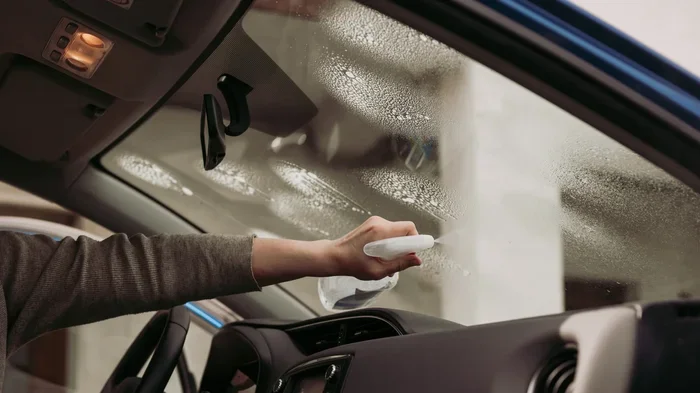
- Spray the solution generously onto the windshield interior.
- Let it sit for two to three minutes to loosen the film.
- Wipe with a clean microfiber cloth using circular motions.
- Flip to a dry side and buff until the glass is streak-free.
For moderate buildup, you can repeat this process twice. The vinegar smell fades quickly as the glass dries. This method works best as a windshield cleaning tip for regular maintenance between deeper cleans.
Method 2: Baking Soda Paste for Stubborn Film
When vinegar alone is not enough, baking soda adds gentle abrasive power. It lifts the film without scratching your glass.
Follow these steps for a deeper clean:
- Mix three tablespoons of baking soda with one tablespoon of water.
- Stir until you get a thick paste consistency.
- Apply the paste to the affected areas of the windshield.
- Gently rub in small circles using a soft microfiber cloth.
- Rinse with clean water and wipe dry with a separate cloth.
Baking soda is a mild abrasive, so avoid pressing too hard. Let the paste do the work. This method handles interior windshield film that has been building up for several months.
Method 3: Rubbing Alcohol or Isopropyl Alcohol
For heavier film, isopropyl alcohol dissolves the oily residue effectively. It evaporates quickly and leaves no streaks behind.
Here is how to use it safely:
- Use 70% isopropyl alcohol for best results.
- Dampen a microfiber cloth with the alcohol.
- Wipe the windshield in firm, even strokes.
- Let the alcohol evaporate naturally or buff with a dry cloth.
- Repeat if any film residue remains.
Alcohol works well on haze on car windows caused by heavy off-gassing. However, it can dry out rubber seals if used too frequently. Limit this method to once a month or so.
Method 4: Clay Bar Treatment for Deep Set Film
A detailing clay bar is the gold standard for removing bonded contaminants from glass. It pulls the film out of the glass surface rather than just wiping it away.
Follow this process for professional-level results:
- Wash the windshield exterior first to remove loose debris.
- Spray a dedicated clay lubricant or quick-detailer onto the glass.
- Flatten a small piece of detailing clay into a disc shape.
- Glide the clay gently across the windshield in straight lines.
- Fold the clay frequently to expose a clean surface.
- Buff the glass dry with a fresh microfiber towel after treatment.
This method feels almost magical when you see how much grime comes off. It is the best answer for restore windshield clarity on severely hazy glass. Use a fine-grade clay bar to avoid any risk of micro-scratches.
Method 5: Commercial Automotive Glass Cleaners
Several products are specifically designed for interior windshield film removal. Look for cleaners labeled for automotive use and interior glass only.
Top-rated options include:
- Rain-X Interior Glass Cleaner: Cuts through grease and leaves a rain-repellent finish.
- Stoner Invisible Glass: A streak-free formula that works on heavy buildup.
- Meguiar’s Ultimate Interior Detailer: Cleans and protects surfaces while removing film.
- 303 Aerospace Protectant: Prevents future off-gassing buildup after cleaning.
These products are worth the investment if you deal with recurring film. They are formulated to handle automotive materials safely. Always follow the product instructions for best results.
Tools and Products You Will Need
Having the right tools makes the job faster and more effective. You do not need a full garage of equipment, but a few quality items go a long way.
Essential Cleaning Supplies
- Microfiber cloths: Get at least three clean ones. Use one for applying solution, one for wiping, and one for buffing.
- Spray bottle: A clean, empty spray bottle lets you mix your own solutions easily.
- Soft-bristle brush: Helps loosen dried residue before wiping.
- Detailing clay bar: For deep removal of bonded contaminants.
- Glass cleaner: Either DIY vinegar solution or a quality commercial product.
Recommended Protective Gear
Protecting yourself and your car interior is important during the cleaning process:
- Wear gloves: Isopropyl alcohol and some cleaners can dry out your skin.
- Work in a shaded area: Direct sunlight causes products to dry too fast and leave streaks.
- Open your windows: Good ventilation prevents inhaling cleaning fumes.
- Protect your dashboard: Place a towel over the dash to catch dripping solution.
Using the right tools prevents scratches and ensures a thorough clean. Automotive glass care starts with having quality supplies on hand.
Comparison of Removal Methods
Not all methods work equally well for every situation. Here is a quick comparison to help you choose the best approach for your level of film buildup.
| Method | Best For | Difficulty | Cost | Time Needed |
|---|---|---|---|---|
| Vinegar and Water | Light film, regular maintenance | Easy | Very Low | 15 minutes |
| Baking Soda Paste | Moderate buildup | Easy | Very Low | 20 minutes |
| Isopropyl Alcohol | Heavy oily film | Medium | Low | 15 minutes |
| Clay Bar Treatment | Severe, bonded film | Medium | Medium | 30 minutes |
| Commercial Glass Cleaners | All levels, convenient | Easy | Medium to High | 15-20 minutes |
Start with the simplest method and move up only if needed. Most people find that vinegar or baking soda handles their film problem just fine. Save the clay bar for the really tough cases.
Preventing Film Buildup on Your Windshield
Cleaning is only half the battle. Stopping the film from returning saves you time and effort in the long run. A few simple habits make a big difference.
Apply a Dashboard Protectant
After cleaning, apply a UV-protectant dashboard conditioner. This reduces off-gassing by stabilizing the plastic surface. Products like 303 Aerospace Protectant create a barrier that slows chemical breakdown.
Apply protectant to a cloth first, not directly on the dash. This prevents overspray onto the windshield. Reapply every two to four weeks for best results.
Keep Your Car Interior Clean
Dust and debris on the dashboard get baked onto the windshield by heat and UV rays. Regular vacuuming and wiping of your dash and console reduces the material available to form film.
Simple habits that help:
- Vacuum your dashboard and vents weekly.
- Remove trash and papers from the car regularly.
- Avoid leaving plastic items on the dashboard in direct sun.
- Use a sunshade when parking outdoors.
Clean Your Windshield Monthly
Routine cleaning prevents heavy buildup from ever forming. A quick wipe-down with a vinegar solution takes just minutes and keeps your glass looking great.
Set a monthly reminder on your phone if needed. Consistent maintenance is always easier than tackling heavy buildup later. Prevent windshield haze before it starts with this simple habit.
Choose Quality Interior Accessories
The products you place inside your car contribute to film buildup. Cheap phone mounts, air fresheners, and plastic accessories off-gas more than quality alternatives.
Look for accessories made from low-VOC materials. Brands that specialize in automotive interiors often use safer plastics and adhesives. This small change reduces the contaminants hitting your windshield every day.
Common Mistakes to Avoid When Cleaning Windshield Film
Even with the best intentions, people make mistakes that can damage their windshield or reduce cleaning effectiveness. Avoid these pitfalls for the best results.
Using Paper Towels or Regular Cloth
Paper towels leave lint and fibers behind on glass. They can also scratch the surface if the film has created a gritty layer. Always use a high-quality microfiber cloth designed for glass cleaning.
Cleaning in Direct Sunlight
Cleaning products dry too fast in direct sunlight. This leaves streaks, residue, and water spots that are harder to remove than the original film. Find a shaded spot or clean in your garage instead.
Using Abrasive Scrubbers
Steel wool, rough sponges, and scrub brushes can permanently scratch your windshield. The glass is softer than you think. Stick to soft cloths and gentle cleaning solutions.
Skipping the Rinse Step
Many people apply cleaner and wipe without rinsing. Residual cleaner and loosened film get redistributed across the glass. Always rinse with clean water or a second damp cloth after wiping with cleaner.
Overlooking the Edges and Corners
Film builds up heavily in the corners and edges where the windshield meets the dashboard. These areas are easy to miss but harbor the most buildup. Pay extra attention to these spots during cleaning.
Expert Insights on Automotive Glass Care
Professional detailers share valuable tips that elevate your cleaning game. These insights come from years of experience working with automotive glass.
Pro tip 1: Always clean the inside of your windshield last. When you wash the exterior first, soapy water runs down and hits the interior glass. Cleaning the interior first means you deal with a clean surface.
Pro tip 2: Use a flashlight at a low angle to spot film you cannot see in normal light. The angled beam reveals haze that straight-on light hides. This trick helps you identify problem areas before and after cleaning.
Pro tip 3: Replace your microfiber cloths frequently. Dirty cloths reintroduce grime onto your glass. Wash them after every use with no fabric softener, which leaves a residue that transfers to glass.
Pro tip 4: For vehicles with heavy film buildup, do the cleaning in stages. Tackle one section at a time rather than the whole windshield at once. This prevents the cleaner from drying before you can wipe it off.
Pro tip 5: Consider ceramic glass coatings after cleaning. These create a hydrophobic barrier that repels contaminants and makes future cleaning easier. They are a great investment for anyone who parks outside regularly.
Key Takeaways
- Know the cause: Dashboard off-gassing and UV exposure are the main culprits behind interior windshield film.
- Start simple: Vinegar and water or baking soda paste handles most light to moderate film buildup effectively.
- Go strong when needed: Isopropyl alcohol and clay bars tackle heavy, bonded film that simple methods cannot remove.
- Use the right tools: Microfiber cloths, quality cleaners, and proper protective gear make the job safer and more effective.
- Prevent future buildup: Dashboard protectants, regular cleaning, and quality interior accessories stop film from returning.
- Avoid common mistakes: No paper towels, no direct sunlight cleaning, and no abrasive scrubbers protect your glass from damage.
- Stay consistent: Monthly cleaning and protection routines keep your windshield crystal clear year-round.
Conclusion
Learning how to remove film from inside a car windshield is a simple skill that pays off every time you drive. A clear windshield means better visibility, less eye strain, and safer nighttime driving. The methods in this guide work for every level of film buildup, from light haze to heavy, stubborn residue.
Start with the simplest method and work your way up if needed. Most people are surprised at how well household items like vinegar and baking soda work. For tough cases, clay bars and commercial cleaners deliver professional results at home.
Prevention is just as important as cleaning. Apply dashboard protectants, clean monthly, and choose quality accessories. These habits keep your windshield clear and reduce the effort needed for each cleaning session.
Your windshield is your window to the road. Treat it well, and it will give you clear, unobstructed views for years to come. Grab your supplies today and give your windshield the care it deserves.
Frequently Asked Questions
What causes the oily film on the inside of my car windshield?
The film is caused by dashboard off-gassing, where plastics and vinyl release chemicals that stick to the glass. UV rays and heat accelerate this process. Combined with dust, skin oils, and everyday contaminants, this creates a persistent haze on your windshield interior.
Can I use household cleaners to remove windshield film?
Yes, vinegar and water, baking soda paste, and isopropyl alcohol are all effective household solutions. These work well for light to moderate film buildup. For heavy buildup, you may need a dedicated automotive glass cleaner or a detailing clay bar.
How often should I clean the inside of my windshield?
Clean your windshield interior at least once a month to prevent heavy buildup. If you park outdoors in direct sunlight or live in a hot climate, clean every two weeks. Regular cleaning makes the job easier each time and keeps your glass crystal clear.
Will cleaning the windshield film damage my glass?
No, as long as you use the right methods and avoid abrasive tools. Stick to microfiber cloths, gentle cleaners, and non-scratch techniques. Avoid paper towels, rough sponges, and harsh chemical abrasives that can permanently scratch the glass surface.
What is the best product for removing interior windshield haze?
For most people, a vinegar and water solution works great for light film. For tougher buildup, isopropyl alcohol or a detailing clay bar delivers excellent results. Commercial products like Rain-X Interior Glass Cleaner and Stoner Invisible Glass are also highly rated for automotive use.
How can I prevent windshield film from coming back?
Apply a UV protectant to your dashboard after cleaning to reduce off-gassing. Clean your interior regularly, use a sunshade when parked outside, and choose low-VOC interior accessories. These habits significantly slow the buildup process and keep your windshield clear longer.