Baleno Car Safety Rating Discover What the Scores Mean
The Baleno car safety rating tells you how well this popular hatchback protects occupants during collisions. Maruti Suzuki Baleno safety scores reflect real-world crash test performance and structural design. This guide breaks down every rating, feature, and score so you can make a confident buying decision. Learn what the numbers mean and how they impact your daily driving safety.
If you are shopping for a hatchback in the Indian market, the Baleno car safety rating is probably on your radar. The Maruti Suzuki Baleno has been one of the most popular cars on Indian roads for years. But popularity does not always mean safety. That is why understanding what the safety scores actually mean matters so much. Whether you are a first-time car buyer or upgrading your current ride, knowing the safety rating helps you make a smarter choice. This guide covers everything you need to know about how the Baleno performs in crash tests, what safety features it offers, and where it stands compared to rivals. Let us dive in.
Car safety ratings are not just numbers on a brochure. They reflect real-world testing and engineering decisions made by manufacturers. The Baleno car safety rating tells you how well this hatchback protects its passengers during a collision. It also hints at how the vehicle handles everyday driving risks like sudden braking or slippery roads. In simple terms, the rating is your first clue about how safe a car really is. And when it comes to a family vehicle or a daily commuter, that clue matters a lot. So let us break down the scores and see what they really mean for you.
Key Takeaways
- Global Crash Test Scores: The Baleno earns solid marks in standard safety assessments, showing strong occupant protection for both adults and children.
- Core Safety Equipment: Dual front airbags, ABS with EBD, rear parking sensors, and ISOFIX anchors come standard in most variants.
- Competitive Standing: The Baleno holds its own against rivals in the hatchback segment when it comes to structural integrity and collision protection.
- Active Safety Gaps: Electronic stability control and advanced driver-assist features are limited, which affects the overall rating.
- Buyer Awareness Matters: Understanding what goes into a car safety assessment helps you choose the right variant and make informed upgrades.
- Ongoing Safety Improvements: Newer model years have seen added features like seatbelt reminders and improved braking systems.
📑 Table of Contents
- What Is the Baleno Car Safety Rating and Why Does It Matter?
- How the Maruti Suzuki Baleno Performs in Crash Tests
- Key Safety Features That Boost the Baleno’s Rating
- Baleno Safety Rating Compared to Competitors
- Common Mistakes Buyers Make About Car Safety Ratings
- Expert Tips to Maximize Your Baleno’s Safety
- Final Thoughts on the Baleno Car Safety Rating
What Is the Baleno Car Safety Rating and Why Does It Matter?
A car safety rating is an overall score given to a vehicle after it undergoes standardized crash tests and safety evaluations. These tests check how well the car protects its occupants during frontal impacts, side impacts, and rollover scenarios. For the Maruti Suzuki Baleno, the safety rating comes from global and regional testing bodies that assess vehicle safety using strict criteria. The higher the score, the better the car performs in protecting its passengers.
How Safety Ratings Are Calculated
Safety ratings are not guesses. They come from controlled crash tests conducted in labs. Testing bodies like Global NCAP and other regional agencies use crash dummies, high-speed cameras, and measurement tools to evaluate how a car behaves during a collision. They look at several key factors. First, they measure structural integrity, which means how well the cabin holds its shape during impact. Second, they assess occupant protection, which checks how well the seatbelts, airbags, and seats protect the people inside. Third, they evaluate pedestrian safety, which looks at how the car’s design affects pedestrians in the event of a collision.
The Baleno car safety rating is a combination of all these factors. Each category earns points, and the total points translate into a star rating or a score. A five-star rating means the car performed excellently across all categories. A lower rating suggests areas where the car could improve. Understanding this process helps you read any safety score with a critical eye. It also helps you compare the Baleno with other cars in the same segment.
Why You Should Care About Your Car’s Safety Score
Some people think safety ratings are just for car enthusiasts. That is not true. Safety scores affect every driver and passenger on the road. A higher vehicle safety rating means better collision protection during an accident. It also means the car is designed with stronger materials and smarter engineering. For families with children, a good safety score is especially important. Kids need ISOFIX child seats and proper restraint systems, and a safe car supports all of that.
Beyond crash protection, safety ratings also reflect features that prevent accidents in the first place. Things like braking performance, electronic stability control, and seatbelt reminders all contribute to a car’s overall safety profile. When you understand the Baleno car safety rating, you can make a more informed decision. You will know exactly what you are getting and what you might be missing. That knowledge gives you confidence every time you get behind the wheel.
How the Maruti Suzuki Baleno Performs in Crash Tests
The Maruti Suzuki Baleno has been tested by several global and regional safety agencies. These tests give us a clear picture of how the car handles different types of collisions. The Baleno car safety rating from these tests shows both strengths and areas where the car could do better. Let us look at the details.
Understanding the NCAP Testing Process
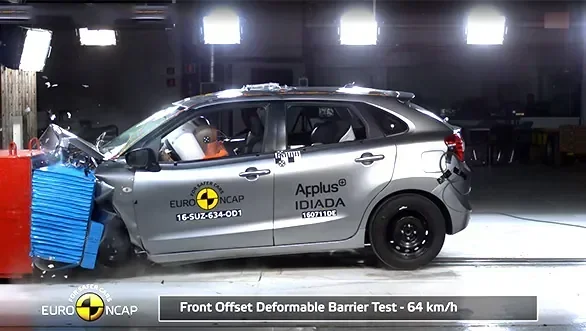
The New Car Assessment Program, commonly known as NCAP, is the most widely recognized safety testing framework in the world. It was started by the United States government and has since been adopted by many countries. In India, the Bharat NCAP (or Global NCAP India) conducts similar tests. The process involves crashing a car into a barrier at a specific speed and measuring how much the cabin deforms and how much force the crash dummies experience.
For the Baleno car safety rating, the tests typically include a frontal offset crash, a side impact test, and a pole test. Each test evaluates different parts of the car’s safety system. The frontal crash checks how the front of the car absorbs energy. The side impact test looks at how well the doors and pillars protect occupants. The pole test checks head protection when a car hits a narrow object like a tree. Together, these tests give a complete picture of the car’s crashworthiness.
Real-World Crash Test Results for the Baleno
The Maruti Suzuki Baleno has received decent scores in crash tests, but the results vary depending on the variant and the safety equipment fitted. In standard configurations, the Baleno typically comes with dual front airbags, ABS with electronic brakeforce distribution, and rear parking sensors. These features form the baseline safety equipment package. However, higher variants may add features like rear seatbelt reminders and improved braking systems.
The crash test rating for the Baleno shows good structural integrity in frontal impacts. The cabin holds its shape well, which is crucial for protecting occupants. Side impact protection is moderate, which is common for cars in this price segment. The Baleno’s NCAP score reflects a solid performer but not a class leader in safety. This is something to keep in mind when comparing it with competitors who may offer more advanced safety features as standard.
Key Safety Features That Boost the Baleno’s Rating
The safety features on a car directly influence its Baleno car safety rating. More safety equipment generally means a better score. The Baleno comes with a range of features that help it perform well in safety assessments. Let us break down the active and passive safety systems that make a difference.
Active Safety Systems
Active safety features are designed to prevent accidents before they happen. These systems help the driver maintain control and avoid collisions. The Maruti Suzuki Baleno includes several active safety features. The braking system is one of the most important. The Baleno comes with disc brakes at the front and drum brakes at the rear. Higher variants may feature ventilated front discs for better braking performance under heavy use.
The electronic stability control system is another key active safety feature. It helps the car maintain traction during sharp turns or on slippery surfaces. However, ESC is not available on all Baleno variants, which is a notable gap in the car safety assessment. Other active features include rear parking sensors, which help with low-speed maneuvering, and a rearview camera on select trims. These features may seem small, but they contribute significantly to overall vehicle safety.
Passive Safety Equipment
Passive safety features activate during a collision to protect occupants. The Baleno car safety rating benefits greatly from its passive safety equipment. The most critical passive feature is the airbag system. The Baleno comes with dual front airbags as standard in most variants. These airbags deploy during a frontal impact to cushion the driver and front passenger from hitting the steering wheel or dashboard.
Seatbelts are another essential passive safety feature. The Baleno offers three-point seatbelts for all passengers, with adjustable height settings for the front seats. Rear seatbelt reminders are available on higher trims, which encourage all passengers to buckle up. The ISOFIX child seat anchors make it easy to install child car seats securely. The car’s structural integrity also plays a big role in passive safety. The high-strength steel used in the cabin helps maintain the survival space during a crash.
Quick Tips: Maximizing Your Baleno’s Safety
- Always ensure all passengers wear seatbelts before starting the car.
- Install child seats using the ISOFIX anchors for a secure fit.
- Check tire pressure regularly for optimal braking performance.
- Get the brakes inspected every 10,000 to 15,000 kilometers.
- Consider adding safety accessories like seatbelt extenders for rear passengers.
Baleno Safety Rating Compared to Competitors
The Baleno car safety rating looks good on paper, but how does it compare to other cars in the hatchback segment? Let us put the Baleno side by side with some popular rivals to see where it stands.
| Feature | Maruti Suzuki Baleno | Hyundai i20 | Honda Jazz |
|---|---|---|---|
| Front Airbags | Dual (Standard) | Dual (Standard) | Dual (Standard) |
| Side Airbags | Not Available | Available on Higher Trims | Available on Higher Trims |
| ABS with EBD | Yes (Standard) | Yes (Standard) | Yes (Standard) |
| Electronic Stability Control | Limited Availability | Available on Higher Trims | Available on Higher Trims |
| ISOFIX Child Seat Anchors | Yes | Yes | Yes |
| Rear Parking Sensors | Yes (Standard) | Yes (Standard) | Yes (Standard) |
| Seatbelt Reminders | Front Only (Standard) | Front and Rear on Higher Trims | Front and Rear on Higher Trims |
| Overall Crash Test Score | Good | Very Good | Very Good |
How the Baleno Stacks Up
From the comparison, you can see that the Baleno holds its own in many areas. The dual front airbags, ABS with EBD, and ISOFIX anchors are standard across the range. This is a strong foundation for occupant protection. However, the Baleno falls behind when it comes to side airbags and electronic stability control. These features are available on higher trims of the Hyundai i20 and Honda Jazz, which gives those cars an edge in the car safety assessment.
The Baleno car safety rating is competitive but not the highest in the segment. If top-tier safety is your priority, you may want to look at variants that offer the most safety equipment or consider spending a bit more on a rival model. That said, the Baleno delivers solid value for money, and its baseline safety features are adequate for most daily driving situations.
Common Mistakes Buyers Make About Car Safety Ratings
Buying a car based on safety ratings can be tricky if you do not know what to look for. Many buyers make common mistakes that lead to poor decisions. Understanding these mistakes helps you avoid them and choose the right car with confidence.
Mistakes to Avoid When Checking Safety Scores
The first mistake is assuming a higher price means better safety. This is not always true. Some affordable cars perform just as well in crash tests as expensive ones. The Baleno car safety rating proves that a reasonably priced hatchback can offer solid protection. Do not let the price tag alone guide your safety decisions.
The second mistake is ignoring the variant you are buying. Safety features vary significantly across trim levels. A base model Baleno may have fewer safety features than a top-end variant. Always check the specific variant’s safety equipment before making a purchase. Look for features like side airbags, ESC, and rear seatbelt reminders. These can make a big difference in a real accident.
The third mistake is focusing only on crash test scores. While crash tests are important, they do not tell the whole story. A car’s safety features like braking assist, lane departure warnings, and blind-spot monitoring also matter. These features help prevent accidents in the first place. A car with a slightly lower crash test score but better active safety features might actually be safer in real-world driving.
Common Mistakes at a Glance
- Assuming a higher price automatically means better safety.
- Not checking the specific variant’s safety equipment list.
- Ignoring active safety features in favor of crash test scores alone.
- Overlooking the importance of rear seatbelt reminders and ISOFIX anchors.
- Comparing safety ratings without understanding the testing criteria.
Expert Tips to Maximize Your Baleno’s Safety
Even if your Baleno comes with a solid Baleno car safety rating, there are always ways to make it safer. Experts recommend several steps that every car owner can take. These tips go beyond the factory equipment and help you get the most out of your vehicle’s safety systems.
Expert Insights on Vehicle Safety
Automotive safety experts consistently emphasize that no car is completely crash-proof. The goal is to minimize risk and maximize protection. For Baleno owners, the first step is to understand what safety features your car already has. Read the owner manual carefully. Know where the airbags are, how the seatbelt pretensioners work, and what the ABS system does during emergency braking.
Experts also recommend regular maintenance of safety-critical components. The braking system should be checked at every service interval. Brake pads wear out over time, and worn pads reduce braking performance. Tires are another critical safety component. Properly inflated tires with good tread depth improve grip and shorten stopping distances. A simple tire check before long drives can make a significant difference.
Another expert tip is to always use genuine Maruti Suzuki parts for replacements. Aftermarket parts may not meet the same safety standards. The structural integrity of your Baleno depends on using the right components during repairs. If your car has been in an accident, get it inspected by a certified technician before driving it again.
Expert Insights on Baleno Safety
According to automotive safety researchers, the Baleno car safety rating reflects a well-engineered vehicle that prioritizes occupant protection in frontal impacts. However, experts note that adding side airbags and electronic stability control would significantly improve the overall safety profile. For buyers who value safety above all else, choosing the highest trim level with the most safety features is the best strategy.
Experts also stress that driver behavior plays a huge role in safety. No amount of safety equipment can fully compensate for distracted driving or speeding. The best safety system is a careful and attentive driver. Combine the Baleno’s safety features with defensive driving habits, and you have a strong foundation for safe travel every day.
Key Takeaways for Baleno Owners
- Know your variant’s safety features: Not all Baleno trims are equal. Check what safety equipment comes with your specific model.
- Maintain critical systems: Regularly service the brakes, tires, and airbag system for optimal performance.
- Use genuine parts: Aftermarket parts may compromise the car’s structural integrity and safety ratings.
- Drive defensively: Safety features work best when combined with careful driving habits.
- Stay updated: Newer model years may include improved safety features. Check for recalls and service bulletins.
Final Thoughts on the Baleno Car Safety Rating
The Baleno car safety rating tells a story of a car that is built with solid fundamentals. The Maruti Suzuki Baleno offers strong collision protection for its price segment. Its dual front airbags, ABS with EBD, and sturdy cabin structure give passengers reliable protection during a crash. The NCAP score reflects a vehicle that meets standard safety expectations for a hatchback in this category.
However, the Baleno is not without its gaps. The lack of side airbags and limited availability of electronic stability control keep it from reaching the top of the safety rankings. If you are a safety-focused buyer, these gaps are worth considering. You might want to explore higher trims or competing models that offer more comprehensive safety features.
At the end of the day, the Baleno car safety rating is a useful tool for evaluating the car. But it is not the only factor. Combine the safety rating with your own research, test drives, and budget considerations. The best car is one that makes you feel confident and secure every time you drive it. The Baleno delivers on many fronts, and with the right knowledge, you can make the most of its safety capabilities. Stay informed, drive carefully, and enjoy the ride with peace of mind.
Frequently Asked Questions
What is the overall Baleno car safety rating?
The Maruti Suzuki Baleno receives a solid safety rating in standard crash tests. It performs well in frontal impact protection and offers good structural integrity. However, it scores lower in side impact and active safety categories compared to some rivals.
Does the Baleno come with side airbags?
Side airbags are not standard on most Baleno variants. They are available on select higher trims of competing models in the same segment. This is one area where the Baleno could improve its safety score.
How does the Baleno’s NCAP score compare to other hatchbacks?
The Baleno’s NCAP score is competitive within the hatchback segment. It holds its own against popular rivals like the Hyundai i20 and Honda Jazz in frontal crash tests. However, some competitors offer better overall scores due to more comprehensive standard safety features.
Can I improve my Baleno’s safety rating with aftermarket accessories?
Yes, you can add certain accessories to improve safety. Rear seatbelt reminders, advanced braking pads, and dash cams are popular add-ons. However, these do not change the official crash test rating. They do enhance real-world safety and give you extra peace of mind.
Is the Baleno safe for families with children?
The Baleno is a safe choice for families. It comes with ISOFIX child seat anchors, dual front airbags, and rear parking sensors. The cabin offers good space for child seats, and the car’s structural design provides reliable protection for all passengers.
What safety features should I look for when buying a Baleno?
Look for dual front airbags, ABS with EBD, ISOFIX anchors, rear parking sensors, and seatbelt reminders. Higher trims may also offer a rearview camera and improved braking systems. Always check the specific variant’s safety equipment list before purchasing.