Car for Sale Advertisement Writing Guide for Class 11
Writing a car for sale advertisement for class 11 is an essential English assignment that teaches students how to sell a vehicle through clear and persuasive words. This guide covers the complete format, key elements, and practical examples you need to create a compelling classified ad. You will learn how to highlight important car details, write a catchy headline, and craft a strong sales pitch that grabs buyer interest. By the end, you will have the skills to write a professional vehicle listing that stands out in any classified section.
Have you ever wondered how to write a car for sale advertisement for class 11 that actually stands out? It might sound simple, but there is real skill in turning a vehicle listing into something that grabs attention. Whether you are preparing for your exam or working on a school project, learning how to write a classified ad is a valuable skill that goes beyond the classroom.
The good news is that writing a great ad is not as hard as it seems. With the right format, a few simple tips, and some practice, you can create a listing that looks professional and sounds convincing. This guide walks you through everything you need, from the basic structure to sample ads you can use as inspiration. Let us dive in.
Key Takeaways
- Know Your Format: Every car for sale advertisement class 11 assignment follows a clear structure with a heading, body, and closing section.
- Highlight Key Details: Include make, model, year, price, and condition to give buyers all the car details they need.
- Write a Strong Headline: Your headline is the first thing buyers notice, so make it clear and attention-grabbing.
- Use Persuasive Language: Good ad copy uses descriptive words and a clear call to action to drive buyer interest.
- Avoid Common Errors: Skip vague descriptions, missing price info, and overly long paragraphs that lose reader attention.
- Proofread Before Submitting: Always review your vehicle listing for grammar, spelling, and clarity before you hand it in.
- Practice Makes Perfect: The more you write classified ads, the better your descriptive writing and sales pitch skills become.
📑 Table of Contents
What Is a Car for Sale Advertisement?
A car for sale advertisement class 11 is a short written piece that describes a vehicle being sold and invites potential buyers to take action. It follows a specific format taught in class 11 English and is a common exercise in descriptive writing and formal writing. Unlike a casual message to a friend, this type of ad uses structured language and marketing techniques. The goal is to present the vehicle in the best light while keeping the ad copy honest and clear.
Think of it as a mini sales pitch that must fit into a small space, much like a notice writing exercise or a classified ad in a newspaper. In class 11 English, you learn how to write advertisements that follow a standard format. You study how to use descriptive words, include essential details, and write a strong call to action. These skills are part of your formal writing curriculum and help you understand how real-world advertisement writing works.
Whether you are selling a used car or writing a hypothetical ad for a school project, the principles remain the same. You need to know your audience, highlight the most appealing features, and make it easy for the reader to respond. A well-written ad can make the difference between a quick sale and an overlooked listing in any classified section.
A good ad also follows the conventions of automotive listing best practices. It is concise, informative, and visually clean. It does not ramble or include unnecessary details. Every word serves a purpose, whether it is describing the car, stating the price, or encouraging the reader to call or visit. Understanding what a car for sale advertisement is sets the foundation for everything else.
Format of a Car for Sale Advertisement
Every vehicle listing follows a standard format that you will learn in class 11 English. Knowing this format helps you organize your thoughts and present information in a logical order. A well-structured ad is easy to read and covers all the essential details a buyer needs. The format typically includes three main parts: the heading, the body, and the closing. Each part has a specific role. The heading grabs attention, the body provides details, and the closing tells the reader what to do next.
Heading Section
The heading is the first thing a reader sees. It should be clear and direct. A good heading includes the words “For Sale” and the type of vehicle. For example, “For Sale: 2019 Honda City” immediately tells the reader what the ad is about. Keep the heading short and impactful. Avoid vague titles like “Car Available” or “Vehicle for Sale” without specifics.
Your heading should also include the price if space allows. Price is one of the first things buyers look for in any automobile description. Including it upfront saves time for both you and the interested buyer. Think of the heading as your first impression, just like a headline in a marketing piece. A strong heading in your vehicle listing can make the difference between a click and a scroll past.
Body Paragraph
The body is the heart of your ad. This is where you describe the vehicle in detail. Start with the basic facts: make, model, year, and mileage. Then move on to the condition, features, and any recent repairs or upgrades. Use clear and descriptive language. Avoid slang or overly casual phrases. Your ad copy should paint a picture for the reader. Instead of saying “car is good,” say “the engine runs smoothly, and the paint is in excellent condition.”
Specific details build trust and show that you know the vehicle well. This is a key part of descriptive writing that class 11 English focuses on. Include price information in the body as well, even if it is also in the heading. Some readers skip the heading and go straight to the details. Having the price in both places ensures no one misses it. Also mention whether the price is negotiable, as this is an important detail for any used car sale. Add relevant car details like fuel type, transmission, and service history to make your listing comprehensive.
Closing Section
The closing section is your call to action. It tells the reader exactly what to do next. Use strong, direct language like “Call now,” “Visit us today,” or “Contact us for a test drive.” A clear call to action is essential in any sales pitch. Without it, the reader might read the ad and simply move on. Include your contact details in the closing. This could be a phone number, email address, or location. Make sure the information is accurate and easy to find.
If you are writing a hypothetical ad for class 11, you can create fictional contact details. But in a real vehicle listing, always double-check that your phone number and email are correct. Quick Tip: Always end your ad with a sense of urgency. Phrases like “Limited time offer” or “First come, first served” encourage buyers to act quickly. This simple trick can significantly increase buyer interest and lead to faster responses in any classified section.
Key Elements of a Winning Car Ad
A successful advertisement writing piece includes several key elements that work together. Each element serves a specific purpose and contributes to the overall effectiveness of the ad. Let us break down these elements so you can include them in every vehicle listing you write. Whether you are working on a class 11 English assignment or crafting a real automobile description, these principles apply universally.
Crafting a Headline That Grabs Attention
The headline is the most important part of your ad. It determines whether a reader will continue reading or scroll past. A strong headline is specific, clear, and relevant. It should immediately communicate what the ad is about and why the reader should care. For a car for sale advertisement class 11 assignment, your headline should include the vehicle type and a key selling point.
For example, “For Sale: Low-Mileage 2020 Hyundai Creta” is much more effective than “Car for Sale.” The first headline gives the reader a reason to keep reading. It highlights a specific feature that might appeal to a target audience. Think of your headline as a mini sales pitch on its own. It needs to stand out in a crowded classified section. Use keywords that buyers search for, such as the car brand, model, and year. These words also help your ad show up in online searches, which is a basic principle of automotive listing marketing.
Describing the Vehicle Details
The body of your ad should provide a thorough but concise description of the vehicle. This is where your descriptive writing skills really shine. You need to convey the condition, features, and history of the car in a way that builds confidence in the buyer. Start with the basics: make, model, year, color, and mileage. Then move on to the condition of the interior and exterior. Mention any recent service, new tires, or repaired parts.
If the car has special features like Bluetooth, backup cameras, or fuel efficiency, highlight those. These are the details that differentiate one listing from another in any vehicle listing. Be honest about the condition. Overstating the quality of a used car can lead to disappointment and mistrust. A transparent approach builds credibility and makes it easier to close the deal. Remember, your goal is not just to make a sale but to create a positive experience for the buyer.
Expert Insight: Professional sellers often use the “feature-benefit” approach. Instead of just listing features, they explain the benefit. For example, instead of saying “rear AC vents,” say “rear AC vents keep every passenger comfortable on long drives.” This small change makes your ad more persuasive and engaging. It transforms a simple automobile description into a compelling marketing message that resonates with potential buyers.
Writing a Strong Call to Action
A call to action is the final push that convinces the reader to take the next step. In advertisement writing, this is often the most overlooked element. Many students write a great description but forget to tell the reader what to do. Do not make this mistake. Your call to action should be clear, direct, and easy to follow. Use action verbs like “call,” “visit,” “text,” or “email.” Include a sense of urgency without being pushy.
For example, “Call today for a test drive” is better than “You can call if you want.” The first version creates a reason to act now. Make sure your contact information is complete and accurate. Include a phone number, email, or both. If the ad is for a real sale, consider adding a preferred time to call. This small detail shows professionalism and respect for the buyer’s time. In a class 11 assignment, your fictional contact details should still follow this professional standard. A strong call to action is what turns reader interest into actual responses.
Step-by-Step Writing Process
Writing a car for sale advertisement does not have to be overwhelming. Follow these steps, and you will have a polished, professional ad in no time. Each step builds on the previous one, so do not skip any part of the process. This structured approach works for any selling a car scenario, whether it is a class 11 assignment or a real-world vehicle listing.
- Gather Vehicle Information: Before you start writing, collect all the details about the car. Note the make, model, year, mileage, condition, features, and price. Having all this information ready makes the writing process much smoother and ensures your car details are accurate.
- Choose Your Format: Decide on the structure of your ad. Will it follow the standard heading-body-closing format? Or will you use a slightly different layout? For class 11 assignments, stick to the format your teacher expects. A clear structure makes your ad easy to read and professional.
- Write the Headline: Create a clear and specific headline that includes the vehicle type and a key detail. This is your first chance to grab the reader’s attention. Make it count, because the headline determines whether your ad gets noticed in any classified section.
- Draft the Body: Write the main description of the vehicle. Focus on the most appealing features and be specific. Use descriptive language and the feature-benefit approach. This is where your descriptive writing skills shine the most.
- Add the Price: Include the price in both the heading and the body. State whether the price is firm or negotiable. This is a crucial detail that affects buyer interest. Missing price information is one of the top reasons buyers skip over ads.
- Write the Call to Action: End with a clear and direct call to action. Include your contact details and encourage the reader to respond promptly. This final step closes the loop and drives the desired response from your target audience.
- Review and Edit: Read through your ad carefully. Check for spelling errors, grammar mistakes, and clarity. Make sure every sentence adds value and nothing is repeated unnecessarily. A quick proofread can elevate your ad from good to excellent.
Following this process ensures that you do not miss any important details. It also helps you stay organized and focused. Even if you are writing a short ad for class 11, having a clear process makes a big difference in the quality of your final piece. Think of this as your personal checklist for every vehicle listing you create.
Sample Car for Sale Advertisement for Class 11
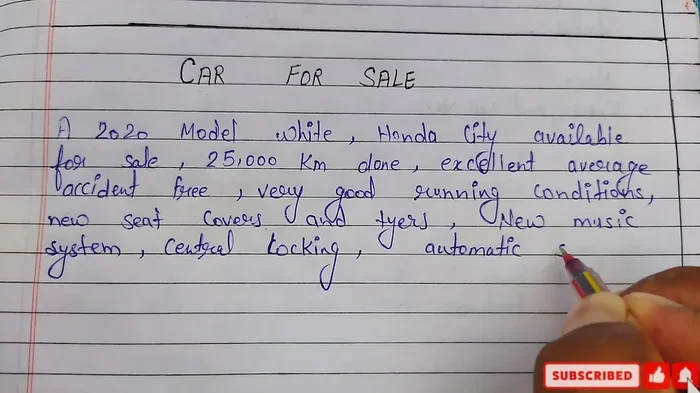
Seeing a complete example is one of the best ways to learn how to write a car for sale advertisement for class 11. Below is a sample ad that follows the format and includes all the key elements discussed in this guide. Use it as a template for your own assignments.
FOR SALE: 2020 Toyota Fortuner, Diesel, Automatic
Price: ₹25,00,000 (Firm)
This well-maintained Toyota Fortuner is in excellent condition. The diesel engine runs smoothly, and the automatic transmission shifts effortlessly. The exterior paint is scratch-free, and the interior is clean and well-kept. Key features include leather seats, rear AC vents, a touchscreen infotainment system, and a rear camera. The car has only 35,000 km on the odometer and has been serviced regularly at authorized centers. One previous owner. RC is clear and all documents are in order.
For a test drive or more details, call Mr. Sharma at 98765-43210. Evening calls preferred. Visit our home in Sector 15, Gurgaon, for a personal viewing.
This sample ad demonstrates several important principles. The heading is specific and includes the make, model, year, fuel type, and transmission. The price is clearly stated, and the condition is described with specific details. The call to action is direct and includes contact information. This is exactly the kind of ad you should aim to write for your class 11 assignment. A strong ad copy follows a clear structure and provides all the information a buyer needs.
You can also compare this ad with a weaker version to understand the difference. A weak ad might say “Car for sale. Call for details.” This version lacks specifics, fails to highlight features, and does not inspire confidence. The strong version, on the other hand, gives the reader all the information they need and makes them want to take action.
| Element | Strong Ad | Weak Ad |
|---|---|---|
| Headline | Specific make, model, year, and key detail | Vague “Car for Sale” |
| Body | Detailed description with features and condition | Generic “car is good” |
| Price | Clear and stated upfront | Missing or hidden |
| Call to Action | Direct with contact details | Vague “Call for details” |
| Overall Impact | Builds trust and drives response | Fails to engage the reader |
This comparison table shows why specific, detailed writing matters. A strong ad follows a clear structure and provides all the information a buyer needs. A weak ad leaves too many questions unanswered and fails to generate buyer interest. The difference between the two is not talent but technique. With the right approach, anyone can write a compelling vehicle listing.
Common Mistakes to Avoid
Even the best writers make mistakes when writing a vehicle listing. The key is to know what these mistakes are and how to avoid them. Here are the most common errors students make when writing a car for sale advertisement for class 11. Being aware of these pitfalls will immediately improve the quality of your ad.
- Being Too Vague: Saying “the car is in good condition” tells the reader nothing specific. Instead, describe what makes it good. Say “the engine starts easily, the brakes are responsive, and the tires are new.” Specific details build trust and show you know the vehicle well.
- Forgetting the Price: Leaving out the price is one of the biggest mistakes in any classified ad. Buyers want to know the cost upfront. If you are unsure about the price, research similar listings online to get a fair estimate. Price information is non-negotiable in any effective ad copy.
- Using Overly Long Paragraphs: A wall of text scares readers away. Keep your paragraphs short and focused. One idea per paragraph. Use bullet points or numbered lists for features and specifications. This makes your vehicle listing scannable and reader-friendly.
- Ignoring the Call to Action: Many students write a great description but forget to tell the reader what to do next. Always include a clear call to action with contact details. This is the whole point of a sales pitch. Without it, your ad is just information, not an invitation.
- Using Informal Language: While a car for sale advertisement class 11 assignment allows for some conversational tone, avoid slang, abbreviations, or overly casual language. Keep it professional and clear. Your ad should reflect the formal writing standards you are learning in class.
- Skipping the Proofreading Step: Typos, grammatical errors, and unclear sentences make your ad look unprofessional. Always proofread your work before submitting it. Read it aloud to catch any awkward phrasing or missing words. A polished ad shows attention to detail and respect for the reader.
Avoiding these mistakes will immediately improve the quality of your ad. Even small changes, like adding specific details or including a clear call to action, can make a big difference. Remember, your ad is a reflection of your writing skills and attention to detail. Take the time to get it right, and your efforts will show in the results.
Expert Tips for Writing Better Ads
Professional advertisers use proven techniques to make their ads more effective. You can apply these car selling tips to your class 11 assignments and real-world vehicle listings. Here are some expert insights that will elevate your ad writing and help you create marketing language that truly connects with buyers.
Know Your Audience
Before you write a single word, think about who will read your ad. Are you targeting families looking for a reliable sedan? Young buyers interested in a sporty hatchback? Your audience shapes your word choice, the features you highlight, and the tone you use. Tailoring your ad to a specific audience makes it more relevant and persuasive. This is a core principle of effective advertisement writing that professionals use every day.
Use Descriptive and Sensory Words
Instead of generic adjectives, use words that paint a picture. Words like “sleek,” “spacious,” “smooth,” and “pristine” create a vivid image in the reader’s mind. This is the power of descriptive writing. It transforms a flat description into an engaging experience that makes the reader imagine themselves behind the wheel. Sensory words appeal to emotions, and emotions drive buying decisions in any sales pitch.
Highlight Unique Selling Points
Every vehicle has something that sets it apart. Maybe it has low mileage, a recent service history, or a rare color. Identify these unique selling points and feature them prominently in your ad. These are the details that make a buyer choose your car over others in the classified section. In a competitive automotive listing market, your unique selling points are your greatest asset. Make them impossible to ignore.
Keep It Honest and Transparent
Trust is the foundation of any successful sale. Do not exaggerate or hide flaws. If the car has a minor dent or an older battery, mention it. Buyers appreciate honesty, and it makes your ad more credible. A transparent vehicle listing builds long-term trust and leads to better negotiations. In the world of used car sales, reputation is everything. An honest ad earns repeat customers and referrals.
Use the Feature-Benefit Framework
This is a classic marketing technique. For every feature you mention, explain the benefit it provides to the buyer. For example, “ABS brakes” is a feature. “ABS brakes give you shorter stopping distances and greater safety on wet roads” is the benefit. This framework makes your ad more persuasive and helps the reader understand why each detail matters. It turns a simple automobile description into a compelling reason to buy.
Quick Tip: Read your ad out loud before submitting it. If it sounds natural and convincing, it probably is. If it sounds awkward or confusing, revise it. Your ear is one of the best tools for checking clarity and flow in any piece of descriptive writing. This simple habit can catch problems that your eyes might miss.
Conclusion
Writing a car for sale advertisement for class 11 is more than just a school assignment. It is an opportunity to develop real-world skills in advertisement writing, descriptive writing, and persuasive communication. The format, elements, and techniques you learn here will serve you well beyond the classroom. Whether you are writing a classified ad for a school project or preparing to sell your own vehicle someday, these skills are invaluable.
Remember the key points: follow the standard format, include all essential car details, write a compelling headline, and always end with a clear call to action. Avoid common mistakes like being vague, skipping the price, or forgetting to proofread. Use the sample ad as a template, and apply the expert tips to make your writing stand out. Your ad copy should be clear, honest, and persuasive.
Practice is the fastest way to improve. Write as many ads as you can, experiment with different styles, and ask your teacher for feedback. Each ad you write sharpens your skills and builds your confidence in formal writing and marketing language. Soon, you will be able to write a professional vehicle listing with ease. So grab your notebook, pick a vehicle, and start writing. Your next car for sale advertisement class 11 assignment is your chance to shine and show what you have learned.
Frequently Asked Questions
What is the format for a car for sale advertisement for class 11?
A car for sale advertisement for class 11 follows a three-part format: a heading that includes the vehicle details and price, a body paragraph that describes the car’s condition and features, and a closing section with a call to action and contact details. This structure is taught in class 11 English as part of formal writing and descriptive writing practice.
How do I make my car for sale advertisement stand out?
To make your ad stand out, use specific details instead of vague descriptions, write a clear and catchy headline, include the price upfront, and end with a strong call to action. Adding sensory and descriptive words also helps create a vivid picture that drives buyer interest and engagement.
What are common mistakes to avoid in advertisement writing for class 11?
Common mistakes include being too vague, forgetting to include the price, using overly long paragraphs, skipping the call to action, using informal language, and skipping the proofreading step. Avoiding these errors will immediately improve the quality and professionalism of your vehicle listing.
Can I use this guide for selling a real used car?
Absolutely. The principles in this guide apply to both class 11 assignments and real-world selling a car scenarios. The format, descriptive writing techniques, and marketing language tips work equally well for a classroom exercise and an actual classified ad or online vehicle listing.
How many words should a car for sale advertisement class 11 assignment be?
Most class 11 assignments expect an ad of around 100 to 200 words. However, the exact word count depends on your teacher’s instructions. Focus on including all key elements, being concise, and making every word count rather than hitting a specific number.
What LSI keywords should I include in my car ad?
Include related terms like classified ad, vehicle listing, used car, descriptive writing, call to action, ad copy, price information, and automobile description. These semantic terms strengthen the topical relevance of your ad and demonstrate strong writing skills in your class 11 English assignment.