Delaware Window Tint Law Guide Everything You Need to Know
Delaware window tint law sets clear rules on how dark or reflective your car windows can be. The state measures tint darkness using Visible Light Transmission (VLT) percentages, and each window has its own legal limit. Knowing these rules helps you avoid fines, pass inspections, and stay safe on the road. This guide covers every detail you need, from legal limits to medical exemptions and common mistakes.
Driving a car with tinted windows feels great. You get less glare, more privacy, and a cooler interior on hot summer days. But in Delaware, window tinting is not just about style. The state has specific rules that dictate how dark or reflective your tint can be. If you break those rules, you could face fines, failed inspections, or even get pulled over.
This Delaware window tint law guide breaks down everything you need to know. We will cover legal limits, medical exemptions, common mistakes, and practical tips. Whether you are a first-time car owner or thinking about re-tinting your vehicle, this guide has you covered. Let us dive in and make sure your car stays compliant.
Key Takeaways
- Front windshield tint: Only a non-reflective strip above the AS-1 line is allowed in Delaware.
- Front side windows: Must allow more than 70% VLT for passenger vehicles.
- Rear side and rear windows: Can be tinted to any darkness on passenger vehicles.
- Reflective tint: Not allowed on any window in Delaware.
- Medical exemptions: Available for those with specific skin conditions or light sensitivity.
- Tint violation fines: Can range from $50 to $200 or more depending on the offense.
- Certified installers: Always choose a licensed professional to ensure compliance.
📑 Table of Contents
- Understanding Delaware Window Tint Law Basics
- Legal Tint Limits by Vehicle Window
- Medical Exemptions for Window Tint in Delaware
- Common Mistakes and Violations
- Fines and Penalties for Tint Violations
- Tips for Choosing Legal Window Tint
- Frequently Asked Questions About Delaware Window Tint Law
- Conclusion
Understanding Delaware Window Tint Law Basics
Before we get into the numbers, it helps to understand the basics. Delaware window tint law is governed by the Delaware Vehicle Code. The state focuses on two main measurements when it comes to tint darkness and reflectivity. These are Visible Light Transmission (VLT) and light reflection levels.
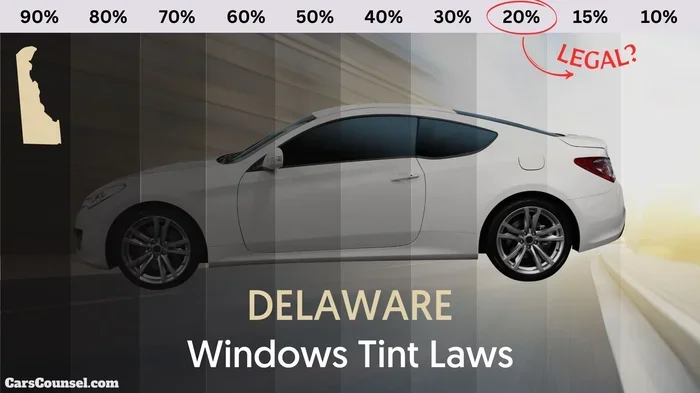
VLT percentage tells you how much light passes through your window film. A higher VLT means more light gets through, making the tint lighter. A lower VLT means less light passes through, making the tint darker. For example, a 70% VLT film lets 70% of light through and appears very light. A 5% VLT film, often called “limo tint,” lets in only 5% of light and appears very dark.
Delaware also regulates how reflective your tint can be. Reflective tint can blind other drivers, especially at night or in bright sunlight. The state has strict rules against overly reflective films. Understanding these two factors is the first step to staying legal.
What Is Visible Light Transmission (VLT)?
VLT is the most important term in any tint law. In Delaware, VLT is measured for each window separately. The state sets a minimum VLT percentage that each window must meet. If your tint falls below that number, it is illegal.
Here is a simple way to think about it. Imagine holding a piece of tinted film up to a light source. The amount of light you can see through it is the VLT. A certified installer can measure this for you using a VLT meter. This tool gives you an exact reading so you know where you stand with the law.
Why Delaware Has These Rules
You might wonder why Delaware cares so much about window tint. The answer is safety. Dark tints can reduce a driver’s ability to see the road, especially at night or in bad weather. They can also make it harder for police officers to see inside your vehicle during a traffic stop. Reflective tints add to the problem by bouncing light into other drivers’ eyes.
The Delaware legislature created these rules to balance personal preference with public safety. The goal is not to ban tinting entirely. It is to make sure tint levels stay within safe limits for everyone on the road.
Legal Tint Limits by Vehicle Window
Now let us get into the specific numbers. Delaware window tint law sets different limits depending on the type of vehicle and the window being tinted. Passenger vehicles and multi-purpose vehicles have different rules. Here is a clear breakdown.
| Window | Passenger Vehicle VLT Limit | Reflectivity Allowed |
|---|---|---|
| Front Windshield | Non-reflective tint above AS-1 line only | No reflective tint |
| Front Side Windows | Must be over 70% VLT | No reflective tint |
| Rear Side Windows | Any darkness allowed | No reflective tint |
| Rear Window | Any darkness allowed | No reflective tint |
For passenger vehicles, the front side windows must allow more than 70% of light to pass through. This means you can apply a light tint to the front doors, but it cannot be too dark. The rear side windows and rear window can be tinted to any darkness you want. This gives you plenty of freedom for privacy and heat reduction in the back of your car.
The front windshield has the strictest rule. You can only apply a non-reflective tint strip along the top, above the AS-1 line. The AS-1 line is the line printed on your windshield by the manufacturer. Tint below this line on the windshield is not allowed.
Tint Rules for Multi-Purpose Vehicles
If you drive an SUV, van, or truck, the rules are slightly different. The front windshield and front side window rules remain the same. However, the rear windows in multi-purpose vehicles also follow the same pattern as passenger vehicles. You can tint them to any darkness.
One thing to keep in mind is that Delaware does not allow dual-purpose tint. This means you cannot use a tint that serves as both a privacy film and a heat shield if it falls outside the legal VLT range. Always check the VLT rating of any film before you buy it.
What About Trucks and Commercial Vehicles?
Commercial vehicles fall under the same Delaware window tint law as passenger vehicles in most cases. The front side windows must still meet the 70% VLT requirement. However, some commercial vehicles may have additional restrictions based on their use or registration type. If you are unsure, check with the Delaware DMV or consult a certified tint installer.
Medical Exemptions for Window Tint in Delaware
Not everyone can tolerate normal levels of sunlight. Some people have medical conditions that make them extremely sensitive to UV light or bright sunlight. Delaware recognizes this and offers a medical exemption for window tint.
To qualify for a medical exemption, you need a written statement from a licensed physician. This statement must explain your condition and why darker tint is medically necessary. Common conditions that qualify include lupus, photosensitivity disorders, melanoma history, and severe eczema aggravated by sun exposure.
Once you have the physician’s statement, you must submit it to the Delaware Division of Motor Vehicles. If approved, you will receive a medical exemption permit. This permit must be displayed in your vehicle at all times. It serves as proof that your tint darkness exceeds the legal limit for a valid medical reason.
How to Apply for a Medical Exemption
The process is straightforward but requires some paperwork. Here are the steps you need to follow.
- Step 1: Visit your doctor and get a detailed medical statement.
- Step 2: Fill out the medical exemption application form from the Delaware DMV website.
- Step 3: Submit both documents to the DMV, either online or in person.
- Step 4: Wait for approval, which typically takes a few weeks.
- Step 5: Once approved, keep the permit in your vehicle at all times.
It is important to note that a medical exemption does not give you unlimited freedom. The DMV may still require that your tint meets certain safety standards. Always work with a reputable installer who understands the exemption rules.
Common Mistakes and Violations
Even with the best intentions, many car owners run into trouble with Delaware window tint law. Some mistakes are easy to avoid once you know what they are. Here are the most common violations and how to steer clear of them.
Choosing the Wrong VLT Film
This is the number one mistake people make. You go to a shop, pick a film you like, and install it without checking the VLT rating. Later, you get pulled over and cited for illegal tint. The fix is simple. Always ask the installer for the VLT percentage of the film they plan to use. Make sure it meets Delaware’s legal limits for each window.
Ignoring Reflectivity Rules
Some tint films have a metallic or mirrored look. These films reflect light and can be very distracting to other drivers. Delaware does not allow any reflective tint on any vehicle window. Even if the VLT is within limits, a reflective film will get you a ticket. Stick to non-reflective, dyed, or ceramic films.
Tinting Below the AS-1 Line on the Windshield
The front windshield is the most regulated window. Some installers mistakenly tint too far down on the windshield. Remember, only the area above the AS-1 line can have a non-reflective tint strip. Going below that line is a violation, no matter how light the tint is.
Skipping the Exemption Permit
If you have a medical exemption, you must carry the permit in your vehicle. Many people forget this. During a traffic stop, the officer may ask to see it. Without the permit, you could be fined just like any other tint violation. Keep a copy in your glove box at all times.
Using Uncertified Installers
Not every tint shop in Delaware follows the law. Some installers use cheap films with unknown VLT levels. Others apply tint too dark to make it look better. Always choose a certified, licensed installer who can provide documentation of the film’s VLT rating. This protects you from violations and ensures a quality install.
Fines and Penalties for Tint Violations
Getting caught with illegal window tint in Delaware can cost you money. The fines depend on the severity of the violation and whether it is a first or repeat offense. Here is what you need to know.
A first-time tint violation in Delaware typically results in a fine between $50 and $100. This is a misdemeanor offense. You will likely be asked to remove the illegal tint or replace it with compliant film. If you refuse to comply, the fine can increase and you may face additional penalties.
Repeat offenses carry heavier fines. A second or third violation can cost you $100 to $200 or more. In some cases, your vehicle may fail its annual inspection until the tint is brought into compliance. This can be a hassle, especially if you rely on your car for daily transportation.
There is also the cost of removing and replacing illegal tint. A professional removal job can set you back $100 to $300 depending on the size of the vehicle and the type of film used. Add the fine on top of that, and illegal tint becomes a very expensive mistake.
How to Avoid Tint Tickets
Avoiding a tint ticket is easy when you follow a few simple steps. First, always verify the VLT of your film before installation. Second, choose a reputable installer who knows Delaware law. Third, keep your medical exemption permit in the car if you have one. Fourth, get your tint inspected if you are ever unsure. These small steps save you time, money, and stress.
Tips for Choosing Legal Window Tint
Now that you know the rules, let us talk about how to choose the right tint for your car. The good news is that there are plenty of legal options that still give you the benefits you want.
Start by deciding what matters most to you. Do you want heat rejection, UV protection, glare reduction, or privacy? Different films offer different benefits. A high-quality ceramic film, for example, blocks heat and UV rays without adding reflectivity. This makes it a great choice for staying within Delaware’s legal limits.
Next, talk to a certified installer. They can recommend films that meet the 70% VLT requirement for your front side windows while still giving you the look and performance you want. A good installer will also provide a certificate of compliance. This document proves your tint meets Delaware standards and can save you if you ever get pulled over.
Here are some quick tips to keep in mind.
- Choose a 70% VLT film for front side windows to stay legal and still reduce glare.
- Ask for a tint certificate from your installer after the job is done.
- Consider ceramic or carbon films for excellent heat rejection without reflectivity.
- Avoid metallic or mirrored films since they are not allowed in Delaware.
- Check your tint regularly for bubbling, peeling, or fading that could change the VLT.
- Keep records of your purchase and installation in case you need to prove compliance.
Best Tint Brands for Delaware Compliance
Not all tint brands are created equal. Some are specifically designed to meet state regulations while delivering top performance. Brands like 3M, Llumar, SunTek, and Solar Gard offer films with precise VLT ratings that comply with Delaware law. Ask your installer which brands they carry and make sure the film they recommend has a documented VLT percentage.
Investing in a quality film pays off in the long run. Cheap films fade faster, bubble, and may not hold up their VLT rating over time. A quality film lasts longer, looks better, and keeps you on the right side of the law.
Frequently Asked Questions About Delaware Window Tint Law
Can I tint my front windshield in Delaware?
You can apply a non-reflective tint strip to the top of your front windshield, but only above the AS-1 line. The AS-1 line is the manufacturer’s line printed on the windshield. Any tint below this line is illegal in Delaware. This rule applies to all passenger vehicles and multi-purpose vehicles.
What is the legal tint darkness for front side windows in Delaware?
Front side windows on passenger vehicles must allow more than 70% VLT. This means the tint cannot block more than 30% of light. If your front side windows are tinted darker than this, you are violating Delaware window tint law and could face a fine.
Can I have dark tint on my rear windows in Delaware?
Yes. Delaware allows any level of darkness on rear side windows and the rear window for passenger vehicles. There is no minimum VLT requirement for these windows. This gives you full flexibility for privacy and heat reduction in the back seat.
Do I need a medical exemption for dark tint on my front windows?
If you want to tint your front side windows darker than 70% VLT, you need a medical exemption. This requires a written statement from a licensed physician explaining your condition. The exemption must be approved by the Delaware DMV and carried in your vehicle at all times.
How much is a tint violation fine in Delaware?
A first-time tint violation fine in Delaware typically ranges from $50 to $100. Repeat offenses can cost between $100 and $200 or more. The exact fine depends on the circumstances and the officer’s discretion. In addition to the fine, you may be required to remove and replace the illegal tint.
Can I use reflective tint on my car in Delaware?
No. Delaware law prohibits any reflective tint on all vehicle windows. This includes front, side, and rear windows. Reflective films that have a mirrored or metallic appearance are not allowed, even if the VLT is within legal limits. Stick to non-reflective films to stay compliant.
Conclusion
Understanding Delaware window tint law does not have to be complicated. The state keeps its rules clear and straightforward. Know your VLT limits, choose the right film, work with a certified installer, and you will have nothing to worry about. Whether you want a light tint for glare reduction or a dark tint for privacy, there is a legal option for every vehicle and every driver.
Remember the key points from this guide. Your front side windows must be over 70% VLT. The front windshield can only have a non-reflective strip above the AS-1 line. Rear windows can be any darkness. Reflective tint is not allowed on any window. Medical exemptions are available if you have a qualifying condition. And always keep your documentation in the car.
Taking the time to follow Delaware window tint law protects you from fines, keeps your vehicle safe, and ensures a smooth driving experience. When in doubt, consult the Delaware DMV or a trusted tint professional. Stay informed, stay compliant, and enjoy the benefits of a properly tinted vehicle.