How Accurate Is Black Book Trade-In Value for Car Owners
Black Book trade-in value is a popular tool used by car owners to estimate what their vehicle might fetch at a dealership. But how reliable is it really? The answer depends on several factors including your car’s condition, mileage, and local market demand. Black Book provides a solid baseline, but it should not be your only source when negotiating a trade-in. Understanding its strengths and limitations helps you get a fairer deal.
Key Takeaways
- Black Book trade-in value gives a useful starting point but may not reflect your exact local market.
- Dealers often use Black Book as a reference but adjust based on demand and vehicle specifics.
- Your car’s condition, mileage, and service history heavily influence the final trade-in offer.
- Comparing Black Book with other tools like Kelley Blue Book gives you a wider price range.
- Knowing your trade-in value ahead of time puts you in a stronger negotiating position.
- Black Book updates regularly, but market shifts can happen faster than the data reflects.
- Getting multiple dealer offers ensures you are not leaving money on the table.
📑 Table of Contents
- How Accurate Is Black Book Trade-In Value for Car Owners?
- Factors That Affect Black Book Trade-In Value Accuracy
- How Black Book Compares to Other Valuation Tools
- Common Mistakes Car Owners Make With Trade-In Values
- How to Maximize Your Black Book Trade-In Value
- Is Black Book Trade-In Value Worth Trusting?
- Final Thoughts on Black Book Trade-In Value Accuracy
How Accurate Is Black Book Trade-In Value for Car Owners?
If you are thinking about trading in your car, you have probably heard of Black Book trade-in value. It is one of the most well-known tools in the automotive world. But here is the big question: how accurate is it really? The truth is, Black Book is a helpful starting point. However, it is not the final word on what your car is worth. Many factors come into play that Black Book cannot fully capture. Let us break it all down so you know exactly what to expect.
When you walk into a dealership, you want to feel confident. You want to know your car’s worth and avoid getting lowballed. Black Book trade-in value gives you a number to reference. But that number is only as good as the data behind it and how well it matches your specific vehicle. In this article, we will explore just how accurate Black Book really is, what affects your trade-in offer, and how you can use this tool to your advantage.
What Exactly Is Black Book Trade-In Value?
Black Book is a vehicle valuation guide used mostly by dealerships and dealers in the United States. It provides estimated prices for used cars based on real wholesale data. Unlike some other guides, Black Book focuses heavily on what dealers actually pay for vehicles at auctions and from trade-ins. This makes it especially relevant for anyone looking to trade in a car.
The Black Book trade-in value is updated frequently. It takes into account things like regional demand, vehicle condition, and current market trends. However, it is important to understand that Black Book is not a one-size-fits-all tool. It gives you a range, not an exact dollar figure. Think of it as a compass, not a GPS. It points you in the right direction but does not give you turn-by-turn directions to your final destination.
Many car owners rely on Black Book because it is trusted by dealers. If a dealer is using the same guide you are, you both have a common reference point. This can make negotiations smoother. Still, there are limitations you need to know about before you trust Black Book completely.
Factors That Affect Black Book Trade-In Value Accuracy
The accuracy of your Black Book trade-in value depends on several key factors. Understanding these can help you set realistic expectations and avoid surprises at the dealership.
Vehicle Condition and Maintenance History
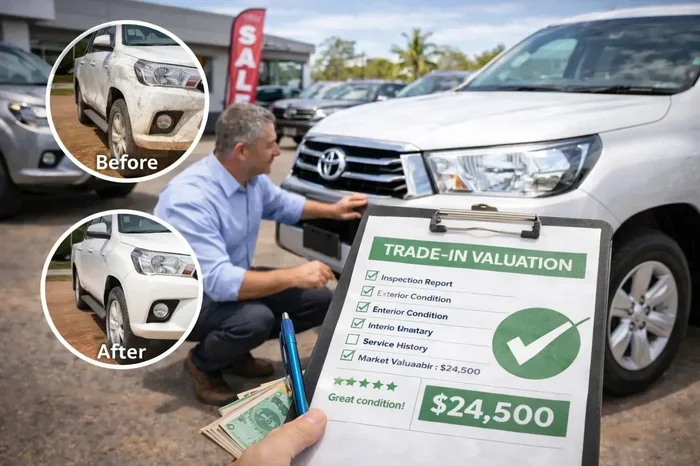
Black Book categorizes vehicles into different condition levels. These typically include excellent, good, fair, and poor. Your car’s actual condition plays a huge role in where it falls within those categories. A well-maintained car with a clean history report will naturally fetch a higher trade-in value than one with visible wear and tear.
Here are some things dealers look at closely:
- Interior cleanliness and any stains or damage
- Exterior paint condition and presence of dents or scratches
- Mechanical health, including engine and transmission condition
- Tire tread depth and overall wear patterns
- Service records and whether regular maintenance was performed
If your car has full service records and no accident history, your Black Book trade-in value will likely be on the higher end. But even small issues like a cracked windshield or worn brake pads can pull the offer down. Always fix minor issues before you trade in your car. It is a small effort that can make a big difference.
Mileage and Age of the Vehicle
Mileage is one of the biggest factors in determining trade-in value. Black Book adjusts its estimates based on average mileage for a given year and model. If your car has lower-than-average mileage, you are in a good position. Higher mileage will reduce your Black Book estimate, sometimes significantly.
Age also matters. Older vehicles naturally depreciate over time. A five-year-old sedan will have a lower Black Book trade-in value than a two-year-old version of the same model. This is simply how car depreciation works. The steepest drop in value happens in the first few years of ownership.
That said, some vehicles hold their value better than others. Popular models with strong resale records tend to lose value more slowly. If you drive a vehicle that is in high demand, your Black Book estimate will likely be more accurate because the data reflects strong market demand for that model.
Local Market Conditions
Black Book provides national and regional estimates. But your local market can differ quite a bit from the national average. For example, trucks and SUVs might trade for more in rural areas where they are in high demand. In a city with heavy traffic, compact cars might hold their value better.
Seasonal trends also play a role. Convertibles tend to trade for more in the summer. All-wheel-drive vehicles might fetch higher prices in snowy regions during winter. Black Book tries to account for regional differences, but it cannot capture every local quirk. Checking your local classifieds and dealer listings gives you a better picture of what cars like yours are actually selling for in your area.
How Black Book Compares to Other Valuation Tools
No single valuation tool is perfect. That is why smart car owners compare multiple sources before setting their expectations. Here is how Black Book trade-in value stacks up against some popular alternatives.
Black Book vs. Kelley Blue Book
Kelley Blue Book, often called KBB, is probably the most recognized name in car valuation. Both Black Book and KBB provide trade-in estimates, but they use different data sources. Black Book leans heavily on wholesale auction data and dealer-to-dealer transactions. KBB uses a mix of wholesale and retail data along with consumer trends.
In practice, Black Book trade-in values tend to run slightly lower than KBB estimates. This is because Black Book reflects what a dealer is likely to pay at auction, not what a retail customer might pay. If you are trading in your car, Black Book may give you a more realistic picture of what the dealer will offer. If you are selling privately, KBB retail values might be more relevant.
Black Book vs. Edmunds and NADA Guides
Edmunds and NADA Guides are two other popular options. Edmunds provides a “trade-in value” that is based on what dealers are willing to pay. NADA Guides are often used by lenders for loan purposes and tend to reflect higher values than Black Book.
Here is a quick comparison:
- Black Book – Best for dealer trade-in negotiations and wholesale pricing
- Kelley Blue Book – Great all-around tool for both trade-in and private party values
- Edmunds – Offers detailed breakdowns and instant cash offer estimates
- NADA Guides – Often used for financing and tends to show higher values
Using two or three of these tools together gives you a well-rounded view of your car’s worth. No single guide should be your only source of information.
Common Mistakes Car Owners Make With Trade-In Values
Even with a solid understanding of Black Book trade-in value, many car owners make mistakes that cost them money. Let us look at the most common ones.
Relying on Only One Valuation Source
This is the biggest mistake. If you walk into a dealership quoting only Black Book, the dealer can easily tell you their offer is close to that number. But the truth is, your car might be worth more based on other tools or local demand. Always check at least two or three valuation sources before you negotiate.
Ignoring the Difference Between Trade-In and Private Party Value
Black Book gives you a trade-in value, which is what a dealer will pay. This is almost always lower than what you could get by selling the car yourself. If you are not in a rush and have the time to list your car, a private sale usually brings in more cash. But if convenience matters more, the trade-in route makes sense even if it means accepting a lower Black Book trade-in value.
Not Knowing Your Car’s True Condition
Be honest about your car’s condition. If you claim it is in “excellent” condition but it has a stained carpet and a check engine light, the dealer will notice. This mismatch can lead to a lower offer and a frustrating negotiation. Get a pre-trade-in inspection if you are unsure about your car’s mechanical health. It is a small investment that can save you from a big surprise.
Skipping the Negotiation Step
Many car owners accept the first offer they receive. Do not do this. The initial trade-in offer is almost always lower than what the dealer is willing to pay. Use your Black Book trade-in value as leverage. If the dealer’s offer is below what Black Book suggests, politely push back. Show them the data and explain why you believe your car is worth more. A little negotiation can add hundreds of dollars to your final offer.
How to Maximize Your Black Book Trade-In Value
Now that you understand how Black Book trade-in value works and what affects it, let us talk about how to get the most out of it. These practical tips can help you walk away with a better deal.
Clean and Detail Your Car Before Trading In
First impressions matter a lot at a dealership. A clean, well-detailed car signals that it has been well cared for. Spend a few hundred dollars on a professional detailing job if needed. A clean interior, waxed exterior, and fresh smell can push your car into a higher Black Book condition category. That alone could add money to your trade-in offer.
Gather All Your Documentation
Having your paperwork organized shows the dealer you are a responsible owner. Bring your service records, title, registration, and any receipts for recent repairs or upgrades. If you have replaced the tires, brakes, or battery recently, those receipts matter. They support your claim that the car has been properly maintained and can justify a higher trade-in value.
Time Your Trade-In Strategically
Timing can affect your Black Book trade-in value. End of the month, end of the quarter, and end of the year are all times when dealers are pushing to hit sales targets. A dealer who is desperate to close a deal may be more willing to offer a higher price for your trade-in. Also, avoid trading in your car right after a new model year launches. Demand for outgoing models often drops, which can reduce your offer.
Get Multiple Offers Before You Commit
Do not go to just one dealership. Get trade-in offers from several dealers in your area. Many dealers now offer instant online estimates based on Black Book and other valuation tools. Use these estimates to compare. If one dealer offers significantly more than the others, ask why. Their willingness to pay more might reflect local demand for your specific vehicle.
Separate Your Trade-In from Your New Car Purchase
This is a pro tip that many car buyers do not know. Negotiate the price of your new car first, before you discuss your trade-in. If you combine both negotiations, the dealer can hide a low trade-in offer inside a seemingly good new car price. By keeping them separate, you ensure you are getting a fair deal on both sides. Use your Black Book trade-in value as your starting point for the trade-in discussion.
Is Black Book Trade-In Value Worth Trusting?
The short answer is yes, with some caveats. Black Book trade-in value is a reliable tool that gives you a solid baseline for understanding what your car might be worth. It is widely used by dealers, which means both you and the dealer are working from the same data. This creates a level playing field and can make negotiations more transparent.
However, Black Book is not perfect. It cannot account for every variable that affects your specific vehicle. Your car’s unique history, local market quirks, and current demand all play a role that Black Book can only partially capture. The key is to use Black Book as one tool among many. Pair it with other valuation guides, do your own research on local listings, and always negotiate with confidence.
Car owners who take the time to understand their Black Book trade-in value and prepare accordingly will almost always get a better deal than those who walk in blind. Knowledge is power in the trade-in process. The more you know about your car’s worth, the less likely you are to be taken advantage of.
At the end of the day, Black Book is a trusted resource that has helped millions of car owners navigate the trade-in process. It is not a magic number, but it is a very useful starting point. Use it wisely, combine it with other tools, and you will be well-equipped to get the best possible trade-in value for your car.
Final Thoughts on Black Book Trade-In Value Accuracy
So, how accurate is Black Book trade-in value for car owners? It is accurate enough to be a trusted reference, but it is not the whole picture. The Black Book estimate gives you a solid range based on real wholesale data and dealer transactions. It is especially useful for understanding what a dealer might realistically offer.
Your actual trade-in value will depend on your car’s condition, mileage, local market, and your negotiation skills. By using Black Book alongside other valuation tools, preparing your car properly, and negotiating confidently, you can close a deal that feels fair and rewarding.
Remember, the goal is not just to accept the first number you see. It is to walk into the trade-in process informed, prepared, and ready to advocate for your car’s true worth. Black Book trade-in value gives you the foundation you need to do exactly that.
Frequently Asked Questions
What is Black Book trade-in value based on?
Black Book trade-in value is based on real wholesale data from dealer-to-dealer transactions and auction results. It focuses on what dealers are actually paying for used vehicles, making it highly relevant for trade-in negotiations.
Is Black Book more accurate than Kelley Blue Book for trade-ins?
Black Book tends to be more accurate for trade-in scenarios because it emphasizes wholesale pricing. Kelley Blue Book includes both trade-in and retail values. For a dealer trade-in, Black Book often gives a more realistic estimate of what you will actually receive.
How often does Black Book update its trade-in values?
Black Book updates its values frequently, often on a weekly or bi-weekly basis. This helps ensure the data reflects current market conditions. However, sudden market shifts can sometimes happen faster than the updates.
Can I negotiate above the Black Book trade-in value?
Yes, you absolutely can. Black Book provides a baseline, but your car’s specific condition, features, and local demand can justify a higher offer. Always negotiate and use your Black Book estimate as leverage to push for a better deal.
Why is my Black Book trade-in value different from what the dealer offered?
Dealers adjust Black Book estimates based on their own profit margins, local demand, and your car’s specific condition. Small issues like worn tires or missing service records can cause the dealer’s offer to fall below the Black Book range.
Should I use Black Book if I want to sell my car privately?
Black Book is designed primarily for trade-in and wholesale pricing. If you are selling privately, tools like Kelley Blue Book retail value or Edmunds private party value are more appropriate. These reflect what individual buyers are willing to pay.
=== CONCLUSION ===
Black Book trade-in value remains one of the most trusted tools for car owners preparing to trade in their vehicles. It provides a data-driven estimate rooted in real dealer transactions and wholesale market trends. While it is not flawless, it gives you a strong foundation for understanding what your car might be worth.
The key takeaway is that no single tool tells the complete story. Use Black Book alongside other valuation guides, know your car’s true condition, and negotiate with confidence. Preparation and knowledge are your greatest assets in any trade-in conversation. With the right approach, you can walk away with a fair deal and a smooth transaction.