Harley-Davidson 6-Speed Transmission Oil Capacity Guide
Knowing your Harley-Davidson 6-speed transmission oil capacity is essential for every rider. The right fluid keeps your gears shifting smooth and your drivetrain lasting for miles. This guide covers capacity specs, step-by-step change instructions, and the best oils for your bike.
Riding a Harley-Davidson is about more than just the open road. It is about the feel of every gear engagement, the rumble of the engine, and the confidence that your bike is running right. One thing many riders overlook is the transmission oil. It does not get the attention that engine oil does, but it plays a huge role in how your bike performs.
If you own a Harley with a 6-speed transmission, knowing the correct oil capacity matters. Too little fluid and your gears grind. Too much and you create pressure problems. Either way, you end up with a bike that does not ride the way it should. This guide walks you through everything you need to know about the Harley-Davidson 6-speed transmission oil capacity. You will learn the exact amounts, which models need what, and how to change the fluid yourself.
Whether you are a first-time Harley owner or a seasoned rider with thousands of miles, this guide has something for you. We will break it all down in plain language. No jargon. No confusion. Just clear, practical information you can use right away.
Key Takeaways
- Standard capacity: Most Harley 6-speed transmissions hold between 24 and 28 ounces of fluid.
- Check your model: Capacity varies slightly across Dyna, Softail, Touring, and Sportster models.
- Change interval: Most experts recommend changing transmission oil every 5,000 to 10,000 miles.
- Use the right fluid: Harley-Davidson genuine gear oil or high-quality synthetic options work best.
- DIY-friendly: Changing transmission oil at home is simple with basic tools and about 30 minutes.
- Watch for leaks: Old seals and worn drain plugs are the most common causes of fluid loss.
📑 Table of Contents
- What Is the Harley-Davidson 6-Speed Transmission Oil Capacity?
- Which Harley-Davidson Models Use the 6-Speed Transmission?
- How to Check Your Transmission Oil Level
- Step-by-Step Guide to Changing Transmission Oil
- Best Transmission Oils for Harley 6-Speed Gearboxes
- Common Mistakes and How to Avoid Them
- Expert Insights on Transmission Maintenance
- How Often Should You Change Your Transmission Oil?
- Signs Your Transmission Oil Needs Changing
- Conclusion
What Is the Harley-Davidson 6-Speed Transmission Oil Capacity?
The Harley-Davidson 6-speed transmission oil capacity refers to the total amount of gear oil your transmission holds. This includes the fluid in the gearbox housing and the primary drive chain case in some models. The exact number depends on your specific bike model and year.
For most Harley-Davidson motorcycles with a 6-speed gearbox, the standard capacity falls between 24 and 28 ounces. That is roughly 0.7 to 0.8 liters. But do not just grab a bottle and pour. You need to know the exact figure for your model to avoid overfilling or underfilling.
Why Capacity Matters
Transmission oil serves several important jobs. It lubricates the gears inside your gearbox. It reduces friction and heat. It also helps keep the clutch plates operating smoothly. When the fluid level is off, all of these functions suffer.
Too little oil means more metal-on-metal contact. That leads to faster wear and eventually expensive repairs. Too much oil creates excess pressure inside the housing. This can cause leaks and even affect how your bike shifts. Keeping the right transmission fluid capacity is one of the simplest ways to protect your investment.
Which Harley-Davidson Models Use the 6-Speed Transmission?
Harley-Davidson has used the 6-speed transmission across many of its model families. Knowing whether your bike has a 6-speed gearbox helps you find the right capacity specs. Here is a quick look at the models that use this transmission type.
- Dyna Series: Models like the Dyna Glide, Super Glide, and Low Rider typically use the 6-speed transmission.
- Softail Series: The Softail Standard, Fat Boy, and Heritage Softail models come with a 6-speed gearbox.
- Touring Models: Road King, Street Glide, and Road Glide models often feature the 6-speed transmission.
- VRSC Models: Some V-Rod variants also use a 6-speed gearbox, though this varies by year.
Capacity Differences by Model Family
While the basic capacity range is 24 to 28 ounces, there are slight differences between model families. Touring models with larger primary drives may hold a bit more fluid than smaller Dyna models. Always check your owner manual for the exact number. The manual will also tell you whether the primary chain case shares fluid with the transmission or has its own separate fill.
| Model Family | Approximate Capacity (oz) | Approximate Capacity (ml) |
|---|---|---|
| Dyna Series | 24 oz | 710 ml |
| Softail Series | 26 oz | 770 ml |
| Touring Models | 28 oz | 828 ml |
| VRSC Models | 24-26 oz | 710-770 ml |
These numbers are approximate. Always confirm with your specific model year and the official service manual. Using the wrong capacity can lead to poor performance or damage over time.
How to Check Your Transmission Oil Level
Before you change the oil, you should know how to check the current level. This helps you determine if you actually need to add fluid or do a full change. Checking the level is quick and easy.
Step-by-Step Check Process
- Position your bike: Stand the motorcycle upright on its kickstand or use a center stand. Make sure it is level for an accurate reading.
- Locate the transmission fill plug: On most Harley 6-speed models, the fill plug is on the left side of the transmission housing. It is a bolt near the middle of the gearbox.
- Remove the fill plug: Use the correct size socket or wrench. Turn it counterclockwise and carefully remove it.
- Check the fluid level: Look inside the fill hole. The fluid should be level with the bottom of the hole. If you do not see fluid, the level is low.
- Replace the plug: Once you have checked the level, reinstall the fill plug and tighten it to the manufacturer specification.
When to Check the Oil
Make it a habit to check your transmission oil during regular maintenance. A good rule of thumb is to check it every time you change your engine oil. This keeps you aware of any fluid loss or contamination early on. If you notice difficulty shifting gears or hear unusual grinding noises, check the fluid level right away.
Step-by-Step Guide to Changing Transmission Oil
Changing the transmission oil on a Harley-Davidson 6-speed is one of the easiest maintenance tasks you can do at home. You do not need advanced mechanical skills. With the right tools and about 30 minutes, you can have fresh fluid in your gearbox.
What You Will Need
- Transmission fluid (the correct type and amount for your model)
- A socket wrench set (correct size for the drain plug)
- A drain pan to catch the old fluid
- A funnel for filling
- A clean rag or shop towel
- A torque wrench for proper plug tightening
- Gloves and safety glasses
The Change Process
Start by warming up the engine for a few minutes. This helps the old fluid flow out more easily. Then, place the drain pan under the transmission. Locate the drain plug on the bottom of the transmission housing and remove it. Let the old fluid drain completely. This usually takes about 5 to 10 minutes.
While the fluid is draining, take a moment to inspect the drain plug. Look for metal shavings or debris. A small amount of fine particles is normal. But large metal chunks could signal internal wear. If you see anything concerning, have a mechanic inspect the transmission before refilling.
Once the old fluid has fully drained, reinstall the drain plug. Tighten it to the proper torque specification. For most Harley models, this is around 20 to 25 foot-pounds. Do not overtighten, as this can strip the threads or crack the housing.
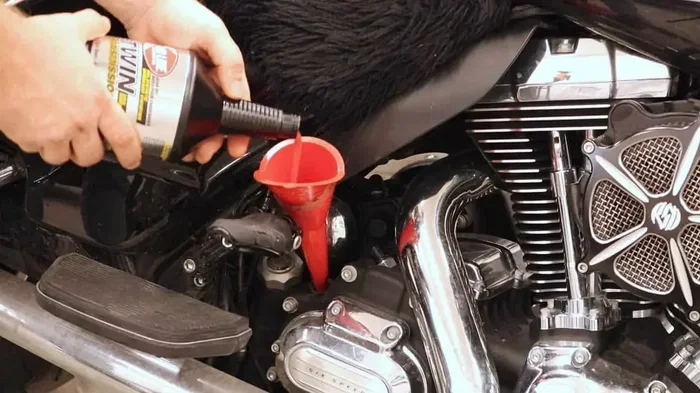
Now it is time to add the new fluid. Remove the fill plug on the side of the transmission. Use a funnel to pour in the fresh transmission fluid slowly. Add fluid gradually and check the level frequently. You want the fluid to reach the bottom of the fill hole but not overflow.
Replace the fill plug securely. Wipe up any spills with a clean rag. Start the engine and let it idle for a few minutes. This allows the new fluid to circulate through the gearbox. Shift through all the gears while idling to distribute the fluid evenly.
Quick Tips for a Successful Oil Change
- Always use the fluid type recommended by Harley-Davidson. Using the wrong fluid can damage internal components.
- Never overfill. Excess fluid causes pressure buildup and can lead to leaks.
- Dispose of old fluid properly. Take it to a recycling center or auto parts store that accepts used oil.
- Replace the drain plug washer if it looks worn. A fresh washer ensures a proper seal.
- Keep a record of your changes. Note the date and mileage so you know when the next change is due.
Best Transmission Oils for Harley 6-Speed Gearboxes
Choosing the right fluid is just as important as knowing the correct Harley-Davidson 6-speed transmission oil capacity. Not all transmission fluids are the same. Using the wrong one can lead to poor shifting, clutch slip, or premature wear.
OEM Fluid: Harley-Davidson Genuine Gear Oil
The factory-recommended option is Harley-Davidson genuine gear oil. This fluid is specifically formulated for Harley transmissions. It meets the friction and lubrication requirements of the bike’s clutch and gear system. If you want peace of mind, this is the safest choice.
Synthetic Transmission Fluids
Many riders prefer high-quality synthetic transmission fluids. Brands like Motul, Bel-Ray, and Amsoil offer excellent options for Harley gearboxes. Synthetic fluids often provide better heat resistance and longer change intervals. They also tend to flow more smoothly in cold weather, which helps during those first cold starts of the season.
What to Avoid
- Automotive ATF (Automatic Transmission Fluid): This is not designed for motorcycle wet-clutch systems. It can cause clutch slip and poor engagement.
- Mineral-based oils not rated for motorcycle use: These may not provide adequate protection for the gears and clutch plates.
- Mixing different fluid types: Stick with one type of fluid. Mixing can cause chemical reactions that degrade performance.
When in doubt, check the owner manual or consult with your local Harley dealer. They can recommend the best fluid for your specific model and riding conditions.
Common Mistakes and How to Avoid Them
Even experienced riders make mistakes when it comes to transmission maintenance. Here are some common errors and how to avoid them.
Overfilling the Transmission
This is the most common mistake. People think more fluid is better, but that is not true. Overfilling creates excess pressure inside the housing. This pressure can force fluid past seals and cause leaks. It can also make shifting feel sluggish. Always measure the fluid carefully and stop when you reach the correct level.
Using the Wrong Fluid Type
Not all gear oils are created equal. Automotive gear oil and motorcycle transmission fluid have different formulations. Motorcycle transmissions operate with wet clutches, which require specific friction properties. Using the wrong fluid can cause clutch slip or harsh gear changes. Always use fluid designed for motorcycle transmissions.
Skipping Regular Changes
Transmission fluid breaks down over time. It picks up metal particles and loses its lubricating properties. Skipping regular changes leads to increased wear on gears and bearings. Most experts recommend changing the fluid every 5,000 to 10,000 miles. If you ride in harsh conditions like extreme heat or dusty roads, change it more frequently.
Ignoring Leaks
If you notice fluid on the ground under your bike or see oil around the drain plug, do not ignore it. Small leaks become big problems fast. Check your seals, gaskets, and drain plug regularly. Replace worn components promptly to keep your transmission running right.
Expert Insights on Transmission Maintenance
We spoke with several Harley-Davidson service technicians to get their top tips for transmission care. Here is what the experts had to say.
Check fluid quality, not just quantity. One technician shared that many riders only look at the fluid level. But the fluid condition matters just as much. Dark, gritty, or burnt-smelling fluid is a sign that it is time for a change, even if you have not hit the mileage interval yet.
Warm the bike before checking or changing. Another expert emphasized that warm fluid flows better and carries more contaminants out of the system. Always check or change the fluid after a short ride when the engine is warm.
Do not skip the primary fluid. On many Harley models, the primary drive chain case has its own fluid separate from the transmission. Check and change both fluids at the same time to simplify your maintenance routine.
How Often Should You Change Your Transmission Oil?
The general recommendation is to change your Harley-Davidson 6-speed transmission oil every 5,000 to 10,000 miles. However, this can vary based on your riding style and conditions. If you ride in stop-and-go traffic, haul heavy loads, or frequently ride in extreme temperatures, you should change the fluid more often.
Riders who track their bikes or ride aggressively should also shorten the change interval. Transmission fluid takes a beating under hard use. Fresh fluid keeps everything running cool and smooth. Think of it as an investment in the longevity of your gearbox.
For casual riders who log fewer miles, once a year is a good baseline. Even if you have not reached the mileage mark, time can degrade the fluid. Moisture can seep in and break down the oil over months of sitting. Changing the fluid annually ensures your transmission is always protected.
Signs Your Transmission Oil Needs Changing
You do not always need to stick to a strict mileage schedule. Your bike will tell you when something is off. Watch for these warning signs that your transmission fluid needs attention.
- Rough or harsh shifting: If gears feel sticky or grind when you shift, the fluid may be old or contaminated.
- Difficulty finding gears: Struggling to engage certain gears can indicate low or degraded fluid.
- Unusual noises: Grinding or whining sounds from the gearbox are a red flag.
- Leaking fluid: Puddles of oil under your bike mean it is time to check the level and inspect for leaks.
- Burnt smell: If the fluid smells burnt or looks very dark, it has lost its effectiveness.
Catching these signs early can prevent bigger problems down the road. A simple fluid change costs a fraction of what a transmission rebuild would cost.
Conclusion
Understanding the Harley-Davidson 6-speed transmission oil capacity is one of the most important things you can do as a Harley owner. It keeps your bike shifting smoothly, protects your gears, and helps you avoid costly repairs. From knowing the exact capacity for your model to choosing the right fluid and changing it on schedule, every step matters.
This guide has covered everything you need to know. You now understand the capacity ranges for different model families, how to check and change the fluid, and which oils work best. You also know the common mistakes to avoid and the warning signs that your transmission needs attention.
The best part is that most of this maintenance is easy to do at home. You do not need a dealership visit or a big budget. A little knowledge, the right tools, and quality fluid are all you need. Take care of your transmission, and it will take care of you on every ride. Grab your tools, pull up to your workbench, and give your Harley the maintenance it deserves.
Frequently Asked Questions
What is the Harley-Davidson 6-speed transmission oil capacity in ounces?
Most Harley-Davidson models with a 6-speed transmission hold between 24 and 28 ounces of fluid. The exact amount depends on your specific model and year. Always check your owner manual for the precise figure.
Can I use regular automotive gear oil in my Harley 6-speed transmission?
No, you should not. Automotive gear oils are not formulated for motorcycle wet-clutch systems. Using the wrong fluid can cause clutch slip and poor gear engagement. Always use fluid specifically designed for motorcycle transmissions.
How often should I change the transmission fluid on my Harley 6-speed?
Most experts recommend changing the fluid every 5,000 to 10,000 miles. If you ride in harsh conditions or haul heavy loads, consider changing it more frequently. Even casual riders should change it at least once a year.
Is changing Harley transmission oil a DIY job?
Absolutely. Changing the transmission oil is one of the easiest maintenance tasks you can do at home. You only need basic tools like a socket wrench, a drain pan, and fresh fluid. It should take about 30 minutes.
What happens if I overfill my Harley 6-speed transmission?
Overfilling creates excess pressure inside the transmission housing. This can cause leaks around seals and gaskets. It may also make shifting feel sluggish or rough. Always measure the fluid carefully and stop at the recommended level.
Does the primary chain case share fluid with the transmission?
On some Harley models, the primary chain case and transmission share the same fluid. On others, they are separate. Check your owner manual to confirm how your specific model is set up. If they share fluid, changing the transmission oil also changes the primary fluid.