Can You Program a Transponder Key by Yourself at Home
Can you program a transponder key yourself? The short answer is yes, in many cases. Programming a transponder key at home can save you significant money and time compared to visiting a locksmith or dealership. This guide walks you through everything you need to know, from understanding how transponder keys work to the actual programming process. We also cover common mistakes, the tools you need, and when it is best to call a professional.
Have you ever lost your car key or needed a spare? If so, you have probably wondered about programming a transponder key yourself. The good news is that many car owners can do this right at home. You do not need to be a mechanic or a tech expert. With the right information and a few basic tools, you can save yourself a trip to the dealership or a locksmith. This guide breaks down everything you need to know about programming a transponder key by yourself. We will cover how these keys work, what tools you need, the step-by-step process, and common pitfalls to avoid.
A transponder key is not just a regular metal key. Inside the plastic head is a small electronic chip. This chip sends a signal to your car’s immobilizer system. If the signal matches, the engine starts. If it does not match, the car will not turn over. This technology has been around since the 1990s and has made car theft much harder. But it also means that replacing a lost key can be expensive. That is where DIY programming comes in. Learning how to program a transponder key yourself can save you a lot of money and give you peace of mind.
Key Takeaways
- Yes, you can program a transponder key yourself at home with the right tools and guidance for most vehicle brands.
- You will need a blank transponder key, an OBD scanner or programming tool, and your vehicle owner manual.
- Common mistakes include using the wrong key type and skipping the programming sequence steps.
- Some car brands are easier to program than others, with Ford and Chevrolet being more DIY-friendly.
- Call a professional if you are unsure, locked out, or dealing with a high-security luxury vehicle.
- Programming a transponder key yourself can save $50 to $200 compared to dealership or locksmith fees.
- Always test the new key immediately after programming to confirm it works before you need it in an emergency.
📑 Table of Contents
- What Is a Transponder Key and How Does It Work?
- Can You Really Program a Transponder Key Yourself?
- Tools and Equipment You Will Need
- Step-by-Step Guide to Programming Your Transponder Key
- Common Mistakes to Avoid When Programming a Transponder Key
- When Should You Call a Professional Instead?
- Expert Insights on DIY Transponder Key Programming
- Key Takeaways
- Conclusion
What Is a Transponder Key and How Does It Work?
Before you try to program a transponder key yourself, it helps to understand what it is and how it works. A transponder key has two parts. The first part is the physical blade that turns the ignition. The second part is the electronic chip embedded in the key head. This chip is called a transponder because it responds to a signal from the car.
How the Chip Inside the Key Communicates with Your Car
When you insert your key into the ignition, the car sends out a radio signal. The transponder chip in the key picks up this signal. It then sends back a unique coded response. Your car’s engine control unit, or ECU, checks this code. If the code is correct, the immobilizer disables and the engine can start. This whole process happens in milliseconds. You do not even notice it is happening.
The code is unique to each key. This is why you cannot just cut a new key from an old one. Even if the metal blade is identical, the chip must be programmed with the correct code. This is the security feature that protects your vehicle from theft.
Why Transponder Keys Were Invented
Car manufacturers introduced transponder keys to reduce vehicle theft. Before these chips existed, hotwiring a car was relatively easy. With transponder technology, a thief would need the actual coded key to start the engine. This made cars much safer. Today, most vehicles on the road use some form of transponder key technology. If you drive a car made after the mid-1990s, there is a very good chance you have a transponder key.
Can You Really Program a Transponder Key Yourself?
The short answer is yes. In many cases, you can program a transponder key yourself at home. However, the process depends on your vehicle make, model, and year. Some cars are very easy to program. Others require specialized equipment that is hard to find. Let us look at what the process actually involves and which vehicles are the most DIY-friendly.
What the Process Actually Involves
Programming a transponder key means teaching your car’s ECU to recognize a new key. You place the existing working key in the ignition. You turn it to the on position for a specific amount of time. Then you remove the old key and insert the new key within a certain time window. The car accepts the new key as valid. The exact steps vary by vehicle, but the basic idea is the same across most models.
Some vehicles allow you to program a new key using only the existing key. Others require a key programming tool or an OBD scanner. A few luxury brands lock you out of DIY programming entirely. These cars need a dealer or a professional locksmith with specialized software.
Which Car Brands Are Easier to Program
Not all cars are created equal when it comes to DIY key programming. Some brands make the process very simple. Others make it nearly impossible without professional tools. Here is a general breakdown:
- Ford: Most Ford vehicles from the 2000s onward are very DIY-friendly. The programming process is straightforward and well-documented online.
- Chevrolet: Many GM vehicles allow self-programming with a simple key-turn sequence. Newer models may need a scanner tool.
- Toyota: Toyota and Lexus keys can often be programmed at home, though some models require a professional.
- Honda: Honda offers relatively simple programming steps for most models from the past 20 years.
- BMW, Mercedes, Audi: These luxury brands often require proprietary diagnostic tools. DIY programming is much harder for these vehicles.
Tools and Equipment You Will Need
Before you start programming a transponder key yourself, make sure you have the right equipment. The good news is that most of what you need is affordable and easy to find. You do not need a garage full of expensive tools.
Essential Tools for DIY Key Programming
- Blank transponder key: You need a key with the correct chip type for your vehicle. These are available online for $5 to $25. Make sure you order the right model for your car.
- Key cutting service: If you buy an uncut blank key, you will need it cut to match your existing key. Many hardware stores and locksmiths offer this for a small fee.
- Vehicle owner manual: Your manual contains the exact programming steps for your specific model. This is your most important resource.
- Working key: In most cases, you need at least one original working key to program a new one. If you have lost all keys, the process becomes much more complicated.
Optional but Helpful Equipment
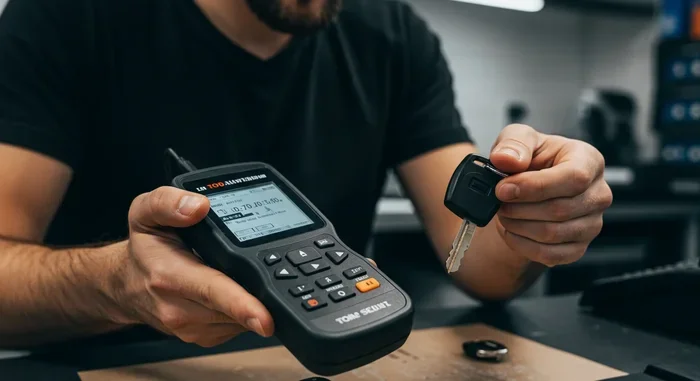
- OBD2 scanner: A basic OBD2 scanner can help with some vehicles. It connects to your car’s diagnostic port and can assist with key programming. Prices range from $20 for basic models to $200 for advanced units.
- Key programming tool: Devices like the Xhorse VVDI Key Tool or the Autel MX808 are popular among DIYers. These tools support many car brands and can handle more complex programming tasks.
- Internet access: YouTube and car forums are goldmines of information. You can often find a video tutorial specific to your vehicle model.
Step-by-Step Guide to Programming Your Transponder Key
Now let us get into the actual process. While every vehicle is different, the general steps for programming a transponder key yourself follow a similar pattern. Always refer to your vehicle owner manual for the exact procedure for your specific car.
Step 1: Gather Your Vehicle Information
Before you do anything, gather your vehicle information. You will need your car’s make, model, year, and VIN number. The VIN is usually found on the dashboard near the windshield or on the driver’s side door jamb. Write this down. You will also want to confirm the type of transponder chip your key uses. Common chip types include ID46, ID48, and ID4C. This information is often in your owner manual or can be found online.
Step 2: Prepare the New Key
Take your new blank transponder key and have it cut to match your existing key. If you ordered a pre-cut key, skip this step. Make sure the key slides smoothly into the ignition. A poorly cut key can damage the ignition cylinder. Once the key is ready, place it nearby so you can access it quickly during the programming sequence.
Step 3: Follow the Programming Sequence
This is the most important part. The programming sequence tells your car to accept the new key. Here is a general example that works for many Ford and Chevrolet vehicles:
- Insert the working key into the ignition.
- Turn the key to the “On” position for about 10 to 15 seconds.
- Turn the key back to the “Off” position.
- Remove the working key within 5 seconds.
- Insert the new key into the ignition within 10 seconds.
- Turn the new key to the “On” position and wait for the security light to turn off.
- Turn the key back to “Off” and then remove it.
- Try starting the engine with the new key.
Note: The timing and exact steps vary significantly between vehicles. Always double-check your specific model’s procedure. Doing the steps in the wrong order or at the wrong time can reset the programming process and force you to start over.
Step 4: Test the New Key
Once the programming sequence is complete, test the new key. Try starting the engine. Check if the security light goes off. Also test any remote functions if your key has a remote fob built in. If the key works, you are all set. If it does not work, repeat the process carefully. Make sure you are following the correct sequence for your vehicle.
| Aspect | DIY Programming | Professional Programming |
|---|---|---|
| Cost | $10 to $50 for a blank key | $50 to $200 for locksmith or dealer |
| Time Required | 15 to 45 minutes | 30 minutes to 2 hours |
| Tools Needed | Basic tools, OBD scanner optional | Professional diagnostic equipment |
| Risk Level | Low to moderate | Very low |
| Works for All Cars? | No, depends on brand and model | Yes, works for all vehicles |
| Need Working Key? | Usually yes | No, professionals can generate new codes |
Common Mistakes to Avoid When Programming a Transponder Key
Even with the best instructions, mistakes can happen. Knowing what to avoid can save you a lot of frustration. Here are the most common errors people make when they try to program a transponder key themselves.
Using the Wrong Key or Chip Type
This is the number one mistake. Not all transponder chips are the same. If you order the wrong chip type, the key will not work no matter how carefully you follow the programming steps. Before you buy a blank key, confirm the chip type your vehicle requires. Check your owner manual or look up your VIN online. Taking five minutes to verify this can save you from buying the wrong key entirely.
Skipping the Vehicle Owner Manual
Your owner manual is the best source for your specific vehicle’s programming steps. Do not rely solely on generic instructions you find online. The steps can differ even between model years of the same car. Skipping the manual can lead to failed programming attempts and wasted time.
Rushing Through the Timing
The timing in the programming sequence matters a lot. If you wait too long between steps, the car resets and you have to start over. Practice the sequence a few times before you actually insert the new key. Some people find it helpful to read through the steps out loud before they begin.
Not Having a Backup Plan
What happens if the programming fails and you are left with no working keys? This is a real possibility. Always keep your working key safe and accessible until you have successfully programmed and tested the new key. If you have already lost all working keys, DIY programming becomes much riskier and you should strongly consider calling a professional.
When Should You Call a Professional Instead?
DIY programming works great for many situations, but it is not the right choice for every scenario. Knowing when to call a professional can save you time, money, and a lot of stress.
Situations Where DIY Programming Is Not Worth the Risk
- You have lost all working keys: If you do not have any working key to program from, the DIY process becomes very difficult or impossible for most vehicles. A locksmith or dealer can generate a new key code from your VIN.
- You drive a luxury or high-security vehicle: Brands like BMW, Mercedes, Audi, and Porsche often use advanced immobilizer systems. These systems are not designed for DIY programming and require professional-grade tools.
- Your vehicle is under warranty: Some manufacturers may void your warranty if you attempt DIY key programming. Check your warranty terms before proceeding.
- You feel uncertain or uncomfortable: There is no shame in calling a professional. If the process feels too complicated or risky, it is perfectly fine to seek help.
How a Locksmith Can Save You Time and Money
A mobile locksmith can come to your location and program a transponder key on the spot. This is often cheaper than going to a dealership. Many locksmiths charge between $50 and $150 for key programming services. They also have the expertise to handle situations where you have lost all keys. A professional locksmith is a great middle ground between full DIY and expensive dealer visits.
Expert Insights on DIY Transponder Key Programming
Expert Insight: According to automotive locksmiths, the most important factor in successful DIY key programming is preparation. Know your vehicle, have the right tools ready, and follow the steps exactly. Rushing or guessing leads to failed attempts. Also, always keep your original key safe until you have fully tested the new one. If your car is older and uses a simple transponder system, the chances of success are very high for a motivated DIYer.
Expert Insight: Many people do not realize that newer vehicles from 2015 onward often have more advanced security features. These vehicles may require a key fob programming process in addition to the transponder chip programming. If you own a newer car, research your specific model thoroughly before attempting any DIY work. The process can be significantly different from older vehicles.
Key Takeaways
- You can program a transponder key yourself at home for most vehicles made after 2000, especially Ford, Chevrolet, Toyota, and Honda models.
- The process requires a blank transponder key, your working key, and your vehicle owner manual. Following the exact programming sequence is critical.
- Common mistakes include using the wrong chip type, rushing the timing, and skipping the manual. Avoid these and your chances of success go up significantly.
- Luxury and high-security vehicles often require professional programming due to advanced immobilizer systems.
- Always test the new key immediately after programming to confirm it works before you need it in an emergency situation.
- Programming a transponder key yourself can save you $50 to $200 compared to professional services, making it well worth the effort for compatible vehicles.
Conclusion
Programming a transponder key yourself is a practical skill that every car owner can benefit from. It saves money, saves time, and gives you independence from dealerships and locksmiths. With the right tools, the correct blank key, and a clear set of instructions, most people can complete the process in under an hour.
Remember that not every vehicle is the same. Check your car model and year before you attempt DIY programming. If your vehicle is a simple or mid-range brand from the last 20 years, you have a very good chance of success. For luxury or newer vehicles with advanced security, consider calling a professional.
The key takeaway is this: you can absolutely program a transponder key yourself at home in many situations. Do your research, gather your tools, follow the steps carefully, and test your new key right away. With a little patience and the right guidance, you will have a working spare key in no time. This is one of those handy skills that pays for itself the very first time you need it.
Frequently Asked Questions
Can I program a transponder key myself if I have no working keys?
In most cases, you need at least one working key to program a new one. If you have lost all keys, the DIY process becomes much harder. Some vehicles allow a locksmith or dealer to generate a new key code from your VIN number. This is the best route if you have no working keys at all.
How much does it cost to program a transponder key yourself?
The cost is usually very low. A blank transponder key costs between $5 and $25 online. If you need a key cutting service, that adds about $5 to $10. Compare this to $50 to $200 for a locksmith or dealer, and the savings are clear. The only real cost is your time.
What happens if I mess up the programming sequence?
If you mess up the sequence, the car may reset the programming process. You simply start over and try again. In rare cases, you may need to wait a few minutes before trying again. Always refer to your owner manual for guidance on recovery steps if the process fails.
Do all transponder keys use the same type of chip?
No, transponder chips come in different types and frequencies. Common chip types include ID46, ID48, and ID4C. You must match the chip type to your vehicle. Using the wrong chip will result in a key that does not work, even if the programming sequence is followed correctly.
Can I program a transponder key without an OBD scanner?
Yes, for many vehicles you do not need an OBD scanner. The programming sequence typically uses the ignition key turns to teach the car to recognize a new key. However, some newer or more complex vehicles do require a scanner tool. Check your vehicle manual to confirm what your specific model needs.
Is DIY transponder key programming safe for my car?
Yes, it is generally very safe. Programming a new key does not affect your car’s computer or other systems. The process only adds the new key to the list of recognized keys. As long as you follow the correct steps for your vehicle, there is no risk of damage or data loss.