How Many Blend Door Actuators Are in a Chevrolet Silverado
Most Chevrolet Silverado trucks have two blend door actuators, one for the driver side and one for the passenger side in dual-zone climate systems. A blend door actuator controls the temperature of air flowing into your cabin by directing hot or cold air through the HVAC system. Knowing how many you have helps when diagnosing temperature problems or planning a replacement.
If you own a Chevrolet Silverado, you know how important a comfortable cabin is. Whether you are driving through a freezing winter or a scorching summer, your truck’s heating and cooling system keeps you comfortable. But what happens when the temperature starts acting strange? You might hear a clicking sound or feel air that never gets warm enough. These are telltale signs of a failing blend door actuator.
So, how many blend door actuators are in a Chevrolet Silverado? The short answer is most Silverado models have two. But the full answer depends on your specific model year, trim level, and whether you have a single-zone or dual-zone climate system. Let us dive deep into this topic and cover everything you need to know.
Key Takeaways
- Two Actuators Standard: Most Chevrolet Silverado models come with two blend door actuators for dual-zone temperature control.
- Some Models Have Three: Higher trims or models with rear climate zones may include a third actuator.
- Common Failure Symptoms: Clicking noises, inconsistent temperatures, and stuck airflow settings signal a bad actuator.
- Replacement Is Manageable: Many DIYers can replace a blend door actuator in under an hour with basic tools.
- Costs Are Reasonable: Parts typically range from $50 to $150 per actuator, with labor adding $100 to $300.
- Location Matters: Actuators sit behind the dashboard near the HVAC housing unit.
- Prevention Helps: Regular HVAC use and avoiding moisture buildup can extend actuator life.
📑 Table of Contents
- What Is a Blend Door Actuator?
- How Many Blend Door Actuators Are in a Chevrolet Silverado?
- Common Symptoms of a Failing Blend Door Actuator
- Where Is the Blend Door Actuator Located?
- Blend Door Actuator Replacement Tips
- How Much Does It Cost to Replace a Blend Door Actuator?
- Can You Drive With a Bad Blend Door Actuator?
- How to Prevent Blend Door Actuator Problems
- Expert Insight: Why Blend Door Actuators Fail
- Key Takeaways
- Conclusion
What Is a Blend Door Actuator?
A blend door actuator is a small electric motor inside your truck’s HVAC system. It controls the blend door, which is a flap that directs air over the heater core or the evaporator core. This process determines whether the air coming into your cabin is hot, cold, or somewhere in between.
Think of it like a traffic officer for air. The blend door actuator tells the door where to point. When it works right, you get perfect temperature control. When it fails, you get frustration.
How the Blend Door Actuator Works
Here is a simple breakdown of the process:
- The temperature control knob or digital setting sends a signal to the blend door actuator.
- The actuator motor moves the blend door to the correct position.
- Air passes over either the heater core or the evaporator core depending on the door position.
- Hot or cold air flows into the cabin through the vents.
This whole process happens in seconds. You turn the dial, and the blend door actuator responds almost instantly. When it starts failing, that response becomes slow, erratic, or completely silent.
How Many Blend Door Actuators Are in a Chevrolet Silverado?
The number of blend door actuators in your Chevrolet Silverado depends on several factors. Let us look at the most common configurations across different model years and trims.
Standard Dual-Zone Climate Systems
Most Chevrolet Silverado trucks come equipped with a dual-zone climate control system. This means the driver and passenger can set different temperatures. To make this work, the truck uses two blend door actuators:
- Driver Side Blend Door Actuator: Controls the temperature for the driver’s side vents.
- Passenger Side Blend Door Actuator: Controls the temperature for the passenger side vents.
These two actuators are the most common setup across Silverado 1500, Silverado 2500, and Silverado 3500 models. Whether you have the SLE, LT, or LTZ trim, the dual-actuator setup is standard in most configurations.
Models With Three or More Actuators
Some Chevrolet Silverado models, especially those with rear climate controls or higher-end trims, may have three blend door actuators. The third actuator typically controls the rear HVAC zone. This is more common in extended cab and crew cab models that offer rear passenger comfort controls.
Additionally, certain model years may use a third actuator for the floor and defrost blend door. This depends on the HVAC system design. Always check your specific model year and trim to confirm the exact number.
Quick Reference by Model
| Silverado Model | Typical Number of Actuators | Climate Zones |
|---|---|---|
| Silverado 1500 (Standard) | 2 | Dual Zone |
| Silverado 2500 (Standard) | 2 | Dual Zone |
| Silverado 3500 (Standard) | 2 | Dual Zone |
| Silverado 1500 (High Trim) | 2 or 3 | Dual or Tri-Zone |
| Silverado with Rear Controls | 3 | Tri-Zone |
Keep in mind that aftermarket modifications or previous repairs can change the number of actuators in your system. Always verify before purchasing replacement parts.
Common Symptoms of a Failing Blend Door Actuator
Knowing the signs of a bad blend door actuator can save you time and money. These small motors work hard every time you adjust the temperature. Over time, they wear out. Here are the most common symptoms to watch for.
Clicking or Knocking Noises
This is the number one sign of a failing blend door actuator. When you change the temperature setting, you hear a repetitive clicking or knocking sound coming from behind the dashboard. The actuator motor is trying to move the blend door but cannot get it to the correct position.
The clicking happens because the gear inside the actuator is stripping or the motor is straining. It is like hearing a small motor grinding away behind your dash. It is hard to ignore once you notice it.
Inconsistent or Incorrect Temperatures
Another clear sign is temperature inconsistency. You set the dial to full heat, but the air stays lukewarm. Or you set it to cold, but warm air keeps blowing. The blend door actuator is not moving the door properly, so the wrong amount of air passes over the heater core or evaporator.
This problem often affects one side of the cabin more than the other. For example, the driver side might get cold air while the passenger side stays warm. This points to a specific actuator failure on that side.
Temperature Stuck on One Setting
Sometimes the blend door actuator fails completely. The temperature stays stuck on one setting no matter what you do. You cannot adjust it hotter or colder. This usually means the motor has burned out or the gears have completely broken.
A stuck actuator does not always mean the HVAC system itself is broken. The heater and air conditioning may still work fine. The problem is simply that the door cannot move to redirect the airflow.
No Response from Controls
In rare cases, you might notice that the blend door actuator does not respond at all when you adjust the temperature. The controls on the dashboard work, but nothing changes in the cabin. This could indicate a wiring issue or a completely dead actuator motor.
Where Is the Blend Door Actuator Located?
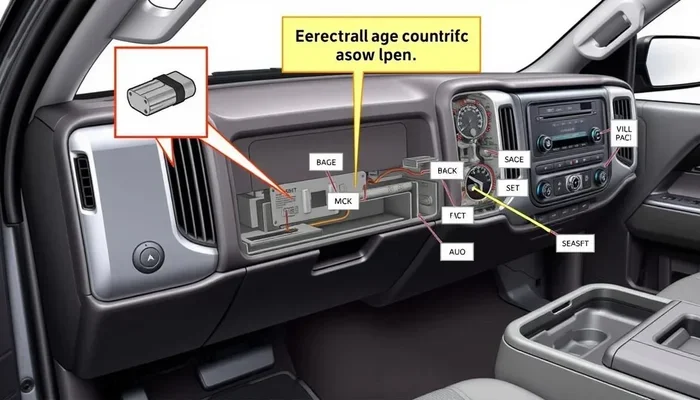
The blend door actuator sits behind the dashboard on the HVAC housing unit. In a Chevrolet Silverado, you typically find the actuators on the passenger side of the dashboard, though this varies by model year.
Accessing the Actuator
To reach the blend door actuator, you usually need to remove the lower dashboard panels. The actuator is mounted directly to the HVAC box. It connects to the blend door through a small linkage rod or plastic gear mechanism.
Here is a simplified step-by-step for locating the actuator:
- Start by removing the lower dashboard cover on the passenger side.
- Look for the HVAC housing unit, which is the large plastic box behind the glove area.
- Find the small cylindrical or rectangular motor attached to the housing.
- The actuator connects to the blend door through a small arm or gear.
Always disconnect the battery before working on any electrical components. Safety comes first. The blend door actuator is a relatively accessible part once you remove the panels, but working in tight spaces can be challenging.
Driver vs. Passenger Side Actuator
In most Silverado models, the driver side actuator is harder to access because it sits closer to the steering column. The passenger side actuator is usually easier to reach. If you are doing a DIY replacement, many people start with the passenger side first.
Blend Door Actuator Replacement Tips
Replacing a blend door actuator in a Chevrolet Silverado is one of the more common HVAC repairs. The good news is it is a job many DIYers can handle with basic tools and a little patience.
Tools You Will Need
- Socket set and screwdrivers
- Trim removal tools
- Multimeter for testing
- New blend door actuator (OEM or aftermarket)
- Owner’s manual for your specific model year
Steps to Replace the Actuator
- Disconnect the battery: Always start here for safety.
- Remove dashboard panels: Use trim tools to gently pop off the lower panels on the passenger side.
- Locate the HVAC housing: Find the large plastic box behind the glove compartment area.
- Find the actuator: Look for the small motor with an electrical connector attached to the HVAC housing.
- Disconnect the electrical connector: Press the release tab and pull the connector off.
- Remove the mounting screws: Take out the screws holding the actuator to the housing.
- Swap in the new actuator: Mount the new unit, reconnect the electrical connector, and replace the screws.
- Reconnect the battery and test: Turn the key and adjust the temperature to verify the new actuator works.
How Long Does Replacement Take?
Most people complete a blend door actuator replacement in 30 minutes to one hour per actuator. If you are replacing both the driver and passenger side actuators, plan for about two hours total. The job is straightforward but requires patience with tight spaces and stubborn clips.
How Much Does It Cost to Replace a Blend Door Actuator?
The cost of replacing a blend door actuator in a Chevrolet Silverado is generally affordable compared to other HVAC repairs. Let us break down the numbers.
Parts Cost
A single blend door actuator typically costs between $50 and $150 for the part. OEM parts from the dealership tend to be on the higher end. Aftermarket parts from brands like Dorman, ACDelco, or BWD offer more budget-friendly options that still perform well.
Labor Cost
If you take your Silverado to a mechanic, labor costs usually range from $100 to $300 per actuator. The exact cost depends on your local labor rates and how accessible the actuator is in your specific model year.
Total Cost Breakdown
- Single Actuator Replacement (DIY): $50 to $150 for parts only.
- Single Actuator Replacement (Shop): $150 to $450 total.
- Both Actuators (DIY): $100 to $300 for parts.
- Both Actuators (Shop): $300 to $900 total.
These are general estimates. Your actual cost may vary based on your model year, trim level, and where you live. Always get a quote from your local mechanic before committing to the repair.
Can You Drive With a Bad Blend Door Actuator?
Yes, you can drive with a bad blend door actuator. The actuator only controls temperature, not the operation of the vehicle itself. Your truck will run and drive normally. However, you may not be comfortable if the cabin temperature does not adjust properly.
In cold weather, a failed actuator set to cold can make driving miserable. In hot weather, the same problem with air conditioning can be just as bad. If the blend door actuator is causing a persistent clicking noise, it can also be distracting on long drives.
It is not a safety issue, but it is a comfort issue. Most people choose to replace a bad actuator sooner rather than later because the constant clicking and temperature problems get old fast.
How to Prevent Blend Door Actuator Problems
You cannot prevent all actuator failures because they are wear-and-tear components. But there are steps you can take to extend their lifespan and avoid premature failure.
Use Your HVAC System Regularly
Run your heating and air conditioning regularly, even in mild weather. This keeps the internal components lubricated and prevents the blend door from seizing up. A blend door that sits unused for months is more likely to stick or develop problems when you finally need it.
Keep Moisture Out of the HVAC System
Moisture inside the HVAC system can corrode electrical connections and cause the blend door actuator to fail prematurely. Make sure your cabin air filter is replaced on schedule. A clogged filter can cause excess moisture buildup in the system.
Avoid Aggressive Temperature Swings
Constantly switching from maximum heat to maximum cold puts extra strain on the blend door actuator. Try to make gradual adjustments instead of slamming the dial from one extreme to the other. This reduces wear on the motor and gears inside the actuator.
Address Issues Early
If you notice early warning signs like occasional clicking or slight temperature inconsistency, get it checked soon. A small problem with the blend door actuator can become a bigger issue if the blend door itself gets damaged from prolonged actuator failure.
Expert Insight: Why Blend Door Actuators Fail
Blend door actuators fail for a few common reasons. The most frequent cause is simply age and mileage. These small motors run every time you adjust the temperature, and over time, the internal gears wear down. The plastic gears inside the actuator can strip, causing the motor to spin freely without moving the blend door.
Another common cause is water intrusion. If your HVAC system gets moisture inside, it can short out the electrical connections or corrode the gear mechanism. This is especially common in trucks that live in snowy or rainy climates where salt and moisture combine to create corrosion.
Electrical issues also play a role. A blown fuse, a damaged wiring harness, or a poor ground connection can cause the blend door actuator to malfunction. Before replacing the actuator, a good mechanic will always check the wiring and connectors first.
Key Takeaways
- Two Actuators Standard: Most Chevrolet Silverado models come with two blend door actuators for dual-zone temperature control.
- Some Models Have Three: Higher trims or models with rear climate zones may include a third actuator.
- Common Failure Symptoms: Clicking noises, inconsistent temperatures, and stuck airflow settings signal a bad actuator.
- Replacement Is Manageable: Many DIYers can replace a blend door actuator in under an hour with basic tools.
- Costs Are Reasonable: Parts typically range from $50 to $150 per actuator, with labor adding $100 to $300.
- Location Matters: Actuators sit behind the dashboard near the HVAC housing unit.
- Prevention Helps: Regular HVAC use and avoiding moisture buildup can extend actuator life.
Conclusion
Understanding how many blend door actuators are in your Chevrolet Silverado is the first step toward solving temperature problems. Most Silverado trucks have two blend door actuators, one for each side of the dual-zone climate system. Some models with rear climate controls may have three.
When your blend door actuator starts failing, you will notice the symptoms quickly. Clicking noises, inconsistent temperatures, and stuck settings all point to this small but important component. The good news is that replacing a blend door actuator is a straightforward repair that most people can do themselves or have done affordably at a shop.
Do not ignore the signs. A failing blend door actuator will not fix itself, and waiting too long can sometimes lead to more damage to the blend door or HVAC housing. Whether you tackle the repair yourself or visit a mechanic, addressing the problem quickly will restore your comfort and keep your Silverado running at its best.
Take care of your truck’s blend door actuators, and they will take care of keeping you comfortable for miles to come. Your Chevrolet Silverado deserves a climate system that works perfectly in every season.
Frequently Asked Questions
What happens when a blend door actuator goes bad in a Chevrolet Silverado?
When a blend door actuator fails, you may hear clicking or knocking noises from behind the dashboard. The temperature control may become inconsistent or stuck on one setting. Air may not get hot or cold enough depending on which actuator has failed. The HVAC system still blows air, but it cannot adjust the temperature properly.
Can I drive my Chevrolet Silverado with a broken blend door actuator?
Yes, you can safely drive with a broken blend door actuator. It does not affect the engine, transmission, or braking systems. However, you will lose proper temperature control in the cabin, which can make driving uncomfortable in extreme heat or cold. It is best to replace the actuator soon for comfort.
How much does it cost to replace a blend door actuator in a Silverado?
The cost typically ranges from $150 to $450 for a single actuator replacement at a shop. DIY parts cost between $50 and $150 per actuator. The total depends on your model year, trim level, and whether you are replacing one or both actuators. Always compare OEM and aftermarket part prices before purchasing.
How do I know if my Silverado has two or three blend door actuators?
Most standard Silverado models have two actuators for the dual-zone driver and passenger climate controls. If your truck has rear climate controls or a tri-zone system, it likely has a third actuator for the rear zone. Check your owner’s manual or consult a dealership with your VIN to confirm the exact number for your specific configuration.
Is replacing a blend door actuator difficult on a Chevrolet Silverado?
No, it is one of the more straightforward HVAC repairs. The actuator is located behind the dashboard on the passenger side in most models. You need to remove a few dashboard panels, disconnect the electrical connector, remove mounting screws, and swap in the new unit. Many DIYers complete the job in under an hour per actuator.
Can a bad blend door actuator damage other parts of the HVAC system?
Yes, if left unaddressed for a long time. A stuck blend door can put extra strain on the HVAC blower motor. In some cases, a broken actuator gear can break off and lodge inside the HVAC housing, blocking airflow or damaging the blend door mechanism itself. Replacing the actuator early prevents these more costly secondary repairs.