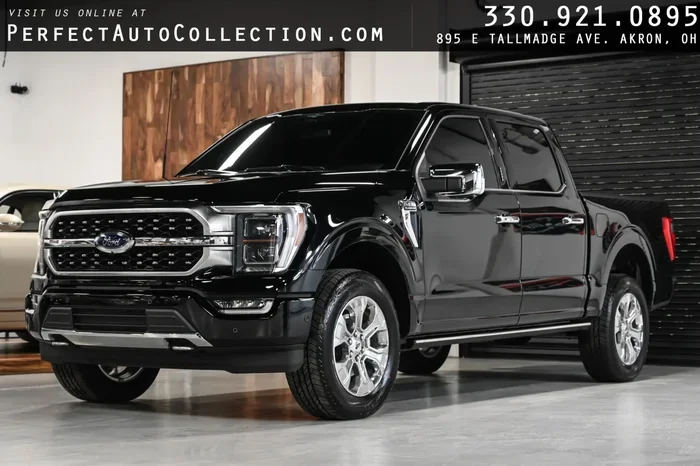
Does a Ford F-150 Qualify for Section 179 Deductions
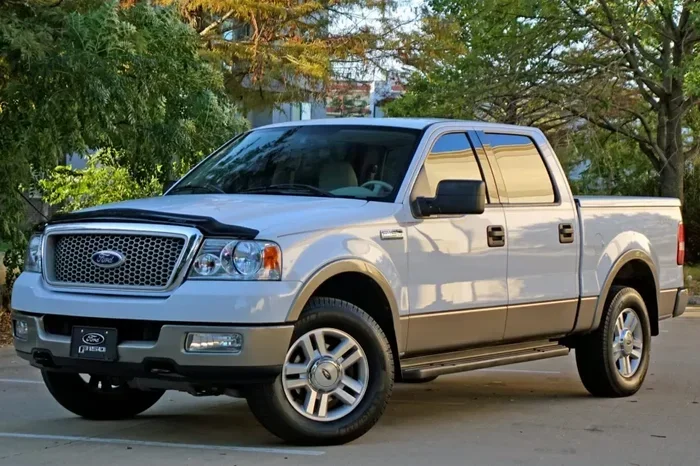
Yes, a Ford F-150 can qualify for Section 179 deductions if it meets IRS requirements for business use and weight limits. This powerful tax write-off allows you to deduct the full purchase price of your truck in the year you place it in service. Understanding the rules around business vehicle deductions can save you thousands in taxes and make owning a Ford F-150 for work much more affordable.
Owning a Ford F-150 for your business can be a game-changer. Whether you haul tools, tow equipment, or drive clients around, this truck does a lot of heavy lifting. But here is the question on every business owner’s mind: can you write off your Ford F-150 on your taxes?
The short answer is yes. A Ford F-150 can qualify for a Section 179 deduction, which lets you deduct the full cost of a business vehicle in the year you buy it. This is not some shady loophole. It is a real, legal tax deduction built into the IRS tax code. Thousands of small business owners use it every year to lower their tax bill.
In this guide, we will walk you through everything you need to know about Ford F-150 Section 179 eligibility. We will cover the rules, the limits, the paperwork, and the common mistakes people make. By the end, you will know exactly whether your truck qualifies and how to get the most out of your tax savings.
Key Takeaways
- Ford F-150 Can Qualify: The F-150 meets Section 179 requirements when used more than 50% for business purposes and meets GVWR thresholds.
- Weight Matters: IRS rules classify trucks differently from SUVs, and the F-150’s classification plays a big role in deduction eligibility.
- Deduction Limits Apply: Section 179 has annual limits that change yearly, so staying updated is essential for maximizing tax savings.
- Documentation Is Key: Proper records of business use mileage and expenses strengthen your claim if the IRS audits you.
- Multiple Vehicles Can Help: If you own multiple trucks or vehicles, you may be able to deduct more than one under Section 179.
- Consult a Tax Pro: Always work with a qualified tax advisor to ensure you follow IRS rules and claim every deduction you deserve.
📑 Table of Contents
- What Is a Section 179 Deduction?
- Does a Ford F-150 Meet the IRS Requirements?
- How to Determine If Your Ford F-150 Qualifies
- Ford F-150 Trim Levels and GVWR Details
- How to Claim the Section 179 Deduction for Your Ford F-150
- Section 179 vs. Bonus Depreciation for the Ford F-150
- Real-World Examples of Ford F-150 Section 179 Deductions
- Expert Insights on Maximizing Your Ford F-150 Tax Deduction
- Key Takeaways
- Conclusion
What Is a Section 179 Deduction?
A Section 179 deduction is a federal tax benefit that lets business owners deduct the full cost of qualifying equipment in the year of purchase. Instead of spreading the deduction over several years through depreciation, you can take it all at once. This can be a massive boost to your cash flow and lower your taxable income fast.
The IRS tax code Section 179 covers more than just trucks. It also applies to computers, office furniture, and machinery. But for many small business owners, a business vehicle deduction is the most valuable use of this provision. A truck like the Ford F-150 often falls into the category of qualified property that the IRS allows for immediate expensing.
How Does Section 179 Work?
When you purchase a business vehicle and place it in service during the tax year, you can elect to take the full deduction right away. You do not have to wait. You simply claim it on your tax return using Form 4562. The amount you deduct reduces your taxable dollar-for-dollar, which means you save money at your actual tax rate.
There are limits, though. The Section 179 limits change from year to year. For tax year 2024, the maximum deduction is $1,220,000. Your total business equipment purchases must also stay under the annual cap, which is $3,050,000 for 2024. Once you exceed that cap, the deduction starts to phase out dollar for dollar.
Does a Ford F-150 Meet the IRS Requirements?
This is the big question. The IRS does not treat every vehicle the same way. To answer whether your Ford F-150 qualifies for Section 179, you need to understand how the IRS classifies trucks and SUVs.
Vehicle Classification Matters
The IRS looks at the gross vehicle weight rating, or GVWR, to decide how to classify a vehicle. If a vehicle has a GVWR over 6,000 pounds, it is classified as a truck, not a passenger vehicle. This distinction is huge because trucks are not subject to the same deduction limits as SUVs and passenger cars.
Here is the good news. The Ford F-150, especially in higher trim levels and with the SuperCrew cab and larger payload packages, has a GVWR that exceeds 6,000 pounds. This means it qualifies as a heavy-duty truck in the eyes of the IRS. As a result, the SUV deduction limits that cap write-offs for passenger vehicles do not apply.
SUV vs Truck: Why the Difference Matters
Many business owners get tripped up by the difference between an SUV and a truck for tax deduction purposes. Passenger SUVs and cars have a vehicle depreciation limit of about $20,200 in the first year (for 2024). Trucks that exceed the 6,000-pound GVWR threshold have no such cap.
This is one of the biggest advantages of owning a Ford F-150 for business. You are not stuck with a small annual deduction. You can potentially write off the entire purchase price in year one, provided you meet the other requirements. This makes the truck deduction one of the most powerful tools for small business owners who use a pickup for work.
How to Determine If Your Ford F-150 Qualifies
Not every Ford F-150 automatically qualifies for a Section 179 deduction. You need to check a few specific criteria before you can claim it on your taxes. Let us break down the key requirements.
1. Business Use Percentage
The IRS requires that you use the vehicle for business more than 50% of the time. If you use your Ford F-150 for personal errands, weekend trips, and commuting to work, the deduction may be reduced or denied entirely. The business use percentage is calculated by dividing your business miles by your total miles driven.
For example, if you drove 15,000 miles in a year and 10,000 of those miles were for business, your business use percentage is about 67%. That is above the 50% threshold, so you would qualify for a partial deduction. However, if only 40% of your miles are for business, you would not qualify for the full Section 179 deduction.
2. Gross Vehicle Weight Rating (GVWR)
As mentioned above, the GVWR is the weight limit the manufacturer sets for the vehicle, including cargo and passengers. You can find this number on the door jamb sticker of your Ford F-150 or in the owner’s manual. If the GVWR is over 6,000 pounds, you are in the clear for truck classification.
Keep in mind that the GVWR is not the same as the actual weight of the truck. It is the maximum weight the vehicle is designed to handle. Even if your F-150 is empty, if its GVWR exceeds 6,000 pounds, it qualifies as a truck for Section 179 purposes.
3. Purchase and Placement in Service
You must actually purchase the Ford F-150 and put it to use in your business during the tax year. If you buy a truck in December but do not start using it for business until January of the next year, you cannot claim the deduction for the current year. The depreciation schedule starts when the vehicle is placed in service, not when you buy it.
4. The Vehicle Must Be for Your Business
The Ford F-150 must be used primarily in your trade or business. If you are a sole proprietor, independent contractor, or LLC member, this is straightforward. If you are an employee using a company truck, the rules are different, and you may not be able to claim the deduction directly. The business vehicle deduction rules apply to business owners, not W-2 employees.
Ford F-150 Trim Levels and GVWR Details
Not all Ford F-150 models are created equal when it comes to GVWR thresholds. Different trims and configurations can push the weight rating above or below the 6,000-pound line. Here is what you need to know about the most popular configurations.
Which F-150 Trims Exceed 6,000 Pounds GVWR?
Most Ford F-150 SuperCrew and SuperCab models with the larger payload packages have a GVWR above 6,000 pounds. The XL, STX, and XLT trims in higher payload configurations typically meet this threshold. The Lariat, King Ranch, and Platinum trims also commonly exceed it, especially when equipped with the 6.5-foot or 8-foot bed.
However, lighter-duty configurations with smaller payloads may fall below 6,000 pounds. Always check the door jamb label or the vehicle certification label to confirm the exact GVWR for your specific F-150. Do not guess. The IRS will check this number if you claim the deduction.
Quick Tips for Verifying GVWR
- Check the driver-side door jamb for the vehicle label.
- Look up your specific VIN on the Ford website or with your dealer.
- Consult your vehicle owner’s manual for the official GVWR.
- If in doubt, ask your dealer to confirm the GVWR in writing.
- Keep this documentation with your tax records for at least three years.
How to Claim the Section 179 Deduction for Your Ford F-150
Once you have confirmed that your Ford F-150 qualifies, the next step is to actually claim the deduction. The process is straightforward, but you need to be precise with your paperwork.
Step-by-Step Filing Process
- Gather your purchase documentation. Keep your bill of sale, title, registration, and any financing paperwork. These prove the purchase price and the date you placed the vehicle in service.
- Track your business mileage. Use a mileage log app or a simple spreadsheet to record every trip. Note the date, destination, purpose, and miles driven for each business trip.
- Complete Form 4562. This is the IRS form for depreciation and amortization. You will use it to claim your Section 179 deduction for the Ford F-150.
- Attach the form to your tax return. Form 4562 attaches to your Form 1040 or your business tax return, depending on your filing status.
- Keep records for at least three years. The IRS can audit you within three years of filing. Having organized records protects you if questions arise about your business vehicle deduction.
Common Mistakes to Avoid
- Claiming 100% business use without proof. The IRS is skeptical of 100% business claims. Always be honest about your personal use percentage.
- Ignoring the GVWR threshold. Assuming your truck qualifies without checking the actual weight rating can lead to a denied deduction.
- Missing the deadline. You must claim the deduction in the tax year you place the vehicle in service. You cannot retroactively claim it for a previous year.
- Forgetting about state taxes. Some states also allow Section 179 deductions for business vehicles, but the rules vary. Check your state tax guidelines.
- Not consulting a tax professional. Tax laws change every year. A qualified CPA or tax advisor can help you navigate the rules and avoid costly errors.
Section 179 vs. Bonus Depreciation for the Ford F-150
When people talk about writing off a business truck, they often mention two options: Section 179 and bonus depreciation. Both can reduce your tax bill, but they work differently. Understanding the difference helps you choose the best strategy for your situation.
What Is Bonus Depreciation?
Bonus depreciation allows you to deduct a large percentage of the vehicle’s cost in the first year, even if you do not qualify for Section 179. For tax year 2024, the bonus depreciation rate is 60%. This means you can deduct 60% of the Ford F-150’s purchase price in year one, and then depreciate the remaining 40% over the following years.
Bonus depreciation does not require you to use the vehicle more than 50% for business. However, the deduction is reduced if personal use is significant. Many business owners combine Section 179 with bonus depreciation to maximize their tax savings.
Which Option Is Better?
For most Ford F-150 owners, Section 179 is the better choice because it allows you to deduct 100% of the cost in year one, provided you meet the requirements. Bonus depreciation only covers a percentage. However, if your business income is not high enough to absorb the full deduction, bonus depreciation might be more practical.
Your tax advisor can help you compare the two options and choose the one that gives you the greatest tax savings based on your specific financial situation.
Real-World Examples of Ford F-150 Section 179 Deductions
Theory is great, but real examples make the concept click. Let us look at a few scenarios where business owners successfully claimed a Ford F-150 Section 179 deduction.
Example 1: The Contractor
Mike is a general contractor who buys a Ford F-150 XLT for $55,000 to haul tools and materials to job sites. He drives 12,000 miles for business and 5,000 miles for personal use. His business use percentage is about 71%. Because his F-150 has a GVWR over 6,000 pounds, he qualifies for the full Section 179 deduction. He deducts the entire $55,000 on his tax return, significantly lowering his taxable income for the year.
Example 2: The Small Business Owner
Sarah owns a landscaping company and purchases a Ford F-150 Lariat for $68,000. She uses it exclusively for business, driving to client sites and hauling equipment. Her business use is 100%. She qualifies for the full Section 179 deduction and writes off the entire purchase price. This single deduction saves her over $15,000 in federal taxes, depending on her tax bracket.
Example 3: The Farmer
Tom runs a small farm and buys a Ford F-150 to transport equipment and crops. The truck has a GVWR of 6,500 pounds, and he uses it 90% for farming operations. Because farming businesses have additional tax deduction benefits, Tom can claim the full Section 179 deduction and also take advantage of farm-specific tax credits.
Expert Insights on Maximizing Your Ford F-150 Tax Deduction
Tax professionals who specialize in small business deductions offer several tips for getting the most out of your Ford F-150 Section 179 deduction.
Keep Impeccable Records
The number one rule of claiming any vehicle deduction is documentation. Keep a detailed mileage log, save all receipts for fuel, maintenance, and repairs, and store your purchase paperwork in a safe place. If the IRS ever questions your claim, you will be glad you did.
Consider the Total Cost of Ownership
When calculating your tax savings, do not just look at the purchase price. Factor in interest on your auto loan, insurance premiums, fuel costs, and maintenance expenses. Many of these costs are also deductible as business expenses, which can amplify your overall savings beyond just the Section 179 deduction.
Time Your Purchase Strategically
If you are close to the end of the tax year, consider timing your purchase so it falls within the current tax year. Buying in December instead of January can make a big difference in your deduction timing. This is especially helpful if you are trying to reduce your taxable income for a specific year.
Key Takeaways
- Ford F-150 Can Qualify: The F-150 meets Section 179 requirements when used more than 50% for business and has a GVWR over 6,000 pounds.
- GVWR Is Critical: Always verify the gross vehicle weight rating on your specific vehicle before claiming the deduction.
- Business Use Percentage Matters: You must use the truck for business more than half the time to qualify for the full deduction.
- Documentation Is Essential: Keep mileage logs, receipts, and purchase records to support your claim during an audit.
- Section 179 vs. Bonus Depreciation: Section 179 usually offers a better deduction, but bonus depreciation can complement it in some cases.
- Consult a Tax Professional: A qualified CPA or tax advisor can help you navigate the rules and maximize your savings.
Conclusion
The answer to the question “does a Ford F-150 qualify for Section 179” is a clear yes, under the right conditions. The Ford F-150 is one of the most popular business vehicles in America, and for good reason. It is tough, versatile, and offers significant tax deduction advantages for business owners who use it for work.
By understanding the IRS tax code requirements, verifying your vehicle’s GVWR, tracking your business use, and keeping thorough records, you can take full advantage of the Section 179 deduction for your Ford F-150. This can result in thousands of dollars in tax savings that put money back in your pocket.
Remember, every business situation is different. What works for one owner may not work for another. The best thing you can do is consult with a qualified tax professional who can review your specific circumstances and help you claim every deduction you are entitled to. A Ford F-150 is already a smart investment for your business. With the right tax strategy, it becomes an even smarter one.
Take the time to understand the rules, do your homework, and make the most of your business vehicle deduction. Your future self and your tax return will thank you.
Frequently Asked Questions
Can I claim a Section 179 deduction if I use my Ford F-150 partly for personal use?
Yes, but your deduction will be reduced based on your business use percentage. If you drive your Ford F-150 60% for business and 40% for personal use, you can only deduct 60% of the purchase price under Section 179. The IRS requires that the vehicle be used more than 50% for business to qualify for any deduction at all.
What is the gross vehicle weight rating, and why does it matter for my Ford F-150?
The gross vehicle weight rating, or GVWR, is the maximum weight your Ford F-150 is designed to carry, including passengers, cargo, and the vehicle itself. The IRS uses this number to classify your truck. If the GVWR exceeds 6,000 pounds, your F-150 is classified as a truck rather than a passenger vehicle, which unlocks higher deduction limits under Section 179.
Is there a maximum amount I can deduct under Section 179 for a Ford F-150?
The Section 179 deduction for a single vehicle is not capped at a specific dollar amount for trucks over 6,000 pounds GVWR. However, the total Section 179 deduction across all your business equipment cannot exceed the annual limit set by the IRS. For 2024, that limit is $1,220,000. So if your Ford F-150 costs $55,000, you can deduct the full amount as long as your total equipment purchases stay under the annual cap.
Can I claim both Section 179 and bonus depreciation on my Ford F-150?
Generally, no. You cannot double-dip. If you take the full Section 179 deduction, there is nothing left to apply bonus depreciation to. However, if you choose to take a partial Section 179 deduction, you can apply bonus depreciation to the remaining balance. Your tax advisor can help you decide which strategy saves you the most money.
Do I need to be a business owner to claim a Section 179 deduction on a Ford F-150?
Yes. Section 179 deductions are available to business owners, including sole proprietors, partners, LLC members, and S-Corporation shareholders. W-2 employees who use a company-provided vehicle typically cannot claim this deduction directly. The vehicle must be used in a trade or business that you own or operate.
What happens if the IRS audits my Section 179 claim for my Ford F-150?
If the IRS audits your claim, you will need to provide documentation proving your business use, the purchase price, the GVWR of your vehicle, and your business mileage records. Keeping organized records throughout the year makes the audit process much smoother. Most legitimate deductions hold up fine under scrutiny as long as the paperwork is in order.