What Happens If You Put 85 Instead of 87 Gas in Your Car
Putting 85 instead of 87 gas in your car can cause problems depending on your vehicle type. Most modern cars with higher compression engines need the recommended octane rating to run properly. Using a lower fuel grade may lead to engine knocking, reduced performance, and potential long-term damage. The good news is that a simple mistake like this is usually fixable if you act quickly.
Have you ever pulled up to the gas pump and accidentally selected 85 instead of 87 gas? It happens to the best of us. You are in a hurry, the pump numbers blur together, and before you know it, you are fueling up with a lower octane rating than your car needs. The question that immediately hits your mind is: what happens now? Will your engine be okay? Should you drain the tank? This guide answers all of those questions and more. We will walk you through exactly what happens when you put 85 instead of 87 gas in your car, which vehicles can handle it, and how to fix the mistake before any serious damage occurs.
Understanding fuel grades does not have to be complicated. The octane rating on a gas pump tells you how well the fuel resists knocking or pinging inside your engine. Most passenger cars on the road today are designed to run on regular gasoline with an octane rating of 87. But what happens when you accidentally choose a lower grade? Let us break it down in simple terms so you feel confident the next time you pull up to the pump.
Key Takeaways
- Engine Knocking Risk: 85 octane gas has a lower resistance to premature ignition, which can cause knocking in engines designed for 87.
- Not All Cars Are Affected: Older vehicles with lower compression ratios may run fine on 85 octane without any noticeable issues.
- Performance May Drop: You might notice reduced acceleration and power when using a lower fuel grade than recommended.
- Quick Fix Exists: If you accidentally fill up with 85 gas, topping off with 87 or higher can dilute the lower octane fuel.
- Check Your Manual: Your vehicle owner’s manual will tell you the minimum recommended octane level for your engine.
- Warranty Concerns: Consistently using the wrong fuel grade could potentially void your engine warranty over time.
📑 Table of Contents
- What Does Octane Rating Actually Mean?
- What Happens When You Put 85 Instead of 87 Gas?
- Which Cars Can Safely Use 85 Octane Gas?
- How to Fix the Mistake If You Already Did It
- 85 vs 87 Gas: Side-by-Side Comparison
- Tips to Avoid the Wrong Fuel in the Future
- Common Myths About Lower Octane Gas
- Conclusion
What Does Octane Rating Actually Mean?
Understanding the Numbers on the Pump
The octane rating on a gas pump is not just a random number. It measures the fuel’s ability to resist knocking or detonation inside the combustion chamber. When your engine works correctly, the air fuel mixture ignites at exactly the right moment. The spark plug fires, and the fuel burns in a controlled way. This keeps your drivetrain running smoothly and efficiently.
But when the air fuel mixture ignites too early or unevenly, you get knocking. This is also called detonation or pinging. It sounds like a rattling or pinging noise coming from the engine bay. Over time, repeated knocking can cause serious damage to pistons, valves, and the fuel injector system.
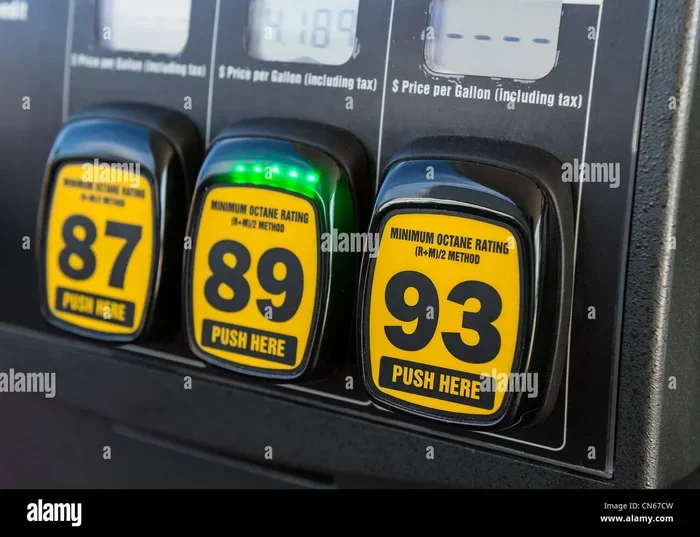
Different fuel grades have different octane ratings. Regular gasoline is typically 87 octane. Mid-grade is usually 89. Premium fuel is 91 or higher. Some stations in certain regions also offer 85 octane as the lowest grade available. This is where confusion often starts for drivers who are used to seeing 87 as the standard regular grade.
Why Octane Matters for Your Engine
Your engine’s compression ratio plays a big role in determining which fuel grade you need. A higher compression ratio means the air fuel mixture gets squeezed more tightly before ignition. This creates more power but also raises the temperature and pressure inside the cylinder. That is why high performance engines and turbocharged engines need higher octane fuel to prevent premature ignition.
When you use the correct octane rating, your engine runs the way the manufacturer intended. You get the best balance of power, fuel economy, and engine longevity. Using a lower octane fuel than recommended can throw off this balance. The engine knock sensor may try to compensate by adjusting the ignition timing, but this often leads to reduced engine performance and less efficient fuel burn.
What Happens When You Put 85 Instead of 87 Gas?
Immediate Effects on Your Engine
The moment you put 85 instead of 87 gas into your tank, your engine starts running on a lower octane fuel. For most modern cars designed for 87 octane, this means the fuel is more prone to premature detonation. The combustion chamber experiences uncontrolled ignition events that can cause a noticeable knocking sound.
You might not notice anything right away. Some drivers fill up with 85 gas and drive for days without any obvious problems. But the effects can be subtle and cumulative. You may notice a slight drop in engine performance, especially during acceleration or when you are hauling a heavy load. The engine might feel sluggish or less responsive than usual.
In some cases, the check engine light may come on. Modern cars have sophisticated engine knock sensors that detect irregular combustion. When the sensor detects knocking, it adjusts the ignition timing to protect the engine. This adjustment helps prevent immediate damage, but it also reduces power and fuel economy. So even if your car seems fine on the outside, it may be working harder than it needs to.
Long-Term Damage Risks
Using 85 octane fuel occasionally once or twice is unlikely to cause permanent harm. But consistently running a lower fuel grade than recommended can lead to real problems over time. The repeated knocking and detonation can wear down internal engine components faster than normal. This includes piston rings, cylinder walls, and valve seats.
Here are some of the long term risks of consistently using lower octane fuel:
- Increased wear on engine internals: The constant knocking puts extra stress on pistons and connecting rods.
- Reduced fuel economy: Your engine may burn more fuel to compensate for the lower octane rating.
- Carbon buildup: Incomplete combustion can leave deposits in the combustion chamber and on the fuel injector tips.
- Catalytic converter stress: Unburned fuel from detonation can overheat and damage the catalytic converter over time.
- Potential warranty issues: If your car is still under warranty, consistently using the wrong fuel grade may void coverage for engine damage.
The severity of these risks depends on several factors. Your car’s compression ratio, driving conditions, and how long you use the wrong fuel all play a role. A car with a high compression ratio will feel the effects of 85 gas much more than an older vehicle with a lower compression ratio.
Which Cars Can Safely Use 85 Octane Gas?
Vehicles That Accept Lower Octane Fuel
Not every car needs 87 octane fuel. In fact, many older vehicles and some modern cars are perfectly fine with 85 octane. The key is your engine’s compression ratio and how the manufacturer designed the fuel system. Vehicles with lower compression ratios do not need high octane fuel because the air fuel mixture does not get compressed as much before ignition.
Older cars from the 1990s and early 2000s often had lower compression ratios and were built to run on lower octane fuel. If you drive a classic car or an older truck, 85 gas might work just fine. However, you should always check your vehicle manual or the fuel door sticker to confirm the recommended fuel type.
Some smaller engines, like those found in compact cars and sedans, also do well on lower octane fuel. These engines typically have modest power output and do not generate the kind of heat and pressure that demands high octane gasoline. If your car is a basic commuter vehicle with a naturally aspirated engine, you may not notice any difference at all.
High Performance and Turbocharged Engines
On the other hand, high performance vehicles and turbocharged engines are a different story entirely. These engines compress the air fuel mixture at much higher ratios to squeeze out more power. They absolutely need the recommended octane rating to function correctly.
If you drive a sports car, a luxury SUV, or a turbocharged sedan, putting 85 gas in the tank is a bad idea. The engine is specifically tuned for higher octane fuel. Using a lower grade can trigger the engine knock sensor to pull timing aggressively, which robs you of power and makes the car feel slow and unresponsive.
Here is a simple way to think about it:
- Regular commuter cars (older models): May tolerate 85 octane fine.
- Modern sedans and SUVs: Usually need at least 87 octane.
- Turbocharged and high performance engines: Require the manufacturer recommended octane, often 91 or higher.
Always refer to your vehicle manual or the label inside the fuel door. The manufacturer tells you the minimum octane rating your engine needs. Going below that rating, even occasionally, is not recommended.
How to Fix the Mistake If You Already Did It
Steps to Take Right Away
If you have already put 85 instead of 87 gas in your car, do not panic. A single fill up with lower octane fuel is usually not a disaster. Here is what you should do right away to minimize any potential damage:
- Do not drive aggressively: Avoid hard acceleration and heavy loads. Gentle driving reduces the stress on your engine and lowers the chances of detonation.
- Top off with the correct fuel: The next time you visit the gas station, fill up with 87 octane or higher. This dilutes the lower octane fuel and brings the overall octane level closer to what your engine expects.
- Watch for warning signs: Listen for any knocking or pinging sounds from the engine. Pay attention to how the car feels during acceleration. If something seems off, ease off the gas and get to a safe location.
- Check the check engine light: If the check engine light comes on after using 85 gas, do not ignore it. Have a mechanic scan the diagnostic codes to see if the engine knock sensor has triggered any alerts.
When to See a Mechanic
In most cases, topping off with the correct fuel will resolve any issues. However, there are situations where you should visit a mechanic. If you notice persistent knocking that does not go away after switching back to 87 octane, that is a red flag. Similarly, if your check engine light stays on for more than a day or two, get the car inspected.
Also, if you have been consistently using 85 gas for many tanks, it is worth getting a professional opinion. A mechanic can check for carbon buildup, inspect the fuel injector condition, and run diagnostics to make sure no internal engine damage has occurred. It is always better to be safe than sorry when it comes to your engine.
85 vs 87 Gas: Side-by-Side Comparison
Not sure how 85 and 87 octane gas really compare? Here is a side by side look at the key differences between these two fuel grades:
| Feature | 85 Octane | 87 Octane |
|---|---|---|
| Fuel Grade | Lowest available at some stations | Standard regular gasoline |
| Knock Resistance | Lower resistance to detonation | Higher resistance to detonation |
| Recommended For | Older engines with low compression | Most modern passenger vehicles |
| Engine Performance | May cause knocking in 87-rated engines | Optimized for standard engines |
| Fuel Economy | May be slightly lower in modern cars | Better efficiency for most vehicles |
| Price | Usually cheaper per gallon | Slightly more expensive |
| Availability | Limited to certain regions | Available at all gas stations |
As you can see, the price difference is often the main reason people consider 85 gas. But the potential savings at the pump may not be worth the risk if your car needs 87 octane. The slight cost difference is usually outweighed by the potential for engine damage and reduced fuel economy.
Tips to Avoid the Wrong Fuel in the Future
Making a fuel grade mistake is easy to do, especially when you are in a rush or driving an unfamiliar car. Here are some simple tips to help you avoid putting 85 instead of 87 gas again:
- Know your recommended octane: Memorize or write down the minimum octane rating your car needs. Keep this information on your phone or taped inside the glove box.
- Check the pump before you squeeze the handle: Take a second to look at the numbers on the pump. It only takes a couple of seconds and can save you a lot of trouble.
- Set a fuel reminder: Some smartphone apps can remind you of your recommended fuel grade. Use technology to your advantage.
- Stick to the same station: If you always fill up at the same gas station, you are less likely to mix up the fuel grades. Familiarity reduces mistakes.
- Read the fuel door label: Every car has a label on the inside of the fuel door or on the fuel cap that shows the recommended fuel type. Make it a habit to check it.
- Don’t let price be your only guide: The cheapest gas at the pump is not always the best choice for your car. Using the wrong fuel grade can cost you more in repairs down the road.
Taking these small precautions can save you from the headache of dealing with engine problems caused by the wrong fuel grade. A few extra seconds at the pump can protect your engine for years to come.
Common Myths About Lower Octane Gas
Myth: Lower Octane Gas Saves You Money in the Long Run
Many drivers believe that using 85 gas instead of 87 gas will save them money over time. While the price per gallon is often lower, the savings are usually minimal. More importantly, lower octane fuel can reduce your fuel economy. Your engine may need to work harder to compensate for the lower octane rating, which means you burn more fuel overall. The small savings at the pump can quickly disappear at the fuel economy level.
Myth: All Cars Can Run on 85 Gas
This is one of the most dangerous misconceptions about fuel grades. Not all cars are created equal. Modern engines with high compression ratios and turbochargers absolutely need the recommended octane level. Putting 85 gas in a car that requires 87 can cause real damage over time. Always follow the manufacturer’s recommendation for your specific vehicle.
Myth: The Check Engine Light Will Always Come On
While modern cars have knock sensors that can detect detonation, the check engine light does not always come on right away. Sometimes the engine control unit adjusts the timing silently to compensate. This means your car could be running on lower octane fuel and suffering damage without any obvious warning signs. Do not wait for the check engine light to tell you something is wrong.
Conclusion
Putting 85 instead of 87 gas in your car is a mistake, but it is one that can usually be fixed without major consequences. The key is to act quickly, top off with the correct fuel grade, and pay attention to how your car is running. Most modern vehicles are designed to run on 87 octane regular gasoline, and using a lower grade can lead to engine knocking, reduced performance, and potential long term damage.
Remember, your vehicle manual is your best friend when it comes to fuel choices. It tells you exactly what octane rating your engine needs. If you are ever in doubt, ask a trusted mechanic or call your dealership. They can confirm the recommended fuel type for your specific make and model.
Taking a few extra moments to choose the right fuel grade at the pump can save you from expensive repairs and keep your engine running strong for many miles to come. Stay informed, stay careful, and your car will thank you for it.
Frequently Asked Questions
Can putting 85 gas instead of 87 gas damage my engine?
Occasionally using 85 octane fuel is unlikely to cause immediate damage. However, consistently running a lower fuel grade than recommended can lead to engine knocking, which over time can wear down internal components like pistons and valves. The risk is higher for modern engines with high compression ratios and turbocharged engines that are specifically tuned for higher octane fuel.
Will using 85 octane gas void my car warranty?
Using the wrong fuel grade once or twice is unlikely to void your warranty. But if the manufacturer determines that engine damage was caused by consistently using a lower octane fuel than recommended, they may deny a warranty claim related to that damage. Always follow the fuel recommendations in your vehicle manual to keep your warranty intact.
How do I know what octane rating my car needs?
Check your vehicle owner’s manual or look for the fuel label on the inside of your fuel door or on the fuel cap. The manufacturer clearly states the minimum recommended octane rating for your engine. Most modern passenger cars require 87 octane regular gasoline, but always verify for your specific vehicle.
Can I mix 85 and 87 octane gas together?
Yes, you can mix different octane grades. When you mix 85 and 87 gas, the resulting fuel will have an octane rating somewhere between the two. This can be a quick fix if you accidentally put 85 gas in your car and need to bring the octane level up. Topping off with 87 octane on your next fill-up is a practical way to dilute the lower grade fuel.
Does 85 gas really save money at the pump?
85 octane gas is often slightly cheaper per gallon than 87 octane. However, the price difference is usually small, often just a few cents per gallon. Additionally, using lower octane fuel in a car that requires 87 can reduce your fuel economy, meaning you may end up spending more over time. The potential savings rarely outweigh the risk of engine damage.
What should I do if I accidentally put 85 gas in my car?
Do not panic. If it is a one time mistake, simply top off with 87 octane or higher on your next fill-up. Avoid aggressive driving until you have added the correct fuel. If you notice persistent knocking, a check engine light, or any unusual engine behavior, have a mechanic inspect your vehicle as soon as possible. A single fill-up with lower octane fuel is usually not a serious problem, but it is always best to correct it quickly.