Can I Still Drive With a P0171 Code Heres What You Need
Driving with a P0171 code is possible in the short term, but it carries real risks. This lean fuel mixture error means your engine is running too thin on fuel, which can lead to overheating, catalytic converter damage, and poor performance. In this guide, you will learn exactly what the code means, whether it is safe to keep driving, the top causes, and how to fix it without breaking the bank.
Key Takeaways
- Short drives may be okay: You can sometimes drive a short distance with a P0171 code, but extended driving is risky.
- Vacuum leaks are the #1 culprit: A small vacuum leak is the most common reason for this lean condition code.
- Ignoring it can be expensive: Continued driving can damage your catalytic converter and oxygen sensor over time.
- DIY diagnosis is possible: You can use an OBD-II scanner and a smoke test to identify the root cause at home.
- Fuel system issues matter too: A weak fuel pump or clogged injector can trigger this code just as easily as a vacuum leak.
- Fix it promptly: Addressing a P0171 code early saves money and keeps your engine running strong.
- Check engine light is your warning: The P0171 code almost always comes with a check engine light and noticeable symptoms.
📑 Table of Contents
- What Is a P0171 Code and Why Should You Care?
- Can You Still Drive With a P0171 Code?
- What Causes a P0171 Lean Fuel Mixture Code?
- Symptoms of a P0171 Lean Condition You Should Not Ignore
- How to Diagnose and Fix a P0171 Code
- Expert Tips to Prevent P0171 Code Issues
- Key Takeaways
- Frequently Asked Questions
- Conclusion
What Is a P0171 Code and Why Should You Care?
Let us start with the basics. A P0171 code is an OBD-II diagnostic trouble code. It means your engine control module has detected a lean fuel mixture in bank one of your engine. In plain English, your engine is getting too much air and not enough fuel.
Your engine needs a precise balance of air and fuel to run correctly. This balance is called the air-fuel ratio. When the ratio tips too far toward air, your engine runs lean. The P0171 code is your car’s way of telling you something is off.
This code is serious, but it is not always an emergency. Understanding what it means puts you in a much better position to make smart decisions about your vehicle.
How Does the Lean Fuel Mixture Affect Your Engine?
When your engine runs lean, combustion temperatures rise. Higher temperatures can cause engine knocking, reduced power, and increased wear on internal components over time. The oxygen sensor detects the imbalance and sends data to your car’s computer, which then triggers the P0171 code.
Your check engine light will usually illuminate on the dashboard when this code is stored. Do not ignore it. Even if your car seems to run fine, the lean condition is still doing low-level damage behind the scenes.
Can You Still Drive With a P0171 Code?
This is the question most drivers want answered, and the honest answer is: it depends. You can sometimes drive a short distance with a P0171 code, but you should not make a habit of it. Let us break down when it is okay and when it is not.
Short-Term Driving: Is It Safe?
If you are on your way to the nearest mechanic or a safe location, driving a few miles with a P0171 code is generally okay. Many drivers get to the shop without any immediate problems. However, you should keep the drive as short as possible.
Here are some things to watch for during a short drive:
- Rough idle or stalling at stoplights
- Hesitation or stumbling when you accelerate
- Unusual engine sounds like pinging or knocking
- Decreased fuel efficiency
- Hot engine temperatures
If you notice any of these symptoms getting worse, pull over safely and turn off the engine. Continuing to drive under those conditions can cause more harm than good.
When It Is Not Safe to Drive
There are situations where you should absolutely not drive with a P0171 code. If your engine is misfiring severely, losing power, or running very rough, stop driving immediately. A severe lean condition can cause engine damage that costs thousands to repair.
Also, if the check engine light is flashing instead of staying solid, that is a red flag. A flashing light usually indicates a more serious problem, like an active misfire that could damage the catalytic converter. In those cases, call a tow truck and have your vehicle transported to a repair shop.
Long highway drives are especially risky with a P0171 code. The sustained high RPM and engine load can amplify the effects of a lean mixture, leading to overheating and internal damage.
What Happens If You Keep Driving With This Code?
Driving with a P0171 code over a long period can cause a chain reaction of problems. The lean mixture burns hotter, which stresses the exhaust valves and piston rings. The catalytic converter has to work harder to compensate, and it can overheat and fail prematurely.
Fuel injector performance can also suffer. When the engine runs lean for extended periods, the injectors may not deliver fuel evenly, creating a cascading effect of poor engine performance. What starts as a simple fix can turn into a costly repair job if you keep ignoring it.
What Causes a P0171 Lean Fuel Mixture Code?
Pinpointing the cause is the key to fixing the problem. There are several common reasons why a P0171 code appears, and some are much easier to fix than others. Let us go through them one by one.
Vacuum Leaks
A vacuum leak is the most common cause of a P0171 code. Your engine relies on sealed vacuum lines to maintain proper pressure and airflow. When a hose cracks, loosens, or develops a hole, unmetered air sneaks into the intake manifold. This extra air throws off the air-fuel ratio and triggers the lean code.
Common places where vacuum leaks happen include:
- Cracked or brittle vacuum hoses
- A loose or damaged intake manifold gasket
- Worn brake booster hose
- Leaking PCV valve or its hose
- Cracked throttle body gasket
Vacuum leaks can be tricky to find, but a smoke test performed by a mechanic can quickly reveal the source. If you are handy, you can also try spraying carburetor cleaner around suspected areas while the engine is running. A change in RPM will tell you where the leak is.
Faulty Oxygen Sensor
The oxygen sensor, also called the O2 sensor, measures the amount of oxygen in your exhaust. It sends this data to your car’s computer so it can adjust the fuel mixture. When the sensor fails or gets contaminated, it may send incorrect readings, causing the computer to lean out the mixture.
Oxygen sensors do not last forever. Most last between 60,000 and 100,000 miles, depending on your vehicle. Replacing a faulty sensor is usually straightforward and not too expensive compared to other repairs.
Mass Airflow Sensor Problems
The mass airflow sensor, or MAF sensor, measures the amount of air entering the engine. If it is dirty or malfunctioning, it can underreport the air volume, causing the computer to inject too little fuel. A dirty MAF sensor is one of the most overlooked causes of a P0171 code.
Cleaning the MAF sensor with a proper cleaner is an easy fix you can do at home. Simply remove the sensor, spray it with MAF cleaner, and let it dry completely before reinstalling. Avoid touching the delicate wire or film inside the sensor.
Fuel System Issues
Sometimes the problem is not too much air, but too little fuel. A weak fuel pump, clogged fuel injector, or failing fuel pressure regulator can all cause a lean condition. If the fuel system cannot deliver enough fuel at the right pressure, the engine will run lean regardless of how good the sensors are.
Here are some fuel system components to check:
- Fuel pump pressure and volume output
- Fuel filter for clogs or restrictions
- Fuel injector cleanliness and pulse width
- Fuel pressure regulator function
Other Less Common Causes
Less often, a P0171 code can be triggered by a faulty coolant temperature sensor, a stuck exhaust gas recirculation valve, or even a problem with the engine’s timing. These causes are harder to diagnose and usually require professional tools and expertise.
Symptoms of a P0171 Lean Condition You Should Not Ignore
The P0171 code does not always come alone. Your vehicle will usually show warning signs before or after the code is stored. Recognizing these symptoms early can help you address the problem before it gets worse.
Here are the most common symptoms of a P0171 lean condition:
- Check engine light illuminated on the dashboard
- Reduced fuel economy and increased fuel consumption
- Rough or unstable idle, especially at cold start
- Hesitation or stumbling during acceleration
- Engine stalling, particularly at idle or low speeds
- Engine pinging or knocking sounds under load
- Hard starting, especially when the engine is warm
- Increased exhaust emissions and possible sulfur smell
If you notice any combination of these symptoms, it is a good idea to scan your vehicle with an OBD-II scanner right away. Even if the check engine light is not on yet, stored codes can reveal problems early.
How to Diagnose and Fix a P0171 Code
Fixing a P0171 code starts with proper diagnosis. Jumping to conclusions and replacing parts randomly is a waste of money and time. A systematic approach gets you to the right fix faster.
Step-by-Step Diagnostic Process
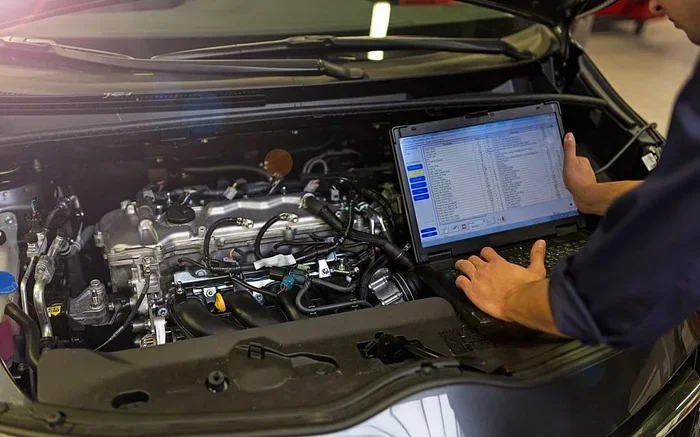
Here is how a professional mechanic typically approaches a P0171 diagnosis:
- Scan the vehicle with an OBD-II scanner to confirm the P0171 code and check for any additional codes.
- Inspect all vacuum hoses and connections for visible cracks, leaks, or loose fittings.
- Perform a smoke test to identify hidden vacuum leaks in the intake system.
- Check the MAF sensor for dirt or contamination and clean it if needed.
- Test the oxygen sensor readings with a scan tool to see if the sensor is responding correctly.
- Measure fuel pressure at the fuel rail to ensure the pump and regulator are working properly.
- Inspect fuel injectors for clogs or uneven spray patterns.
- Check the intake manifold gasket for leaks, especially on older vehicles.
Following these steps in order helps you eliminate the easy fixes first and narrows down the root cause efficiently.
Common Repairs and Their Costs
The cost to fix a P0171 code varies widely depending on the cause. Here is a rough breakdown of common repairs and what you might expect to pay:
| Repair | Estimated Cost Range | Difficulty Level |
|---|---|---|
| Replace vacuum hose | $10 – $50 | Easy |
| Replace intake manifold gasket | $150 – $400 | Moderate |
| Clean or replace MAF sensor | $20 – $150 | Easy to Moderate |
| Replace oxygen sensor | $100 – $300 | Moderate |
| Replace fuel injector | $150 – $400 per injector | Moderate |
| Replace fuel pump | $300 – $800 | Difficult |
| Replace fuel pressure regulator | $150 – $350 | Moderate |
Keep in mind these are estimates. Actual costs depend on your vehicle make, model, year, and local labor rates. Getting a proper diagnosis before committing to a repair will save you from unnecessary expenses.
Expert Tips to Prevent P0171 Code Issues
Prevention is always better than repair, and there are simple habits that can help you avoid a P0171 code in the first place.
Stay on top of regular maintenance. Replace your fuel filter at the recommended intervals. A clogged filter restricts fuel flow and can contribute to lean conditions. Use quality fuel from reputable stations to minimize carbon buildup in your fuel system.
Listen to your car. Unusual sounds, changes in idle quality, or slight drops in fuel economy are early warning signs. Addressing these small issues early can prevent a P0171 code from developing later.
Do not skip oil changes. Clean oil keeps internal engine components running smoothly and helps maintain proper sealing, which reduces the chance of vacuum leaks developing over time.
Check your PCV system regularly. The positive crankcase ventilation valve and its hoses are common failure points that can introduce unmetered air into the engine. A quick inspection during oil changes can catch problems early.
Use an OBD-II scanner at home. Having a basic scanner in your garage lets you check for codes before they become serious problems. Early detection of a lean condition can save you from expensive repairs down the road.
Key Takeaways
- Short drives may be okay: You can sometimes drive a short distance with a P0171 code, but extended driving is risky.
- Vacuum leaks are the #1 culprit: A small vacuum leak is the most common reason for this lean condition code.
- Ignoring it can be expensive: Continued driving can damage your catalytic converter and oxygen sensor over time.
- DIY diagnosis is possible: You can use an OBD-II scanner and a smoke test to identify the root cause at home.
- Fuel system issues matter too: A weak fuel pump or clogged injector can trigger this code just as easily as a vacuum leak.
- Fix it promptly: Addressing a P0171 code early saves money and keeps your engine running strong.
- Check engine light is your warning: The P0171 code almost always comes with a check engine light and noticeable symptoms.
Frequently Asked Questions
How far can I drive with a P0171 code before causing damage?
There is no set distance that is safe for every vehicle. Some drivers manage a few miles without issues, while others experience damage within a longer drive. The safest approach is to get the code diagnosed and repaired as soon as possible. The longer you drive with a lean condition, the more stress you put on your engine and exhaust components.
Will a P0171 code clear itself?
In some cases, the code may clear if the root cause is temporary, such as a momentary vacuum leak that seals itself. However, most P0171 codes require a proper fix. Simply clearing the code without addressing the underlying problem will usually cause it to return within a few drive cycles. Always diagnose the cause before clearing any code.
Is it safe to drive with a P0171 code on the highway?
Highway driving with a P0171 code is not recommended. Sustained high speeds and engine loads amplify the effects of a lean mixture, increasing the risk of overheating and engine damage. If you must travel on the highway, keep the distance as short as possible and monitor your engine temperature closely.
Can a dirty air filter cause a P0171 code?
A dirty air filter typically causes a rich condition, not a lean one, because it restricts airflow. However, in rare cases where the filter is severely clogged and creates uneven airflow, it could contribute to sensor misreadings. A clean air filter is part of routine maintenance and helps ensure proper engine breathing.
How much does it cost to fix a P0171 code?
The cost varies widely depending on the cause. A simple vacuum hose replacement might cost under $50, while a fuel pump replacement could cost $500 or more. Getting a proper diagnosis first is the best way to avoid unnecessary expenses and ensure you pay for the right repair.
What is the difference between a P0171 and P0174 code?
A P0171 code refers to a lean condition in bank one of the engine, while a P0174 code refers to bank two. In a four-cylinder engine, there is only one bank, so you will typically only see a P0171 code. In V6, V8, or V10 engines, both codes can appear separately if the lean condition affects different banks. The diagnostic process is similar for both codes.
Conclusion
So, can you still drive with a P0171 code? The short answer is yes, but only cautiously and for short distances. The better answer is to get it fixed as soon as you can. A P0171 code signals a lean fuel mixture that your engine was not designed to run with for long periods.
Whether the cause is a simple vacuum leak, a dirty MAF sensor, or a failing fuel pump, addressing the problem early keeps your engine healthy and your wallet happy. The diagnostic steps outlined in this article give you a clear path to understanding what is going on under the hood.
Do not let a check engine light become a costly repair bill. Take action today, use the tips and information in this guide, and get your vehicle back to running the way it should. Your engine will thank you for it.