What Happens When a Car of Mass 1000kg Negotiates a Curve
When a car of mass 1000kg negotiates a curve, several key forces come into play, including centripetal force, friction, and inertia. Understanding these forces helps drivers stay safe and makes road design smarter. This guide breaks down the physics, the risks, and the practical tips every driver should know.
Have you ever wondered what keeps a car on the road when it turns? It is not just luck or good steering. There is real science behind every curve you navigate. When a car of mass 1000kg negotiates a curve, multiple forces work together to keep the vehicle on its path. Understanding these forces can make you a safer, more confident driver.
This article breaks down the physics, the risks, and the practical steps you can take. Whether you are a new driver or a seasoned commuter, the insights here will help you understand what really happens when your vehicle enters a turn. Let us dive in.
Key Takeaways
- Centripetal force is essential: It keeps the car moving along the curved path instead of flying off in a straight line.
- Friction between tires and road is critical: Without enough grip, the car will skid outward on the curve.
- Speed matters a lot: The faster a car of mass 1000kg negotiates a curve, the greater the lateral force and the higher the risk of losing control.
- Banked curves reduce skid risk: Road banking uses gravity to help cars turn safely at higher speeds.
- Tire condition and road surface affect grip: Wet, icy, or worn tires dramatically reduce the coefficient of friction.
- Weight distribution changes during turns: Load shifts to the outer wheels, affecting handling and stability.
- Safe speed depends on curve radius and road conditions: Drivers should always adjust speed based on the sharpness of the turn and weather conditions.
📑 Table of Contents
- Understanding the Basics: What Does It Mean to Negotiate a Curve?
- The Physics Behind a Car of Mass 1000kg Negotiating a Curve
- Key Forces at Play When a Car Turns
- How Speed Affects a Car Negotiating a Curve
- The Role of Road Banking in Curve Negotiation
- Practical Tips for Safe Driving on Curves
- Common Mistakes Drivers Make on Curves
- How Road Design Engineers Plan for Curves
- Key Takeaways
- Conclusion
Understanding the Basics: What Does It Mean to Negotiate a Curve?
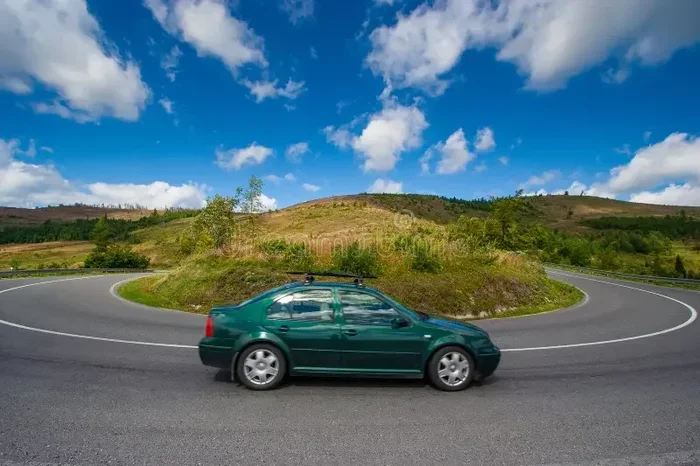
When we say a car of mass 1000kg negotiates a curve, we mean the vehicle successfully follows a curved path without skidding or losing control. A curve is simply a change in direction. The road bends, and the car must follow that bend.
But the car does not want to follow the bend naturally. Thanks to inertia, it wants to keep going straight. Newton’s first law tells us that an object in motion stays in motion in a straight line unless acted upon by an external force. That external force in this case is called centripetal force.
Centripetal force pulls the car toward the center of the curve. Without it, the car would fly off the road in a straight line. This is the basic idea behind curve negotiation. The car’s mass, its speed, and the radius of the curve all determine how much centripetal force is needed.
The Role of Mass in Curve Negotiation
Mass plays a big role. A heavier car needs more force to change direction. When a car of mass 1000kg negotiates a curve, the gravitational pull on the vehicle is significant. The weight of the car presses down on the tires, which increases the friction between the tires and the road surface.
More friction means more grip. More grip means the tires can generate greater centripetal force. But there is a limit. Every tire has a maximum amount of grip it can provide. Exceed that limit, and the car starts to skid.
Think of it like this. Imagine you are holding a ball on a string and spinning it. The faster you spin it, the harder the string pulls. The heavier the ball, the more force the string needs. The same principle applies to your car on a curve.
Why Curve Radius Matters
The radius of curvature is the distance from the center of the curve to the road surface. A tight curve has a small radius. A gentle curve has a large radius. The smaller the radius, the sharper the turn, and the more force the car needs to make it through safely.
For a car of mass 1000kg, a sharp curve at high speed is a dangerous combination. The centripetal force required increases as the radius decreases. This is why sharp curves often have lower speed limits posted nearby. Engineers design these limits based on the curve radius, the expected vehicle weight, and road conditions.
The Physics Behind a Car of Mass 1000kg Negotiating a Curve
Now let us get into the real physics. Do not worry. We will keep it simple and practical. You do not need a degree in engineering to understand what is happening under your car when it turns.
Centripetal Force Explained
Centripetal force is the inward force that keeps an object moving in a circular path. When your car enters a curve, centripetal force acts toward the center of that curve. This force comes primarily from the friction between the tires and the road.
The formula for centripetal force is simple:
Force = (mass x velocity squared) / radius
This means that if you double the speed, the required force quadruples. If you halve the radius, the force doubles. For a car of mass 1000kg, these relationships are very important. A small increase in speed on a tight curve can dramatically increase the force on the tires.
Lateral Acceleration and Its Effects
When a car turns, it experiences lateral acceleration. This is the sideways force you feel pressing you against the door of the car. Lateral acceleration is measured in g-force, where one g equals the force of gravity.
Most passenger cars can handle about 0.7 to 0.9 g of lateral acceleration before the tires lose grip. For a car of mass 1000kg, this translates to a specific speed limit for each curve radius. Exceed that speed, and the tires start to slide.
Lateral acceleration also affects your comfort. High g-forces in a turn can make passengers feel uneasy. It can also shift the weight of the car, which we will discuss in detail later.
The Formula for Safe Speed on a Curve
Engineers use a formula to calculate the safe speed for a curve. The formula takes into account the radius of the curve, the coefficient of friction, and the gravitational acceleration. Here is a simplified version:
Safe speed = square root of (radius x friction coefficient x gravity)
For a dry road with a friction coefficient of about 0.7, a curve with a radius of 50 meters would have a safe speed of roughly 30 km/h. On a wet road, the friction coefficient drops to about 0.4, and the safe speed decreases significantly.
This is why a car of mass 1000kg negotiates curves more safely when drivers slow down in wet or icy conditions. The reduced friction means less centripetal force is available, so speed must be lowered to compensate.
Key Forces at Play When a Car Turns
Several forces work together when your car moves through a curve. Let us look at each one and understand its role.
Friction: The Grip That Keeps You on the Road
Friction is the most important force in curve negotiation. It is the grip between your tires and the road surface. Without friction, a car cannot turn at all. It would simply slide straight off the road.
The friction force depends on two things. The first is the normal force, which is the weight of the car pressing down. For a car of mass 1000kg, the normal force is about 9,800 newtons on a flat road. The second factor is the coefficient of friction, which depends on the tire type, tread depth, and road surface.
Dry asphalt has a high coefficient of friction, around 0.7 to 0.8. Wet asphalt drops to 0.4 to 0.5. Ice can reduce it to 0.1 or less. This is why driving on ice is so dangerous. The available friction is simply not enough to generate the centripetal force needed for the turn.
Normal Force and Weight Distribution
The normal force is the upward force the road exerts on the car. It balances the weight of the car. On a flat road, the normal force is evenly distributed across all four tires.
But when the car turns, weight shifts. The outer wheels carry more load, and the inner wheels carry less. This is called weight transfer or load transfer. For a car of mass 1000kg, this shift can be significant during aggressive turns.
Weight transfer affects grip. The outer tires have more grip because they carry more weight. The inner tires have less grip. This is why cars tend to understeer or oversteer during sharp turns. The grip is not evenly distributed.
Inertia and the Tendency to Go Straight
Inertia is the tendency of an object to resist changes in its state of motion. When your car enters a curve, inertia wants to keep it moving in a straight line. This is why you feel pushed outward during a turn.
That outward feeling is often called centrifugal force, though it is not a real force. It is the effect of inertia. Your body wants to keep going straight while the car turns. This is why seatbelts and proper restraint systems are so important during curve negotiation.
For a car of mass 1000kg, the inertia is proportional to the mass. A heavier car has more inertia and resists changes in direction more. This means it needs more force to turn, and it takes longer to slow down before entering a curve.
How Speed Affects a Car Negotiating a Curve
Speed is the single biggest factor in safe curve negotiation. The relationship between speed and curve safety is not linear. It is exponential. Small increases in speed lead to large increases in the forces acting on the car.
The Danger of Excessive Speed
When a car of mass 1000kg negotiates a curve at too high a speed, the tires can exceed their grip limit. The car begins to skid. In a front-wheel skid, the car pushes wide on the outside of the curve. In a rear-wheel skid, the tail swings out, which is called oversteer or fishtailing.
Skidding on a curve is extremely dangerous. The driver loses steering control. The car can spin out or collide with other vehicles or roadside objects. This is one of the most common causes of single-vehicle accidents on curved roads.
Speed and Centripetal Force: The Relationship
Remember the formula we discussed earlier? Centripetal force equals mass times velocity squared, divided by radius. Notice the velocity is squared. This means that if you increase your speed by just 20 percent, the required centripetal force increases by 44 percent.
For a car of mass 1000kg entering a curve at 60 km/h versus 72 km/h, the force on the tires is substantially different. The higher speed demands much more friction from the road surface. If the road cannot provide that friction, the car skids.
Reaction Time and Curve Entry Speed
Another critical factor is reaction time. Most drivers do not brake perfectly at the start of a curve. They brake before the curve and then ease off the brake as they enter the turn. If the entry speed is too high, the driver may not have enough time or distance to slow down safely.
This is why road engineers place warning signs before sharp curves. The signs give drivers advance notice to reduce speed. They also place curve speed mirrors and rumble strips to alert inattentive drivers.
The Role of Road Banking in Curve Negotiation
Have you noticed that some curves on highways are tilted? The outer edge of the road is higher than the inner edge. This is called banking or superelevation. Banked curves are designed to help cars turn more safely and at higher speeds.
How Banking Reduces Reliance on Friction
On a flat road, all the centripetal force must come from tire friction. On a banked curve, gravity helps. The tilt of the road pushes the car toward the center of the curve, reducing the demand on the tires.
For a car of mass 1000kg, a properly banked curve can significantly increase the safe speed. The banking angle is calculated based on the expected traffic speed and the curve radius. High-speed highways use banking angles of 6 to 10 degrees, while residential streets rarely bank at all.
Ideal Banking Angle
The ideal banking angle is the angle at which no friction is needed at all. At this angle, the horizontal component of the normal force provides all the centripetal force. In theory, a car could navigate the curve even on perfectly icy pavement.
In practice, the ideal angle is rarely achieved because traffic speeds vary. Engineers design for a design speed, which is the speed they expect most vehicles to travel. The banking angle is set to make that speed feel comfortable and safe.
What Happens When Banking Is Insufficient
If the banking angle is too low for the speed of traffic, the tires must provide more centripetal force. This increases the risk of skidding, especially in wet or icy conditions. If the banking angle is too high, slower vehicles may feel pushed outward, and vehicles traveling much below the design speed may drift toward the inner edge of the road.
This is why a car of mass 1000kg negotiates banked curves more easily than flat curves. The banking provides a natural assist that reduces the burden on the tires.
Practical Tips for Safe Driving on Curves
Understanding the physics is great, but what can you actually do to drive more safely on curves? Here are practical tips that every driver should follow.
Slow Down Before the Curve
The most important rule of curve driving is to reduce speed before you enter the turn. Braking during a curve shifts the weight to the front wheels, reducing grip on the rear wheels. This can cause the rear to slide out.
Look for curve warning signs and adjust your speed early. For a car of mass 1000kg, reducing speed by even 10 km/h before a sharp curve can make a huge difference in safety.
Steer Smoothly and Gradually
Avoid jerky steering inputs. Smooth, gradual turns keep the tires within their grip limits. Abrupt steering can break traction and cause a skid. Think of the steering wheel as something you turn with gentle, steady pressure.
Maintain Your Tires
Your tires are the only contact between your car and the road. Worn tread, underinflated tires, or mismatched tires reduce grip significantly. Check your tire pressure regularly and replace tires when the tread depth falls below 3 millimeters.
For a car of mass 1000kg, good tires are essential. The weight of the car demands reliable grip, especially on curves. Premium tires with a high friction coefficient can make a noticeable difference in handling and safety.
Be Extra Cautious in Wet or Icy Conditions
Water, ice, and leaves on the road reduce friction dramatically. In wet conditions, reduce your speed by at least 20 percent before curves. On icy roads, reduce speed by 50 percent or more. The coefficient of friction drops, and the centripetal force your tires can provide drops with it.
Watch for Road Surface Changes
Curves often have different road surfaces than straight sections. Look out for painted lines, metal manhole covers, gravel, or uneven pavement. These surfaces have lower friction and can cause sudden loss of grip when you are turning.
Use Engine Braking on Steep Curves
On steep downhill curves, use engine braking to help control your speed. Downshifting to a lower gear uses engine resistance to slow the car without relying heavily on the brakes. This keeps the car more stable and reduces the risk of wheel lockup.
Common Mistakes Drivers Make on Curves
Even experienced drivers make mistakes on curves. Here are the most common ones and how to avoid them.
Braking Too Hard During the Turn
Hard braking in a curve shifts weight forward and reduces rear tire grip. This can cause the rear wheels to lock up and the car to spin. Always brake before the curve, not during it.
Accelerating Mid-Turn
Some drivers accelerate through a curve to maintain speed. This is risky because it shifts weight to the rear and can cause the front tires to lose grip. Smooth, steady throttle through the curve is safer.
Overcorrecting After a Skid
If the rear of the car starts to slide, many drivers panic and jerk the steering wheel the wrong way. This makes the skid worse. The correct response is to look toward where you want to go and steer gently in that direction.
Ignoring Road Signs and Advisories
Curve warning signs and advisory speed plaques are there for a reason. They are based on engineering calculations for the specific curve. Ignoring them is the fastest way to end up off the road.
How Road Design Engineers Plan for Curves
Road engineers put a lot of thought into curve design. They consider vehicle weight, expected speed, friction levels, and even driver psychology. A well-designed curve feels natural and safe, while a poorly designed one is a hazard.
Sight Distance and Visibility
One of the most important factors in curve design is sight distance. Drivers need to see far enough ahead to react and adjust their speed. Sharp curves with limited visibility are especially dangerous because drivers cannot see oncoming traffic or obstacles until the last moment.
Clear Zones and Recovery Areas
Good road design includes clear zones beyond the curve. These are areas where a driver can safely recover if they leave the road. Trees, poles, and guardrails are placed carefully to minimize the severity of run-off-road crashes.
The Impact of Vehicle Mass on Road Design
Engineers must account for a range of vehicle masses. A car of mass 1000kg behaves differently than a fully loaded truck. Highway curves are typically designed for the most common vehicle types, but heavier vehicles need more caution on tight curves due to their greater momentum and inertia.
Key Takeaways
- Centripetal force keeps the car on the curve: This inward force comes mainly from tire friction and is essential for safe turning.
- Speed has an exponential effect on curve safety: Doubling speed quadruples the required centripetal force, dramatically increasing skid risk.
- Road banking helps cars turn safely: Banked curves use gravity to assist the turn, reducing reliance on tire friction alone.
- Tire condition directly affects grip: Worn or underinflated tires significantly reduce the friction available for curve negotiation.
- Weight shifts during turns: For a car of mass 1000kg, load transfer to the outer wheels affects handling and stability.
- Slow down before the curve: Braking before the turn, not during it, keeps the car stable and the tires gripping.
- Weather changes everything: Wet, icy, or gravelly road surfaces reduce friction and demand much lower speeds on curves.
Conclusion
When a car of mass 1000kg negotiates a curve, a complex dance of forces takes place. Centripetal force, friction, inertia, and gravity all work together to determine whether the turn is smooth and safe or dangerous and unpredictable. Understanding these forces gives you a deeper appreciation for road design and driving safety.
The key message is simple. Respect the curve. Slow down before you turn. Keep your tires in good condition. Adjust your speed for weather and road surface. These habits can save your life and the lives of others on the road.
Next time you approach a curve, think about what is happening beneath you. The physics is always at work. The more you understand it, the more confident and safe you will be behind the wheel. Drive smart, stay alert, and enjoy the ride.
Frequently Asked Questions
What force keeps a car of mass 1000kg on a curved road?
The primary force is centripetal force, which comes from the friction between the tires and the road surface. This inward force keeps the car following the curve instead of flying off in a straight line. Without sufficient friction, the car will skid outward.
What happens if a car goes too fast on a curve?
If the speed is too high, the required centripetal force exceeds the available friction. The tires lose grip, and the car starts to skid. In a front skid, the car pushes wide. In a rear skid, the tail swings out. Either situation can lead to a loss of control and a collision.
Does the mass of the car affect how it handles curves?
Yes, mass plays a significant role. A heavier car has more inertia and requires more centripetal force to change direction. For a car of mass 1000kg, the weight increases the normal force on the tires, which increases friction. However, the greater mass also means greater momentum, making it harder to slow down before a curve.
Why are some curves banked on highways?
Banking uses gravity to help push the car toward the center of the curve. This reduces the demand on tire friction and allows safer travel at higher speeds. Banked curves are especially important on highways where vehicles travel at higher velocities and cannot afford to slow down as much.
How does tire condition affect curve negotiation?
Worn tires with shallow tread have significantly less grip. Underinflated tires have a smaller contact patch and reduced friction. Both conditions make it harder for a car of mass 1000kg to generate the centripetal force needed for safe curve navigation. Always check tire pressure and tread depth before driving.
What is the safest speed for a car on a curved road?
The safest speed depends on the curve radius, the road surface, and weather conditions. On a dry road with a 50-meter radius, a safe speed is around 30 km/h. On wet roads or sharper curves, reduce speed further. Always follow posted advisory speed signs and adjust based on conditions.