Can a Car Overheat on a Hot Day And How to Prevent It
Yes, a car can absolutely overheat on a hot day. High temperatures, heavy traffic, and worn parts push your engine past its safe limit. Understanding the causes and prevention steps keeps your car running safely all summer long. A little car maintenance goes a long way toward avoiding costly repairs.
Yes, a car can overheat on a hot day. It is one of the most common problems drivers face during summer. Can a Car Overheat on a Hot Day? The answer is a clear yes. High temperatures, heavy traffic, and old car parts all play a role. When the outside air is already hot, your engine has a much harder time staying cool. This is why summer is the peak season for engine overheating calls. Understanding what causes it and how to stop it is the best way to protect your vehicle.
Every car has a cooling system designed to manage heat. But that system can fail under extreme conditions. A radiator full of old coolant or a broken water pump can turn a normal drive into a roadside nightmare. The good news is that most overheating problems are easy to prevent. With a little car maintenance and some simple habits, you can keep your engine safe all summer long.
So, what exactly happens when a car overheats? And more importantly, how can you stop it from happening? This guide covers everything you need to know. You will learn the signs, the causes, and the best ways to prevent overheating during the hottest months of the year.
Summer heat can be tough on your car. Many drivers do not think about their engine temperature until something goes wrong. A heat wave can turn a routine drive into a stressful situation fast.
The truth is that your car works hard to stay cool, even on a normal day. Add extreme heat to the mix, and the cooling system has to work twice as hard. This is why car maintenance before summer is so important. A few simple checks can save you from a costly car repair bill.
Key Takeaways
- Hot weather is a real threat: Cars can and do overheat on hot days, especially during heat waves and heavy traffic.
- The cooling system is your best friend: A well-maintained radiator, coolant, and water pump keep your engine temperature in check.
- Watch for warning signs early: Steam from the hood, a rising temperature gauge, and strange smells mean act fast.
- Prevention is simple and cheap: Regular checks, fresh coolant, and smart driving habits go a long way.
- Know what to do when it happens: Pull over safely, turn off the AC, and seek help if needed.
- Don’t ignore small problems: A tiny coolant leak today can lead to a blown head gasket tomorrow.
📑 Table of Contents
What Happens When a Car Overheats on a Hot Day
Your engine produces a lot of heat. Burning fuel creates energy, and energy creates warmth. The cooling system handles this heat by moving coolant through the engine block. When everything works right, the engine temperature stays within a safe range.
But on a hot day, the system faces extra challenges. The air outside is already warm, so the radiator cannot shed heat as easily. Add direct sunlight and stop-and-go traffic, and the problem grows fast.
How Hot Weather Affects Your Engine
When the temperature outside climbs above 90 degrees Fahrenheit, your engine feels it. The radiator relies on airflow to cool the coolant down. But on a hot day, that air is already hot. This means the cooling process slows down.
Here is what happens inside your engine during a heat wave:
- The coolant absorbs heat from the engine block.
- The hot coolant flows to the radiator.
- The radiator tries to release that heat into the outside air.
- If the air is too hot, the radiator cannot cool the coolant fast enough.
- The engine temperature starts to rise.
This cycle can spiral quickly. The hotter the engine gets, the harder the cooling system has to work. And if any part of the system is weak, the whole thing can fail.
The Role of Your Cooling System
Your cooling system is made up of several parts. Each one plays a role in keeping your engine at a safe engine temperature. Here are the key players:
- Radiator: Releases heat from the coolant into the air.
- Water Pump: Circulates coolant through the engine.
- Thermostat: Regulates the flow of coolant based on engine temperature.
- Radiator Fan: Pulls air through the radiator when the car is slow or stopped.
- Hoses and Belts: Carry coolant and power the water pump.
When one of these parts fails, the whole system suffers. And on a hot day, even a small problem can lead to big trouble.
Expert Insight: “Most drivers do not think about their cooling system until something breaks. By then, the damage can be expensive. A simple vehicle maintenance check before summer can catch problems early.”
Common Causes of Car Overheating in Summer
Understanding the overheating causes helps you take action. Many of these problems build up over time. They get worse in hot weather. Here are the most common reasons a car overheats during summer.
Low Coolant Levels
This is the number one cause of engine overheating. Coolant is the fluid that carries heat away from the engine. If the level is too low, there is not enough fluid to do the job.
Coolant leaks are the main reason levels drop. A small crack in a hose or a loose connection can let coolant seep out slowly. You might not notice it until the engine temperature starts to climb.
Check your coolant reservoir once a month during summer. Top it off if needed. But also look for puddles under your car. A green, orange, or pink fluid on the ground is a sign of a coolant leak.
Broken Radiator Fan
The radiator fan pulls air through the radiator when your car is moving slowly or sitting in traffic. On a hot day in stop-and-go traffic, this fan is working overtime.
If the fan motor fails, the radiator cannot cool the coolant properly. Your engine temperature can spike quickly, especially in traffic. You might notice the problem most when you are stuck in a traffic jam on a hot afternoon.
Thermostat Failure
The thermostat controls the flow of coolant through the engine. When the engine is cold, it keeps the coolant from flowing to the radiator. Once the engine warms up, it opens and lets the coolant circulate.
A broken thermostat can get stuck in the closed position. This means no coolant flows to the radiator. The engine heats up fast, and you have a serious problem on your hands.
Water Pump Issues
The water pump is the heart of the cooling system. It pushes coolant through the engine block and hoses. If the pump fails, the coolant stops moving.
Water pump failures can happen from wear and tear over time. A leaking pump or a whining noise from the front of the engine are warning signs. Do not ignore them, especially before summer driving.
Old or Dirty Coolant
Coolant does not last forever. Over time, it breaks down and loses its ability to absorb heat. Old coolant can also become acidic and damage the inside of the cooling system.
Most manufacturers recommend flushing and replacing coolant every 30,000 to 50,000 miles. Check your owner’s manual for the exact schedule. Fresh coolant makes a big difference on hot days.
Warning Signs Your Car Is Overheating
Your car gives you plenty of warning before it fully overheats. Knowing these overheating symptoms can save you from a breakdown. The key is to pay attention and act fast.
Visual Clues
Look for these signs when you are driving on a hot day:
- Steam or smoke coming from under the hood.
- The temperature gauge on the dashboard moving into the red zone.
- Coolant puddles under your parked car.
- Cracks or swelling on coolant hoses.
- The radiator fins looking bent or clogged with debris.
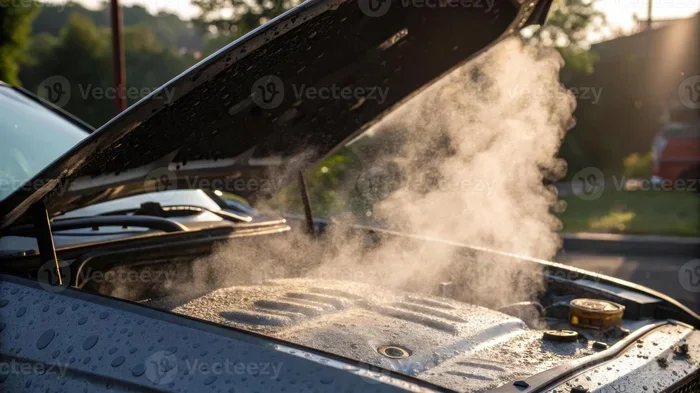
Steam is the most obvious sign. If you see white steam coming from the hood, pull over safely right away. Do not open the hood immediately. Hot coolant can cause severe burns.
Smells and Sounds
Your nose and ears can also alert you to trouble:
- A sweet, syrupy smell often means a coolant leak.
- A burning smell could mean fluid dripping onto hot engine parts.
- A grinding or whining noise from the front of the engine may signal a failing water pump or radiator fan.
- Bubbling sounds from the radiator or overflow tank can indicate air in the system.
Do not ignore these signs. They are your car’s way of telling you something is wrong. Catching them early can prevent a major car repair.
Quick Tips for Hot Weather Driving:
- Glance at your temperature gauge every few minutes on hot days.
- Keep an eye on the coolant level in the reservoir.
- Turn on the air conditioning sparingly in heavy traffic on hot days. The AC puts extra load on the engine.
- Carry extra coolant in your trunk during summer road trips.
How to Prevent Your Car from Overheating
Overheating prevention is much easier than fixing a broken engine. A little effort before summer goes a long way. Here are the best ways to keep your car cool when the heat is on.
Summer Car Maintenance Checklist
Follow this checklist before the hottest months arrive:
- Check the coolant level. Make sure it is between the minimum and maximum marks on the reservoir.
- Inspect the coolant condition. If it looks rusty or dirty, it is time for a flush.
- Test the thermostat. A mechanic can check if it opens and closes properly.
- Examine the hoses and belts. Look for cracks, swelling, or soft spots.
- Verify the radiator fan works. Turn on the AC and listen for the fan to kick in.
- Clean the radiator. Remove bugs, dirt, and debris from the fins. Use a gentle stream of water.
- Check the water pump for leaks. Look for coolant drips around the pump area.
Doing this checklist once a year can save you hundreds of dollars in car repair costs. It takes less than an hour and gives you peace of mind.
Smart Driving Habits for Hot Weather
How you drive also matters. A few smart habits can reduce the strain on your engine:
- Avoid heavy traffic when possible. Stop-and-go driving makes the engine work harder in hot weather.
- Use your vents before the AC. At low speeds, open the windows and use the vents. This reduces the load on the engine.
- Turn on the heater. If your engine starts to get warm, turning on the heater can help pull heat away from the engine. It is not comfortable, but it works in an emergency.
- Give your car a break. On extremely hot days, avoid heavy towing or hauling. These activities generate extra heat.
- Park in the shade. This keeps the engine temperature lower when you start driving.
Overheating Risk: Summer vs. Normal Driving Conditions
Understanding the difference helps you take the right precautions:
| Factor | Normal Weather | Hot Day (90°F+) |
|---|---|---|
| Coolant Efficiency | High | Reduced |
| Radiator Fan Usage | Occasional | Constant in traffic |
| Engine Load | Moderate | Higher due to AC |
| Overheating Risk | Low | Moderate to High |
| Recommended Check Frequency | Every 3 months | Every month |
Common Mistakes to Avoid:
- Ignoring the temperature gauge. Many drivers glance at the gauge but do not really look at it. Make it a habit to check it regularly.
- Topping off with water instead of coolant. Water works in a pinch, but it does not protect against overheating the way proper coolant does.
- Delaying a coolant leak repair. A small leak today can become a big problem tomorrow.
- Skipping summer maintenance. Winter care is not enough. Your car needs a summer checkup too.
Expert Insight: “I see cars come into the shop every summer with the same preventable problems. Drivers wait until something breaks. A little vehicle maintenance before the heat hits can save you from a roadside breakdown and an expensive car repair.”
What to Do If Your Car Overheats
Even with the best prevention, overheating can still happen. Knowing what to do in the moment is critical. Here is your step-by-step guide.
Immediate Steps to Take
If you notice steam or the temperature gauge climbing, follow these steps:
- Turn off the air conditioning. The AC puts extra strain on the engine. Turning it off helps the engine cool down faster.
- Turn on the heater. This sounds strange, but it pulls heat away from the engine. It can buy you a few minutes to find a safe place to stop.
- Pull over safely. Find a parking lot or a safe spot off the road. Do not stop on a highway shoulder if you can avoid it.
- Turn off the engine. Let the car rest for at least 15 minutes. Do not try to drive any further.
- Do not open the radiator cap. The system is under pressure. Opening it while hot can cause hot coolant to spray out and burn you.
Wait until the engine cools down before you check anything. Then you can look at the coolant level and the hoses for visible leaks.
When to Call for Help
Some situations require a tow truck or professional help:
- If steam continues after 15 minutes of rest.
- If you cannot find the cause of the overheating.
- If the temperature gauge stays in the red even after the engine cools.
- If you notice a loud knocking sound from the engine.
- If you see oil mixing with the coolant (a milky-looking fluid).
These signs could mean serious damage, like a blown head gasket. Driving further in these conditions can destroy the engine completely.
When to See a Mechanic
Not every overheating problem is a DIY fix. Some issues need a trained professional. Knowing when to seek help saves you time and money.
Signs You Need Professional Help
Watch for these warning signs that point to a deeper problem:
- Frequent overheating even after adding coolant.
- A consistent coolant leak that keeps coming back.
- The temperature gauge fluctuates between hot and cold.
- White smoke from the exhaust combined with overheating.
- Unusual noises from the engine area during summer driving.
These symptoms often point to problems like a blown head gasket, a failing water pump, or internal engine damage. A mechanic can diagnose the exact cause with the right tools.
Preventive Maintenance Schedule
Staying ahead of overheating problems means following a regular maintenance schedule:
- Every month in summer: Check coolant level and inspect for leaks.
- Every 3 months: Inspect hoses, belts, and the radiator fan.
- Every 30,000 miles: Flush and replace the coolant.
- Every 60,000 miles: Check the water pump and thermostat for wear.
- Before summer each year: Full vehicle maintenance check including the cooling system.
Sticking to this schedule keeps your cooling system in top shape. It also gives you early warning of any developing problems.
Conclusion
Can a Car Overheat on a Hot Day? Yes, it can, and it happens more often than most people think. But the good news is that you have the power to prevent it. Understanding the causes, recognizing the warning signs, and following a solid overheating prevention plan can keep your car running smoothly all summer long.
Your cooling system works hard for you every day. Give it the care it deserves with regular car maintenance and smart driving habits. Check the coolant, watch the temperature gauge, and never ignore the signs of trouble.
A few simple steps today can save you from a costly car repair tomorrow. Stay cool, stay safe, and enjoy your summer driving with confidence.
Frequently Asked Questions
Can a car overheat on a hot day even with new coolant?
Yes, it can. New coolant helps, but other parts like the radiator fan, thermostat, or water pump can still fail. Hot weather puts extra stress on the entire cooling system, so even well-maintained cars can overheat in extreme heat.
How long can you drive an overheated car before damage occurs?
Even a few minutes of driving with an overheating engine can cause serious harm. The head gasket can blow, and internal parts can warp. If your temperature gauge shows red, pull over immediately and turn off the engine.
Is it safe to add water to the coolant system in an emergency?
It is safe as a temporary fix. Water can help bring the engine temperature down in a pinch. However, water does not protect against freezing or boiling like proper coolant does. Get to a mechanic and flush the system as soon as possible.
Does the air conditioning system cause a car to overheat?
The AC puts extra load on the engine, which can contribute to overheating in hot weather. If your cooling system is already weak, running the air conditioning in heavy traffic on a hot day can push the engine over the edge.
How can I tell if my radiator fan is working?
Turn on your car and the air conditioning. The radiator fan should kick in within a few minutes. You should hear it running and feel air coming from the front of the car. If you do not hear or feel anything, the fan may need to be replaced.
What is the best coolant for hot weather driving?
Most modern cars use ethylene glycol-based coolant. Check your owner’s manual for the right type and mixture. Some coolant formulas are specifically designed for high-temperature performance. Always use the type recommended by your manufacturer.