Oregon Window Tint Law Explained Your Complete Guide
Oregon window tint law sets specific rules for how dark or reflective your car windows can be. The law uses visible light transmission (VLT) percentages to define legal tint shade limits for front side windows, rear side windows, and the rear window. Understanding these rules helps you avoid fines, pass inspections, and choose the right tint film for your vehicle.
If you live in Oregon or are planning to move there, understanding Oregon window tint law is essential before you tint your car windows. The rules might seem complicated at first, but they are actually straightforward once you break them down. This guide covers everything you need to know about legal tint darkness, windshield rules, medical exemptions, and what happens if you get caught with illegal tint.
Car window tinting is popular for many reasons. People tint their windows to reduce sun glare, block harmful UV rays, keep their car cooler, and add privacy. But every state has its own set of rules, and Oregon is no different. The Oregon window tint law defines exactly how dark your tint can be, which windows you can tint, and what kind of tint material is allowed.
Whether you are a first-time car owner or thinking about re-tinting your current vehicle, this guide will walk you through every detail. You will learn about visible light transmission (VLT) percentages, the difference between front and rear window rules, and how to avoid a costly tint ticket. Let us dive into the Oregon window tint law and make sure your car stays compliant.
Key Takeaways
- Front side windows must allow more than 35% VLT: This is the strictest rule under Oregon window tint law for passenger vehicles.
- Rear side and rear windows can be any darkness: You have flexibility to tint these windows as dark as you want.
- Windshield tint is limited to the top six inches: Only a non-reflective strip is allowed on the windshield.
- Medical exemptions are available: You can apply for a special permit if you have a qualifying medical condition.
- Violations can result in fines up to $110: Knowing the rules helps you avoid costly tint tickets.
- Always choose certified tint film: Working with a licensed installer ensures your tint meets Oregon standards.
- Reflective tint is not allowed on front side windows: Keep your front windows non-reflective to stay compliant.
📑 Table of Contents
Understanding Oregon Window Tint Law
What Is Car Window Tinting?
Car window tinting involves applying a thin film to the inside of your vehicle’s glass. This film comes in various shades and levels of darkness. The purpose is to control how much light passes through your windows. Some tint films also block heat and ultraviolet radiation, which protects both you and your car’s interior.
The tint shade you choose depends on your personal preferences and what the law allows. In Oregon, the Oregon window tint law regulates the darkness and reflectiveness of window tint based on the type of window. These rules apply to passenger cars, SUVs, and vans.
Why Do Tint Regulations Exist?
Every state creates tint regulations for safety reasons. The main concern is driver visibility. If a window is tinted too dark, the driver may not see clearly, especially at night or in poor weather conditions. This increases the risk of accidents.
Law enforcement also needs to see inside vehicles during traffic stops. Legal tint limits balance personal comfort and privacy with public safety. The Oregon window tint law was designed with these safety concerns in mind, and it applies to all registered vehicles on Oregon roads.
Legal Tint Darkness Levels in Oregon
The darkness of window tint is measured by something called visible light transmission, or VLT for short. VLT is the percentage of light that passes through the window glass and the tint film combined. The lower the VLT percentage, the darker the tint. Understanding VLT is the key to understanding Oregon window tint law.
Front Side Window Tint Rules
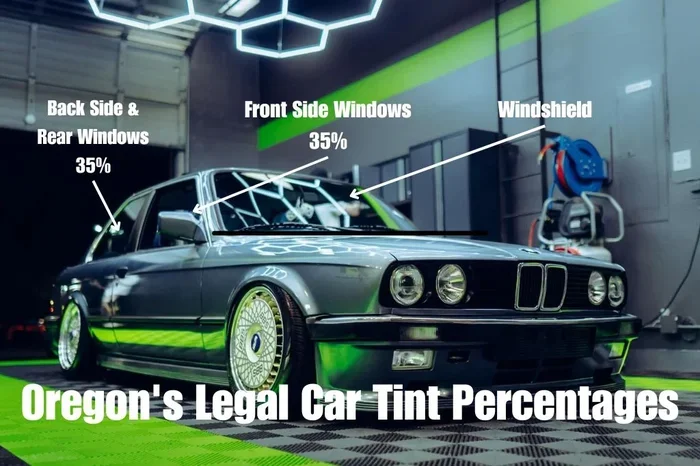
For passenger vehicles in Oregon, the front side windows must allow more than 35% of light to pass through. This means your tint film on the front side windows must have a VLT of 35% or higher. This is the strictest rule under the Oregon window tint law for most cars.
Why is this the case? The front side windows are the primary windows drivers use to see the road and their mirrors. Keeping these windows lighter ensures good visibility. If your front side windows are tinted darker than 35% VLT, you are in violation of the law and could receive a tint ticket.
Rear Side and Rear Window Rules
Here is where Oregon’s law gives you more flexibility. The rear side windows and the rear window can be tinted to any darkness level. There is no minimum VLT requirement for these windows on passenger vehicles. This means you can apply a very dark privacy tint to your back windows if you want to.
This rule applies to sedans, SUVs, and vans alike. However, if your vehicle has tinted rear windows from the factory, you still need to make sure your added tint film does not interfere with the overall VLT. Always check the specifications of your tint film before installation.
Visible Light Transmission Explained
Let us break down VLT in simple terms. Imagine standing in direct sunlight and holding a piece of tinted glass in front of you. If 35% of the sunlight passes through, that glass has a VLT of 35%. The remaining 65% is blocked by the glass and tint combined.
When you buy window tint film, the manufacturer will list the VLT of the film. Keep in mind that your car glass already blocks some light on its own. The combined VLT of your glass plus the film is what matters under Oregon window tint law. A professional tint installer can help you calculate the total VLT to make sure you stay legal.
Comparison of Legal Tint Darkness by Window
- Front Side Windows: Must allow more than 35% VLT
- Rear Side Windows: No minimum VLT limit allowed
- Rear Window: No minimum VLT limit allowed
- Windshield: Non-reflective tint allowed on the top six inches only
Windshield Tint Rules and Regulations
Non-Reflective Tint Strip Rules
The Oregon window tint law allows a small strip of non-reflective tint on the windshield. This strip must be placed on the top six inches of the windshield. You cannot tint the rest of the windshield with any darkness or reflectiveness.
This six-inch strip is often called a sun strip or an eyebrow tint. It helps reduce glare from the sun without blocking the driver’s view of the road. Many drivers appreciate this small addition because it makes driving in bright conditions much more comfortable.
What You Cannot Do to Your Windshield
You cannot apply any reflective tint to the windshield. The tint must be completely non-reflective. Any reflective coating on the windshield is a violation of the Oregon window tint law and could result in a fine.
Also, you cannot extend the tint below the top six inches. Some people try to tint a larger area of the windshield for aesthetic reasons, but this is not permitted in Oregon. Stick to the top strip only, and make sure it is non-reflective.
Medical Exemptions and Special Permits
Who Qualifies for a Tint Exemption?
Some people have medical conditions that make them extremely sensitive to sunlight. For these individuals, standard tint darkness limits may not provide enough protection. The Oregon window tint law includes provisions for a medical exemption that allows darker tint than the standard legal limits.
Qualifying conditions may include photosensitivity, lupus, eczema, or other skin conditions that are worsened by sun exposure. If you have a condition that makes you vulnerable to UV light, you may be eligible for an exemption. You will need a written statement from a licensed physician to support your application.
How to Apply for a Medical Exemption
To apply for a tint exemption in Oregon, you need to submit documentation to the Oregon DMV or the relevant state authority. Your doctor must provide a detailed letter explaining your condition and why darker window tint is medically necessary.
Once approved, you will receive a special permit or exemption certificate. Keep this document in your vehicle at all times. If you are pulled over, you can show the exemption to the officer to prove your tint is legal despite being darker than the standard limits. Without this documentation, you could still receive a tint law violation citation.
Penalties for Violating Oregon Tint Law
Common Fines and Consequences
If you are caught driving with tint that does not meet the Oregon window tint law standards, you can face penalties. The most common consequence is a fine. A tint ticket in Oregon can cost up to $110, depending on the severity of the violation.
Beyond the fine, you may be required to remove the illegal tint and replace it with compliant film. This means paying for the removal and the new tint, which adds to the cost. In some cases, your vehicle may not pass inspection until the tint is brought into compliance.
What Happens During a Traffic Stop
During a routine traffic stop, an officer may notice that your windows are tinted too dark. If the officer suspects a violation, they may measure the VLT of your windows using a tint meter. This device checks how much light passes through the glass and film.
If your tint fails the test, the officer can issue a citation. You may be given a fix-it ticket, which means you have a set period to correct the issue. If you do not fix it within the timeframe, the fine may increase. Always keep your tint certification and any exemption paperwork in your glove box to show if needed.
How to Choose Compliant Tint Film
Tips for Picking the Right Tint
Choosing the right tint film is easier when you know the rules. Here are some practical tips to help you stay compliant with Oregon window tint law:
- Check the VLT rating: Always ask the tint installer for the VLT of the film before installation. Make sure front side windows meet the 35% minimum.
- Choose non-reflective film: Reflective tint is not allowed on the front side windows or the windshield (except the top six inches).
- Consider heat rejection: Look for films that block heat and UV rays without exceeding the legal darkness limit.
- Ask about tint certification: Reputable installers will provide a certification sticker or document proving your tint meets Oregon standards.
- Avoid bubble or peeling film: Poor-quality film can bubble or peel over time, which may draw attention from law enforcement.
Working with a Licensed Installer
Not all tint installers are the same. Working with a licensed and experienced professional makes a big difference. A good installer will know the Oregon window tint law inside and out. They will recommend films that keep your car looking great while staying fully legal.
Before you commit, ask the installer about their experience with Oregon regulations. A professional will be happy to discuss VLT levels, film options, and certification. If an installer seems unsure about the rules, it is a red flag. Choose someone who knows the legal tint limits and can guarantee compliance.
Common Mistakes People Make with Car Window Tinting
Many drivers make avoidable mistakes when tinting their windows. One common error is buying tint online without checking the VLT. Some online films are much darker than what Oregon law allows. Another mistake is applying tint to the windshield outside the top six-inch strip.
Some people also forget about the rearview mirror area. If your tint obstructs the driver’s view of the rearview mirror, it can be considered a violation. Always make sure your tint does not interfere with your line of sight in any way.
Finally, do not assume that because your tint looked fine in another state, it is legal in Oregon. Every state has different tint regulations, and what is permitted in Washington or California may not be allowed in Oregon. Always verify the rules before applying tint.
Benefits of Compliant Window Tinting
Staying within the legal limits of Oregon window tint law does not mean you have to sacrifice the benefits of tinting. Modern window tint film technology offers excellent UV protection and heat rejection even at lighter VLT levels. You can still enjoy a cooler car interior and better protection from the sun.
Compliant tint also reduces sun glare, which makes driving safer and more comfortable. You get the privacy and style benefits of tinting without the risk of a tint ticket or fine. A well-chosen tint film can also protect your car’s interior from fading caused by prolonged sun exposure.
Many tint installers in Oregon offer films specifically designed to meet state regulations while maximizing comfort. These films are often multi-layered and engineered to provide high performance at legal VLT levels. Investing in quality compliant tint is a win-win for your car and your wallet.
Conclusion
Understanding Oregon window tint law is simple once you know the basics. The front side windows must allow more than 35% VLT, while the rear side windows and rear window can be any darkness. The windshield can have a non-reflective tint strip on the top six inches only. Medical exemptions are available for those with qualifying conditions, and violations can result in fines of up to $110.
Working with a knowledgeable tint installer and choosing certified window tint film are the best ways to ensure compliance. Always keep your documentation handy and stay informed about any changes to the law. By following the rules, you can enjoy all the benefits of car window tinting without worry.
Take the time to research your options, ask questions, and invest in quality tint that meets Oregon window tint law standards. Your car, your eyes, and your wallet will thank you. Stay compliant, stay safe, and enjoy the ride.
Frequently Asked Questions
What is the legal tint darkness for front side windows in Oregon?
Under Oregon window tint law, the front side windows on passenger vehicles must allow more than 35% visible light transmission (VLT). This means the tint film on your front side windows cannot be darker than 35% VLT. Any tint darker than this is considered illegal and could result in a citation.
Can I tint my rear windows as dark as I want in Oregon?
Yes. The Oregon window tint law does not impose a minimum VLT requirement for rear side windows or the rear window on passenger vehicles. You can tint these windows to any darkness level you prefer. This gives you full flexibility for privacy and heat rejection in the back of your vehicle.
Do I need a medical exemption for dark tint in Oregon?
If you want to tint your front side windows darker than the 35% VLT limit, you need a medical exemption from the Oregon DMV. You must provide a written statement from a licensed physician explaining your qualifying condition. Without this exemption, darker front window tint is illegal and could result in a fine.
How much is the fine for an illegal tint in Oregon?
A tint ticket in Oregon can cost up to $110. The exact fine depends on the severity of the violation and the jurisdiction. In addition to the fine, you may be required to remove the illegal tint and replace it with compliant film. Repeated violations could lead to higher costs and additional penalties.
Is reflective tint allowed on car windows in Oregon?
No. Reflective tint is not allowed on the front side windows or the windshield in Oregon. The windshield can only have a non-reflective tint strip on the top six inches. Using reflective tint on prohibited windows is a violation of Oregon window tint law and could lead to a citation.
Where can I find a licensed tint installer in Oregon?
You can find licensed tint installers through the Oregon DMV website or by asking for recommendations at local auto shops. Always verify that your installer understands the current Oregon window tint law and can provide a tint certification document. A reputable installer will be transparent about VLT levels and compliance requirements.