How to Reset Your Mitsubishi Air Conditioner Quickly
Learn how to reset your Mitsubishi air conditioner quickly and easily with our complete guide. This article covers every reset method, from the remote control to the circuit breaker, so you can get your cooling system back up and running fast. Whether you are dealing with error codes, a frozen unit, or just need a fresh start, our step-by-step instructions will help you troubleshoot and fix the problem in minutes.
Your Mitsubishi air conditioner is a powerful cooling machine, but even the best units need a fresh start sometimes. How to Reset a Mitsubishi Air Conditioner is one of the simplest yet most useful skills you can learn as a homeowner. A quick reset can clear error codes, restore cooling performance, and bring your comfort back in minutes. This guide covers every method you need, from the remote control to the circuit breaker, so you never have to wait for a repair technician.
We also share practical tips, common mistakes, and maintenance habits that keep your unit running at its best. Read on to become your own Mitsubishi AC troubleshooting expert.
Air conditioners work hard, especially during the peak of summer. Over time, electrical glitches, sensor errors, or simple power surges can cause your unit to freeze up, display warning lights, or stop cooling altogether. Resetting your Mitsubishi air conditioner is often the fastest way to clear these issues and get back to comfortable temperatures.
Knowing the right way to reset your unit matters. A proper Mitsubishi air conditioner reset protects your system from damage and ensures all settings return to their factory defaults. Let us explore the different methods you can use.
Key Takeaways
- Multiple Reset Methods: You can reset your Mitsubishi air conditioner using the remote control, the reset button on the unit, or the circuit breaker.
- Quick Troubleshooting: Understanding error codes and common problems helps you fix issues fast without calling a technician.
- Preventive Maintenance Matters: Regular cleaning and filter changes reduce the need for frequent resets.
- Safety First: Always turn off power before performing any internal reset or inspection.
- When to Call a Pro: Some issues require professional service, especially refrigerant leaks or compressor problems.
- Save Money: Knowing how to reset and troubleshoot your unit can avoid costly service calls.
📑 Table of Contents
- Why You Might Need to Reset Your Mitsubishi Air Conditioner
- How to Reset Your Mitsubishi Air Conditioner Using the Remote Control
- How to Reset Using the Unit’s Built-In Reset Button
- How to Reset Using the Circuit Breaker
- Comparison of Reset Methods
- Resetting Error Codes and Warning Lights
- Preventive Maintenance to Avoid Frequent Resets
- Conclusion
Why You Might Need to Reset Your Mitsubishi Air Conditioner
There are many reasons your Mitsubishi cooling system might need a reset. Understanding these reasons helps you decide which method to use and when. Sometimes a reset is a quick fix. Other times it is the first step in a deeper air conditioner troubleshooting process.
Common Signs Your Unit Needs a Reset
Watch for these warning signs that tell you a reset might help:
- Error codes flashing on the display panel or remote control
- Air conditioner not cooling even though it is running
- Ice buildup on the indoor unit or pipes
- Unusual noises like clicking, buzzing, or rattling
- Unit shuts off randomly or refuses to turn on
- Error light blinking on the indoor or outdoor unit
- Remote control not responding to commands
If you notice any of these symptoms, a reset is often the fastest solution. Before you call a technician, try one of the methods below.
Benefits of a Quick Reset
A simple reset offers many advantages for your Mitsubishi Electric mini split or wall-mounted unit:
- Saves time: A reset takes only a few minutes compared to waiting for a service call.
- Saves money: Avoiding unnecessary technician visits keeps more money in your pocket.
- Restores factory settings: Your unit returns to default operating parameters.
- Clears temporary glitches: Electrical hiccups often resolve with a fresh power cycle.
- Boosts confidence: You become more self-reliant with your HVAC system reset skills.
How to Reset Your Mitsubishi Air Conditioner Using the Remote Control
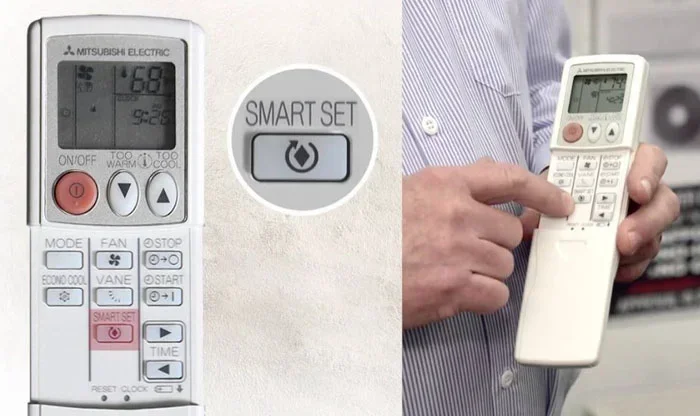
The remote control is the easiest and most common way to perform a Mitsubishi AC reset. Most Mitsubishi units come with a user-friendly remote that includes a reset function. This method works well for minor glitches and error code clears.
Step-by-Step Remote Reset
Follow these steps carefully to reset your unit using the remote:
- Point the remote at the indoor unit and make sure it is within range.
- Press the power button to turn the unit off completely.
- Wait 10 seconds to allow the system to fully power down.
- Press and hold the reset button on the remote for about 5 seconds. On some models, this is labeled “RESET” or shown as a small circular arrow icon.
- Release the button and wait for the unit to beep or show a confirmation light.
- Turn the unit back on using the power button.
- Check the display to see if error codes have cleared.
This method is perfect for everyday use. It takes less than a minute and requires no tools.
Quick Tips for Remote Reset
- Check the batteries in your remote before attempting a reset. Weak batteries often cause unresponsive remotes.
- Clean the remote sensor on the indoor unit with a dry cloth if the reset does not seem to work.
- Use the correct mode after resetting. Set your unit to cool mode and adjust the temperature to your comfort level.
- Keep the remote close during the reset process for a strong signal connection.
Expert Tip: If your remote has a “Service” or “Maintenance” mode, do not use it for a basic reset. These modes are designed for technicians and may change advanced settings.
How to Reset Using the Unit’s Built-In Reset Button
Every Mitsubishi air conditioner has a physical reset button located on the unit itself. This method is useful when the remote is lost, broken, or unresponsive. The Mitsubishi reset button is a small, recessed button that requires a thin tool to press.
Locating the Reset Button
The reset button location depends on your model:
- Wall-mounted units: Look on the right side of the indoor unit behind a small flip panel or door. You may need to open the front panel to access it.
- Ceiling cassette units: Check the side panel or the bottom edge of the unit. The button is often hidden behind a removable cover.
- Floor-standing units: Look near the bottom front panel or behind the front grille.
If you cannot find the button, consult your user manual. The manual will have a diagram showing the exact location for your specific model.
Step-by-Step Button Reset
Here is how to use the built-in reset button:
- Turn off the unit using the remote or the power switch on the unit.
- Unplug the unit from the wall outlet for safety.
- Wait 30 seconds to let all residual power drain from the system.
- Locate the reset button on the indoor unit. It is usually a small, red or black button labeled “RESET.”
- Use a thin tool like a paperclip or a pen tip to press the button firmly.
- Hold for 3 to 5 seconds until you hear a click or see a light flash.
- Plug the unit back in and turn it on using the remote.
- Verify the reset by checking that the display is clear and the unit starts normally.
This method is slightly more involved than the remote reset but is very effective for stubborn issues. It is also the go-to method when your Mitsubishi wall mounted unit is not responding to any remote commands.
How to Reset Using the Circuit Breaker
The circuit breaker method, also known as power cycling, is the most thorough way to perform a cooling system reset. This method cuts all power to the unit, allowing the internal electronics to fully reset. It is ideal for more serious issues like a frozen compressor or persistent error lights.
Power Cycling Through the Breaker
Follow these steps to reset your unit through the circuit breaker:
- Turn off the air conditioner using the remote control first.
- Go to your electrical panel and find the breaker that controls your Mitsubishi air conditioner unit.
- Flip the breaker to the OFF position. You should hear a click.
- Wait at least 60 seconds. This gives the capacitors and circuits time to fully discharge.
- Flip the breaker back to ON. Wait another 10 seconds for the system to power up.
- Turn on the unit using the remote control.
- Check for error codes on the display. If the reset worked, the unit should start in normal cooling mode.
This method is sometimes called a hard reset because it completely drains all power from the system. It is the most powerful reset option available to homeowners.
When to Use the Breaker Method
Use the circuit breaker method when:
- The remote reset and button reset both fail to clear the error.
- Your unit is completely unresponsive and will not turn on.
- You have performed maintenance or cleaning and need a full system restart.
- The air conditioner error light stays on after other reset attempts.
- You have experienced a power outage or electrical surge.
Important safety note: Always make sure your hands are dry and you are standing on a dry surface when working with your electrical panel. If you are uncomfortable with this process, call a licensed electrician or HVAC technician.
Comparison of Reset Methods
Not all reset methods are the same. Here is a quick comparison to help you choose the right one for your situation:
| Method | Best For | Difficulty | Time Required | When to Use |
|---|---|---|---|---|
| Remote Control Reset | Minor glitches, error code clears | Easy | 1-2 minutes | First attempt for most issues |
| Built-In Reset Button | Remote not working, persistent errors | Medium | 3-5 minutes | When remote reset fails |
| Circuit Breaker Reset | Frozen unit, power surge damage, complete failure | Moderate | 5-10 minutes | When other methods fail or after major issues |
Start with the remote control method. If that does not work, move to the built-in reset button. Use the circuit breaker method as a last resort or when dealing with serious issues like a frozen air conditioner or complete system failure.
Resetting Error Codes and Warning Lights
AC error codes are your unit’s way of telling you something is wrong. Mitsubishi units use a series of blinking lights and numeric codes to communicate specific problems. Understanding these codes helps you know exactly what kind of reset or repair your unit needs.
Understanding Mitsubishi Error Codes
Here are some common Mitsubishi error codes and what they mean:
- E1: High-pressure fault. Often caused by a blocked condenser or low airflow.
- E3: Indoor pipe temperature sensor error. May need sensor replacement.
- E5: Communication error between indoor and outdoor units. A reset often fixes this.
- U0: Inverter compressor fault. This may require professional diagnosis.
- H1: Defrost sensor error. Common in units operating in humid conditions.
- CH: Compressor overheating. Usually caused by dirty filters or low refrigerant.
After performing a Mitsubishi air conditioner reset, most temporary error codes will disappear. If a code returns immediately after the reset, it signals a deeper problem that needs professional attention.
Clearing Error Codes After Reset
Follow these steps to clear error codes:
- Perform any of the three reset methods described above.
- Turn the unit off and wait 2 minutes.
- Turn the unit back on and set it to cool mode.
- Observe the display for 2-3 minutes.
- If the error code does not return, the reset was successful.
- If the error code returns, note the exact code and contact a certified Mitsubishi technician.
Quick Tips
- Write down the error code before resetting so you can reference it later if the problem returns.
- Take a photo of the blinking error lights with your phone for easy reference.
- Never ignore repeated error codes. They are your unit’s way of asking for help.
- Keep your model number handy when searching for error code meanings online or when calling for service.
Common Mistakes to Avoid When Resetting
Even simple resets can go wrong if you make these mistakes:
- Skipping the wait time: Not waiting long enough between power cycles can prevent the capacitors from fully discharging. Always wait at least 30 seconds.
- Using the wrong reset button: Some units have a test button that looks similar to the reset button. Always double-check the label.
- Resetting without turning off the unit first: Always power down the unit before attempting any reset method.
- Ignoring the root cause: A reset clears symptoms but does not fix underlying problems like dirty filters, blocked vents, or low refrigerant.
- Attempting the breaker reset during a storm: Wait for stable weather before working with your electrical panel.
Expert Insights
HVAC professionals recommend performing a Mitsubishi inverter AC reset at least once every season as part of routine air conditioner maintenance. This practice clears any accumulated error codes and refreshes the system’s operating parameters. Many technicians also suggest cleaning the air filter and checking the outdoor unit for debris before performing a reset, as dirty components are often the root cause of error codes in the first place.
Preventive Maintenance to Avoid Frequent Resets
The best way to avoid needing frequent resets is to keep your unit well-maintained. A well-cared-for Mitsubishi air conditioner runs more efficiently, experiences fewer errors, and lasts longer. Here are the habits that make the biggest difference.
Filter Cleaning Schedule
Dirty filters are the number one cause of cooling problems in residential Mitsubishi Electric mini split systems. Follow this simple schedule:
- Check filters every 2 weeks during heavy use months (summer and winter).
- Clean filters every 4 weeks by removing them and washing with warm water and mild soap.
- Let filters dry completely before reinstalling them. Never put a wet filter back into the unit.
- Replace filters every 6-12 months if they are damaged or cannot be cleaned effectively.
- Use genuine Mitsubishi replacement filters for the best fit and airflow performance.
Professional Service Tips
While you can handle many tasks yourself, some maintenance jobs are best left to professionals:
- Annual professional inspection: A certified technician checks refrigerant levels, electrical connections, and overall system health.
- Coil cleaning: The outdoor condenser coil should be cleaned at least once a year to prevent airflow blockage.
- Drain line flushing: A clogged drain line can cause water damage and trigger error codes.
- Refrigerant check: Low refrigerant levels cause the compressor to work harder and may trigger error codes like CH or E1.
Scheduling a professional air conditioner maintenance visit once a year can prevent many of the issues that lead to frequent resets. Think of it as a tune-up for your cooling system.
When to Call a Professional Instead of Resetting
Not every problem can be solved with a reset. Call a certified Mitsubishi technician if you experience any of the following:
- Refrigerant leaks: Signs include ice on the pipes, a hissing sound, or a noticeable drop in cooling performance.
- Compressor failure: If the unit makes grinding or clanking noises, the compressor may be damaged.
- Error codes that return immediately: If the same code appears right after a reset, there is likely a hardware problem.
- Water leaks from the indoor unit: This could indicate a clogged drain line or a faulty pump.
- Unit is more than 10 years old: Older units may need replacement rather than repeated resets.
Knowing when to stop troubleshooting and call for help saves you from causing further damage to your unit.
Conclusion
How to Reset a Mitsubishi Air Conditioner is a straightforward process once you know the right steps. Whether you use the remote control, the built-in reset button, or the circuit breaker, each method has its place in your troubleshooting toolkit. Start with the simplest method and work your way up to the more thorough options if needed.
Remember that a reset is a tool, not a cure-all. It clears temporary errors and refreshes your system, but it does not replace regular maintenance. Keep your filters clean, schedule annual professional service, and pay attention to warning signs before they become big problems.
With the knowledge in this guide, you are now equipped to handle most Mitsubishi AC reset situations on your own. You will save time, money, and the frustration of sitting in a hot house waiting for a technician. Keep this guide bookmarked for the next time your air conditioner troubleshooting needs arise.
Stay cool and confident. Your Mitsubishi air conditioner is in good hands.
Frequently Asked Questions
How long should I wait before resetting my Mitsubishi air conditioner?
For a remote or button reset, waiting 10 to 30 seconds is usually enough. For a circuit breaker reset, wait at least 60 seconds to make sure all the capacitors fully discharge. The wait time allows the internal electronics to reset completely, which is why rushing this step is one of the most common mistakes homeowners make.
Will resetting my Mitsubishi air conditioner delete my saved settings?
Yes, a full reset typically clears custom settings like scheduled timers, fan speeds, and temperature preferences. After resetting, you will need to reprogram your preferred settings. This is a normal part of the reset process and happens with most Mitsubishi wall mounted units and mini split systems.
How often should I reset my Mitsubishi air conditioner?
You should only reset your unit when you notice a problem like error codes, poor cooling, or unexpected shutdowns. A reset is not a regular maintenance task you need to do every month. However, performing a quick power cycle once at the start of each cooling season is a good habit that keeps your HVAC system reset ready for heavy use.
What should I do if the error code keeps coming back after a reset?
If the same error code returns immediately after a reset, it means there is an underlying hardware or mechanical issue that a simple reset cannot fix. Common causes include low refrigerant, a faulty sensor, or a failing compressor. In this case, contact a certified Mitsubishi technician for a proper diagnosis and repair.
Can I reset my Mitsubishi air conditioner without the remote control?
Absolutely. You can use the built-in reset button on the indoor unit or the circuit breaker method. Both approaches do not require the remote control at all. The circuit breaker method is especially useful when the remote is lost, broken, or the batteries are dead.
Is it safe to reset the air conditioner during a thunderstorm?
No, it is not safe to work on your electrical panel or HVAC system during a thunderstorm. Lightning strikes and power surges during storms can be dangerous. Wait until the weather is clear and stable before attempting any reset that involves the circuit breaker or electrical connections.