How Does the Toyota RAV4 Tell You Which Tire Is Low
The Toyota RAV4 uses a tire pressure monitoring system (TPMS) to alert you when a tire is low, but it does not always tell you exactly which tire. The dashboard warning light gives you a general alert, and newer models may display individual tire pressure readings on the multi-information display. Understanding how this system works helps you stay safe, save fuel, and avoid costly tire damage.
Key Takeaways
- The RAV4 TPMS warns you about low tire pressure through a dashboard light, but older models don’t specify which tire.
- Newer RAV4 models with a multi-information display can show individual tire pressure readings for all four tires.
- Common causes of low pressure include punctures, temperature changes, and slow leaks that develop over time.
- Resetting the TPMS after inflating your tires is a simple process you can do yourself in minutes.
- Proper tire pressure improves fuel economy, handling, and tire life, saving you money in the long run.
- Regular manual checks with a tire pressure gauge are still important even with TPMS installed.
- Knowing when to visit a professional can prevent small tire issues from becoming big safety problems.
📑 Table of Contents
- How the Toyota RAV4 Tire Pressure System Works
- What the Dashboard Warning Lights Mean
- Common Causes of Low Tire Pressure in the RAV4
- How to Check and Reset Tire Pressure on Your RAV4
- Tips for Maintaining Proper Tire Pressure on Your RAV4
- When to See a Professional for Tire Pressure Issues
- Key Takeaways for RAV4 Tire Pressure Awareness
How the Toyota RAV4 Tire Pressure System Works
The Toyota RAV4 comes equipped with a tire pressure monitoring system that keeps an eye on your tires while you drive. This system is designed to warn you when any tire falls below the recommended pressure level. But does it tell you exactly which tire is low? The answer depends on your model year and trim level.
Every Toyota RAV4 built after 2008 in the United States includes a TPMS as standard equipment. This became a federal requirement for all passenger vehicles. The system uses either direct or indirect sensors to measure tire pressure. Direct TPMS uses a small sensor inside each tire that sends data to the car’s computer. Indirect TPMS uses the wheel speed sensors already present in the anti-lock braking system to detect differences in tire size caused by low pressure.
When the system detects a problem, it triggers a warning light on your dashboard. This light looks like a horseshoe shape with an exclamation point in the center. It is one of the most recognized Toyota warning lights on the dashboard. But here is the thing many RAV4 owners don’t realize: that light alone does not always point to the specific tire that needs attention.
Direct vs. Indirect TPMS in the RAV4
Understanding the difference between direct and indirect systems helps you know what to expect from your RAV4. Direct TPMS gives you more detailed information. Each tire has its own sensor that measures the exact pressure level. These sensors send real-time data to the vehicle’s computer. When one tire drops below the threshold, the system can often tell you which one it is.
Indirect TPMS works differently. It does not have physical sensors inside the tires. Instead, it monitors how fast each wheel is spinning. A tire with low pressure has a smaller rolling radius, which means it spins faster than a properly inflated tire. The system detects this difference and triggers the warning light. However, it cannot tell you which specific tire is the problem.
Most Toyota RAV4 models use a combination of both systems depending on the year and trim. Higher-end trims and newer models tend to have direct sensors that provide more specific information. Base models and older vehicles often rely on indirect systems that give you a general alert only.
What the Dashboard Warning Lights Mean
The TPMS warning light on your RAV4 dashboard is your first clue that something is wrong with your tire pressure. But what does it actually mean when that light comes on? And is there a way to get more specific information?
When the light stays on constantly, it means at least one tire is significantly below the recommended pressure. This is not something to ignore. Driving on underinflated tires can lead to poor handling, reduced fuel economy, and even a blowout. If the light flashes for about 60 to 90 seconds and then stays on, it usually indicates a malfunction in the TPMS system itself rather than a tire pressure issue.
What Newer RAV4 Models Can Display
If you own a newer Toyota RAV4, you may have a multi-information display on your dashboard or instrument cluster. This screen can show individual tire pressure readings for each wheel. When you press the appropriate button on your steering wheel, you can scroll through the display and see the pressure for all four tires plus the spare.
This feature is a game-changer. Instead of guessing which tire is low, you can see the exact numbers right away. For example, you might see that the front left tire reads 28 PSI while the recommended pressure is 35 PSI. That tells you exactly where to look and what to fix.
However, not all RAV4 models have this capability. Older models and lower trims may only show the warning light without any numerical readings. In those cases, you will need to check each tire manually with a tire pressure gauge to find the culprit.
The Spare Tire Sensor
Some RAV4 models also include a sensor for the spare tire. This is especially common in models that come with a full-size spare rather than a compact donut spare. If your spare tire pressure is low, the TPMS may trigger the same warning light. So if you have checked all four road tires and they look fine, don’t forget to check the spare as well.
Common Causes of Low Tire Pressure in the RAV4
Now that you know how the system works and what the lights mean, let’s talk about why your tires might be losing pressure in the first place. There are several common reasons why a Toyota RAV4 low tire pressure issue occurs.
- Punctures from nails, screws, or sharp debris: These are the most obvious cause. A small puncture can let air out slowly over days or weeks, making it hard to notice until the TPMS light comes on.
- Temperature changes: Cold weather causes the air inside your tires to contract. For every 10-degree drop in temperature, your tire pressure can decrease by about 1 PSI. This is why many drivers notice low pressure warnings in winter.
- Slow leaks from the valve stem: The valve stem is the small metal or rubber piece that sticks out of the wheel. Over time, it can crack or corrode, allowing air to escape slowly.
- Bead leaks: The bead is the edge of the tire that seals against the rim. Dirt, corrosion, or damage can break this seal and cause a slow leak.
- Porous or cracked rims: Alloy wheels can develop small cracks that allow air to seep out. This is more common in older vehicles or wheels that have hit potholes.
- Normal air loss over time: Even without a puncture, tires naturally lose about 1 PSI per month. This is why regular checks are important.
Each of these causes has a different fix. A puncture might need a plug or patch. A valve stem issue might just need a replacement valve. Understanding the root cause helps you choose the right solution and avoid repeated trips to the shop.
Why Temperature Changes Matter
Many RAV4 owners are surprised when the TPMS light comes on during the first cold snap of fall. They did not get a puncture, so why is the light on? The answer is simple physics. Air contracts when it gets cold, which reduces the pressure inside the tire. A tire that was perfectly fine in summer can trigger the warning light in winter.
This is actually one of the most common reasons RAV4 owners ask about the tire pressure system. If your light comes on during a cold morning but goes away after you drive for a while, temperature change is likely the cause. However, you should still check the pressure and add air if needed to reach the recommended level.
How to Check and Reset Tire Pressure on Your RAV4
Once you know which tire is low, the next step is to fix it and reset the system. The good news is that this process is straightforward and something you can do at home with basic tools.
Step-by-Step Tire Pressure Check
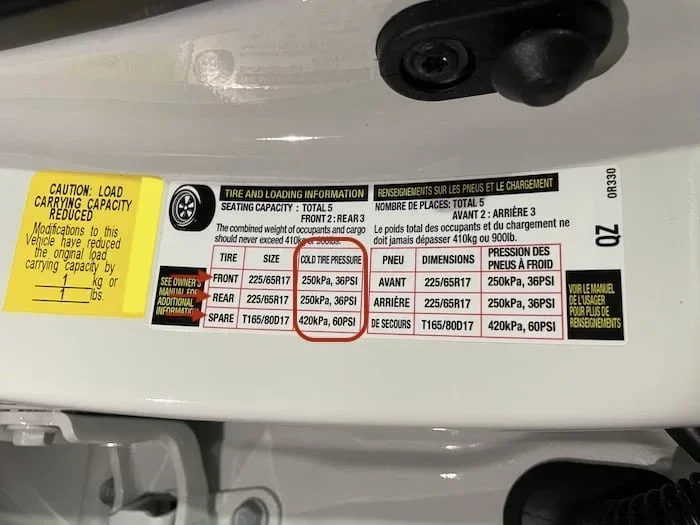
- Find the recommended tire pressure for your RAV4. Check the sticker on the driver’s side door jamb or the owner’s manual. Do not use the number printed on the tire itself, as that is the maximum pressure, not the recommended pressure.
- Remove the valve cap from the tire you want to check.
- Press your tire pressure gauge firmly onto the valve stem. You should hear a brief hiss of air, which is normal.
- Read the number on the gauge and compare it to the recommended PSI.
- Repeat this process for all four tires and the spare.
If any tire reads below the recommended pressure, use an air compressor to add air. Most gas stations have air pumps with gauges built in. Add air in small bursts and check the pressure frequently to avoid overinflating.
How to Reset the TPMS Light
After you have inflated your tires to the correct pressure, you need to reset the TPMS system. The reset process varies slightly depending on your RAV4 model year.
For most RAV4 models, the reset button is located beneath the steering column or on the left side of the dashboard. With the engine running, press and hold the reset button until the TPMS light blinks three times. Release the button and drive the vehicle for about 20 minutes. The system should recalibrate and the light should turn off.
Some newer RAV4 models allow you to reset the system through the infotainment screen. Navigate to the vehicle settings menu, find the TPMS option, and select the reset function. Refer to your RAV4 owner manual for specific instructions for your model.
If the light does not go off after resetting, there may be an underlying issue. A sensor could be dead, a tire might still be low, or the system might need professional diagnosis.
Quick Tips for TPMS Reset
- Always check tire pressure when the tires are cold, meaning the car has been parked for at least three hours or driven less than a mile.
- Keep a tire pressure gauge in your glove box so you can check on the go.
- Reset the system after every tire pressure adjustment, even if you only changed one tire.
- Replace the valve stem caps after checking pressure to keep dirt and moisture out.
Tips for Maintaining Proper Tire Pressure on Your RAV4
Prevention is always better than cure when it comes to tire pressure. A few simple habits can keep your RAV4 tires in great shape and prevent unexpected warnings.
Check Your Tires Monthly
Make it a habit to check your tire pressure at least once a month. Set a reminder on your phone or tie it to a regular event like paying for gas. This simple routine catches slow leaks before they become serious problems.
Invest in a Good Tire Pressure Gauge
The pencil-style gauges that cost a few dollars at the auto parts store work fine for occasional use. But if you want more accuracy, consider a digital gauge. Digital gauges are easier to read and more precise, which helps you maintain the exact recommended pressure.
Keep a Tire Pressure Log
This might sound like overkill, but keeping a simple log of your tire pressure readings helps you spot trends. If you notice one tire consistently loses pressure faster than the others, that is a sign of a slow leak that needs attention.
Check the Spare Tire Too
It is easy to forget about the spare tire until you need it. But a spare with low pressure is useless in an emergency. Check your spare tire pressure at least twice a year, ideally when you change your seasonal tires.
Be Mindful of Load and Driving Habits
Heavy loads put more stress on your tires and can affect pressure. If you regularly carry heavy cargo in your RAV4, check your tire pressure more frequently. Also, avoid potholes and curbs whenever possible, as impacts can damage tires and TPMS sensors.
How Proper Pressure Affects Fuel Economy
Maintaining the right tire pressure does more than keep you safe. It also improves your fuel economy. Underinflated tires create more rolling resistance, which means your engine has to work harder. Studies show that tires underinflated by just 10 PSI can reduce fuel efficiency by up to 3 percent. Over time, that adds up at the pump.
Properly inflated tires also wear more evenly, which means they last longer before you need to replace them. This saves you money on both fuel and new tires. It is one of the easiest ways to get more out of your Toyota RAV4 maintenance routine.
When to See a Professional for Tire Pressure Issues
Most tire pressure issues are simple to fix on your own. But some situations call for professional help. Knowing when to visit a mechanic can save you time, money, and prevent safety hazards.
If you have checked all four tires and the spare, and they are all at the correct pressure, but the TPMS light is still on, there is likely a sensor problem. TPMS sensors have batteries that typically last 5 to 10 years. When the battery dies, the sensor cannot send data, and the system triggers a warning. A mechanic can test each sensor and replace any that are faulty.
You should also see a professional if you notice your tire pressure dropping rapidly. A slow leak might be fixable with a plug or patch, but a rapid loss could indicate a more serious damage like a sidewall puncture or a broken bead. Driving on a severely low tire can cause permanent damage to the tire and even the rim.
Another reason to seek professional help is if your RAV4 has been sitting for a long time. Tires can develop flat spots or lose pressure when a vehicle sits unused for weeks or months. A mechanic can assess the condition of your tires and advise whether they need to be replaced or simply reinflated.
Finally, if your RAV4 has the TPMS reset button but the light keeps coming back after you reset it, this could indicate a deeper system issue. The control module might need reprogramming, or there could be a wiring problem that requires professional diagnosis.
Choosing the Right Tire Shop
When you do need professional help, choose a shop that is familiar with Toyota vehicles. Many tire shops can read the TPMS codes directly, which tells them exactly which sensor or tire is causing the problem. This saves time and gives you a clear picture of what needs to be fixed.
Ask your local Toyota dealer if they offer TPMS diagnostics as part of their service package. Many dealers can check your sensors, test tire pressure, and reset the system all in one visit. It is a convenient way to make sure everything is working correctly.
Key Takeaways for RAV4 Tire Pressure Awareness
The Toyota RAV4 tire pressure monitoring system is a valuable safety feature that helps you stay aware of tire conditions. While it does not always tell you exactly which tire is low, newer models with a multi-information display can provide individual readings. Understanding how the system works, what the warning lights mean, and how to check and reset it yourself puts you ahead of most drivers.
Regular maintenance, monthly checks, and prompt attention to warning lights keep your RAV4 running safely and efficiently. Proper tire pressure improves handling, boosts fuel economy, and extends the life of your tires. It is one of the simplest yet most impactful things you can do for your vehicle.
So the next time that TPMS light comes on, do not panic. Check your tires, find the low one, add air, and reset the system. If the problem persists, visit a professional. With the right knowledge and a little proactive care, you will keep your RAV4 tires in excellent condition for miles to come.
Stay attentive to your tire pressure, keep a gauge handy, and remember that your Toyota RAV4 is designed to help you stay safe on the road. The system works hard for you, and a little attention on your part goes a long way toward keeping everything rolling smoothly.
Frequently Asked Questions
Does the Toyota RAV4 tell you which specific tire is low?
It depends on your model year and trim. Newer RAV4 models with a multi-information display can show individual tire pressure readings for each wheel. Older models and base trims only display a general warning light without specifying which tire is the problem. In those cases, you will need to check each tire manually with a gauge.
How do I reset the TPMS light on my Toyota RAV4?
Locate the TPMS reset button, which is usually found beneath the steering column or on the left side of the dashboard. Press and hold it with the engine running until the warning light blinks three times. Then drive the vehicle for about 20 minutes to allow the system to recalibrate. Some newer models let you reset the system through the infotainment screen.
What causes low tire pressure in a Toyota RAV4?
Common causes include punctures from nails or debris, temperature changes that cause air to contract, slow leaks from valve stems, bead leaks, cracked rims, and normal air loss over time. Cold weather is one of the most frequent triggers, especially during seasonal temperature drops.
How often should I check my RAV4 tire pressure?
You should check your tire pressure at least once a month and before any long road trips. Tires naturally lose about 1 PSI per month, and temperature changes can cause additional fluctuations. Regular checks help you catch slow leaks early and maintain optimal fuel efficiency.
Can I drive my RAV4 with the TPMS light on?
It is not recommended. The TPMS light means at least one tire is significantly underinflated, which can affect handling, braking, and fuel economy. Driving on underinflated tires also increases the risk of a blowout. Check your tire pressure as soon as possible and inflate any low tires before driving long distances.
How long do Toyota RAV4 TPMS sensors last?
TPMS sensors typically last between 5 and 10 years, depending on usage and driving conditions. The internal battery cannot be replaced separately, so when the battery dies, the entire sensor must be replaced. If your TPMS light is flashing or stays on even after you inflate your tires, a dead sensor battery may be the cause.
=== CONCLUSION ===
The question “does the Toyota RAV4 tell you which tire is low” has a nuanced answer that depends on your specific model and year. The Toyota RAV4 tire pressure monitoring system is designed to alert you when something is wrong, and newer models go a step further by showing you exactly which tire needs attention. Whether you have a basic warning light or a full digital display, understanding your system empowers you to take quick, confident action.
Regular maintenance, monthly pressure checks, and prompt responses to warning lights keep your RAV4 safe and efficient. A little attention to your tires pays off in better fuel economy, longer tire life, and peace of mind on every drive. Stay proactive, stay informed, and your Toyota RAV4 will keep you rolling safely for many miles ahead.