How Bugatti Sets the Ultimate Performance Benchmarks
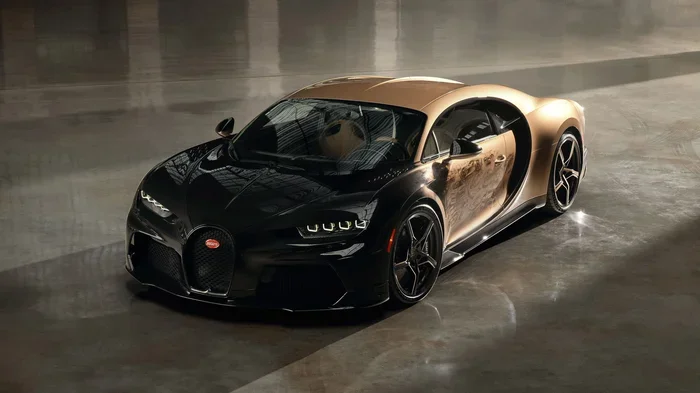
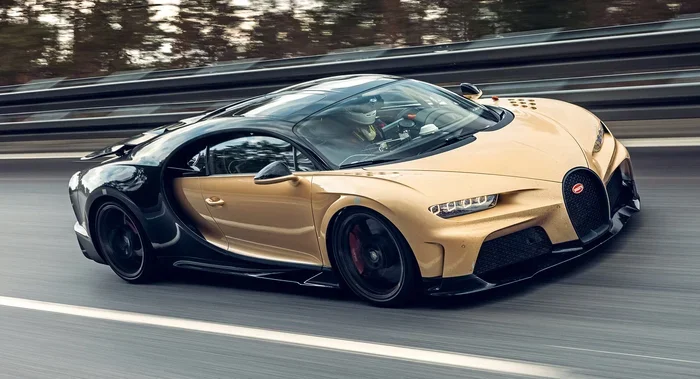
Bugatti sets performance benchmarks through a combination of quad-turbo W16 engineering, advanced aerodynamics, and relentless testing. The French luxury automaker has redefined what is possible in a production hypercar. From the Chiron to the Bolide, every Bugatti model pushes the limits of speed, power, and precision engineering.
When you think about the fastest cars in the world, one name always comes to mind: Bugatti. How Bugatti Sets Performance Benchmarks is a question that fascinates car enthusiasts and engineers alike. The French automaker has spent over a century perfecting the art of speed. Every Bugatti model is more than just a car. It is a statement of what engineering can achieve when limits are meant to be broken.
The story of Bugatti performance benchmarks starts with a simple idea. Build the fastest, most powerful, and most beautiful car possible. Then make it better. This philosophy has driven the company since its founding in Molsheim, France. Today, Bugatti continues to lead the hypercar industry with machines that redefine what we think is possible on four wheels.
So how does Bugatti actually set these incredible standards? The answer lies in a mix of raw power, smart design, and obsessive attention to detail. From the engine to the tires, every component is engineered with one goal in mind. Bugatti performance benchmarks are not just numbers on a spec sheet. They represent years of innovation, testing, and refinement.
Key Takeaways
- Quad-Turbo W16 Power: Bugatti’s legendary engine delivers over 1,500 horsepower, setting the standard for hypercar performance.
- Aerodynamic Mastery: Active aerodynamics and downforce optimization make Bugatti cars faster and more stable at extreme speeds.
- Lightweight Construction: Carbon fiber and advanced materials keep the weight low while maintaining structural strength.
- Thermal Management: Sophisticated cooling systems ensure the engine and brakes perform at their best under extreme stress.
- Record-Breaking Testing: Bugatti conducts rigorous vehicle performance testing on some of the world’s most demanding tracks.
- Hybrid Future: The brand is now exploring hybrid hypercar technology to set the next generation of performance benchmarks.
📑 Table of Contents
The Bugatti Legacy of Speed and Engineering
Bugatti has a long and proud history of building some of the most iconic cars ever made. The brand was founded by Ettore Bugatti in 1909. From the very beginning, the company focused on combining elegance with raw performance. This unique blend of style and power set Bugatti apart from other luxury car makers early on.
A Heritage of Innovation
The early Bugatti models, like the Type 35, dominated Grand Prix racing in the 1920s and 1930s. These cars were lightweight, fast, and beautifully engineered. They proved that hypercar engineering could be both artistic and scientific. This heritage of innovation still drives the company today.
Modern Bugatti models carry forward this legacy with pride. The Bugatti Chiron, for example, is a direct descendant of the legendary Veyron. Both cars share a commitment to pushing the boundaries of vehicle performance testing. Each new model learns from the last, creating a cycle of continuous improvement that keeps the brand at the top.
Why Bugatti Stands Out
What makes Bugatti different from other luxury sports car makers? The answer is simple: ambition. While other brands focus on refinement or comfort, Bugatti focuses on being the absolute best. This means every detail matters. From the stitching on the seats to the shape of the rear diffuser, nothing is left to chance.
Bugatti also invests heavily in engineering excellence. The company employs some of the brightest minds in the automotive world. These engineers work in state-of-the-art facilities to design and test every component. The result is a car that performs at the highest level in every measurable way.
The Quad-Turbo W16 Engine: Heart of the Benchmark
At the center of every Bugatti is an engine that defies belief. The quad-turbo W16 engine is the beating heart of the brand. This massive power plant has 16 cylinders arranged in a W shape. It is fitted with four turbochargers that work together to deliver mind-blowing amounts of power.
Understanding the W16 Configuration
The W16 engine is unlike anything else in the automotive world. Most cars use four, six, or eight cylinders. Bugatti chose 16 for a reason. More cylinders mean more power strokes per revolution. This translates directly into smoother power delivery and higher engine power output.
The current version of the W16 produces over 1,500 horsepower. It also generates a staggering 1,180 pound-feet of torque. This level of torque delivery allows Bugatti cars to accelerate from 0 to 60 mph in just 2.4 seconds. That is faster than most supercars can reach 60 mph.
Quick Tip: If you ever get the chance to ride in a Bugatti, pay attention to how the power builds. The quad-turbo system delivers power so smoothly that you barely notice the transition. It feels like the engine has infinite reserves of energy waiting to be unleashed.
How the Quad-Turbo System Works
Four turbochargers might sound like overkill. But they are essential for the W16 engine to reach its full potential. Each turbocharger feeds compressed air into a set of cylinders. This allows the engine to burn fuel more efficiently and produce more power.
The quad-turbo setup also helps eliminate turbo lag. Turbo lag is the delay between pressing the accelerator and feeling the power. Bugatti’s system minimizes this delay so that power arrives instantly. This is crucial for track performance where every fraction of a second counts.
Powertrain Innovation Over the Years
Bugatti has continuously evolved the W16 engine since its introduction. Each generation brings improvements in efficiency, power, and reliability. The company also invests in powertrain innovation to stay ahead of competitors.
For example, the latest versions of the W16 feature advanced fuel injection systems. These systems deliver fuel with incredible precision. This ensures that every drop of fuel contributes to maximum power. It also helps reduce emissions, which is important as regulations become stricter around the world.
| Engine Feature | Bugatti W16 | Typical Luxury V8 |
|---|---|---|
| Cylinders | 16 | 8 |
| Horsepower | 1,500+ hp | 500-650 hp |
| Torque | 1,180 lb-ft | 500-600 lb-ft |
| Turbochargers | 4 | 2 |
| 0-60 mph | ~2.4 seconds | 3.5-4.5 seconds |
Aerodynamics and Downforce: Shaping the Air
Power means nothing if a car cannot handle it. This is why aerodynamics play such a crucial role in Bugatti performance benchmarks. At speeds above 200 mph, the air itself becomes a force that can push a car off course. Bugatti engineers spend countless hours shaping each car to cut through the air with minimal resistance.
The Science of Airflow
Active aerodynamics are one of Bugatti’s biggest advantages. These are movable parts on the car that adjust based on speed and driving conditions. For example, the rear wing on a Bugatti can change its angle depending on whether you are driving on the street or on a track.
At low speeds, the wing stays flat to reduce drag. At high speeds, it tilts to increase downforce optimization. Downforce pushes the car down onto the road, giving it more grip. This is essential for stability at extreme speeds where a single gust of wind could be dangerous.
Designing for Speed
Every curve and crease on a Bugatti serves a purpose. The front splitter directs air under the car. The side vents cool the brakes and engine. The rear diffuser speeds up airflow underneath to create suction. These elements work together to manage airflow around the entire vehicle.
The goal is simple: reduce drag and increase downforce simultaneously. This is not easy to achieve, but Bugatti has mastered it through years of speed engineering and wind tunnel testing. The result is a car that slices through the air like a knife through butter.
Expert Insight: Bugatti uses full-scale wind tunnels to test every model before production. Engineers can simulate speeds over 250 mph and observe how the car behaves. This testing is essential for setting accurate performance benchmarks that real drivers can trust on the road and on the track.
Comparing Aerodynamic Features
Not all hypercars are created equal when it comes to aerodynamics. Here is how Bugatti compares to some of its rivals in key areas:
| Aerodynamic Feature | Bugatti Chiron | Rival Hypercar A | Rival Hypercar B |
|---|---|---|---|
| Active Rear Wing | Yes | Yes | No |
| Active Front Flaps | Yes | No | Yes |
| Underbody Diffuser | Yes | Yes | Yes |
| Top Speed (mph) | 261+ | 200+ | 220+ |
| Drag Coefficient | 0.36 | 0.41 | 0.39 |
As you can see, Bugatti leads in several key aerodynamic areas. The combination of active wings, front flaps, and a sophisticated diffuser gives the Chiron a significant advantage. This is why Bugatti can achieve such high top speeds while maintaining rock-solid stability.
Chassis and Construction: Lightweight Strength
A powerful engine and smart aerodynamics mean little without a strong foundation. Bugatti’s approach to carbon fiber construction sets it apart from nearly every other automaker. The company uses advanced materials to build a chassis that is both incredibly light and remarkably strong.
The Monocoque Chassis
Bugatti uses a monocoque chassis, which means the body itself serves as the structural frame. This design is common in aircraft and racing cars. It eliminates the need for a separate frame, saving significant weight without sacrificing strength.
The monocoque is made primarily from carbon fiber reinforced polymer. This material is incredibly strong for its weight. It can withstand the enormous forces generated at high speeds while keeping the car light enough to accelerate quickly and brake effectively.
Why Weight Matters
In the world of hypercar engineering, every kilogram counts. A lighter car accelerates faster, brakes shorter, and handles better. Bugatti engineers obsess over weight reduction in every component. They measure and re-measure until every part is as light as it can possibly be.
Even the interior parts are designed to be as light as possible. The seats, dashboard, and trim are all crafted from lightweight materials without sacrificing luxury. This commitment to weight savings is a key reason why Bugatti cars perform so well on the track and on the road.
Quick Tip: When evaluating a hypercar’s performance, always look at the power-to-weight ratio. This number tells you how much power each kilogram of the car has to move. Bugatti’s low weight and massive power give it an exceptional ratio that few rivals can match.
Material Innovation
Bugatti does not just use off-the-shelf materials. The company works closely with suppliers to develop custom composites and alloys. These materials are designed specifically for automotive applications where extreme performance is required. The result is a car that feels solid and planted at any speed.
The chassis does not flex or vibrate, even under the most demanding conditions. This level of engineering excellence is what separates Bugatti from the competition. It is also why Bugatti cars feel so special to drive. Every surface, every seam, every joint is engineered to perfection.
Thermal Management and Braking Systems
Generating over 1,500 horsepower creates a lot of heat. If that heat is not managed properly, performance drops and components can fail. This is why thermal management is a critical part of Bugatti performance benchmarks. The company has developed some of the most advanced cooling systems in the automotive industry.
Keeping Cool Under Extreme Stress
Bugatti uses a multi-stage cooling system that is far more advanced than what you find in standard cars. The engine has dedicated coolant circuits for different zones. The turbochargers have their own cooling loops. Even the transmission and differentials are separately cooled.
This level of attention to cooling ensures that every component operates at its ideal temperature. It also means that Bugatti cars can sustain high performance for longer periods without overheating. This is essential for track performance where drivers push the car to its limits repeatedly.
Braking Systems That Match the Power
Stopping a car that can go over 260 mph requires braking systems of extraordinary capability. Bugatti uses carbon-ceramic brakes that are designed to handle extreme heat and stress. These brakes resist fade even under repeated hard use.
They also weigh less than traditional steel brakes, contributing to the car’s overall weight savings. The combination of powerful brakes and advanced braking systems gives Bugatti drivers confidence at any speed. You know that no matter how fast you are going, the car will stop when you need it to.
Common Mistakes: Many car owners underestimate the importance of proper brake maintenance. Even the most advanced braking systems need regular inspection and care. If you own a high-performance vehicle, make sure to follow the manufacturer’s brake service schedule strictly. Neglecting your brakes can lead to dangerous situations and costly repairs.
Braking Performance Comparison
Here is how Bugatti’s braking system compares to typical high-performance cars:
| Braking Feature | Bugatti Chiron | Standard Sports Car | High-Performance Sedan |
|---|---|---|---|
| Brake Material | Carbon-ceramic | Vented disc | Vented disc |
| 60-0 mph (feet) | ~98 feet | ~120 feet | ~115 feet |
| Brake Fade Resistance | Excellent | Moderate | Good |
| Weight Savings | Significant | Minimal | Minimal |
The numbers speak for themselves. Bugatti’s carbon-ceramic brakes stop the car significantly shorter than most competitors. This is a direct result of the company’s commitment to speed engineering and vehicle performance testing. Every system on a Bugatti is designed to work in harmony with every other system.
The Future: Hybrid Hypercar Technology and Next-Gen Benchmarks
Bugatti is not resting on its laurels. The company is already looking toward the future of hybrid hypercar technology. As emissions regulations tighten and technology advances, Bugatti is preparing to set new benchmarks for the next generation of luxury performance cars.
Why Hybrid Technology Matters
Adding electric motors to a hypercar engine brings several advantages. Instant torque from an electric motor complements the W16’s power delivery. This means even quicker acceleration and smoother power at low speeds. The electric motor fills in the gaps where the combustion engine needs a moment to spool up.
Hybrid systems also allow for regenerative braking. Energy that is normally lost during braking can be captured and stored in a battery. This energy can then be used to boost power when needed. The result is a car that is not only faster but also more efficient overall.
Bugatti’s Hybrid Vision
Bugatti has already shown glimpses of its hybrid future. The Bugatti Bolide, for instance, is a track-focused concept that explores the limits of what a hypercar can do. While not a production model, the Bolide demonstrates the company’s commitment to pushing boundaries in every possible way.
Looking ahead, Bugatti will likely integrate hybrid technology into its production lineup. This move will help the brand meet future regulations while maintaining its reputation for engineering excellence. The next generation of Bugatti hypercars will combine the raw power of the W16 with the instant response of electric motors.
Expert Insight: Industry experts believe that Bugatti’s hybrid strategy will focus on enhancing performance rather than just improving fuel economy. The goal is to make the cars faster and more capable, not just greener. This approach aligns with Bugatti’s core identity as a performance-first brand that never compromises on speed or power.
What to Expect Next
While Bugatti has not revealed all the details of its future plans, several trends are clear. The company will continue to prioritize raw power and speed. But it will also embrace electrification as a way to enhance, not replace, its signature performance.
The next Bugatti model could feature a combined output of over 1,800 horsepower. It might also introduce new active aerodynamics and advanced driver assistance systems. Whatever form it takes, one thing is certain: Bugatti performance benchmarks will continue to rise. The brand will keep pushing the envelope and setting standards that the entire industry strives to match.
Conclusion
How Bugatti Sets Performance Benchmarks is a story of relentless ambition and engineering mastery. From the quad-turbo W16 engine to the aerodynamic bodywork, every element is designed to push the limits of what is possible. Bugatti does not just build fast cars. It builds cars that define the standard for the entire industry.
The company’s commitment to hypercar engineering, lightweight construction, thermal management, and continuous innovation sets it apart from every competitor. Whether you are a car enthusiast or simply appreciate great engineering, Bugatti’s approach to performance is truly inspiring.
As the automotive world moves toward electrification and new technologies, Bugatti remains focused on its core mission. The brand will continue to set performance benchmarks that others strive to match. And that is exactly what makes Bugatti one of the most extraordinary names in the history of the automobile. The future of speed has never looked brighter.
Frequently Asked Questions
What makes Bugatti’s performance benchmarks so high?
Bugatti sets such high benchmarks because of its combination of a massive quad-turbo W16 engine, advanced aerodynamics, and lightweight construction. Every component is designed and tested to extract the maximum possible performance. This obsessive attention to detail is what gives Bugatti its edge over other luxury sports car makers.
How does Bugatti test its cars before production?
Bugatti uses a combination of computer simulations, wind tunnel testing, and real-world track testing. Engineers subject each model to extreme conditions to ensure it meets the brand’s performance standards. This rigorous vehicle performance testing process is a key reason why Bugatti cars are so reliable and capable at extreme speeds.
Is the Bugatti Chiron the fastest car Bugatti has ever made?
The Chiron is one of the fastest production cars ever made, with a top speed of over 261 mph. However, Bugatti has created even faster track-focused models like the Bolide. The Chiron remains the benchmark for production hypercars, but Bugatti continues to push the limits with new and exciting projects that explore the edges of speed engineering.
What role does aerodynamics play in Bugatti’s performance?
Aerodynamics are absolutely critical to Bugatti’s performance. At speeds above 200 mph, air resistance becomes the biggest enemy of speed. Bugatti uses active aerodynamics, including adjustable wings and flaps, to optimize airflow and downforce optimization. This allows the car to remain stable and fast at extreme velocities.
Will Bugatti make a fully electric hypercar?
Bugatti is exploring hybrid technology but has not confirmed a fully electric hypercar. The brand’s identity is deeply tied to the sound and feel of its combustion engines. However, hybrid hypercar technology will likely play a major role in Bugatti’s future, enhancing performance while meeting new emissions regulations and sustainability goals.
How does Bugatti’s braking system compare to other hypercars?
Bugatti uses carbon-ceramic brakes that are among the best in the industry. These brakes offer superior stopping power, fade resistance, and durability compared to standard brake systems. When combined with the car’s advanced braking systems and aerodynamic downforce, Bugatti can stop from top speeds with remarkable precision and safety.