How Do Police Unlock a Car Door Without Damaging It
Police use specialized non-destructive tools and proven techniques to open car doors safely. From air wedges to long reach rods, law enforcement has a range of methods designed to protect your vehicle. Understanding these processes helps car owners feel more informed during a lockout emergency.
Have you ever locked your keys inside your car and wondered how police handle it? It happens more often than you think. Thousands of drivers face a car door lockout every single day. And when it happens, most people want one thing: a quick fix that doesn’t damage their vehicle.
The good news is that police and professional locksmiths have developed highly effective methods for unlock car door without key situations. These techniques have evolved significantly over the years. Today’s tools are designed to open doors cleanly and safely. In this article, we will walk you through exactly how police unlock a car door without causing any harm. You will learn about the tools they use, the steps they follow, and what you can do to avoid getting locked out in the first place.
Key Takeaways
- Police use non-destructive methods like air wedges and long reach tools to open doors without scratching or breaking anything.
- Lockout tools such as slim jims and lock picks are common in a police officer’s toolkit for car door access.
- Air wedge and rod combinations are among the most popular and safest techniques for modern vehicles.
- Police often call a locksmith when standard tools don’t work or when the car has advanced security systems.
- Most methods are legal when performed by authorized personnel during emergencies or with proper authorization.
- Car owners can prevent lockouts by using spare keys, key fob signal boosters, and smart habits.
- Non-destructive entry saves money by avoiding costly repairs to doors, windows, and locks.
📑 Table of Contents
- Why Police Need to Unlock Car Doors
- Common Tools Police Use to Unlock Car Doors
- Step-by-Step: How Police Unlock a Car Door
- Non-Destructive Methods Explained in Detail
- When Police Call a Professional Locksmith
- Can You Use These Methods Yourself?
- Tips to Prevent Car Lockouts
- Key Takeaways
- FAQ Section
- Conclusion
Why Police Need to Unlock Car Doors
Police officers encounter locked car doors in many situations. Sometimes a child or pet is trapped inside a hot vehicle. Other times, a driver has simply lost their keys or locked them in the trunk. Whatever the reason, police need fast and safe solutions. Damaging a vehicle should always be the last resort. When police use non-destructive entry methods, everyone benefits. The driver keeps their car intact, and the officer resolves the situation quickly.
Common Lockout Scenarios
Police deal with a wide variety of lockout emergencies. Here are some of the most common situations they face:
- Children or pets trapped inside a vehicle during hot weather
- Drivers who accidentally lock keys inside the car
- Keys broken off in the lock cylinder or ignition
- Faulty key fob that no longer communicates with the car
- Transponder key failure after a battery dies in the fob
- Emergency rescues where every second counts
In each of these cases, the goal is the same. Get access to the vehicle quickly without causing damage. Police are trained to handle these situations with care and precision.
Common Tools Police Use to Unlock Car Doors
Law enforcement agencies invest in specialized lockout tools for police that are designed to work on modern vehicles. These tools have evolved alongside car technology. Let us take a closer look at the most common ones.
Air Wedge and Long Reach Tool
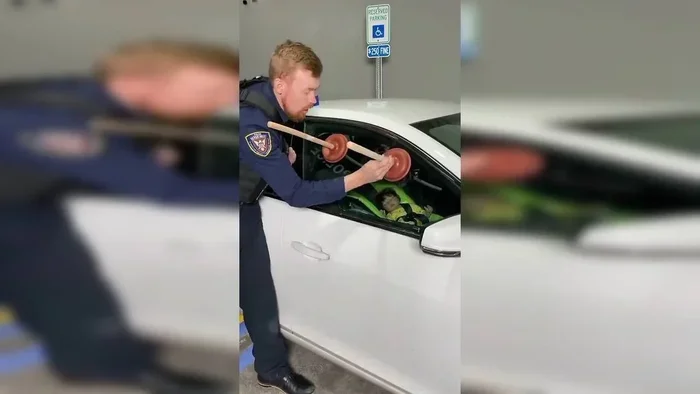
This is perhaps the most widely used combination in police lockout work. An air wedge tool is a small inflatable bladder that gets inserted between the door and the weather strip. Once inflated, it creates a small gap. Then, a long reach rod is inserted through that gap to press the unlock button or pull the interior door handle. This method works beautifully on most modern cars and trucks. It is gentle, precise, and leaves no marks.
Slim Jim
The slim jim lockout tool is a thin, flat metal strip that slides between the window and the weather stripping. It reaches down to the door linkage rods and manually manipulates the lock mechanism. While this tool has been around for decades, it requires serious skill. Used incorrectly, it can damage internal wiring or break the linkage. That is why police receive extensive training before using one.
Lock Pick Set
Just like a locksmith, police officers sometimes use a lock pick set to open a car door. This involves inserting a tension wrench and a pick into the lock cylinder and manipulating the pins until the lock turns. It is one of the most delicate methods, but it is also one of the most reliable. Many police departments train officers in basic lock picking as part of their vehicle lockout procedure.
Inflatable Wedge and Adapter Tools
Modern vehicles have more complex door interiors. To accommodate this, police use inflatable wedge adapters that create a precise gap for specialized tools. These adapters protect the door frame and paint while allowing access to the interior mechanism.
Key Fob Signal Booster
Some newer police vehicles carry a key fob signal booster. This device amplifies the signal from your key fob, even if it is inside the car. The officer places the booster near the door, and the signal reaches the fob inside. This allows the driver to unlock the car from outside. It is a simple but clever solution that works on many modern vehicles.
Step-by-Step: How Police Unlock a Car Door
Now let us walk through the actual process. When a police officer responds to a car lockout call, they follow a systematic approach. Here is what typically happens.
Step 1: Assess the Situation
The officer first evaluates the scene. Are there children or animals inside the vehicle? Is there any immediate danger? This assessment determines the urgency and the method they will use. If someone is in immediate danger, the officer may choose a faster, more forceful method. In most cases, though, they opt for non-destructive entry.
Step 2: Choose the Right Tool
Based on the vehicle model and lock type, the officer selects the appropriate tool. Newer cars with electronic locks may require a different approach than older vehicles with traditional lock cylinders. The officer considers factors like door thickness, window type, and interior layout.
Step 3: Create Access
Using an air wedge, the officer gently inflates the bladder to create a small gap between the door and the frame. This gap is usually less than an inch wide. Care is taken to protect the paint and rubber seal from any damage.
Step 4: Operate the Lock Mechanism
Through the gap, the officer inserts the long reach tool or a specialized adapter. They carefully maneuver it to press the unlock button or pull the door handle release. This step requires steady hands and a good eye. The officer works slowly to avoid snagging any wires or components.
Step 5: Verify Access and Close the Door
Once the door is open, the officer checks that everything is working properly. The lock mechanism, window controls, and door sensors should all function normally. The door is then carefully closed, and the gap is inspected for any signs of damage.
Step 6: Document the Incident
Police officers document every lockout call they handle. This includes the method used, the time taken, and whether any damage occurred. This documentation protects both the officer and the vehicle owner.
Non-Destructive Methods Explained in Detail
Non-destructive entry is the gold standard in police lockout work. It means opening the door without breaking, bending, or scratching any part of the vehicle. Let us explore why this matters and how it works.
Why Non-Destructive Methods Matter
Car repairs are expensive. A damaged door panel, broken window, or scratched paint can cost hundreds or even thousands of dollars. By using non-destructive methods, police save vehicle owners from unnecessary expenses. It also preserves the resale value of the car. Most importantly, it shows respect for the driver’s property.
How Air Wedges Protect Your Vehicle
The air wedge method is widely considered the safest approach. The wedge is made of soft rubber or silicone material that conforms to the door shape. It distributes pressure evenly, so there is no risk of denting or cracking the frame. The gap created is just large enough for tools to pass through, nothing more.
The Role of Adapter Tips
Different cars need different adapter tips. Some doors have curved interiors, while others are flat. Police carry a variety of adapter attachments that fit into the air wedge gap. These adapters allow the officer to reach specific components inside the door without touching anything else. It is like performing surgery on a car door.
Modern Vehicles and Electronic Locks
Today’s cars come with electronic locks, keyless entry, and push-button start systems. These advanced features can make lockouts more challenging. However, police have adapted. Tools like transponder key bypass devices and signal boosters help officers handle modern vehicles effectively. The goal remains the same: open the door without damage.
When Police Call a Professional Locksmith
Not every lockout situation can be handled with standard police tools. In some cases, officers call a professional locksmith for assistance. This is especially common with high-end or luxury vehicles. These cars often have advanced security systems that require specialized knowledge and equipment.
Complex Security Systems
Some vehicles have anti-theft systems that lock out all entry methods after a certain number of incorrect attempts. Others require a computer diagnostic to reset the system. In these situations, a locksmith with the right training and tools is the best choice. Police departments often have partnerships with local locksmiths for exactly these scenarios.
Broken Keys and Damaged Lock Cylinders
If a key is broken inside the lock cylinder, police may not be able to extract it with their standard tools. A locksmith has specialized extraction kits that can remove broken key pieces without damaging the cylinder. Once the broken piece is removed, the lock can be rekeyed or replaced.
Cost Considerations for Vehicle Owners
When police handle a lockout, it is usually free of charge. But if a locksmith is called, there may be a fee. The cost depends on the complexity of the job and the time of day. Most locksmiths charge between $50 and $150 for a standard car lockout. Some charge more for emergency after-hours service. It is always a good idea to ask for a price estimate before work begins.
Can You Use These Methods Yourself?
You might be wondering whether you can try these methods on your own car. The short answer is no. Most of these tools require professional training and experience. Using a slim jim or lock pick incorrectly can cause serious damage to your vehicle. You could break internal linkages, damage wiring, or even trigger your car’s alarm system.
Instead of attempting DIY lockout methods, consider these safer alternatives:
- Call a roadside assistance service like AAA or your insurance provider’s roadside program
- Contact a licensed locksmith who specializes in car lockouts
- Check if your spare key is accessible or with a trusted person nearby
- Use a spare key fob if you have one stored somewhere safe
Trying to force open your own car door is never a good idea. It almost always leads to more problems and higher costs. Leave it to the professionals who know exactly how to handle car lockout rescue situations safely.
Tips to Prevent Car Lockouts
The best way to deal with a car lockout is to avoid one altogether. Here are some practical tips that every driver should follow.
Always Keep a Spare Key
Keep a spare key at home, in your office, or with a trusted family member. A spare key can save you from a stressful lockout situation in minutes. Some people also hide a spare key in their car, but this is not recommended. A thief knows all the common hiding spots.
Use a Key Fob Signal Booster
If your car uses a keyless entry system, a signal booster can extend the range of your key fob. This means you can unlock your car from inside your house or even from a greater distance. It is a small investment that can prevent a lot of headaches.
Develop Good Habits
Make it a habit to check for your keys before closing the door. Place your keys in the same spot every time you exit the car. Some drivers keep a key hook by their front door for this exact purpose. Small habits like these add up to big prevention.
Stay Calm During a Lockout
If you do find yourself locked out, stay calm. Panicking leads to poor decisions. Call for professional help and wait patiently. Most lockout situations are resolved within 15 to 30 minutes when handled by a trained professional.
Key Takeaways
- Police use non-destructive methods like air wedges and long reach tools to open doors without scratching or breaking anything.
- Lockout tools such as slim jims and lock picks are common in a police officer’s toolkit for car door access.
- Air wedge and rod combinations are among the most popular and safest techniques for modern vehicles.
- Police often call a locksmith when standard tools don’t work or when the car has advanced security systems.
- Most methods are legal when performed by authorized personnel during emergencies or with proper authorization.
- Car owners can prevent lockouts by using spare keys, key fob signal boosters, and smart habits.
- Non-destructive entry saves money by avoiding costly repairs to doors, windows, and locks.
FAQ Section
Is it legal for police to unlock my car door?
Yes, it is legal when police have a valid reason, such as a safety emergency or with the owner’s consent. Officers typically verify ownership before attempting to open the vehicle. They follow department protocols and local laws during every lockout call.
Will police unlock my car for free?
In most cases, police will unlock your car at no charge if it is a genuine emergency or a routine lockout. However, policies vary by department. Some agencies may refer you to a locksmith if the situation is not urgent or if they do not carry the right tools for your vehicle.
How long does it take police to unlock a car door?
A trained officer can usually unlock a car door in 5 to 15 minutes using non-destructive methods. The time depends on the vehicle model, lock type, and the tools available. Complex situations with advanced security systems may take longer.
Can police unlock any car door regardless of the lock type?
Police can unlock most standard car doors using their standard toolkit. However, some high-security or luxury vehicles require specialized equipment. In those cases, police will often call a professional locksmith who has the right tools and training for that specific make and model.
What should I do if I am locked out of my car?
First, stay calm and do not attempt to force the door open. Call your roadside assistance provider or a licensed locksmith. If there is an immediate danger, such as a child or pet trapped inside, call 911 right away. Police will respond and use their professional methods to open the door safely.
Do police damage cars when unlocking them?
Police are trained to use non-destructive methods whenever possible. In the vast majority of cases, there is no visible damage to the vehicle. However, extremely rare situations involving fragile or older car models may result in minor marks. Officers always prioritize protecting your car during the unlock process.
Conclusion
Knowing how police unlock a car door without damaging it is both fascinating and practical. Police officers have a wide range of specialized tools and techniques at their disposal. From air wedges to lock picks, every method is designed to protect your vehicle while getting you back inside. These professionals undergo rigorous training to handle lockout situations with precision and care.
The next time you or someone you know faces a car door lockout, you will have a better understanding of what to expect. More importantly, you will know that there is no need to panic. Help is always available, and the damage-free methods police use make the process smooth and stress-free.
Take the prevention tips from this article to heart. Keep a spare key handy, invest in a key fob signal booster, and develop smart lockout-prevention habits. These small steps can save you from the frustration and cost of a lockout emergency. And if you do find yourself locked out, remember that trained professionals are just a phone call away, ready to help you unlock car door without key damage and get you back on the road.