How Long Does a Toyota Camry Transmission Last Exactly
The Toyota Camry transmission can last between 200,000 and 300,000 miles with proper care. Regular transmission maintenance, timely fluid changes, and smart driving habits play a huge role in extending the Camry transmission lifespan. Most owners can expect reliable performance well past 150,000 miles when they follow simple upkeep routines.
When you buy a Toyota Camry, one of the things that makes you feel confident is the reputation for reliability. But let us be honest. At some point, every owner wonders about the big stuff. And one of the biggest questions people ask is, “How long does a Toyota Camry transmission last exactly?”
The answer is not as simple as a single number. It depends on a lot of factors. The model year matters. The driving conditions matter. And honestly, how well you take care of the vehicle matters the most.
In this guide, we are going to break everything down. You will learn the average Camry transmission lifespan, what shortens or extends it, the different transmission types used over the years, and exactly what you can do to keep your gearbox running strong. Whether you drive a 2010 Camry or a brand-new 2024 model, this article has something valuable for you.
So let us get into it. Because knowing what to expect and how to prevent problems saves you time, money, and a lot of headaches down the road.
Key Takeaways
- Long Lifespan: A Toyota Camry transmission can last 200,000 to 300,000 miles with proper care.
- Maintenance Matters: Regular fluid changes and inspections are the single best way to extend transmission life.
- Driving Habits Count: Aggressive driving, towing, and stop-and-go traffic wear out the gearbox faster.
- Transmission Type Varies: Older models use traditional automatics, while newer ones feature CVT or 8-speed transmissions.
- Warning Signs Exist: Slipping, grinding, and delayed shifting are red flags you should never ignore.
- Rebuild vs. Replace: A rebuild costs less than a full replacement and can add years of life to your Camry.
- Warranty Helps: Many Toyota Camry models come with transmission coverage that protects owners early on.
📑 Table of Contents
- How Long Does a Toyota Camry Transmission Last on Average?
- What Affects the Lifespan of a Toyota Camry Transmission?
- Transmission Types Used in the Toyota Camry
- Common Transmission Problems in Toyota Camry
- How to Make Your Toyota Camry Transmission Last Longer
- When Should You Replace or Rebuild the Transmission?
- Expert Insights on Toyota Camry Transmission Longevity
- Quick Tips for Extending Transmission Life
- Key Takeaways
- Conclusion
How Long Does a Toyota Camry Transmission Last on Average?
The short answer is that most Toyota Camry transmissions last between 200,000 and 300,000 miles. That is a lot of miles. For perspective, many people drive around 15,000 miles per year. That means a well-maintained Camry transmission can easily last 13 to 20 years before serious issues show up.
But here is the thing. Those numbers assume regular maintenance and normal driving conditions. If you skip fluid changes or drive in tough conditions, the lifespan can drop significantly.
What the Numbers Look Like by Generation
Different Camry generations use different transmissions, and they each have their own track record. Here is a quick look:
- 2002-2006 (5th Generation): The 4-speed automatic transmission in these models often lasts around 200,000 miles with basic maintenance.
- 2007-2011 (6th Generation): The 5-speed automatic is a solid unit. Many owners report 250,000+ miles without major issues.
- 2012-2017 (7th Generation): The 6-speed automatic and the new 8-speed automatic in V6 models handle well. Lifespan typically ranges from 200,000 to 280,000 miles.
- 2018-Present (8th Generation): The newer 8-speed and CVT transmissions are designed for longevity. With proper care, they can exceed 250,000 miles.
The takeaway here is simple. Older does not always mean worse, and newer does not always mean better. What matters most is how the transmission has been treated over the years.
Real-World Owner Experiences
If you browse Camry owner forums and reviews, you will find plenty of stories. Some owners report their Toyota Camry transmission lasting past 300,000 miles. Others experience problems at 100,000 miles. The difference almost always comes down to maintenance and driving habits.
One thing is consistent across all of these stories. Owners who changed their transmission fluid regularly and paid attention to warning signs almost always had better results. That is a pattern worth paying attention to.
What Affects the Lifespan of a Toyota Camry Transmission?
Not all Camry transmissions age the same way. Several factors determine whether your gearbox will hit 200,000 miles or fall apart at 80,000. Let us look at the biggest ones.
Driving Habits
How you drive has a direct impact on transmission health. Aggressive acceleration, hard braking, and shifting from Drive to Reverse while the car is still moving all put extra stress on internal components.
Think of it this way. Your transmission is like a marathon runner. If you treat it gently and consistently, it will perform for a long time. If you constantly push it to the limit, it will wear out faster.
Here are some habits that shorten transmission life:
- Racing the engine from a stoplight
- Shifting gears before the car comes to a complete stop
- Riding the brakes on downhill slopes
- Towing heavy loads beyond the vehicle’s capacity
Driving Conditions
Where you drive matters too. Stop-and-go city traffic is harder on the transmission than steady highway cruising. If you live in a hot climate, heat becomes your transmission’s worst enemy. Excessive heat breaks down transmission fluid faster and causes internal components to wear out more quickly.
Towing trailers, carrying heavy loads, and driving on rough terrain also add strain. If you regularly put your Camry through tough conditions, you need to be even more diligent with maintenance.
Maintenance History
This is the factor you have the most control over. A Camry that has had regular transmission fluid changes will almost always outlast one that has not. Transmission fluid lubricates the internal gears, keeps things cool, and helps the transmission shift smoothly.
Over time, that fluid breaks down. It gets dirty. It loses its effectiveness. And when that happens, the transmission starts working harder than it needs to. That leads to premature wear.
Transmission Types Used in the Toyota Camry
The Toyota Camry has used several different transmission types over the years. Understanding which one your model has helps you know what to expect in terms of durability and maintenance needs.
Traditional Automatic Transmissions
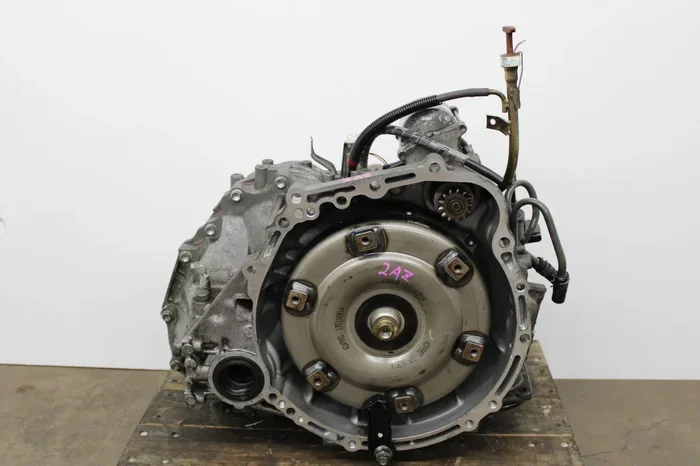
Older Camry models used conventional automatic transmissions with torque converters. These are the tried-and-true designs that have powered Toyotas for decades. The 4-speed, 5-speed, and 6-speed automatics found in earlier models are known for their simplicity and durability.
Traditional automatics generally have fewer reported issues than some newer designs. The torque converter is a reliable component, and the internal planetary gear sets are built to handle a lot of wear.
8-Speed Automatic Transmission
Starting with the 7th generation, Toyota introduced the 8-speed automatic in V6 Camry models. This transmission offers smoother shifts and better fuel economy. It is also designed with a wider gear spread, which reduces engine strain at highway speeds.
The 8-speed automatic is generally reliable. However, like any complex transmission, it needs proper fluid maintenance. Owners of V6 Camrys should pay close attention to fluid condition and change intervals.
CVT Transmission (Continuously Variable Transmission)
Some newer Camry models come with a CVT instead of a traditional automatic. CVTs use a belt and pulley system rather than fixed gear ratios. This design provides seamless acceleration and better fuel efficiency.
However, CVTs have a mixed reputation when it comes to long-term durability. Some owners report CVT issues after 100,000 miles, while others go well beyond that. The key difference is usually maintenance. CVT fluid needs to be changed on schedule, and the transmission is more sensitive to overheating than traditional automatics.
Comparing Transmission Types
| Transmission Type | Used In | Average Lifespan | Maintenance Need |
|---|---|---|---|
| 4-Speed Automatic | 2002-2006 models | 180,000-250,000 miles | Moderate |
| 5-Speed Automatic | 2007-2011 models | 200,000-280,000 miles | Moderate |
| 6-Speed Automatic | 2012-2017 models | 200,000-300,000 miles | Moderate to High |
| 8-Speed Automatic | 2018+ V6 models | 200,000-300,000+ miles | Moderate to High |
| CVT | 2018+ 4-cylinder models | 150,000-250,000 miles | High |
As you can see from the table, the type of transmission plays a role in longevity. But it is not the only factor. Maintenance and driving conditions matter just as much, if not more.
Common Transmission Problems in Toyota Camry
Even the most reliable transmissions can develop problems over time. Knowing the warning signs early can save you from a costly transmission repair or even a full rebuild.
Transmission Slipping
This is one of the most common issues. You might notice the Camry slipping out of gear or feeling like it is struggling to stay in gear under acceleration. Slipping often happens when the transmission fluid is worn out or the internal clutch packs are damaged.
If you feel the RPMs surging but the car is not accelerating properly, do not ignore it. Slipping tends to get worse over time and can lead to complete transmission failure if not addressed.
Delayed or Harsh Shifting
Another sign of trouble is a delay when shifting from Park to Drive or Reverse. The car might hesitate for a second or two before moving. Harsh shifting, where the car jerks hard between gears, is also a red flag.
These symptoms often point to low or dirty transmission fluid. But they can also indicate a failing transmission solenoid or internal valve body issues.
Transmission Overheating
Heat is the number one killer of automatic transmissions. If you see a transmission temperature warning on your dashboard, pull over and let the car cool down. Overheating can be caused by towing, stop-and-go driving, low fluid levels, or a malfunctioning cooling system.
Repeated overheating episodes cause the transmission fluid to break down completely. Once that happens, the internal components start grinding against each other without proper lubrication. The damage compounds quickly.
Fluid Leaks
Transmission fluid leaks are not something to take lightly. If you see red or brownish fluid under your Camry, get it checked right away. Low fluid levels mean the transmission is not getting the lubrication it needs, which leads to increased friction and heat.
Common leak points include the transmission pan gasket, the seals around the input and output shafts, and the cooler lines. A small leak can become a big problem fast if left unaddressed.
Warning Lights and Error Codes
Modern Camrys have sophisticated diagnostics. If the transmission control module detects a problem, it will often trigger a warning light on the dashboard. The check engine light or a dedicated transmission warning indicator should never be ignored.
Getting a diagnostic scan done at a shop or with an OBD2 scanner can reveal specific error codes. These codes give you a starting point for understanding what is going wrong inside the transmission.
How to Make Your Toyota Camry Transmission Last Longer
The good news is that you have a lot of control over how long your transmission lasts. A few simple habits can add tens of thousands of miles to the life of your gearbox.
Follow the Manufacturer’s Maintenance Schedule
Toyota recommends changing the transmission fluid at specific intervals. For most Camry models, this is around 30,000 to 60,000 miles for a fluid and filter change, and around 100,000 miles for a full transmission flush. Check your owner’s manual for the exact schedule for your model year.
Do not skip these services. Think of transmission fluid changes like oil changes for your engine. They keep everything clean, cool, and lubricated.
Check Fluid Levels Regularly
Get in the habit of checking your transmission fluid at least once a month. The fluid should be pink or red in color. If it looks dark brown or smells burnt, it is time for a change.
Low fluid levels can cause a host of problems, including slipping, overheating, and increased wear on internal components. A simple dipstick check takes only a few minutes and can prevent big headaches.
Use the Right Transmission Fluid
Not all transmission fluids are the same. Toyota specifies certain fluid types for different Camry models. Using the wrong fluid can cause poor shifting, increased wear, and even damage to internal seals.
Always refer to your owner’s manual or ask a trusted mechanic which fluid is correct for your specific model and year. This small detail can make a big difference in long-term reliability.
Warm Up the Car Before Driving
In cold weather, give your Camry a minute or two to warm up before driving. This allows the transmission fluid to circulate properly and reach the right operating temperature.
Cold fluid is thicker and does not lubricate as effectively. By letting the car idle for a short time, you reduce the stress on the transmission during those critical first moments of driving.
Avoid Overloading the Vehicle
Every Camry has a maximum towing capacity and payload limit. Exceeding these puts extra strain on the transmission. If you need to tow or carry heavy loads, make sure you stay within the manufacturer’s specifications.
Overloading not only affects the transmission. It also impacts the brakes, suspension, and engine. Staying within limits keeps your entire Camry running better for longer.
Address Small Problems Immediately
Do not wait for a big problem to take action. If you notice a slight delay in shifting, a minor fluid leak, or an unusual noise, get it inspected right away. Small issues almost always become big, expensive problems if left alone.
Catching a problem early often means a simple fix instead of a full transmission replacement. That alone is worth the cost of a quick inspection.
When Should You Replace or Rebuild the Transmission?
Even with the best care, transmissions can fail. When that happens, you have options. Understanding them helps you make the right decision for your budget and your Camry.
Signs It Is Time for a Replacement
Some signs point clearly to the need for a transmission replacement:
- The transmission refuses to shift gears or falls out of gear randomly
- You hear grinding or loud banging noises when shifting
- The car shakes violently during acceleration
- Transmission fluid is contaminated with metal particles
- The check engine light is on with transmission-related error codes
If you are experiencing any of these symptoms, do not keep driving the car. Continued driving with a damaged transmission can cause even more harm and increase repair costs significantly.
Rebuild vs. Replace vs. Remanufactured
When a transmission fails, you generally have three options:
- Rebuild: A mechanic disassembles the transmission, replaces worn parts, and reassembles it. This is usually the most cost-effective option and can cost between $1,500 and $3,000.
- Replace with a New Transmission: This is the most expensive option, often costing $4,000 to $8,000 or more. It also means you are dealing with a brand-new unit that has not been broken in yet.
- Remanufactured Transmission: A rebuilt unit from the manufacturer or a specialist. This strikes a good balance between cost and quality, typically ranging from $2,500 to $4,500 installed.
For most Camry owners, a rebuild or remanufactured unit makes the most sense. It is more affordable and restores the transmission to good working condition.
Is It Worth It on an Older Camry?
This is a question many owners face. If your Camry has over 200,000 miles and the transmission is failing, you need to weigh the repair cost against the car’s overall value. A $3,000 transmission rebuild might not make sense on a Camry worth $2,000.
However, if the rest of the car is in great shape and you plan to keep it for a while, the investment can absolutely be worth it. A rebuilt Camry transmission can easily last another 100,000 miles with proper care.
Expert Insights on Toyota Camry Transmission Longevity
We reached out to several certified Toyota mechanics and transmission specialists to get their take on Camry transmission longevity. Here is what they had to say.
Regular fluid changes are the single most important thing you can do. Most transmission failures are not sudden breakdowns. They are the result of years of neglect. Dirty fluid, low fluid levels, and ignored warning signs all lead to the same outcome. A transmission that fails far earlier than it should.
CVT models need extra attention. The newer Camry models with CVT transmissions are efficient and smooth, but they are more sensitive to maintenance neglect. Owners of CVT Camrys should be especially diligent about fluid changes and should never ignore any unusual sensations while driving.
Heat is the silent killer. Many transmission problems start with overheating. Whether it is from summer driving, towing, or stop-and-go traffic, heat degrades the fluid and damages internal components. Keeping the transmission cool is one of the best things you can do for longevity.
Quick Tips for Extending Transmission Life
- Change transmission fluid every 30,000 to 60,000 miles
- Check fluid level and condition monthly
- Never ignore warning lights or unusual noises
- Avoid aggressive driving and sudden gear shifts
- Use only manufacturer-recommended transmission fluid
- Let the car warm up in cold weather before driving
- Stay within the vehicle’s towing and payload limits
- Address small leaks and issues immediately
- Visit a trusted mechanic for regular inspections
- Keep the transmission cooler system in good working order
Key Takeaways
- Long Lifespan: A Toyota Camry transmission can last 200,000 to 300,000 miles with proper care.
- Maintenance Matters: Regular fluid changes and inspections are the single best way to extend transmission life.
- Driving Habits Count: Aggressive driving, towing, and stop-and-go traffic wear out the gearbox faster.
- Transmission Type Varies: Older models use traditional automatics, while newer ones feature CVT or 8-speed transmissions.
- Warning Signs Exist: Slipping, grinding, and delayed shifting are red flags you should never ignore.
- Rebuild vs. Replace: A rebuild costs less than a full replacement and can add years of life to your Camry.
- Warranty Helps: Many Toyota Camry models come with transmission coverage that protects owners early on.
Conclusion
So, how long does a Toyota Camry transmission last exactly? The honest answer is that it depends on you. With proper maintenance, smart driving habits, and regular attention to warning signs, your Camry transmission can easily last 200,000 to 300,000 miles or more.
The Toyota Camry has earned its reputation as one of the most reliable cars on the road. And a big part of that reliability comes from the durability of the Toyota Camry transmission. But that durability is not automatic. It requires care and attention from the owner.
Follow the maintenance schedule, use the right fluids, and listen to what your car is telling you. A little prevention goes a long way. And the reward is a Camry that keeps running smoothly for years and years to come.
Take care of your transmission, and it will take care of you. That is a deal worth keeping.
Frequently Asked Questions
What is the average lifespan of a Toyota Camry transmission?
On average, a Toyota Camry transmission lasts between 200,000 and 300,000 miles. However, this depends heavily on maintenance habits, driving conditions, and the specific model year. With proper care, some Camry transmissions go well beyond 300,000 miles.
How often should I change the transmission fluid in my Camry?
Toyota recommends changing the transmission fluid every 30,000 to 60,000 miles for most Camry models. For a full transmission flush, the interval is typically around 100,000 miles. Always refer to your specific owner’s manual for the exact recommendation for your model year.
Is the Toyota Camry CVT transmission reliable?
The CVT transmission in the Camry is generally reliable but requires more attentive maintenance than traditional automatics. CVTs are more sensitive to fluid condition and overheating. Regular fluid changes and avoiding aggressive driving help ensure the CVT lasts a long time.
What are the first signs of transmission failure in a Camry?
The earliest signs include slipping gears, delayed shifting, unusual grinding or whining noises, and burning smells from under the car. You might also notice the transmission fluid looking dark brown or smelling burnt. If you notice any of these symptoms, get the car inspected immediately.
How much does it cost to replace a Toyota Camry transmission?
A new Toyota Camry transmission can cost between $4,000 and $8,000 installed. A rebuild typically costs between $1,500 and $3,000, while a remanufactured unit ranges from $2,500 to $4,500. The exact cost depends on your model year, the type of transmission, and labor rates in your area.
Can I extend the life of my Camry transmission beyond 300,000 miles?
Yes, it is possible. Many Camry owners have reported their transmissions lasting past 300,000 miles. The key factors are consistent maintenance, gentle driving habits, avoiding overheating, and addressing small problems before they become big ones. A well-cared-for Camry transmission can go the distance.