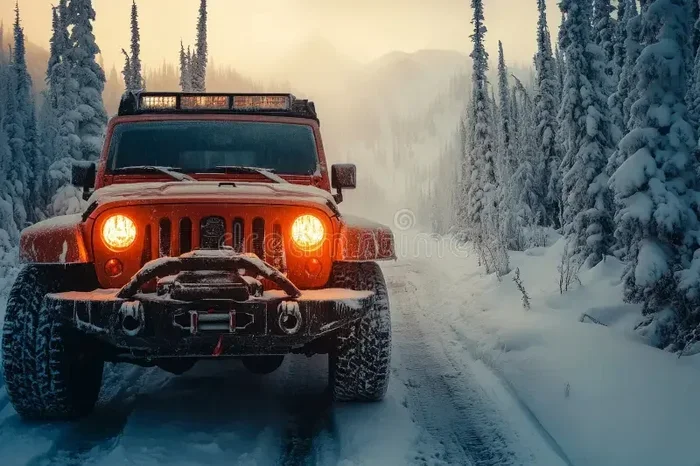
Should You Use 4-High or 4-Low When Driving on Icy Roads
Knowing when to use 4-high or 4-low on icy roads can make the difference between a safe drive and a dangerous one. Most drivers don’t fully understand how their 4WD systems work in cold weather, and picking the wrong setting can cause wheel slippage or damage your drivetrain. This guide breaks down exactly when each mode works best, so you can drive with confidence all winter long.
Winter driving is scary enough without guessing which setting to put your truck or SUV in. You see the snow piling up, the roads glistening with ice, and you wonder: should I switch to 4-high or 4-low? It is a question that confuses a lot of drivers, especially those who don’t use their four-wheel drive systems very often. The truth is, picking the right 4WD setting on icy roads can keep you safe and prevent costly damage to your vehicle.
Most people know that 4WD helps you grip the road better. But fewer people understand the real difference between the high and low ranges. Using the wrong one can leave you spinning in circles or worse. That is exactly why this guide exists. By the end, you will know exactly when to use each setting, what happens if you pick wrong, and how to stay safe all winter long.
Key Takeaways
- 4-High is best for light snow and icy highways: It gives you extra traction without slowing you down too much.
- 4-Low is for serious winter conditions: Use it in deep snow, steep hills, and very slippery surfaces at low speeds.
- Never use 4-low on dry pavement: It can damage your drivetrain and cause handling problems.
- Speed limits matter: 4-high works up to 55 mph, while 4-low is for under 40 mph.
- Combine settings with winter tires: Even the best 4WD mode won’t save you without proper snow tires.
- Know your vehicle: Not every truck or SUV handles icy roads the same way.
- Practice in safe areas: Test your vehicle’s settings before you face real winter emergencies.
📑 Table of Contents
Understanding 4-High and 4-Low on Icy Roads
Before we dive into when to use each setting, let us break down what they actually do. Your vehicle’s transfer case is the part that sends power to all four wheels. It has different ranges that change how much torque goes to each wheel and how fast your vehicle can go. Understanding this basic concept makes the whole decision much simpler.
What Does 4-High Mean?
4-High, often written as 4H, sends power to all four wheels at a speed close to normal driving. You can use it at highway speeds, usually up to about 55 miles per hour. The differential lock or torque split helps your tires grip when the road gets slippery. Think of it as a safety boost for regular winter driving.
You use 4-High when road conditions are slippery but not extreme. Light snow, packed ice, and wet roads are perfect situations for this setting. It gives you better traction control without making your vehicle feel sluggish or slow. Most drivers who live in snowy areas use 4-High more often than 4-Low during the winter months.
What Does 4-Low Mean?
4-Low, or 4L, is a completely different beast. It uses a lower gear ratio in the transfer case, which means your wheels turn slower but with much more power. This is the setting you want when you are crawling through deep snow, climbing a steep icy hill, or navigating very rough terrain. It gives you maximum control at low speeds.
The key thing to remember is that 4-Low is not for fast driving. Most manufacturers recommend staying under 40 miles per hour in this mode. Some say even slower. The extra torque can actually make your vehicle hard to control if you go too fast on a slick surface. It is a tool for slow, careful driving in tough conditions.
How 4WD Systems Work on Icy Roads
To really understand which setting to choose, it helps to know a little bit about how your drivetrain works in the cold. Winter weather driving puts a lot of stress on every part of your vehicle, and the 4WD system is no exception.
The Role of the Transfer Case
The transfer case is the brain of your four-wheel drive system. It takes power from the engine and splits it between the front and rear axles. When you switch from 2H to 4H or 4L, you are essentially telling the transfer case to change how it distributes that power. In 4-High, the split is roughly even, and the vehicle moves at normal speeds. In 4-Low, the split stays even, but the gear reduction multiplies the torque going to each wheel.
Think of it like riding a bicycle. 4-High is like riding on flat ground in a normal gear. 4-Low is like switching to a low gear to climb a steep hill. You pedal slower, but with much more force. Your wheels work the same way on icy roads.
Traction and Wheel Slippage
On icy roads, your tires lose grip. This is called wheel slippage, and it is what makes your car slide around. When slippage happens, your traction control system kicks in to slow down the spinning wheel. But 4WD systems help too, because they send power to all four wheels instead of just two. This means even if one tire starts to slip, the others can keep pulling you forward.
However, 4WD alone does not fix everything. Your tire tread depth, the type of tires you use, and your driving habits all matter just as much. A truck on bald tires in 4-Low will still struggle on ice. That is why experts always recommend pairing your drivetrain choice with proper winter tires or snow chains for the best results.
When to Use 4-High on Icy Roads
4-High is the go-to setting for most winter driving situations. It is versatile, safe, and easy to use. Here is when you should reach for it.
Light Snow and Packed Ice
If the roads have a light dusting of snow or a layer of packed ice, 4-High is your best friend. It gives you the extra grip you need without slowing you down too much. You can maintain normal speeds and still feel confident in your vehicle’s handling. This is the setting you want for your daily commute during winter.
Many modern trucks and SUVs have electronic stability control that works hand in hand with 4H. The system monitors each wheel and adjusts power delivery automatically. This makes 4-High even more effective for everyday winter driving on icy roads.
Highway Driving in Winter
Highway driving in snow or ice is one of the scariest situations for any driver. The speeds are higher, and there is less room to recover if you start to slide. Switching to 4-High before you hit the highway gives you a safety buffer. It helps your tires maintain grip during acceleration, cornering, and even light braking.
Keep in mind that you should switch to 4-High before the road gets bad. Do not wait until your wheels are already spinning. Most systems allow you to engage 4H at speeds up to 55 or 60 mph, but it is always safest to switch on clear pavement first.
Quick Tips for Using 4-High
- Switch to 4H before road conditions worsen.
- Stay under 55 mph for best results.
- Keep a longer following distance than usual.
- Combine 4H with winter tires for maximum safety.
- Do not use 4H on dry, clear roads for extended periods.
When to Use 4-Low on Icy Roads
4-Low is not for everyday winter driving. It is a specialized tool for serious conditions. Using it correctly can save you from getting stuck or losing control in extreme situations.
Deep Snow and Drifts
When snow piles up past your wheel wells, 4-High might not be enough. Deep snow creates resistance, and your wheels need serious torque to push through it. This is where 4-Low shines. The extra power at low speeds helps you crawl through snow without spinning your tires or getting stuck.
If you live in an area with heavy snowfall or need to drive unplowed roads, knowing how to use 4L is essential. It gives you the brute force to move forward when traction control alone cannot keep up.
Steep Icy Hills and Slopes
Driving up or down a steep, icy hill is one of the most dangerous winter driving scenarios. 4-Low gives you the control you need to climb slowly without spinning out. The low gear ratio keeps your wheels turning at a manageable speed, which reduces the risk of sliding backward or losing steering control.
When going downhill in 4-Low, let the engine do the braking. Avoid riding your brakes too hard, as this can cause your wheels to lock up on ice. The low-range setting helps you maintain a steady, slow speed without overworking your brakes.
Quick Tips for Using 4-Low
- Only use 4L when you need serious torque at low speeds.
- Keep your speed under 40 mph at all times.
- Never use 4L on dry pavement or clear roads.
- Disengage 4L as soon as conditions improve.
- Practice shifting into 4L in a safe, empty area before you need it in an emergency.
4-High vs 4-Low: Head-to-Head Comparison
It is easy to get confused between the two settings, especially when you are in a hurry and the weather is bad. Here is a simple comparison to help you decide quickly.
| Feature | 4-High (4H) | 4-Low (4L) |
|---|---|---|
| Best For | Light snow, packed ice, wet roads | Deep snow, steep hills, off-road ice |
| Speed Range | Up to 55 mph | Under 40 mph |
| Torque Delivery | Normal with added grip | High torque at low speeds |
| Safe on Dry Pavement? | No (use only when needed) | No (can cause drivetrain damage) |
| Fuel Economy | Slightly reduced | Significantly reduced |
| Daily Commuting? | Yes | No |
| Recommended Tire Type | All-season or winter tires | Winter tires or snow chains |
As you can see, each setting has its place. The key is matching the right mode to the current road conditions. When in doubt, 4-High is the safer default choice for most winter driving on icy roads.
Common Mistakes Drivers Make on Icy Roads
Even experienced drivers make mistakes when the roads get icy. Knowing what to avoid can save you from a dangerous situation or expensive repairs.
Using 4-Low on Dry Pavement
This is probably the most common and most damaging mistake. 4-Low locks your drivetrain into a low gear ratio that is designed for slow, high-torque situations. On dry pavement, this creates binding in the drivetrain, which can lead to worn CV joints, damaged differentials, and expensive repairs. Always switch back to 2H or 4H when the road clears up.
Waiting Too Long to Switch
Many drivers wait until their wheels start spinning before they switch to 4H or 4L. By then, it may already be too late. The best practice is to anticipate bad road conditions and switch before you encounter them. This gives your drivetrain time to engage and your tires time to grip the road.
Relying Only on 4WD
Your 4WD system is a powerful tool, but it is not magic. It cannot overcome physics. If you are driving too fast for conditions, even the best 4WD setting will not save you. Always slow down, increase your following distance, and let your tires do the work.
Ignoring Tire Condition
Your tires are the only part of your vehicle that actually touch the road. Worn-out tires with shallow tread will struggle on ice no matter what 4WD setting you use. Make sure your tire tread depth is at least 4/32 of an inch for winter driving, and consider switching to dedicated winter tires if you live in a harsh climate.
Expert Tips for Winter Driving Safety
Beyond choosing the right 4WD setting, there are several other things you can do to stay safe on icy roads. These tips come from experienced winter drivers and automotive experts.
Prepare Your Vehicle Before Winter
Do not wait until the first snowstorm to think about your vehicle. Before winter arrives, have your drivetrain inspected, check your fluid levels, and make sure your heating system works properly. Replace worn wiper blades and top off your windshield washer fluid with a winter-grade formula that won’t freeze.
Keep an Emergency Kit in Your Truck
Even with the best preparation, things can go wrong. Keep a winter emergency kit in your vehicle at all times. This should include a blanket, flashlight, extra gloves, a small shovel, sand or kitty litter for traction, and a phone charger. If you get stuck on an icy road, these supplies can make the difference between a minor inconvenience and a serious emergency.
Smooth and Gentle Movements
On ice, sudden movements are your worst enemy. Accelerate gently, brake early and softly, and avoid sharp steering inputs. Smooth driving keeps your tires in contact with the road and gives your traction control system time to work properly. Jerky movements can break traction instantly and send you sliding.
Monitor Road Conditions Before You Leave
Check weather and road reports before you head out. If conditions look dangerous, consider staying home or delaying your trip. No appointment or errand is worth risking your safety on icy roads. Use apps and local traffic reports to plan the safest route, even if it takes a little longer.
Key Takeaways
- 4-High is your daily winter driving mode: Use it for light snow, packed ice, and wet highway roads up to 55 mph.
- 4-Low is for extreme winter conditions: Use it in deep snow, steep icy hills, and rough terrain at speeds under 40 mph.
- Never use 4-Low on dry pavement: It can cause serious drivetrain damage that costs hundreds or thousands of dollars to repair.
- Switch early, not late: Anticipate bad road conditions and engage your 4WD system before you need it.
- Pair your setting with good tires: Winter tires and snow chains work together with 4WD to maximize your safety.
- Drive smoothly and slowly: No 4WD setting can replace safe driving habits on icy roads.
- Practice makes perfect: Test your vehicle’s settings in a safe, empty area so you are confident when winter weather hits.
Conclusion
Choosing between 4-high or 4-low on icy roads does not have to be confusing. The simple rule is this: use 4-High for most winter driving situations, and reserve 4-Low for the toughest conditions where you need maximum torque at low speeds. Both settings serve an important purpose, and knowing when to use each one is a skill that will keep you safer all winter long.
Remember that 4WD is a tool, not a safety net. It works best when combined with good tires, smooth driving habits, and smart decisions about when to hit the road. Take the time to understand your vehicle, practice switching between settings, and always respect the power of winter weather.
The next time you face icy roads, you will know exactly what to do. Stay safe, drive carefully, and trust your preparation. Winter driving can be manageable when you have the right knowledge and the right tools at your disposal.
Frequently Asked Questions
Can I switch from 4-High to 4-Low while driving on ice?
Most modern vehicles allow you to shift between 4-High and 4-Low while driving, but only at very low speeds. Check your owner’s manual for the specific speed limit, which is usually under 5 mph. It is always safest to pull over completely before making the switch.
Is 4-Low necessary for driving on icy roads?
For most everyday winter driving, 4-High is more than enough. 4-Low is only necessary when you face extreme conditions like deep snow, steep icy hills, or off-road terrain. Using 4-Low for regular icy road driving is unnecessary and can actually make handling worse at higher speeds.
Does 4WD help with braking on icy roads?
4WD helps with acceleration and traction, but it does not improve your braking distance. Your brakes work the same way whether you are in 4H, 4L, or 2H. Always increase your following distance and brake gently on ice, regardless of your drivetrain setting.
Can using 4-Low damage my vehicle on icy roads?
Using 4-Low on icy roads at low speeds will not damage your vehicle. However, using 4-Low on dry pavement or at high speeds can cause serious drivetrain damage. Always switch back to 2H or 4H when road conditions improve.
What is the difference between AWD and 4-High on icy roads?
AWD systems automatically send power to all four wheels without driver input. 4-High requires you to manually engage the system. Both provide extra traction on ice, but 4-High gives you more control over power distribution and is generally better for serious winter conditions.
How fast can I drive in 4-High on icy roads?
Most manufacturers recommend staying at or below 55 mph in 4-High. Going faster can put unnecessary stress on your drivetrain and reduce the effectiveness of your traction control. Always adjust your speed to match the road conditions, even if you are in the right 4WD setting.