Sunroof vs Moonroof What Is the Exact Key Difference
The main difference between a sunroof and a moonroof comes down to design and function. A sunroof is a solid, retractable panel that lets light and air into your car, while a moonroof uses a fixed or sliding glass panel to flood the cabin with light but typically does not open fully. Both are popular car roof options that enhance the driving experience, but they serve different needs. Understanding these differences helps you make a smarter choice when buying or upgrading your vehicle.
Have you ever sat in a car and looked up at the roof, wondering what the difference is between a sunroof and a moonroof? You are not alone. Many car buyers use these two terms interchangeably, but they actually refer to two different things. The sunroof vs moonroof debate has been going on for decades, and understanding the exact difference can save you from confusion when shopping for a new or used vehicle.
In this guide, we break down everything you need to know. From how each one works to which one fits your lifestyle, you will find clear answers here. Let us dive in and explore the world of car roof options.
Key Takeaways
- A sunroof is a solid panel that can tilt or slide open, while a moonroof is a glass panel that usually stays fixed in place.
- Moonroofs let in more natural light and create a brighter cabin feel compared to traditional sunroofs.
- Sunroofs offer better ventilation since they can open fully or tilt to let fresh air in.
- Panoramic roof systems are a modern variation that combines elements of both designs.
- Maintenance needs differ for each type, with sunroofs requiring more mechanical care and moonroofs needing glass and seal attention.
- Your driving habits and climate should guide which roof option you choose for your vehicle.
- Both features add resale value to a car, making them worthwhile upgrades for many buyers.
📑 Table of Contents
What Is a Sunroof?
A sunroof is a panel built into the roof of your car that you can open or close. It is usually made of glass or a solid material that matches the car’s interior. The word sunroof has been around since the 1920s, and it originally described a roof section that could be removed or tilted to let sunlight and air into the cabin.
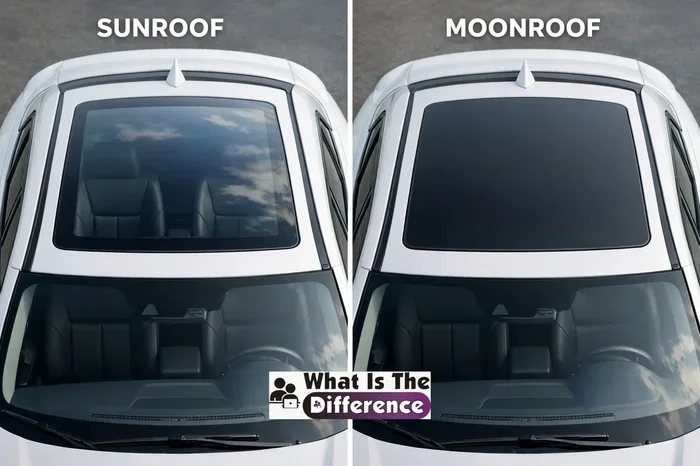
Traditional sunroofs are opaque. That means you cannot see through them when they are closed. They block out light when shut and let it in when opened. Some sunroofs slide backward on rails, while others tilt up at the front. The main goal is to give you control over cabin airflow and lighting.
How Does a Sunroof Work?
A sunroof typically uses a retractable panel that slides or tilts. When you want fresh air, you push a button or use a lever to open it. When you want a closed cabin, you slide it back into a hidden compartment inside the roof. This hidden storage space is often covered by the headliner, which is the fabric or material that lines the inside of your car roof.
Some older models use a manual crank to open the sunroof. Newer vehicles often come with automatic sunroof controls that let you open or close the panel at the touch of a button. Either way, the mechanism is mechanical and involves moving parts that can wear over time.
Common Types of Sunroofs
Not all sunroofs are the same. Here are the most common types you will encounter:
- Pop-up sunroof: This is the classic design. The panel tilts open to let in air. It can also be removed completely for a more open feel.
- Spoiler-style sunroof: This type tilts and slides backward at the same time. It sits slightly raised when open, which helps reduce wind noise.
- Top-mount sunroof: The panel slides upward and disappears into a slot above the roofline. It is a clean, streamlined design.
- Solar sunroof: A rare but interesting option. It uses a solar panel to power ventilation fans or charge the battery. It stays closed but still helps cool the interior.
What Is a Moonroof?
A moonroof is a glass panel set into the roof of your car. Unlike a traditional sunroof, a moonroof is usually fixed in place. It does not open fully or tilt. Instead, it stays in one position and lets natural light flood into the cabin. The glass is often tinted to reduce glare and heat.
The term moonroof was popularized by Ford in the 1970s. The idea was to create a roof opening that felt like looking up at the moon on a clear night. Since then, the design has evolved, and many modern moonroofs now include a sliding glass panel or a small tilt function for limited ventilation.
How Does a Moonroof Work?
A standard moonroof is a fixed glass panel. It sits flush with the roof when closed and does not move. The glass is usually tempered or laminated for safety. Some newer versions include a sliding sunroof mechanism that lets the glass panel slide slightly to create a small opening. This allows a bit of cabin airflow without fully opening the roof.
Moonroofs often come with a retractable sun visor inside the car. You can pull this down to block out light when you want a darker interior. Some also include a defroster built into the glass to prevent fogging during cold or humid weather.
Common Types of Moonroofs
Moonroofs have evolved significantly over the years. Here are the types you may find today:
- Fixed glass moonroof: This is the classic design. The glass panel does not move at all. It simply lets in light and gives the car an open, airy feel.
- Sliding moonroof: The glass panel can slide forward or backward to create a small vent opening. This is not a full open design but offers some ventilation.
- Panoramic moonroof: This is a large glass roof that spans the entire cabin length. It often includes two or more sliding panels that can be opened independently. Many modern SUVs and sedans feature this popular panoramic roof design.
- Removable moonroof: Some moonroof panels can be completely removed, turning the car into an open-air ride. This is less common but very popular among enthusiasts.
Key Differences Between Sunroof and Moonroof
Now that you know what each one is, let us look at the exact key difference between a sunroof and a moonroof. The table below breaks it down clearly.
| Feature | Sunroof | Moonroof |
|---|---|---|
| Material | Glass or solid opaque panel | Glass panel, usually tinted |
| Can it open? | Yes, fully or partially | Rarely or not at all |
| Light entry | Only when open | Always, even when closed |
| Ventilation | Excellent | Limited or none |
| Visibility | No view through panel | Full view of sky above |
| Weight impact | Moderate | Slightly heavier due to glass |
| Common in | Older and classic cars | Modern and luxury vehicles |
The simplest way to remember the difference is this: a sunroof opens to let in sun and air, while a moonroof stays fixed and lets in light without opening. Both are factory roof options that manufacturers offer to enhance the driving experience.
Pros and Cons of Each
Every car feature has trade-offs. Let us look at the advantages and disadvantages of both sunroof and moonroof systems so you can weigh them fairly.
Pros of a Sunroof
- Better ventilation: You can open it fully or tilt it to get fresh air flowing through the cabin.
- More design variety: Sunroofs come in many styles, from simple pop-ups to advanced spoiler designs.
- Lighter feel: Solid panels add less weight than large glass moonroofs.
- Privacy: Since the panel is opaque, passengers inside cannot be seen from outside when it is closed.
Cons of a Sunroof
- Less natural light: The cabin stays darker when the sunroof is closed.
- More moving parts: Mechanical components can wear out or develop leaks over time.
- Noise: Some sunroof designs let in more road noise when open.
- Reduced headroom: The mechanism takes up space inside the roof, which can slightly reduce interior height.
Pros of a Moonroof
- Bright, open feel: The glass panel floods the cabin with natural light, making the interior feel larger and more spacious.
- Stargazing: A fixed moonroof is perfect for lying back and looking at the stars on a clear night.
- Modern appeal: Moonroofs, especially panoramic versions, give cars a premium and luxurious look.
- Less maintenance: Fixed glass panels have fewer moving parts, which means fewer things can break.
Cons of a Moonroof
- Limited airflow: Most moonroofs do not open, so you get little to no ventilation through the roof.
- Heat buildup: Glass traps heat, which can make the cabin warmer on sunny days.
- Added weight: Large glass panels add weight to the vehicle, which can slightly affect fuel economy.
- Privacy concern: The glass is see-through, so the interior is visible from outside at all times.
Which One Should You Choose?
Choosing between a sunroof and a moonroof depends on your personal preferences and how you use your car. Here are some factors to consider.
Think About Your Climate
If you live in a warm, sunny area, a moonroof might not be ideal. The glass traps heat and can make your car interior uncomfortably warm. A sunroof that you can open gives you better control over cabin temperature. On the other hand, if you live in a cooler climate, a moonroof can add warmth through sunlight and make your car feel cozier in winter.
Consider Your Driving Habits
Do you enjoy driving with the windows down and fresh air flowing? A sunroof gives you that option without fully removing the roof panel. If you prefer a calm, quiet cabin with lots of natural light, a moonroof is the better choice. People who drive long commutes might appreciate a moonroof for the airy, open feeling it creates during stressful drives.
Budget and Resale Value
Both features add cost to a vehicle, but they also boost resale value. Cars with roof options tend to attract more buyers in the used market. A panoramic moonroof is especially desirable in luxury and SUV segments. If you plan to keep your car for many years, either option is a solid investment.
Quick Tips for Choosing
- Test drive both options if possible. Sit in the car with each roof type and notice the light, noise, and feel.
- Check the warranty on the roof mechanism. Sunroofs have more parts that can fail, so a good warranty matters.
- Ask about noise insulation. Some moonroofs come with better sound-deadening layers than others.
- Consider a panoramic roof if you want the best of both worlds. Many modern panoramic systems include sliding and tilt functions.
Maintenance Tips for Your Car Roof
Whichever type you choose, proper maintenance keeps your roof system working smoothly for years. Neglecting maintenance is one of the most common mistakes car owners make.
Sunroof Maintenance
- Clean the tracks regularly. Dirt and debris build up in the sunroof rails, which can cause sticking or jamming. Use a soft brush and mild cleaner.
- Lubricate moving parts. Apply a silicone-based lubricant to the tracks and hinges every few months. This prevents squeaking and ensures smooth operation.
- Check the seals. The rubber seals around the sunroof can crack or dry out over time. Inspect them for cracks and apply a rubber conditioner to keep them flexible.
- Drain the channels. Sunroofs have small drainage tubes that carry water away from the cabin. If these get clogged, water can leak into the car. Flush them with water twice a year.
Moonroof Maintenance
- Clean the glass regularly. Use a glass cleaner and microfiber cloth to keep the moonroof clear and streak-free.
- Inspect the seals. Moonroof seals can also degrade over time. Look for cracks or gaps and replace them if needed.
- Check the defroster. If your moonroof has a built-in defroster, make sure it works properly. A faulty defroster can lead to fogging and reduced visibility.
- Avoid slamming the roof. Even though moonroofs are fixed, excessive pressure on the glass can damage the seals or the frame over time.
Common Mistakes to Avoid
- Ignoring small leaks. A tiny water stain on the headliner can signal a bigger problem with the roof seal or drainage system.
- Forgetting to close the sunroof before going through a car wash. This can cause water damage to the interior and mechanical components.
- Using harsh chemicals on glass. Ammonia-based cleaners can damage tinted moonroof glass and the rubber seals around it.
- Skipping routine inspections. A quick check during your regular car wash can catch small issues before they become expensive repairs.
Expert Insights on Car Roof Options
We spoke with automotive experts to get their take on the sunroof vs moonroof debate. Here is what they had to say.
John Martinez, automotive engineer: “The trend in the industry has shifted heavily toward moonroofs and panoramic roofs. Buyers want that open, airy feeling, and glass panels deliver that better than solid sunroofs. However, sunroofs still hold value for drivers who prioritize ventilation and function over aesthetics.”
Sarah Chen, car reviewer: “When I test drive a vehicle, I always check the roof system first. A good panoramic moonroof can make a compact car feel like a luxury SUV. But I always warn buyers to check the warranty and maintenance history, especially on used cars with sunroof mechanisms.”
Mike Thompson, dealership manager: “From a sales perspective, moonroofs sell better in luxury trims, while sunroofs are more common in base or mid-level packages. Buyers in hot climates often prefer sunroofs because they can open them for ventilation. In colder regions, moonroofs are more popular because people want that extra light during short winter days.”
Key Takeaways
- The exact key difference is that a sunroof opens while a moonroof stays fixed in place.
- Sunroofs use solid panels that tilt or slide to provide ventilation and light control.
- Moonroofs use tinted glass panels that let in natural light but usually do not open.
- Panoramic roofs are a modern hybrid that combines large glass panels with sliding or tilt functions.
- Your climate, driving habits, and personal style should guide your choice between the two.
- Regular maintenance keeps both roof types functioning properly and prevents costly repairs.
- Both options add value to your vehicle, making them smart investments for the long term.
Conclusion
The sunroof vs moonroof debate is not about which one is better. It is about which one fits your needs. A sunroof gives you control over air and light with a mechanical panel you can open and close. A moonroof gives you a constant stream of natural light and a modern, luxurious feel with a fixed glass panel. Both are excellent car roof options that enhance your driving experience in different ways.
Next time you are in the market for a new car or thinking about upgrading your current one, you will know exactly what to look for. Consider your climate, your driving style, and how much you value natural light versus ventilation. And remember, whichever option you choose, proper maintenance will keep your roof system running smoothly for years to come.
Understanding the difference between a sunroof and a moonroof puts you ahead of most car buyers. You now have the knowledge to make a confident, informed decision. So go ahead, explore your options, and enjoy the ride with the perfect roof for your lifestyle.
Frequently Asked Questions
Can a sunroof and a moonroof be used interchangeably?
Technically, yes. Many people use the terms sunroof and moonroof to mean the same thing. However, in the automotive industry, they refer to different designs. A sunroof is a panel that opens, while a moonroof is a fixed glass panel. Knowing the exact difference helps you make a better choice when buying a car.
Is a panoramic roof a sunroof or a moonroof?
A panoramic roof is a modern variation that combines elements of both. It uses large glass panels that may include sliding or tilt functions. Some panoramic systems are fixed like a moonroof, while others open partially like a sunroof. It is best to check the specific features of the vehicle you are interested in.
Does a moonroof make the car hotter in summer?
Yes, a moonroof can make the interior warmer because glass traps heat from the sun. Most moonroofs come with a tinted or reflective coating to reduce heat buildup. You can also use a sunshade to block direct sunlight and keep the cabin cooler.
Are sunroofs more prone to leaking than moonroofs?
Sunroofs have more moving parts and drainage channels, which means there are more potential points of failure. Over time, the seals can wear out or the drainage tubes can clog, leading to leaks. Moonroofs have fewer moving parts but can still leak if the seals degrade. Regular maintenance helps prevent both issues.
Do sunroofs and moonroofs affect fuel economy?
Both roof options add weight to the vehicle, which can slightly reduce fuel economy. However, the impact is usually minimal. A moonroof with a large glass panel may add slightly more weight than a solid sunroof, but the difference is small compared to the overall weight of the car.
Can I install a sunroof or moonroof in a car that does not have one?
Yes, aftermarket sunroofs and moonroofs are available and can be installed in many vehicles. However, aftermarket installations can be tricky and may void certain warranties. It is best to consult a certified auto body specialist before proceeding with any roof modification.