Find Where the Adaptive Cruise Control Switch Is Located
The adaptive cruise control switch is typically found on your steering wheel, dashboard, or center console, depending on your vehicle brand and model. Knowing the exact adaptive cruise control switch location helps you use this safety feature with confidence every time you drive. This guide walks you through the most common cruise control switch placements, how to identify yours, and what to do if it stops working.
Have you ever sat in a new car and wondered, “Where is the adaptive cruise control switch located?” You are not alone. Many drivers pick up a new vehicle and immediately start hunting for the adaptive cruise control switch without any luck. The truth is, there is no single universal spot for this switch. Its location depends heavily on your vehicle brand, model year, and trim level.
Understanding where your adaptive cruise control switch lives is the first step toward using this powerful driver assistance feature safely and confidently. Whether you drive a compact sedan, a full-size truck, or a luxury SUV, this guide will help you find the right spot. We will cover every common cruise control switch placement, brand-specific layouts, and even how to troubleshoot when the switch does not respond.
The adaptive cruise control switch is more than just a convenience. It is a core part of your vehicle’s adaptive cruise control system, which uses radar sensors and cameras to maintain a safe following distance. When you know exactly where the switch sits, you can engage traffic-aware cruising in seconds and keep your hands on the wheel where they belong. Let us dive into everything you need to know about finding and using your adaptive cruise control switch.
Key Takeaways
- Steering Wheel Is King: Most vehicles place the adaptive cruise control switch on the steering wheel spokes or behind the wheel hub.
- Brand Differences Matter: Toyota, Honda, Ford, and BMW each have unique cruise control button layouts that affect where you find the switch.
- Multiple Controls in One Spot: The adaptive cruise control switch often shares space with volume controls, phone buttons, and voice command activators.
- Dash-Mounted Switches Exist: Some older or luxury models hide the ACC switch on the dashboard or center console instead of the steering wheel.
- Know Your Symbols: Learning the cruise control icon and ACC symbols helps you quickly locate and operate the switch.
- Common Issues Are Fixable: Many adaptive cruise control switch problems stem from dirt, wiring faults, or sensor issues that are easy to address.
📑 Table of Contents
- What Exactly Is an Adaptive Cruise Control Switch?
- Most Common Places to Find the Adaptive Cruise Control Switch
- Adaptive Cruise Control Switch Location by Vehicle Brand
- How to Tell If You Have Found the Right Adaptive Cruise Control Switch
- What Happens When You Press the Adaptive Cruise Control Switch?
- Common Problems With the Adaptive Cruise Control Switch
- Comparison of Adaptive Cruise Control Switch Locations Across Brands
- Tips for Getting the Most Out of Your Adaptive Cruise Control Switch
- Conclusion
What Exactly Is an Adaptive Cruise Control Switch?
The adaptive cruise control switch is the physical button or set of buttons that lets you turn on, adjust, and manage your vehicle’s cruise control system. Unlike traditional cruise control, which simply holds a set speed, the adaptive cruise control system uses sensors to detect vehicles ahead and automatically adjusts your speed. The cruise control switch is your direct link to activating and managing this technology.
Most adaptive cruise control switches include several buttons grouped together. You will typically find buttons for turning the system on and off, setting your desired speed, adjusting the following distance, and resuming a previously set speed. Some vehicles also include buttons for activating the stop and go function, which allows the system to slow down to a complete stop in traffic and then accelerate again when the road clears.
Why the Switch Location Matters
The placement of your adaptive cruise control switch affects how easily you can use it while driving. A well-placed switch is easy to reach without taking your hands off the steering wheel for long. A poorly placed switch can be distracting or hard to find in low-light conditions. This is why most vehicle manufacturers put the cruise control switch right on the steering wheel, where your hands naturally rest.
When the adaptive cruise control switch is within easy reach, you can make quick adjustments without looking away from the road for too long. This is especially important when you are driving on highways and need to adjust your following distance or speed frequently. The better the switch placement, the safer and more convenient your adaptive cruise control experience becomes.
Quick Tip
Before you start driving, take a moment to locate your adaptive cruise control switch and familiarize yourself with each button. Knowing the layout by touch alone makes a huge difference when you are on the road.
Most Common Places to Find the Adaptive Cruise Control Switch
The adaptive cruise control switch can appear in several different locations depending on your vehicle. Let us walk through the most common spots where manufacturers place this important control.
1. On the Steering Wheel
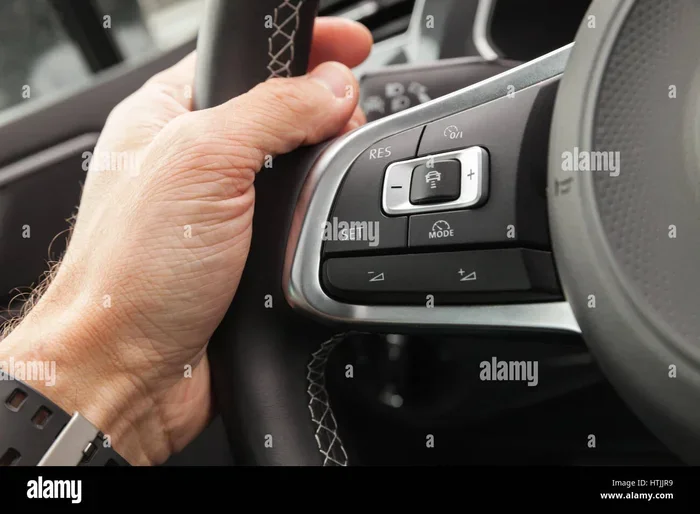
The steering wheel is by far the most common location for the adaptive cruise control switch. In most vehicles, you will find the cruise control buttons embedded in the spokes or mounted on the left side of the steering column. Some brands place the ACC switch behind the steering wheel hub, where it is easy to reach with your thumb while your hands stay in the proper driving position.
On many vehicles, the adaptive cruise control switch shares its housing with other steering wheel controls. You might find it grouped with audio controls, phone buttons, and voice command activators. This is normal and actually helps keep the steering wheel area clean and uncluttered.
2. On the Steering Column
Some older vehicles and certain truck models place the cruise control switch on the steering column itself, either on the left side or near the turn signal stalk. This placement was very common in vehicles from the early 2000s and late 1990s. If you drive a classic or a work truck, there is a good chance your adaptive cruise control switch sits right on the column rather than on the wheel.
The column-mounted ACC switch is usually a lever or a toggle switch that you can flip or push with your fingers. While this placement works fine, it can be slightly less convenient than a wheel-mounted switch because your hand has to move off the wheel to reach it.
3. On the Dashboard or Center Console
In some luxury vehicles and certain older models, the adaptive cruise control switch is located on the dashboard or center console. You might find it near the gear shifter, on the instrument panel, or integrated into the infotainment system. This placement is less common today but still appears in vehicles from brands like Mercedes-Benz, Lexus, and certain models from Volvo.
Dashboard-mounted cruise control switches often look like small toggle switches or rotary dials. They may be grouped with other vehicle settings like traction control or stability management. If you cannot find the switch on your steering wheel, the dashboard and center console are the next places to look.
4. Integrated into the Infotainment Screen
Modern vehicles are increasingly moving toward touchscreen-based controls. In some newer models, the adaptive cruise control switch is not a physical button at all. Instead, you access cruise control settings through the vehicle’s infotainment screen. You tap an icon on the display to turn the system on and adjust settings like your preferred speed and following distance.
While touchscreen-based ACC controls look sleek, they can be more distracting to use while driving. If your vehicle uses a touchscreen for cruise control, we recommend setting your preferences before you start moving. This keeps your eyes on the road and your attention focused on driving safely.
Expert Insight
Automotive engineers design adaptive cruise control switch placements based on extensive driver ergonomics research. The goal is always to minimize the time your eyes leave the road. If you struggle to find your switch, check your vehicle’s owner manual for the exact diagram of control locations.
Adaptive Cruise Control Switch Location by Vehicle Brand
Every vehicle manufacturer has its own approach to placing the adaptive cruise control switch. Here is a breakdown of where you can expect to find it across some of the most popular brands on the road today.
Toyota and Lexus
In Toyota and Lexus vehicles, the adaptive cruise control switch is typically located on the steering wheel, usually on the right side. You will find a small cluster of buttons that includes the cruise control on/off button, the set/resume buttons, and the distance adjustment button. The ACC switch in Toyota vehicles often features a dedicated cruise control icon that looks like a speedometer with a car in front of it.
Honda and Acura
Honda places the cruise control switch on the left side of the steering wheel in most models. The buttons are arranged in a row and include on/off, set, resume, and cancel functions. Honda’s adaptive cruise control system uses the same general layout, with the main ACC switch clearly labeled. The steering wheel controls in Honda vehicles are known for being intuitive and easy to reach.
Ford
Ford vehicles typically place the adaptive cruise control switch on the steering wheel, often integrated with the audio and phone controls. In Ford trucks like the F-150, you may also find additional cruise control buttons on the left side of the steering wheel. The ACC switch in Ford models usually includes buttons for setting the speed, adjusting the gap distance, and turning the system on or off.
BMW
BMW takes a slightly different approach. The adaptive cruise control switch in BMW vehicles is often located on the steering wheel stalks or integrated into the iDrive controller. Some BMW models use a combination of steering wheel buttons and a rotary controller on the center console to manage cruise control settings. The ACC switch in BMW vehicles is clearly marked and easy to access once you know where to look.
Chevrolet and GMC
In Chevrolet and GMC vehicles, the adaptive cruise control switch is typically found on the steering wheel, usually on the left side. The buttons include standard cruise control functions like on/off, set, resume, and cancel. In newer Chevrolet models with the Super Cruise system, the controls may also include a driver attention monitoring feature that is integrated into the ACC switch area.
Common Mistakes
One of the biggest mistakes drivers make is assuming the adaptive cruise control switch is in the same place as in their previous vehicle. Every brand has a different layout. Another common error is confusing the regular cruise control button with the adaptive cruise control button. Look for labels like “ACC,” “Adaptive Cruise,” or icons showing a car following another car.
How to Tell If You Have Found the Right Adaptive Cruise Control Switch
Once you think you have located your adaptive cruise control switch, how do you know it is the right one? There are several telltale signs that confirm you have found the correct ACC switch on your vehicle.
First, look for the cruise control icon on or near the switch. Most vehicles use a standard icon that looks like a speedometer with an arrow or a car following another vehicle. If you see this symbol on a button or switch, there is a strong chance it controls the adaptive cruise control system.
Second, check your vehicle’s owner manual. The manual will have a detailed diagram showing the exact location of every control on your vehicle, including the adaptive cruise control switch. This is the most reliable way to confirm you have found the right switch. You can also search for your vehicle’s make and model online along with the phrase “adaptive cruise control switch location” to find specific guidance.
Third, test the switch when the vehicle is safely parked. Press the on/off button and look at your dashboard. If the adaptive cruise control indicator light comes on, you have found the correct switch. The indicator usually looks like a green or white icon of a speedometer with a car ahead.
Quick Tip
When you first get a new vehicle, spend five minutes in a parked car exploring all the controls on the steering wheel. Press each button gently and observe what happens on the dashboard. This simple habit helps you learn your adaptive cruise control switch location without any pressure while driving.
What Happens When You Press the Adaptive Cruise Control Switch?
Pressing the adaptive cruise control switch activates a series of events that happen quickly and seamlessly. Understanding what happens after you press the switch helps you use the system more effectively and with greater confidence.
When you press the on/off button of the adaptive cruise control switch, the system powers up and a indicator light appears on your dashboard or instrument cluster. This tells you the ACC system is ready to be set. Next, you press the set button while driving at your desired speed. The vehicle will then maintain that speed automatically, adjusting for traffic ahead using its radar sensors and cameras.
The adaptive cruise control switch also lets you adjust the following distance. Most vehicles have buttons labeled with plus and minus signs or distance bars that let you increase or decrease the gap between your vehicle and the one ahead. A longer following distance gives you more reaction time, while a shorter gap keeps traffic flowing more smoothly around you.
If you need to cancel the adaptive cruise control system, you can press the cancel button on the adaptive cruise control switch, tap the brake pedal, or pull the stalk (if your vehicle uses a stalk for cruise control). The system will disengage, but your previously set speed is usually saved so you can resume it with a quick press of the resume button.
Understanding the Dashboard Indicators
Your vehicle’s dashboard provides important feedback about the adaptive cruise control system. When the system is active, you will see a green or white indicator showing that adaptive cruise control is engaged. If the system detects a vehicle ahead, it may display a car icon or a distance gauge. If there is a problem with the ACC system, a warning light will appear, often in yellow or red, alerting you to check the system.
These dashboard indicators are your best friends when using the adaptive cruise control switch. They tell you at a glance whether the system is active, what speed is set, and how much distance is being maintained. Learning to read these indicators quickly makes your adaptive cruise control experience much smoother and safer.
Common Problems With the Adaptive Cruise Control Switch
Like any electronic component in your vehicle, the adaptive cruise control switch can develop problems over time. Knowing what to look for helps you address issues early and avoid unsafe driving situations.
Switch Does Not Respond
If pressing the adaptive cruise control switch does nothing, the first thing to check is whether the vehicle’s ignition is on. The ACC system only works when the engine is running and the vehicle is in drive or neutral. If the ignition is on and the switch still does not respond, the issue could be a blown fuse, a wiring problem, or a faulty switch itself.
Dashboard Warning Lights
A warning light on your dashboard related to the adaptive cruise control system can indicate a problem with the switch or the sensors. Common warning lights include a cruise control disabled symbol or a sensor obstruction message. If you see these lights, have your vehicle checked by a qualified mechanic as soon as possible. The issue could be as simple as a dirty radar sensor or as complex as a wiring fault.
Intermittent Function
Sometimes the adaptive cruise control switch works fine one moment and stops working the next. This intermittent behavior is often caused by loose wiring, a worn-out switch contact, or moisture getting into the switch housing. If you notice the ACC system turning on and off unpredictably, do not ignore it. Get it inspected to ensure your driver assistance features are working properly.
Expert Insight
Mechanics recommend cleaning the area around your adaptive cruise control switch regularly. Dust, crumbs, and debris can accumulate around buttons and cause intermittent contact issues. A quick wipe-down with a dry cloth during your regular car cleaning routine can prevent many common switch problems.
How to Fix Common Switch Issues
Many adaptive cruise control switch problems have simple solutions. Start by checking the vehicle’s fuse box for a blown fuse related to the ACC system. You can find the fuse diagram in your owner manual. If the fuse is fine, try resetting the system by turning the ignition off and on again. Sometimes a simple reset clears electronic glitches that cause the switch to malfunction.
If these steps do not solve the problem, it is time to visit a professional. A certified mechanic can test the adaptive cruise control switch with diagnostic equipment and determine whether the switch itself needs replacement or if the issue lies elsewhere in the adaptive cruise control system. Replacing a faulty cruise control switch is usually straightforward and affordable, especially when caught early.
Comparison of Adaptive Cruise Control Switch Locations Across Brands
To help you quickly identify where the adaptive cruise control switch sits in popular vehicles, here is a comparison table of common placement locations across major brands.
| Brand | Typical Switch Location | Switch Type | Notes |
|---|---|---|---|
| Toyota | Steering wheel right side | Button cluster | Dedicated ACC icon on buttons |
| Honda | Steering wheel left side | Button row | Intuitive layout, easy to reach |
| Ford | Steering wheel, both sides | Integrated controls | Shares space with audio controls |
| BMW | Steering wheel stalks / iDrive | Stalk or rotary controller | Touchscreen integration in newer models |
| Chevrolet | Steering wheel left side | Button cluster | Includes Super Cruise in newer models |
| Lexus | Steering wheel right side | Button cluster | Similar to Toyota layout |
| Volkswagen | Steering wheel left side | Button cluster | Includes distance and speed controls |
| Tesla | Touchscreen only | No physical switch | Fully touchscreen-based cruise control |
As you can see, the adaptive cruise control switch location varies widely across brands. Tesla represents the most extreme departure from traditional controls, relying entirely on the touchscreen. Most other brands stick with physical buttons on the steering wheel because they are safer and easier to use while driving.
Tips for Getting the Most Out of Your Adaptive Cruise Control Switch
Now that you know where your adaptive cruise control switch is and how it works, here are some practical tips to help you get the most out of this feature.
Use it on highways, not in city traffic. The adaptive cruise control system works best on open roads with steady traffic flow. In heavy city traffic with frequent stops and starts, the system may not perform as smoothly, especially in older vehicles without stop-and-go capability.
Adjust the following distance to match your comfort level. Everyone drives differently, and the adaptive cruise control switch lets you set a following distance that feels right for you. Start with a longer distance and gradually shorten it as you get comfortable with how the system responds.
Keep your sensors clean. The adaptive cruise control system relies on radar sensors and cameras to detect vehicles ahead. If these sensors are dirty or covered in snow, ice, or mud, the system may not work properly. Keep the front of your vehicle clean, especially around the grille and windshield areas where sensors are typically mounted.
Do not rely on the system completely. The adaptive cruise control switch is a driver assistance tool, not a replacement for active driving. Always keep your hands on the wheel and your eyes on the road. The system can help reduce fatigue on long drives, but it still requires your attention and input.
Read your owner manual. Every vehicle is different, and the adaptive cruise control switch in your specific model may have unique features or limitations. The owner manual is the best resource for understanding exactly what your ACC system can and cannot do. Take the time to read the relevant section, and you will be much more confident using the feature.
Quick Tip
Set your adaptive cruise control preferences before you hit the highway. Choose your preferred speed, adjust the following distance, and make sure the system is turned on and ready. This way, you can focus on driving once you are in traffic.
Conclusion
Finding the adaptive cruise control switch in your vehicle is simpler than it might seem at first. Whether it is on your steering wheel, steering column, dashboard, or touchscreen, once you know where to look, it becomes second nature. The adaptive cruise control switch is your gateway to a safer, more comfortable driving experience, especially on long highway trips.
Remember that every vehicle is different, and the exact adaptive cruise control switch location depends on your specific make, model, and year. Use the brand-specific guidance in this article to narrow down where your switch is most likely to be. If you still have trouble finding it, your vehicle’s owner manual will have the definitive answer.
Take the time to learn your adaptive cruise control switch thoroughly. Understand what each button does, how the dashboard indicators work, and what to do if something goes wrong. When you know your adaptive cruise control system inside and out, you drive with more confidence and less stress. The adaptive cruise control switch is one of the most useful features in modern vehicles, and now you know exactly how to find and use it to your advantage.
Frequently Asked Questions
Can I install an adaptive cruise control switch myself?
Installing an adaptive cruise control switch yourself is not recommended unless you have professional automotive experience. The ACC system involves wiring, sensors, and modules that must be properly integrated with your vehicle’s electronics. A professional installation ensures the adaptive cruise control switch works safely and reliably.
Why does my adaptive cruise control switch not turn on?
If your adaptive cruise control switch does not turn on, check that the vehicle is running and in drive or neutral. A blown fuse, a faulty switch, or a problem with the ACC system sensors could also be the cause. Refer to your owner manual or consult a mechanic for proper diagnosis.
Is the adaptive cruise control switch the same as the regular cruise control button?
Not always. The adaptive cruise control switch activates the adaptive system, which uses sensors to maintain a safe following distance. A regular cruise control button only holds a set speed. Some vehicles combine both functions into one switch, but many newer models have separate controls for each system.
Where is the adaptive cruise control sensor located?
The sensors for the adaptive cruise control system are usually located behind the front grille or embedded in the windshield near the rearview mirror. These sensors communicate with the adaptive cruise control switch to detect vehicles ahead and adjust your speed automatically.
Can a dirty adaptive cruise control switch cause problems?
Yes, dirt, moisture, or debris around the adaptive cruise control switch can cause intermittent issues or prevent the switch from working at all. Keeping the switch area clean is a simple way to maintain proper ACC system function and avoid unexpected problems while driving.
Do all new vehicles come with an adaptive cruise control switch?
Most new vehicles now include the adaptive cruise control switch as standard or available equipment. However, some base trim levels may only offer traditional cruise control without the adaptive features. Check your vehicle’s specifications or ask the dealer to confirm whether your specific model includes the adaptive cruise control system.
=== CONCLUSION ===
Knowing exactly where the adaptive cruise control switch is located transforms how you interact with one of the most valuable safety features in your vehicle. From steering wheel buttons to dashboard controls and even touchscreen interfaces, the adaptive cruise control switch is designed to be within easy reach so you can focus on the road. We have covered the most common cruise control switch locations, brand-specific layouts, and practical tips for getting the most out of your adaptive cruise control system.
Take a moment today to locate your adaptive cruise control switch and test it in a safe, parked position. Understanding this simple control makes your drives smoother, safer, and more enjoyable. The adaptive cruise control switch is there to work for you, and now you know exactly how to put it to use.