Where Is the Paint Code Normally Located on Your Car
Finding your car’s paint code is easier than you think. The paint code is usually stamped on a label inside the driver’s door jamb, on the VIN sticker, or under the hood. This guide walks you through every common location, so you can match your exact factory color for touch-ups, repairs, or resale paperwork.
Have you ever needed to touch up a scratch on your car and realized you have no idea what color it actually is? Maybe you’re planning a full repaint, or perhaps you just want to order the right touch-up paint from the dealership. Whatever the reason, knowing where the paint code normally is located on a car saves you time, money, and frustration.
The paint code is a unique alphanumeric identifier assigned by the manufacturer. It tells paint shops and auto parts stores exactly which color formula was used on your vehicle when it rolled off the assembly line. Without it, you’re basically guessing. And nobody wants to drive around with a paint job that doesn’t match.
In this guide, we’ll walk you through every common location where you can find your car’s paint code. We’ll also cover what to do if the label is missing or worn out. By the end, you’ll know exactly how to locate your factory paint code on almost any vehicle.
Key Takeaways
- Door jamb sticker: The most common place to find your paint code on nearly every car brand.
- VIN sticker under the hood: Many manufacturers place the color code near the VIN plate on the engine bay.
- Trunk or glove box label: Some vehicles hide the paint code in less obvious spots like the trunk lid or inside the glove compartment.
- VIN lookup works too: You can often retrieve your factory paint code using your vehicle identification number online.
- Dealerships and service manuals: Your dealer or owner’s manual can provide the code if physical labels are worn away.
- Paste code matters for touch-ups: Using the correct paint code ensures an exact color match for any repair job.
📑 Table of Contents
Why You Need Your Car’s Paint Code
You might be wondering why this little code matters so much. After all, can’t you just describe the color? The answer is no. Car colors are incredibly complex. Two cars that look the same white to your eyes might have completely different paint formulas. Lighting, weathering, and even the angle of the sun can make colors appear different.
Here are some real reasons you’ll need your color code:
- Touch-up paint: When you scrape a parking lot pole or get a rock chip, you need the exact formula to blend the repair seamlessly.
- Collision repairs: Body shops rely on the paint code to mix the right color for panel replacements and respraying.
- Custom projects: Planning a full respray or a color change? You still need the original code as a reference point.
- Resale and documentation: Some buyers and appraisers want to confirm the original color matches the vehicle history.
- Parts matching: Trim pieces, badges, and plastic components are often color-coded to match your specific paint formula.
Using the wrong color is a costly mistake. A mismatched touch-up will stand out more than the scratch itself. That’s why finding the correct automotive paint code is so important.
What Does a Paint Code Look Like?
Most paint codes are short combinations of letters and numbers. For example, you might see something like “WA887” or “L902.” The format varies by manufacturer, but they’re usually three to six characters long. The code is often printed right next to the word “Color” or “Paint” on the label.
Some manufacturers use a “WA” prefix (which stands for Volkswagen/Audi paint systems), while others use brand-specific identifiers. The key thing to remember is that the paint code is not the same as the VIN number, though both are important identifiers for your vehicle.
Common Locations Where the Paint Code Is Found
This is the section you’ve been waiting for. The paint code location varies by car brand and model, but there are a handful of standard spots where manufacturers place the label. Let’s go through them one by one.
Driver’s Door Jamb
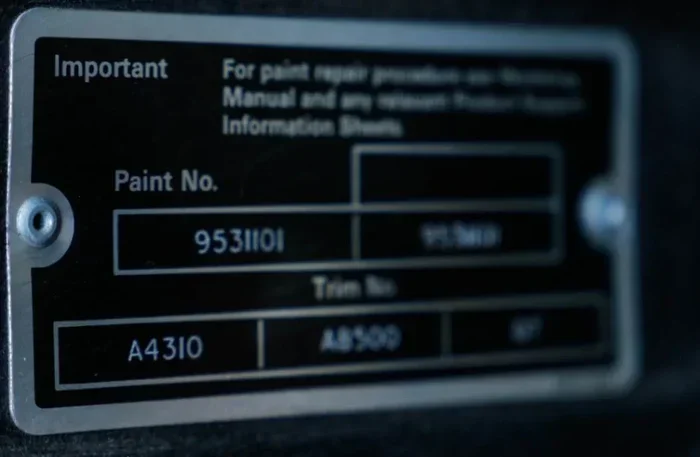
The door jamb sticker is the most common place to find your paint code. Open the driver’s side door and look at the door frame — the part that doesn’t move when you open the door. There’s usually a sticker or metal plate attached there.
This label contains a lot of information. You’ll typically find the tire pressure, vehicle weight, and manufacturing date. Right among that info, you’ll see the car color code. It might be labeled as “Paint Code,” “Color Code,” or “Exterior Color.”
Quick Tip: If your door jamb sticker is faded or peeling, take a photo with your phone in good lighting. This gives you a backup reference you can zoom into and read easily.
VIN Sticker Under the Hood
Pop the hood and look for the VIN plate. On most vehicles, this is located on the firewall (the metal wall between the engine and the cabin), the inner fender, or the radiator support. The VIN sticker contains a wealth of information about your car, including the manufacturer code and the paint code.
For many brands like Ford, Chevrolet, and Toyota, the paint code is printed directly on this plate. Look for a section labeled “Ext. Color” or “Paint.” It’s usually a short combination of letters and numbers.
Expert Insight: On some older vehicles, the paint code might be stamped directly into the metal rather than printed on a sticker. Check the inner fender or the engine bay sidewall for stamped characters.
Trunk Lid or Tailgate
Some manufacturers place the paint code label on the trunk lid, the rear gate, or even inside the trunk near the latch. This is especially common on SUVs and trucks. If you’ve already checked the door jamb and under the hood without success, the trunk is your next best bet.
On vehicles like the Honda CR-V and Toyota Tacoma, the color identifier is often found on a sticker inside the trunk area. Look near the spare tire well or on the inner panel of the tailgate.
Glove Box or Center Console
In a few vehicle models, the paint code is tucked away inside the glove box or on a label inside the center console area. This is less common, but it does happen. If you’re searching for your factory paint code and haven’t found it yet, it’s worth a look.
Some manufacturers also place the label on the inside of the glove box door itself. Open it up, shine a flashlight inside, and look for any small stickers or printed codes.
Underneath the Vehicle
On certain models, particularly older cars, the paint code is stamped onto the body near the rear axle or on the undercarriage. This is more common on vintage vehicles from the 1960s through the 1980s. If you’re working with a classic car, check the frame rails and suspension mounting points.
You’ll want a flashlight and maybe get down on your back for this one. The stamping is often small and can be covered in road grime, so clean the area first if possible.
On the Original Window Sticker
If you still have the original window sticker from when you bought the car, the paint code is listed there. It’s usually in the “Vehicle Description” section. This is a great backup option, especially for newer vehicles.
Even if you don’t have the physical sticker, you can often pull up a copy online using your VIN. Many dealer websites and third-party services offer this for free.
How to Find the Paint Code Using Your VIN
If you simply cannot find the physical label on your car, don’t panic. Your vehicle identification number holds a lot of the information about your vehicle, including the factory color.
Here’s how to look up your paint code using the VIN:
- Locate your VIN: It’s found on the dashboard (visible through the windshield), on the driver’s door jamb, and on the VIN plate under the hood.
- Visit a paint code lookup tool: Several websites and apps let you enter your VIN and retrieve the paint code instantly.
- Contact your dealership: Call the service department with your VIN. They can look up the original paint code in their system within minutes.
- Check your owner’s manual: Some manuals list the paint code in the specifications section or on a label inside the book.
This method works for virtually all modern vehicles. It’s especially helpful when the physical label has been worn away by sun exposure or road conditions.
Online VIN Decoders
There are many free VIN decoders available online. Some of the most reliable ones include the websites of major auto parts retailers and paint suppliers. Simply enter your VIN, and the decoder will return your vehicle details, including the body panel color code.
Just be sure to use a reputable source. Some free decoders only provide partial information. If you need the exact code, a dealership or a dedicated paint code database will give you the most accurate result.
What If You Can’t Find the Paint Code?
Sometimes the label is just gone. Maybe it wore off, was removed during a previous repair, or was never there in the first place. Don’t worry — you still have options.
Contact the Manufacturer
Call the customer service line for your car’s manufacturer. Provide them with your VIN and model year. They can usually tell you the exact factory paint code. This works for all major brands including Ford, Toyota, Honda, Chevrolet, BMW, Mercedes-Benz, and others.
Visit a Dealership
Your local dealership has access to the manufacturer’s database. With your VIN, a service advisor can pull up the paint code in seconds. This is one of the fastest and most reliable methods, especially for newer vehicles.
Use a Paint Code App
Several mobile apps are designed specifically for finding paint codes. You enter your vehicle’s make, model, and year, and the app provides the code. Some apps even let you look up the code using a photo of your car, though this method is less precise.
Check Online Forums and Communities
Car enthusiast forums are goldmines of information. Search for your specific make and model, and you’ll often find threads where owners have shared their paint codes. This works especially well for popular vehicles where many people have already done the research.
Common Mistake: Don’t rely on the paint name alone. “Midnight Black” might be used across several model years, and the formula could change between generations. Always use the actual alphanumeric code for an exact color match.
Using Your Paint Code for Touch-Up and Repairs
Once you have your paint code, you can use it to order touch-up paint, blending solutions, or even a full can of your factory color. Most dealerships sell touch-up paint pens and bottles that are matched to your specific code.
Ordering Touch-Up Paint
When you order touch-up paint, provide the code to the supplier. They will mix the paint to match your vehicle’s original formula. This ensures the best possible color match for any small repairs.
Here are some tips for applying touch-up paint:
- Clean the area thoroughly before applying.
- Use a small brush or pen applicator for precision.
- Apply thin layers rather than one thick coat.
- Let each layer dry completely before adding the next.
- Finish with a clear coat for protection and shine.
Working With a Body Shop
If you’re doing a larger repair, provide the paint code to your body shop before they start mixing colors. This saves time and reduces the chance of a mismatch. Professional shops have spectrophotometers that can read the existing paint, but having the original code gives them a perfect starting point.
Quick Tip: Even if the body shop uses a spectrophotometer, always provide the factory code as a reference. It acts as a backup and ensures the best possible result.
Understanding the Paint Code Format
Different manufacturers use different formats for their automotive paint codes. Here are a few examples:
- Toyota: Usually a three- or four-character code like “040” or “L902.”
- Ford: Often a two-letter or letter-number combination like “WA” or “1P.”
- Chevrolet: Typically a short code like “WA887” or a numeric code like “41.”
- BMW: Uses a format like “Alpine White 632” or a shorter alphanumeric code.
- Honda: Usually a simple number like “NH-532” or a similar format.
The format doesn’t matter as much as the code itself. As long as you provide the exact code to your paint supplier, they can match your color perfectly.
Tips for Keeping Your Paint Code Information Handy
Now that you’ve found your paint code, you don’t want to lose it again. Here are some smart ways to keep this information accessible:
- Save a photo: Take a clear picture of the label and store it in your phone’s photo app and cloud storage.
- Write it down: Keep a small notebook in your glove box with your paint code, VIN, and other key vehicle details.
- Register online: Some car apps and services let you store your vehicle information, including the paint code.
- Share with your insurance: Having your paint code on file can speed up claims for paint-related damage.
Taking a few minutes to document your color code now can save you a lot of hassle down the road. Trust us — you’ll be glad you did when you need a quick touch-up or file an insurance claim.
Quick Tips Summary
- Always start your search at the driver’s door jamb — it’s the most common location.
- If the sticker is faded, use your phone camera to zoom in and read the code.
- Your VIN is a reliable backup for finding the paint code online.
- Never guess the color by name alone — always use the alphanumeric code.
- Keep your paint code stored in at least two places for easy access.
Conclusion
Finding the paint code on your car doesn’t have to be a frustrating experience. Whether it’s on the driver’s door jamb, under the hood on the VIN sticker, inside the trunk, or stored in your vehicle’s digital records, there are multiple ways to locate it. The key is knowing where to look and what to look for.
Once you have your factory paint code, you unlock the ability to get exact color matches for touch-ups, repairs, and custom work. It’s a small piece of information that makes a big difference. Take the time to find it, document it, and keep it somewhere safe.
Your car’s color is part of its identity. Protecting that with the right paint code keeps it looking its best for years to come. So go ahead — open that driver’s door, check the jamb, and make sure you know your code. It’s one of the simplest and most valuable things you can do as a car owner.
Frequently Asked Questions
Where is the most common place to find a car’s paint code?
The driver’s door jamb is the most common location. Open the driver’s side door and look for a sticker on the door frame. The paint code is usually printed right on this label, often labeled as “Paint Code” or “Color Code.”
Can I find my paint code using just my VIN number?
Yes, in most cases. You can use online VIN decoders, contact your dealership, or check your vehicle’s documentation. The VIN contains the factory paint code in its data, making it a reliable backup when the physical label is missing.
What if the paint code sticker on my car is faded or missing?
Don’t worry. You can call your car’s manufacturer with your VIN, visit a dealership, or check your original window sticker. Many online tools and apps also let you retrieve the code using your vehicle details.
Is the paint code the same as the VIN?
No, they are different. The VIN is the vehicle identification number, which is a unique 17-character code for your car. The paint code is a shorter alphanumeric identifier that specifically refers to the factory exterior color formula.
How do I use my paint code to order touch-up paint?
Provide the alphanumeric code to your dealership or paint supplier. They will mix the paint to match your vehicle’s original factory formula. This ensures the best possible color match for any touch-up or repair job.
Does every car have a paint code?
Yes, every vehicle produced has a factory paint code. It’s assigned at the manufacturing plant and corresponds to the specific color formula used on that vehicle. Even custom and special-order colors have a unique code.
=== CONCLUSION ===
Knowing where the paint code is located on your car is an essential piece of vehicle knowledge. It empowers you to handle touch-ups, repairs, and documentation with confidence. The driver’s door jamb, the VIN sticker under the hood, and the trunk area are your primary search locations. If those don’t work, your VIN and dealership can fill in the gaps.
Take a moment today to find and record your factory paint code. It’s a small step that pays off every time you need a color match. Keep that information safe, and your car will always have access to the exact shade it left the factory with.