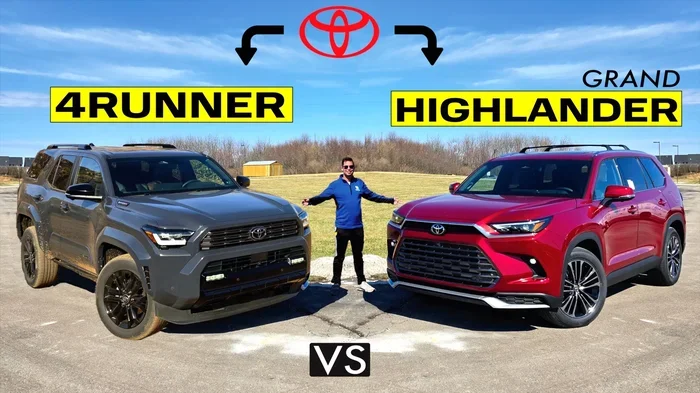
Are Toyota Highlanders Really as Reliable as the 4Runner
The Toyota Highlander and Toyota 4Runner both earn strong reliability scores, but they shine in different areas. The Highlander offers lower upkeep costs and a smoother ride for families, while the 4Runner delivers unmatched off-road toughness and a longer potential lifespan. This guide breaks down ownership data so you can choose with confidence.
When shopping for a reliable SUV, two Toyota models always come up: the Toyota Highlander and the Toyota 4Runner. Both have earned strong reputations for durability, but are they truly equals in reliability? This article dives deep into real-world data, owner surveys, and long-term ownership costs to give you a clear answer.
Toyota built a name for making vehicles that last well past the 200,000-mile mark. The Toyota Highlander and Toyota 4Runner both carry that legacy, yet they serve very different buyers. The Highlander is a unibody, family-friendly crossover, while the 4Runner is a truck-based SUV built for trails. Understanding how their designs affect long-term dependability is the first step in choosing the right one.
Key Takeaways
- Toyota Highlander reliability is excellent for daily driving, with fewer rust and electrical gremlins over time.
- Toyota 4Runner reliability benefits from its body-on-frame design, making it a legend for extreme off-road longevity.
- Both SUVs share a proven V6 engine, but the Highlander adds a fuel-saving hybrid powertrain.
- Maintenance costs are typically lower for the Highlander due to its unibody, car-based platform.
- Resale value is strong for both, yet the 4Runner often commands a higher premium in the used market.
- Common issues differ: the Highlander may need occasional transmission software updates, while the 4Runner can develop rear leaf spring sag.
- Your lifestyle—daily commuter versus adventure rig—determines which SUV delivers the best real-world reliability for you.
📑 Table of Contents
- Why the Toyota Highlander and 4Runner Are Reliability Legends
- Toyota Highlander Reliability: How It Compares to the 4Runner
- Engine and Drivetrain: How They Compare
- Off-Road Prowess vs. Daily Commuting
- Resale Value and Ownership Costs
- Final Verdict: Is the Toyota Highlander as Reliable as the 4Runner?
- Key Takeaways
- Conclusion
Why the Toyota Highlander and 4Runner Are Reliability Legends
Toyota does not accidentally build cars that people trust for decades. The company spends billions on quality control and proven components. Both the Toyota Highlander and Toyota 4Runner benefit from this philosophy, but they take different engineering paths.
The Highlander: A Family-Friendly Workhorse
The Highlander uses a unibody frame, which means the body and frame are one piece. This design is common in cars and crossovers. It makes the Highlander lighter and more fuel-efficient than truck-based SUVs. For a Toyota Highlander daily driver, this translates to a smooth, quiet ride on pavement. The unibody structure also reduces noise and vibration over time. Owners often report that their Highlanders feel solid even after 150,000 miles. The Toyota Highlander lifespan regularly reaches 200,000 to 250,000 miles with basic maintenance.
The 4Runner: The Rugged Off-Road Icon
The 4Runner takes the opposite approach. It uses a body-on-frame design, where the body mounts to a separate, rigid ladder frame. This is the same architecture found in the Toyota Tacoma pickup truck. The body-on-frame design makes the 4Runner incredibly strong and resistant to flex. When you take a Toyota 4Runner off-road, that toughness shines. The 4Runner can handle rock crawling, deep mud, and heavy loads without structural damage. This is why the Toyota 4Runner lifespan often exceeds 300,000 miles in adventure-focused ownership. The frame itself rarely wears out, and many 4Runners are still on the road with their original chassis.
Toyota Highlander Reliability: How It Compares to the 4Runner
Reliability means different things to different people. A family needs a dependable commuter, while an overlander needs a truck that survives brutal trails. Let us break down the numbers.
Long-Term Durability and Lifespan
Both SUVs are known for longevity, but the way they age differs. The Toyota Highlander tends to hold up well as a daily driver. Its unibody design means fewer moving parts in the suspension. The Highlander’s Toyota Highlander engine and transmission are proven units that respond well to regular oil changes. The Toyota Highlander lifespan averages 200,000 to 250,000 miles for most owners. With careful care, some Highlanders push past 300,000 miles.
The Toyota 4Runner often lasts longer in terms of pure mechanical survival. The body-on-frame design means the vehicle can take serious abuse without the bodywork cracking. The Toyota 4Runner lifespan is frequently measured in 300,000 to 400,000 miles for those who use it lightly and maintain it properly. The 4Runner’s simplicity—no complex electronics, a solid rear axle, and a straightforward V6—makes it easier to repair on the trail.
Common Problems and Weak Points
No vehicle is perfect. Understanding potential issues helps you avoid surprises.
- Toyota Highlander problems: Some older models (2008–2013) experienced occasional transmission shudder or solenoid issues. The Toyota Highlander can also develop minor electrical gremlins, such as faulty power window regulators or infotainment glitches. Rust is rare on the unibody Highlander, but weak spot repairs can occur near the rear wheel wells in harsh climates.
- Toyota 4Runner problems: The 4Runner’s rear leaf springs can sag over time, especially when hauling heavy loads. The Toyota 4Runner may also develop issues with the transfer case or front axle disconnect actuator. Older models (pre-2010) are prone to rust on the frame rails and rocker panels if the undercoating wears away. The Toyota 4Runner V6 can occasionally consume a bit more oil as mileage climbs.
Maintenance Costs Compared
Maintenance costs play a big role in long-term reliability. A vehicle that requires expensive repairs can become a money pit, even if it is mechanically sound.
| Category | Toyota Highlander | Toyota 4Runner |
|---|---|---|
| Average Annual Maintenance | $400–$600 | $500–$700 |
| Major Service Interval | Every 5,000–10,000 miles | Every 5,000–10,000 miles |
| Common Expensive Repair | Transmission solenoid ($600–$900) | Rear leaf spring replacement ($400–$800 per axle) |
| Tire Wear (Average) | 50,000–60,000 miles | 40,000–50,000 miles (off-road use reduces this) |
| Brake Pad Replacement | 30,000–50,000 miles | 35,000–55,000 miles |
The Toyota Highlander maintenance cost is generally lower because its unibody design uses more common, car-based parts. The 4Runner’s truck components, like leaf springs and solid axles, can be pricier to replace, but they are also simpler and easier to work on. Overall, the Toyota 4Runner maintenance cost remains reasonable, especially if you do basic work yourself.
Engine and Drivetrain: How They Compare
The powertrain is the heart of any SUV. Both the Toyota Highlander and Toyota 4Runner rely on a V6 engine, but their applications differ greatly.
Highlander’s V6 and Hybrid Powertrain
The current Toyota Highlander uses a 3.5-liter V6 that produces 295 horsepower. This engine is smooth, refined, and paired with an 8-speed automatic transmission. The Highlander also offers a hybrid variant that combines the V6 with two electric motors for a combined 243 horsepower. The hybrid system improves fuel economy significantly, making the Toyota Highlander a great choice for high-mileage commuters. The hybrid powertrain adds complexity, but Toyota’s hybrid systems are famously durable. The electric motors have no traditional transmission wear, and the battery packs are designed to last the life of the vehicle.
4Runner’s V6 and Part-Time 4WD System
The Toyota 4Runner uses a 4.0-liter V6 that produces 270 horsepower. This engine is older in design but incredibly robust. It is paired with a 5-speed or 6-speed automatic, depending on the model year. The 4Runner’s part-time 4WD system lets you lock the front and rear axles for serious traction. The Toyota 4Runner engine is known for its longevity, often exceeding 300,000 miles without a rebuild. The simplicity of the drivetrain means fewer things can go wrong. The 4Runner does not offer a hybrid or electric variant, which keeps the mechanical setup straightforward and repairable almost anywhere.
Off-Road Prowess vs. Daily Commuting
One of the biggest differences between these two SUVs is how you use them. The Toyota Highlander is built for paved roads and family duties, while the Toyota 4Runner thrives on dirt and rocks.
Which SUV Fits Your Lifestyle?
If you need a Toyota Highlander daily driver, you will appreciate its comfortable seats, quiet cabin, and excellent fuel economy. The Highlander handles highway merging and city traffic with ease. It is the ideal Toyota Highlander for school runs, road trips, and commuting. The Toyota Highlander off-road capability is limited; it has all-wheel drive, but it is not designed for serious trail use. Attempting extreme off-roading in a Highlander can damage the unibody structure and low-lying components.
If you want a Toyota 4Runner daily driver that can also conquer backcountry roads, the 4Runner is the clear winner. The Toyota 4Runner off-road reputation is built on solid axles, high ground clearance, and a locking differential. You can take it to remote campsites, river crossings, and mountain trails with confidence. The trade-off is a firmer ride on pavement, lower fuel economy, and more road noise. The 4Runner is less refined as a commuter, but its ruggedness is unmatched.
Quick Tip: Matching Your SUV to Your Needs
Ask yourself one question: will you ever take this vehicle on a serious trail? If the answer is yes, the 4Runner is the better choice for long-term reliability in that environment. If you will only drive on pavement and occasional light gravel roads, the Highlander will serve you well with fewer headaches.
Common Mistake: Overlooking Maintenance Schedules
Many owners assume that because these Toyotas are reliable, they never need service. This is false. Skipping oil changes or ignoring transmission fluid changes will shorten the lifespan of any vehicle. The Toyota Highlander and Toyota 4Runner both require regular maintenance to reach their full potential. Set a reminder for every 5,000 miles and stick to it.
Resale Value and Ownership Costs
Toyota SUVs hold their value better than almost any other brand. This is a direct result of their reliability reputation.
Toyota Resale Dominance
The Toyota Highlander resale value is excellent. After three years, a Highlander retains about 60–65% of its original value. After five years, it still holds around 45–50%. The Toyota 4Runner resale value is even stronger. The 4Runner routinely retains 65–70% of its value after three years and 50–55% after five years. The 4Runner’s scarcity and cult following drive up used prices. If you plan to sell or trade in your SUV, the 4Runner will cost you less in depreciation over time.
Depreciation and Long-Term Savings
Depreciation is the hidden cost of vehicle ownership. The Toyota Highlander depreciates at a moderate rate, making it a smart financial choice for families. The Toyota 4Runner depreciates more slowly, which means you lose less money if you sell after a few years. However, the 4Runner’s higher initial price and slightly higher fuel costs can offset some of that savings. Over a 10-year ownership period, both vehicles prove to be excellent investments, but the 4Runner’s stronger resale often gives it a slight edge.
Expert Insight: The Real Cost of Ownership
According to iSeeCars and RepairPal data, the Toyota Highlander ranks among the top SUVs for low cost of ownership. The Toyota 4Runner is slightly higher in maintenance costs but still below the average for its class. The key takeaway is that both vehicles are financially sound choices. The Toyota Highlander wins on day-to-day affordability, while the Toyota 4Runner wins on long-term value retention.
Final Verdict: Is the Toyota Highlander as Reliable as the 4Runner?
The answer depends on how you define reliability. If reliability means a trouble-free daily commute, low maintenance bills, and a comfortable ride, the Toyota Highlander is absolutely as reliable as the 4Runner—and arguably more practical for most families. If reliability means surviving extreme off-road abuse and lasting 300,000+ miles with minimal mechanical intervention, the Toyota 4Runner has the edge.
Both SUVs are built on Toyota’s legendary reliability platform. The Toyota Highlander uses proven car-based engineering that delivers years of faithful service. The Toyota 4Runner uses rugged truck-based engineering that turns weekend adventures into lifetime memories. Neither choice will leave you stranded if you follow the maintenance schedule and drive within the vehicle’s limits.
So, are Toyota Highlanders as reliable as the 4Runner? Yes, they are both exceptionally reliable, but they excel in different arenas. Choose the Highlander for a smart, efficient family hauler. Choose the 4Runner for an unstoppable off-road companion. You cannot go wrong with either.
Key Takeaways
- Toyota Highlander reliability is outstanding for daily driving, with a proven unibody design that resists rust and wear.
- Toyota 4Runner reliability shines in off-road durability, thanks to its body-on-frame construction and simple drivetrain.
- The Toyota Highlander offers a hybrid option that boosts fuel efficiency and reduces long-term fuel costs.
- The Toyota 4Runner has a higher potential lifespan due to its robust body-on-frame architecture and solid axles.
- Maintenance costs are lower for the Highlander, but the 4Runner’s repairs are simpler and cheaper when they do occur.
- Resale value favors the 4Runner, making it a better financial choice if you plan to sell within five years.
- Your lifestyle is the ultimate deciding factor: choose the Highlander for pavement and families, the 4Runner for trails and adventure.
Conclusion
The Toyota Highlander and Toyota 4Runner both represent the best of Toyota’s SUV lineup. They are built to last, backed by a reputation for Toyota reliability that spans decades. The Highlander brings modern comfort, hybrid efficiency, and family-friendly practicality. The 4Runner brings raw toughness, trail-ready capability, and a simple, repairable design. Whichever you choose, you are buying a vehicle that will serve you well for hundreds of thousands of miles. Apply the insights from this guide, match the SUV to your real-world needs, and you will enjoy a dependable, trustworthy ride for years to come.
Frequently Asked Questions
Is the Toyota Highlander more reliable than the 4Runner?
It depends on usage. The Highlander is more reliable as a daily driver due to its unibody design and lower maintenance costs. The 4Runner is more reliable for off-road abuse and extreme longevity. Both are excellent, but they serve different purposes.
How many miles can a Toyota Highlander last?
With proper maintenance, a Toyota Highlander can easily last 200,000 to 250,000 miles. Some owners have pushed their Highlanders past 300,000 miles by staying on top of oil changes, transmission fluid, and brake service.
How many miles can a Toyota 4Runner last?
The Toyota 4Runner is famous for its longevity. Many examples exceed 300,000 miles, and some reach 400,000 miles. The body-on-frame design and simple mechanicals contribute to this impressive lifespan.
Which Toyota SUV has the lowest maintenance cost?
The Toyota Highlander generally has lower maintenance costs than the 4Runner. Its unibody design uses more common car parts, and its hybrid system reduces brake wear. The 4Runner’s truck components cost more to replace, but repairs are straightforward.
Is the Toyota 4Runner worth the higher price?
If you value off-road capability, resale value, and long-term durability, the 4Runner is worth the premium. The Highlander is a better value for families who prioritize comfort, fuel economy, and lower upfront costs.
Can a Toyota Highlander go off-road?
The Highlander can handle light off-road duties like gravel roads and mild trails. It is not designed for serious rock crawling or deep mud. Attempting extreme off-roading in a Highlander can cause damage to its unibody structure and low-clearance components.