Can I Lift My RAV4 The Complete Guide For Beginners
Can I Lift My RAV4? Yes, you can lift your Toyota RAV4 with a suspension or body lift kit. This guide covers kit types, heights, installation steps, and whether it’s worth the effort. Lift your RAV4 safely and confidently with our expert advice.
You’ve probably seen a RAV4 with a few extra inches of height and thought, “Can I lift my RAV4 too?” The answer is a resounding yes. Whether you want better off-road capability, a more commanding view of the road, or the ability to fit larger tires, a lift kit can transform your Toyota RAV4. This guide walks you through everything you need to know. We’ll cover the different types of kits, how much lift you can get, and whether you should DIY or hire a pro.
The Toyota RAV4 is one of the best-selling SUVs on the planet. It’s reliable, efficient, and practical. But the stock suspension is designed for paved roads and mild driving. If you want to tackle trails, carry more gear, or simply stand out, lifting your RAV4 makes sense. Can I lift my RAV4 without breaking the bank or voiding the warranty? Let’s find out.
Before you buy a single part, you need to understand the basics. There are two main types of lifts: suspension lifts and body lifts. A suspension lift raises the entire chassis relative to the body. It gives you more ground clearance and allows for larger wheels and tires. A body lift, on the other hand, raises the body off the frame. It’s simpler and cheaper, but it doesn’t improve suspension travel. Many builders use a combination of both. We’ll dive deep into each option below.
Key Takeaways
- Multiple lift options: Suspension and body lifts can add 1–3 inches of height.
- DIY possible: Many kits can be installed at home with basic tools.
- Check compatibility: Not all kits fit every RAV4 year and trim.
- Warranty concerns: Lifting may affect your factory warranty.
- Ride changes: Expect a slightly firmer ride and possible rubbing.
- Maintenance matters: Post-lift alignment and inspections are crucial.
📑 Table of Contents
Why Lift a RAV4? The Appeal of a Raised SUV
The RAV4 is a versatile compact SUV. Stock, it sits low to the ground. That’s fine for commuting, but it limits your off-road potential. A lift changes everything. Here are the top reasons people lift their RAV4:
- Better ground clearance: Clear rocks, logs, and rough terrain without scraping the undercarriage.
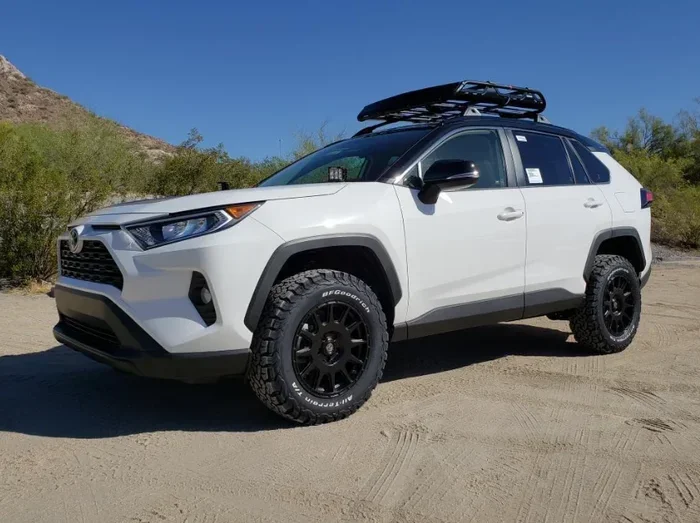
- Larger tire fitment: A lift lets you mount 33-inch or even 35-inch tires for superior traction.
- Improved approach and departure angles: You won’t high-center as easily on trails.
- Aggressive stance: A lifted RAV4 looks more rugged and purposeful.
- Easy maintenance: Getting under the vehicle for oil changes or inspections becomes simpler.
Even if you never leave the pavement, a lift can make your daily drive feel more planted and confident. Can I lift my RAV4 for aesthetic reasons alone? Absolutely.
The RAV4 Trim Factor
Not all RAV4s are created equal. The base LE model is often the easiest to lift. The Adventure and Wildlander trims already have some off-road features, but they still sit on stock suspension. The TRD Off-Road and TRD Pro models come with Bilstein shocks and a factory lift, but you can add even more. The hybrid models (RAV4 Hybrid and RAV4 Prime) add weight, which can affect how the lift performs. Always check your specific year and trim before buying a kit.
Can I Lift My RAV4? Understanding the Lift Kit Types
This is the core question. The answer depends on what you want to achieve. Let’s break down the main lift kit options.
Suspension Lift Kits
A suspension lift replaces or modifies the springs, shocks, and control arms. It raises the entire vehicle and gives you real suspension articulation. This is the go-to choice for serious off-roaders. Popular brands include Bilstein, Eibach, Rough Country, and Icon Vehicle Dynamics. A full suspension lift can add 2 to 4 inches of height. Some advanced kits use coilover shocks that allow you to adjust ride height on the fly.
Suspension lifts are more expensive and complex to install. They require you to swap out multiple components. You’ll also need to realign the steering and suspension after installation. But the result is a RAV4 that can truly go places the stock version can’t.
Body Lift Kits
A body lift uses spacers between the frame and the body. It raises the body without touching the suspension. This is a budget-friendly way to gain a few inches. Body lifts typically add 1 to 3 inches. They’re simple to install and don’t affect the ride quality on pavement. However, they don’t improve suspension travel or ground clearance much. The wheels and tires still sit in the same fender wells.
Body lifts are great if you just want to fit slightly larger wheels or add a roof rack. They’re also easier to reverse if you ever want to go back to stock. Many people pair a small body lift with a leveling kit to get the look they want.
Leveling Kits
A leveling kit is a mild suspension lift that raises the front of the vehicle to match the rear. Most RAV4s sit slightly lower in the front because of the engine weight. A leveling kit adds a spacer or a taller spring to the front only. It typically provides 1 to 2 inches of lift. This is the easiest and cheapest way to change the RAV4’s stance. It’s perfect for fitting 33-inch tires without rubbing, and it improves the vehicle’s appearance.
Spacer Lifts
A spacer lift is a type of suspension lift that uses stacked spacers over the existing coil springs. It’s a bolt-on solution that doesn’t require replacing the springs. Spacer lifts can add 1 to 2 inches. They’re quick to install and relatively affordable. However, they can slightly degrade ride quality because the spacer takes up space that was designed for suspension movement. They’re a good middle ground for someone who wants a little lift without a full kit.
How Much Lift Can You Get? Lift Heights and Compatibility
The amount of lift you can achieve depends on the kit and your RAV4 model. Here’s a quick comparison table to help you choose.
| Lift Type | Typical Lift Height | Best For | Cost Range |
|---|---|---|---|
| Leveling Kit | 1–2 inches | Street appearance, 33-inch tires | $200–$500 |
| Spacer Lift | 1–2 inches | Budget lift, easy install | $150–$400 |
| Body Lift | 1–3 inches | Fender clearance, roof rack | $100–$300 |
| Suspension Lift (Full) | 2–4 inches | Off-road, larger tires (35″) | $800–$2,500 |
| Full Lift (Body + Suspension) | 3–5 inches | Serious trail use, 37″ tires | $1,500–$4,000 |
Most RAV4 owners find that a 2-inch suspension lift or a 1-inch body lift hits the sweet spot. Going beyond 3 inches often requires trimming the fenders and modifying the CV axles. Always check the kit manufacturer’s compatibility list for your specific RAV4 year (2013–2024). Can I lift my RAV4 with a lift that’s too big? Technically yes, but it can lead to drivetrain issues and rubbing.
Lift Height and Drivetrain Considerations
When you lift a RAV4, you change the geometry of the drivetrain. The CV joints, driveshaft, and transfer case all have limited operating angles. A lift that’s too tall can cause the CV axles to bind or the driveshaft to vibrate. The RAV4’s AWD system relies on precise sensor readings. Lifting the vehicle can affect the ABS sensors and speedometer calibration. You may need a speedometer calibrator or a TPMS relocation kit. For hybrid models, the high-voltage battery placement must be considered. Never lift a RAV4 beyond the manufacturer’s recommended limit without upgrading drivetrain components.
Step-by-Step Installation Guide
Installing a lift kit is a weekend project for a motivated DIYer. You’ll need a few tools and a clean workspace. Here’s a general overview of the process.
Tools You’ll Need
- Jack and jack stands
- Socket set and wrenches
- Torque wrench
- Spring compressor (for suspension lifts)
- Alignment kit (if doing it yourself)
- Penetrating oil (for rusted bolts)
- Lift or ramps (optional but helpful)
Installing the Lift Kit
Start by reading the kit instructions thoroughly. Every kit is different, but the general steps are similar. First, loosen the lug nuts and lift the front of the vehicle. Remove the wheels. For a suspension lift, you’ll compress the coil springs and remove the strut assembly. Replace the springs with the lift springs or add spacers. Install the new shocks or struts. Reassemble everything in reverse order. Torque all bolts to the factory spec. For a body lift, you’ll unbolt the body from the frame, insert the spacers, and rebolt. Apply thread-locking compound to prevent vibrations.
Alignment and Final Checks
After installation, do not drive the vehicle without an alignment. The lift changes the camber and toe settings. Incorrect alignment will wear your tires rapidly and affect steering feel. Take the RAV4 to a professional alignment shop. Check all drivetrain components for proper clearance. Test drive slowly at first. Listen for any clunks or vibrations. Adjust if needed.
Quick Tips for Installation
- Take photos before disassembly. It makes reassembly much easier.
- Label all bolts and parts. A small organizer bag helps.
- Use a torque wrench. Over-tightening can strip threads.
- Don’t skip the alignment. It’s not optional.
- Check the transfer case and front differential fluid after a suspension lift.
Pros and Cons of Lifting Your RAV4
Every modification has trade-offs. Let’s weigh the advantages and disadvantages.
Advantages of a Lifted RAV4
- Off-road capability: You can explore trails that were previously inaccessible.
- Tire clearance: Fit all-terrain or mud-terrain tires for better grip.
- Ground clearance: Avoid damage from speed bumps, driveways, and debris.
- Customization potential: Add rock sliders, bumpers, winches, and lighting.
- Resale value: Some buyers pay more for a lifted RAV4, especially in off-road communities.
Potential Drawbacks
- Ride quality: The vehicle may feel stiffer and noisier on the highway.
- Fuel economy: Larger tires and changed aerodynamics can reduce MPG.
- Warranty issues: The dealer may deny claims related to the lift if they can prove damage.
- Cost: A quality kit and professional installation can cost $1,000–$3,000.
- Rubbing: Without trimming, larger tires may rub the fenders or inner wheel wells.
Before you commit, ask yourself: what will I use the RAV4 for 80% of the time? If the answer is commuting and grocery runs, a lift might be overkill. But if you love weekend adventures, the pros often outweigh the cons.
Maintaining Your Lifted RAV4 (Post-Lift Care)
A lifted RAV4 needs a little extra attention. Here’s a maintenance checklist to keep it running smoothly.
- Alignment checks: Get an alignment every 6 months or after hitting a major pothole.
- Brake line inspection: The lift can stretch brake hoses. Check for cracks or bulges.
- CV boot check: Ensure the CV boots are intact and greased. A torn boot leads to a costly repair.
- Driveshaft U-joints: Listen for clunks when shifting from drive to reverse. Lubricate or replace as needed.
- Tire pressure monitoring: If you added a lift kit, you may need to relocate the TPMS sensors. Check them regularly.
- Underbody washes: A lifted RAV4 picks up more mud and debris. Wash the undercarriage after off-road trips.
Also, monitor your fluid levels. The transfer case and front differential may need more frequent changes if you’re using the RAV4 as a trail rig. Use synthetic gear oil for better protection. Can I lift my RAV4 and still keep it reliable? Yes, with proper maintenance, a lifted RAV4 can be just as dependable as a stock one.
Common Mistakes to Avoid
- Skipping the alignment: This is the most common mistake. It will ruin new tires quickly.
- Over-lifting: Going beyond 3 inches without upgrading drivetrain components leads to vibration and CV failure.
- Ignoring the brakes: Longer brake lines can stretch and reduce braking feel. Replace them if needed.
- Cheap lift kits: A $200 kit from an unknown brand can cause more problems than it solves. Stick with reputable manufacturers.
- Forgetting the speedometer: A lift changes tire diameter, which can throw off the speedometer. Recalibrate it.
Expert Insights: What the Pros Say
Experienced RAV4 modifiers often recommend a 2-inch suspension lift paired with 33-inch tires. It’s the sweet spot for street-driven RAV4s that still want off-road credibility. They also stress the importance of a quality alignment and a post-lift inspection by a qualified technician. “Don’t lift your RAV4 just for looks,” says one veteran modifier. “Do it because you want to explore more. That way, you’ll enjoy every inch of extra height.”
Key Takeaways
- Multiple lift options: Suspension and body lifts can add 1–3 inches of height.
- DIY possible: Many kits can be installed at home with basic tools.
- Check compatibility: Not all kits fit every RAV4 year and trim.
- Warranty concerns: Lifting may affect your factory warranty.
- Ride changes: Expect a slightly firmer ride and possible rubbing.
- Maintenance matters: Post-lift alignment and inspections are crucial.
So, can I lift my RAV4? Absolutely. Whether you choose a simple leveling kit or a full suspension setup, the right lift can unlock a new world of capability and style. Just remember to plan carefully, choose quality parts, and maintain the vehicle properly. Your lifted RAV4 will reward you with confidence both on and off the road.
Now that you have the complete guide, you’re ready to make an informed decision. Start by researching kits for your specific RAV4 model year. Talk to other RAV4 owners in online forums. Visit a local off-road shop for advice. The journey to a lifted RAV4 is exciting, and with the right knowledge, you’ll do it right the first time.
Frequently Asked Questions
Is lifting a RAV4 legal?
Yes, lifting a RAV4 is legal in most places. However, there may be height restrictions or modification laws depending on your state or country. Always check local regulations before making changes.
Will a lift kit void my RAV4 warranty?
A lift kit can potentially void parts of your warranty. If the dealer can prove that a lift caused a specific failure, they may deny the claim. Many owners install the kit after the warranty expires to avoid this risk.
How much does it cost to lift a RAV4?
The cost varies widely. A leveling kit might cost $200–$500. A full suspension lift kit can range from $800 to $2,500. Professional installation adds $500–$1,000. Total costs typically fall between $1,000 and $3,500.
Can I lift my RAV4 myself?
Yes, many DIYers install lift kits at home. You’ll need basic mechanical skills, a jack, jack stands, and the right tools. If you’re not comfortable with spring compressors or drivetrain work, hire a professional.
What size tires can I fit after lifting my RAV4?
With a 2-inch suspension lift, you can typically fit 33-inch tires without rubbing. A 3-inch lift allows for 35-inch tires. Always test fit tires before driving and check for clearance in turns and over bumps.
Does lifting a RAV4 affect fuel economy?
Yes, lifting a RAV4 can slightly reduce fuel economy. Larger tires increase rolling resistance, and a changed ride height can affect aerodynamics. The drop is usually 1–2 MPG, but it varies with driving habits.