Is It OK to Drive With the VSC Light On in Traffic
Driving with the VSC light on in traffic is generally not recommended, as it means your Vehicle Stability Control system is disabled or malfunctioning. This system helps keep your car stable during sudden maneuvers or slippery conditions, and without it, you face a higher risk of losing control. The VSC light can come on for many reasons, from a simple loose gas cap to a serious ABS sensor failure. Understanding what triggers the light and how to respond can keep you safe and prevent costly repairs down the road.
You are cruising through traffic, and suddenly you notice a yellow or red warning light on your dashboard shaped like a car sliding or a triangle with an exclamation mark. Your heart skips a beat. Is it OK to drive with the VSC light on? The short answer is: it depends, but you should not ignore it. The VSC light, short for Vehicle Stability Control, is one of the most important safety features in modern cars. When it comes on, it is telling you something is wrong with the system that helps keep your vehicle stable and safe on the road.
Many drivers panic when they see a warning light pop up while driving in traffic. The good news is that in most cases, the VSC light does not mean your car is about to break down. However, it does mean you are driving without a critical safety net. In this article, we will walk you through everything you need to know about the VSC light. You will learn what it means, why it comes on, whether it is safe to keep driving, and how to fix the problem. By the end, you will feel confident making the right decision the next time that little light shows up on your dash.
Key Takeaways
- VSC stands for Vehicle Stability Control: It is a safety system that helps prevent skidding and loss of control while driving.
- Driving with the VSC light on reduces your safety margin: The system cannot intervene if you start to slide or lose traction.
- Common causes include faulty wheel speed sensors, ABS issues, and low brake fluid: These are the most frequent culprits behind the warning light.
- Short, low-speed driving may be acceptable in emergencies: But you should get the problem diagnosed as soon as possible.
- Ignoring the VSC light can lead to bigger repair bills: A small sensor issue can snowball into a more serious brake or stability problem.
- A simple OBD-II scan can reveal the root cause: Many auto parts stores offer free diagnostic checks.
- Regular maintenance prevents VSC light triggers: Keeping your brake fluid topped off and sensors clean goes a long way.
📑 Table of Contents
What Does the VSC Light Mean?
The VSC light is a dashboard warning that alerts you to a problem with your Vehicle Stability Control system. This system works hand in hand with your traction control and anti-lock braking system, commonly known as ABS, to keep your car stable. When the system detects that your vehicle is starting to skid or lose traction, it automatically applies the brakes to individual wheels and reduces engine power. This helps you stay on course, especially during sudden turns or on slippery surfaces like rain or ice.
How the VSC System Works
Your car has sensors on each wheel that monitor speed. There is also a steering angle sensor that tracks how much you are turning the wheel. The VSC system uses all of this data to calculate whether your car is moving in the direction you intend. If it detects a mismatch, it steps in to correct the slide. For example, if your rear end starts to swing out during a sharp turn, the system will brake the inside front wheel to help pull the car back in line.
This entire process happens in milliseconds, faster than any human reaction time. That is why the VSC system is so valuable, especially in traffic where stop-and-go driving and sudden lane changes are common. When the VSC light comes on, it means the computer has detected a fault and has either turned the system off or limited its function. You are essentially driving without this automatic safety net.
VSC vs Traction Control: What Is the Difference?
People often confuse VSC with traction control, but they are related yet different. Traction control prevents your wheels from spinning when you accelerate, especially on wet or icy roads. VSC goes a step further by controlling both acceleration and braking to keep the entire vehicle stable. Think of traction control as focusing on the wheels, while VSC focuses on the whole car. Many cars share sensors and components between these two systems, which is why a problem with one can trigger the light on the other.
When the VSC light is on, traction control may also be disabled. This means your car could spin its wheels more easily on slick surfaces. You might notice this when pulling away from a stoplight on a wet road. The car feels less planted and more eager to slip. This is a clear sign that your stability systems are not fully working.
Can You Safely Drive With the VSC Light On in Traffic?
This is the question most drivers want answered, and the honest answer is: it is not ideal, but it is usually not an immediate emergency. If the VSC light comes on while you are stuck in heavy traffic, you can generally drive to a safe location or the nearest repair shop. The key is to understand the risks and adjust your driving accordingly. You should avoid highway speeds, sharp turns, and driving in rain or on icy roads until the problem is fixed.
Short-Term Driving With the VSC Light On
In stop-and-go traffic at low speeds, the risk is lower because you are not dealing with high-speed cornering or sudden maneuvers. Your regular brakes and steering still work normally. The VSC system simply cannot add its extra layer of protection. Many drivers get to a mechanic or home safely with the light on, especially if the issue is minor, like a loose gas cap or a temporary sensor glitch.
However, you should never treat the VSC light as something to ignore long-term. Even in low-risk situations like city traffic, unexpected events can happen. A pedestrian might step out suddenly, or the car in front of you might brake hard. Without VSC, your ability to maintain control during a panic stop or evasive turn is reduced. You become more reliant on your own driving skills alone.
Risks of Ignoring the VSC Warning Light
The biggest risk of driving with the VSC light on is losing control in conditions you do not expect. A dry road can suddenly become wet from a passing truck. A curve can be more slippery than it looks. Without stability control, your car is more likely to understeer or oversteer, which can lead to a serious accident. In fact, studies from the National Highway Traffic Safety Administration show that electronic stability control systems significantly reduce fatal single-vehicle crashes.
Another risk is that the underlying problem causing the VSC light may affect other systems. For instance, a failing wheel speed sensor that triggers the VSC light also feeds data to the ABS system. If that sensor fails completely, your ABS may stop working too. This means your wheels could lock up during hard braking, making it very hard to steer. What starts as a small warning light can quickly become a major safety issue.
Common Causes of the VSC Warning Light
Understanding why the VSC light comes on can help you decide how urgent the situation is. There are many possible causes, ranging from very minor to more serious. Let us look at the most common ones so you know what to expect.
Faulty Wheel Speed Sensors
The most common reason for the VSC light is a bad wheel speed sensor. These small sensors sit near each wheel and measure how fast each one is spinning. Over time, they can get dirty, damaged, or simply wear out. When one sensor sends incorrect data, the VSC computer cannot accurately determine your car’s stability and will shut the system down as a precaution.
Wheel speed sensors are relatively inexpensive to replace, usually costing between $100 and $300 per sensor including labor. However, if you ignore the light and the sensor fails completely, it can affect your ABS and traction control too. That is when repair costs go up and safety risks increase.
ABS System Malfunctions
Since VSC relies heavily on the ABS system, any ABS problem can trigger the VSC light. This includes issues with the ABS control module, ABS pump, or ABS wiring. You might notice the ABS light also comes on at the same time. ABS problems are more serious because they directly affect your ability to brake safely, especially on wet roads.
Steering Angle Sensor Calibration Issues
Your car has a steering angle sensor in the steering column that tells the VSC system how much you are turning the wheel. After a battery disconnect, alignment, or steering repair, this sensor may need recalibration. If it is out of sync, the VSC system will see a mismatch between your steering input and the car’s actual direction, and it will turn itself off.
This is one of the simpler fixes. A mechanic can recalibrate the sensor with a diagnostic tool, and it usually takes just a few minutes. But if you do not know this is the issue, you might end up replacing parts that are actually fine.
Low Brake Fluid or Brake System Problems
Your VSC system depends on your brakes to do its job. If your brake fluid is low, or if there is air in the brake lines, the VSC computer may detect a problem and shut down the stability system. Low brake fluid can also indicate worn brake pads or a slow leak, both of which need attention.
Check your brake fluid reservoir under the hood. If the level is below the minimum mark, top it off with the correct type of fluid listed in your owner’s manual. But do not just ignore the light after topping off. Find out why the fluid is low in the first place.
Other Possible Causes
Less common causes include a faulty yaw rate sensor, which measures how much your car is rotating, or issues with the powertrain control module. A loose or damaged wiring harness can also trigger the light. In rare cases, a software update at the dealership may be needed to reset the system. The point is, there is no single answer, which is why a proper diagnosis is so important.
| Cause | Severity | Typical Repair Cost |
|---|---|---|
| Faulty Wheel Speed Sensor | Moderate | $100 – $300 |
| ABS System Malfunction | High | $200 – $800 |
| Steering Angle Sensor Recalibration | Low | $50 – $150 |
| Low Brake Fluid | Moderate | $20 – $100 (fluid) + labor |
| Yaw Rate Sensor Failure | High | $300 – $700 |
| Wiring or Electrical Issue | Varies | $50 – $500 |
What Happens When VSC Is Off While Driving
When the VSC system is off, your car loses its electronic stability and traction control features. This does not mean your brakes or steering stop working. You can still drive, steer, and brake normally. What you lose is the computer’s ability to assist you when things get tricky. Think of it like driving a car from the 1990s that does not have these modern safety systems.
Reduced Stability on Wet Roads
On wet or icy roads, the absence of VSC is most noticeable. You might feel the back end of the car start to slide during a turn. Without the system stepping in to brake individual wheels, you have to correct the slide yourself. This requires more skill and quick reactions. In heavy traffic, where you are constantly adjusting speed and direction, this can be exhausting and dangerous.
Many drivers report feeling less confident when the VSC light is on. You might hesitate before taking a curve or feel nervous during sudden stops. That nervousness is your gut telling you something is missing. Trust that instinct and get the issue resolved.
Impact on Braking Performance
Without VSC and ABS working together, hard braking on a slippery surface can cause your wheels to lock up. When wheels lock, the car slides rather than stops, and you lose the ability to steer. In traffic, where you may need to brake suddenly to avoid a collision, this is a real danger. Your stopping distance may also increase on wet or loose surfaces.
This is why mechanics always stress that the VSC light should be taken seriously. It is not just a dashboard annoyance. It is a direct link to how safely your car can stop and maneuver in emergency situations.
How to Fix the VSC Light
Fixing the VSC light starts with finding out what caused it. You cannot just clear the code and hope it stays off. The car’s computer stores a fault code that tells you exactly what the problem is. Here is how to approach it step by step.
Step-by-Step Diagnostic Process
First, grab an OBD-II scanner. These devices plug into a port under your dashboard and read the error codes stored in your car’s computer. Many auto parts stores, like AutoZone or O’Reilly, will scan your car for free. Write down the codes and look them up. Common VSC-related codes include C0035, C0040, and C1201, but the exact code will point you toward the root cause.
Once you have the code, you can decide whether it is a simple fix or something that needs a mechanic. A loose gas cap, for example, can sometimes trigger the VSC light because it affects the EVAP system, which shares some inputs with the stability control computer. Tightening or replacing the gas cap might do the trick.
If the code points to a sensor issue, inspect the sensor and its wiring. Sometimes the connector is corroded or the sensor is just dirty. Cleaning it or replacing it is usually straightforward. For more complex issues like an ABS control module failure or wiring harness damage, it is best to visit a qualified mechanic.
Quick Tips for Resolving VSC Issues
- Check your gas cap first: A loose or damaged gas cap is one of the easiest and cheapest fixes.
- Inspect wheel speed sensors: Look for dirt, metal shavings, or damaged wiring near each sensor.
- Top off brake fluid: Low brake fluid can trigger the VSC light and also affect braking performance.
- Reset the system after repairs: Use an OBD-II scanner to clear the codes once the fix is complete.
- Drive gently after resetting: Give the system a few drives to recalibrate and confirm the light stays off.
- Keep your tires in good shape: Uneven tire wear or wrong tire sizes can confuse the VSC system.
When to See a Mechanic
While some VSC light causes are simple and DIY-friendly, others require professional attention. Knowing when to seek help can save you time, money, and most importantly, keep you safe on the road.
Signs You Need Professional Help
If the VSC light stays on after you have checked the gas cap and topped off brake fluid, it is time to see a mechanic. Other signs that you need professional help include the ABS light also being on, unusual brake behavior like pulling to one side, strange noises when braking, or the car feeling unstable during normal driving. These symptoms suggest a deeper issue that a DIY scan cannot fix.
If you are planning a long road trip or will be driving in challenging weather, do not delay the repair. The VSC system is designed to protect you in exactly those situations, and driving without it in rain, snow, or on unfamiliar roads is a risk you should not take.
Common Mistakes People Make
One of the biggest mistakes is assuming the VSC light is nothing to worry about. People see it every day on their dashboard and eventually tune it out. Another common mistake is driving aggressively with the light on, taking corners fast and braking hard, which is exactly the kind of driving that puts you at risk when stability control is disabled.
Some drivers try to disconnect the VSC fuse to turn off the annoying light. This is a terrible idea because it completely disables the system, not just the warning. You lose all stability and traction assistance, which is far more dangerous than just having the light on.
Another mistake is putting off the repair because the car “still drives fine.” The car may drive fine on dry roads at low speeds, but you will not know how it handles in an emergency until it is too late. Preventive maintenance is always cheaper and safer than reactive repairs.
Expert Insights and Final Thoughts
From years of working with automotive safety systems, the VSC light is one of the most misunderstood warning lights on modern dashboards. Many drivers think it is just a minor issue, but it is actually a direct indicator of your car’s ability to protect you during critical moments. The Vehicle Stability Control system has been proven to save lives. According to the Insurance Institute for Highway Safety, cars equipped with electronic stability control have a significantly lower rate of fatal crashes.
When that light comes on in traffic, take a breath and assess the situation. If you are in heavy, slow-moving traffic on a dry day, you can likely drive carefully to a repair shop. But if it is raining, you are on a highway, or you need to make a complex maneuver, it is better to pull over safely and call for assistance. Your safety is always worth more than getting somewhere faster.
The VSC system is one of the most important advancements in automotive safety in the last few decades. It works silently in the background, correcting your car’s path before you even realize there was a problem. When that light comes on, it is your car telling you it needs help. Listen to it. Get it checked, get it fixed, and get back to driving with confidence.
Remember, the VSC light is not something to fear. It is a tool that is trying to keep you safe by telling you something needs attention. With the right knowledge and quick action, most VSC light issues are easy and affordable to fix. Do not let that little yellow or red light turn into a big safety problem. Take action today, and drive smarter tomorrow.
Frequently Asked Questions
Can I still drive my car if the VSC light is on?
Yes, you can usually drive with the VSC light on, but you should do so cautiously. Avoid high speeds, sharp turns, and wet or icy roads. The VSC system will not be able to assist you if you start to skid, so drive more gently and allow extra stopping distance. Get the problem diagnosed as soon as possible.
What does the VSC light look like on the dashboard?
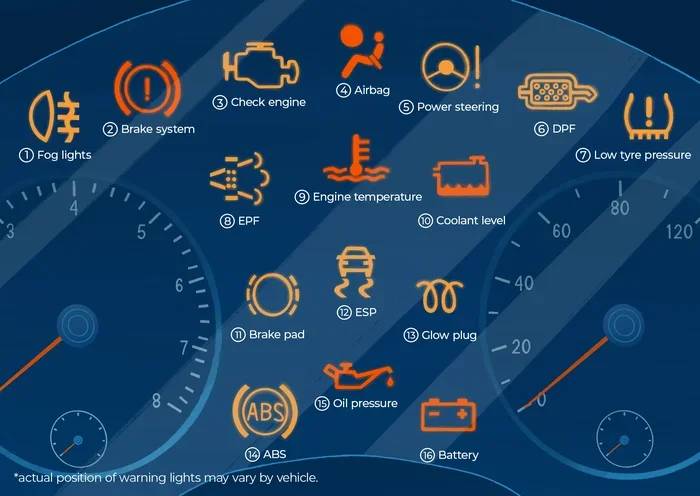
The VSC light usually looks like a car icon with wavy lines underneath, or a triangle with an exclamation mark in the center. Some vehicles also display the letters VSC or ESP. If you are not sure what the light means, check your owner’s manual for the exact symbol and description for your specific car model.
Is it safe to drive in rain with the VSC light on?
No, it is not safe to drive in rain with the VSC light on. Rain makes roads slippery, and the VSC system is designed to help you maintain control in exactly these conditions. Without it, your car is much more likely to skid or slide. If you must drive in the rain, do so at very low speeds and avoid sudden movements.
How much does it cost to fix the VSC light?
The cost varies widely depending on the cause. A simple fix like tightening a gas cap costs nothing. Replacing a wheel speed sensor typically runs between $100 and $300. More complex repairs like an ABS control module can cost $500 or more. The best way to know the exact cost is to get a proper diagnosis from a mechanic.
Will the VSC light turn off by itself?
Sometimes the VSC light will turn off if the issue was temporary, like a brief sensor glitch or a loose gas cap. However, if the underlying problem persists, the light will come back on. Do not assume the problem is solved just because the light went off. Always verify with a diagnostic scan that the fault code has been cleared and the system is working properly.
Can a dead battery cause the VSC light to come on?
Yes, a weak or dead battery can cause the VSC light to come on. The VSC system relies on a stable electrical supply, and voltage drops can confuse the computer. If your battery is old or you have noticed other electrical issues like dimming lights, it is a good idea to have the battery tested. Replacing a failing battery often resolves multiple warning lights at once.
=== CONCLUSION ===
So, is it OK to drive with the VSC light on in traffic? The answer is nuanced. In a low-risk, stop-and-go situation on a dry day, you can usually get to a repair shop safely. But you should never treat the VSC light as something to ignore. Your Vehicle Stability Control system is a critical safety feature that works hard to keep you and your passengers safe every time you drive. When that light comes on, it is telling you that this protection is compromised.
The most important thing you can do is act quickly. Check the simple things first, like your gas cap and brake fluid level. Use an OBD-II scanner to read the fault code. And if the problem is beyond a quick fix, visit a trusted mechanic. Taking care of the VSC light promptly not only keeps you safe but also prevents small issues from turning into expensive repairs. Drive smart, stay safe, and never let that warning light go unanswered.