Is It OK to Leave Your Car in Sport Mode All Day Long
Is It OK to Leave a Car in Sport Mode? is an essential topic that provides valuable insights.
Have you ever wondered whether Sport Mode is something you can just leave on all day? Maybe you love the way your car feels when it is in that mode, and you do not want to switch it off. The good news is that leaving your car in Sport Mode for extended periods will not destroy your vehicle overnight. However, there are real trade-offs you should understand before making it your default setting. This guide breaks down exactly what happens when you keep your car in Sport Mode all day long.
We will cover how Sport Mode changes your transmission, engine behavior, and fuel consumption. You will also learn when it makes sense to use it and when it is better to switch back to normal mode. By the end, you will know exactly what is best for your car and your driving style.
So let us dive right in and answer the big question: is it OK to leave your car in Sport Mode all day long? The short answer is yes, but with some important caveats. Keep reading to find out what those are.
Key Takeaways
- Understanding Is It OK to Leave a Car in Sport Mode?: Provides essential knowledge
📑 Table of Contents
- What Does Sport Mode Actually Do?
- Is It OK to Leave Your Car in Sport Mode All Day Long?
- How Sport Mode Affects Your Car’s Engine and Transmission
- When Sport Mode Makes Sense (and When It Does Not)
- Common Mistakes People Make with Sport Mode
- Expert Tips for Using Sport Mode the Right Way
- Key Takeaways
- Conclusion
What Does Sport Mode Actually Do?
Before we talk about leaving Sport Mode on all day, it helps to understand what this setting actually does to your car. Many drivers press the button or flip the switch without really knowing how it changes things.
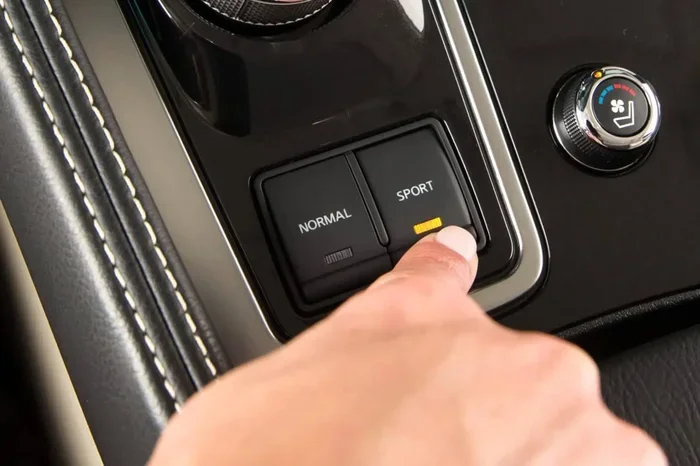
When you activate Sport Mode, your car’s computer system adjusts several key parameters. The transmission holds gears longer before shifting up. This means your engine stays at a higher RPM for a longer time. The throttle response becomes sharper, so when you press the gas pedal, your car accelerates faster. Some vehicles also adjust the steering weight and suspension settings to feel tighter and more responsive.
How Sport Mode Changes Transmission Behavior
Your automatic transmission is the biggest thing that changes in Sport Mode. In normal mode, the transmission shifts up early to save fuel and keep the engine running smoothly. When you switch to Sport Mode, the transmission holds lower gears longer. This gives you more power when you need it, but it also keeps the engine working harder.
Here is what happens inside the transmission when you are in Sport Mode:
- The transmission delays upshifts to keep the engine in its power band.
- Downshifts happen more aggressively when you slow down.
- The car may skip gears during acceleration for quicker response.
- Rev-matching on downshifts becomes more noticeable in some vehicles.
All of these changes are designed to make your car feel more sporty and engaging to drive. They are not harmful in short bursts, but they do have implications for extended use.
What Happens to Engine RPM in Sport Mode
One of the most noticeable effects of Sport Mode is the higher engine RPM. In normal driving mode, your engine might cruise at around 1,500 to 2,000 RPM on the highway. In Sport Mode, that number can climb to 2,500 RPM or more because the transmission holds lower gears. Higher RPM means the engine is working harder, which generates more heat and wears on engine components over time.
This is the core reason why people ask whether it is safe to leave Sport Mode on all day. The answer depends on several factors, which we will cover next.
Is It OK to Leave Your Car in Sport Mode All Day Long?
The direct answer is yes, it is generally okay to leave your car in Sport Mode for a full day. Modern cars are engineered to handle Sport Mode for extended periods without breaking down. Car manufacturers design these modes knowing that some drivers will use them regularly. Your engine, transmission, and other components are built to handle the extra stress that Sport Mode creates.
However, “okay” does not mean “ideal.” There are real downsides to running your car in Sport Mode all day, and those downsides matter depending on how you use your vehicle. Let us look at the pros and cons side by side.
The Pros of Leaving Sport Mode On
There are some genuine benefits to keeping your car in Sport Mode for extended periods:
- Better throttle response: Your car feels more alive and responsive when you need to accelerate quickly.
- Enhanced towing capability: If you are towing a trailer, Sport Mode keeps the transmission in lower gears for more pulling power.
- Improved passing power: On highways, having the transmission ready with lower gears makes quick passes safer and easier.
- More engaging driving feel: Many drivers simply enjoy the way their car handles in Sport Mode and feel more connected to the road.
The Cons of Leaving Sport Mode On All Day
Now let us look at the downsides. These are the reasons you might want to switch back to normal mode after a while:
- Reduced fuel economy: This is the biggest drawback. Sport Mode can reduce your miles per gallon by 10% to 20% depending on your vehicle and driving conditions.
- Increased engine wear: Higher RPM over long periods means more friction and heat inside the engine. Over years, this can add up.
- Louder engine noise: Sport Mode makes your engine louder, which can be tiring on long drives and may disturb neighbors.
- More strain on the brakes: Because the engine brakes harder in lower gears, your brake pads and rotors may wear faster.
- Higher transmission fluid temperatures: Extended high-RPM driving can heat up the transmission fluid more than normal driving would.
So the real answer to “is it OK to leave your car in Sport Mode all day long” is: it will not cause immediate damage, but it is not the most efficient or gentle way to drive your car every single day.
How Sport Mode Affects Your Car’s Engine and Transmission
Let us dig deeper into what happens under the hood when you leave Sport Mode on for hours at a time. Understanding the mechanics helps you make smarter decisions about when to use it.
Engine Stress and Heat Buildup
When your engine runs at higher RPM for extended periods, it generates more heat. Modern engines have cooling systems designed to handle a wide range of conditions, but there are limits. If you are sitting in traffic or driving in hot weather while in Sport Mode, the combination of high RPM and high ambient temperatures can push your engine cooling system harder than it would normally need to work.
This does not mean your engine will overheat just because you left Sport Mode on. It means the cooling system is working overtime, and over many years, components like the thermostat, water pump, and coolant hoses may experience more stress than they would in normal mode.
Transmission Fluid and Gear Wear
Your transmission is the component most affected by extended Sport Mode use. When the transmission holds lower gears longer, the internal clutches and bands are engaged more frequently and for longer durations. This generates more heat inside the transmission housing.
Transmission fluid plays a critical role here. Fresh, clean transmission fluid absorbs heat and lubricates the internal components effectively. But if the fluid gets old or breaks down from repeated high-heat cycles, it loses its ability to protect the gears. This is why regular transmission fluid changes become even more important if you frequently drive in Sport Mode.
Here is a quick look at how Sport Mode affects your transmission compared to normal mode:
- Normal Mode: Shifts early, lower RPM, less heat, longer fluid life, better fuel economy.
- Sport Mode: Holds gears longer, higher RPM, more heat, more frequent fluid changes recommended, reduced fuel economy.
Throttle Response and Acceleration
In Sport Mode, the throttle body opens more aggressively for the same pedal input. This means a light press on the gas pedal produces a stronger acceleration response than it would in normal mode. While this feels great for spirited driving, it also means you may use more fuel during everyday cruising because the engine is working harder even for small inputs.
When Sport Mode Makes Sense (and When It Does Not)
Not all driving situations call for Sport Mode. Knowing when to use it and when to switch back to normal can save you fuel, reduce wear, and keep your car running smoothly for years.
Situations Where Sport Mode Is Great
Sport Mode shines in specific scenarios where you need extra power and control:
- Overtaking on highways: Dropping into Sport Mode before passing a slow-moving truck gives you instant access to lower gears and stronger acceleration.
- Mountain or hilly roads: When driving through mountains, Sport Mode helps the transmission hold lower gears on climbs and provides better engine braking on descents.
- Towing or hauling: If your vehicle is pulling a trailer or carrying heavy cargo, Sport Mode keeps the transmission from hunting between gears and provides steadier power delivery.
- Sporty or winding roads: If you are driving a road with curves and elevation changes, Sport Mode makes the car more responsive and fun to drive.
- Cold starts (briefly): Some drivers switch to Sport Mode for the first few minutes after starting the car to help the engine reach optimal operating temperature faster.
Situations Where Normal Mode Is Better
There are plenty of times when you should leave Sport Mode off:
- Daily commuting in heavy traffic: Stop-and-go driving in Sport Mode is exhausting for both you and the car. The constant gear hunting and high RPM in traffic wastes fuel and builds heat.
- Long highway cruising: On flat interstate highways, normal mode shifts early and keeps the engine at a comfortable, efficient RPM. Sport Mode forces the engine to work harder for no benefit.
- Fuel-saving trips: If you are trying to maximize your range on a single tank of gas, normal mode is the clear winner.
- Cold weather city driving: In cold conditions, letting the engine warm up gently in normal mode is better for long-term engine health.
- Late-night or early-morning driving: If you do not want to wake up the neighborhood, normal mode keeps the engine quieter.
Common Mistakes People Make with Sport Mode
Even experienced drivers make mistakes when using Sport Mode. Here are some of the most common ones and how to avoid them.
Leaving Sport Mode On During Every Drive
The biggest mistake is making Sport Mode your default setting for every single drive. Some drivers activate it once and forget about it. Over weeks and months, this adds unnecessary wear to your engine and transmission. It also costs you significantly more in fuel over time. Make it a habit to switch back to normal mode when you do not need the extra performance.
Using Sport Mode in Stop-and-Go Traffic
Driving in Sport Mode through heavy city traffic is a recipe for frustration and wasted fuel. The transmission constantly hunts between gears, the engine revs higher at every stoplight, and your fuel economy drops dramatically. Save Sport Mode for open roads and clear conditions where you can actually enjoy the extra performance.
Ignoring Maintenance Intervals
If you regularly drive in Sport Mode, you need to stay on top of maintenance. Many drivers forget that the increased stress on the engine and transmission means fluids break down faster. Skipping oil changes or transmission fluid replacements will shorten the life of your engine components. Stick to a strict maintenance schedule if you use Sport Mode frequently.
Confusing Sport Mode with a Performance Upgrade
Here is an important truth: Sport Mode does not add horsepower or change the actual engine output. It simply changes how the transmission, throttle, and sometimes suspension respond to your inputs. If you are looking for real performance gains, Sport Mode is not the answer. It is a driving feel modifier, not a power adder.
Driving Aggressively Just Because You Are in Sport Mode
Some drivers get a false sense of confidence in Sport Mode and start driving more aggressively than they should. The sharper throttle response and stronger engine braking can tempt you to push harder. Remember that Sport Mode does not change the laws of physics or your car’s limits. Drive safely regardless of which mode you are in.
Expert Tips for Using Sport Mode the Right Way
You do not have to choose between never using Sport Mode and leaving it on all the time. There is a smart middle ground that lets you enjoy the benefits without the downsides.
Use Sport Mode Strategically
The best approach is to use Sport Mode only when you need it. Activate it before a highway overpass, a mountain stretch, or a passing maneuver. Once the situation passes, switch back to normal mode. This way, you get the performance when you want it without sacrificing fuel economy or adding unnecessary wear the rest of the time.
Monitor Your Transmission Fluid
If you use Sport Mode regularly, consider changing your transmission fluid more frequently than the standard maintenance schedule. Check your owner’s manual for the recommended interval, and then shorten it by about 20% if you frequently drive in Sport Mode. Fresh fluid keeps the transmission cool and shifting smooth.
Keep an Eye on Engine Temperature
Make it a habit to glance at your temperature gauge, especially during long drives in Sport Mode. If the needle starts climbing into the upper range, pull over safely and let the engine cool down. This is especially important during summer months or when driving in stop-and-go traffic.
Combine Sport Mode with Good Driving Habits
Even in Sport Mode, you can drive in a way that minimizes wear. Avoid riding the brake pedal, accelerate smoothly rather than slamming the throttle, and give your engine time to warm up before pushing it hard. These small habits add up to a longer-lasting, more reliable car.
Know Your Vehicle’s Limits
Every car handles Sport Mode differently. A sports car with a robust cooling system can handle extended Sport Mode use much better than a compact sedan with a smaller engine. Know what your car can handle and do not push it beyond its design limits. When in doubt, consult your owner’s manual or speak with a trusted mechanic.
Key Takeaways
- Sport Mode changes your transmission, throttle, and sometimes suspension: It holds gears longer, sharpens throttle response, and makes the car feel more engaging to drive.
- It is generally safe to leave Sport Mode on all day: Modern cars are built to handle extended use without immediate damage, but there are trade-offs.
- Fuel economy takes a significant hit: Expect 10% to 20% worse fuel economy when driving in Sport Mode compared to normal mode.
- Engine and transmission wear increases over time: Higher RPM and more frequent gear engagement add stress to internal components, especially if maintenance is neglected.
- Use Sport Mode strategically, not as a default setting: Activate it when you need extra power for overtaking, hill climbing, or towing, then switch back to normal mode.
- Regular maintenance becomes even more important: More frequent oil changes and transmission fluid replacements help offset the extra stress that Sport Mode places on your car.
- Sport Mode does not add horsepower: It changes how your car delivers power, not how much power the engine produces.
Conclusion
So, is it OK to leave your car in Sport Mode all day long? The answer is a qualified yes. Your car will not fall apart if you leave it in Sport Mode for a full day. Modern vehicles are built with robust components that can handle the extra stress. However, making Sport Mode your everyday default setting is not the smartest move for your wallet or your car’s long-term health.
The best approach is to use Sport Mode when it adds value, such as during highway passing, mountain driving, or towing. For daily commuting, long highway cruises, and city driving, normal mode is the better choice. It saves fuel, reduces wear, and keeps your car running smoothly for many years to come.
Think of Sport Mode as a tool, not a permanent setting. Just like you would not use a sledgehammer to hang a picture frame, you should not use Sport Mode for every driving situation. Use it wisely, maintain your car properly, and you will enjoy the best of both worlds: great performance when you need it and long-term reliability for everyday driving.
Your car is a significant investment, and how you drive it directly affects how long it lasts. Understanding settings like Sport Mode empowers you to make smarter choices behind the wheel. So go ahead, enjoy that sporty feel when the moment calls for it, but remember to switch back to normal mode when the road demands it. Your car, your fuel tank, and your wallet will all thank you.
Frequently Asked Questions
Can leaving my car in Sport Mode all day damage the engine?
Leaving your car in Sport Mode for an entire day will not cause immediate engine damage. Modern engines are designed to handle higher RPM and increased stress. However, extended use over months and years can contribute to faster wear on engine components, especially if you skip regular oil changes and maintenance. The key is balance and not making Sport Mode your permanent default setting.
Does Sport Mode use more gas?
Yes, Sport Mode does use more fuel. Because the transmission holds lower gears longer and the engine runs at higher RPM, your car burns more gas. Most drivers see a 10% to 20% reduction in fuel economy when using Sport Mode regularly. If fuel efficiency matters to you, switch back to normal mode for everyday driving.
Is it bad to drive in Sport Mode in the city?
Driving in Sport Mode in city traffic is not ideal. Stop-and-go driving in this mode causes the transmission to hunt between gears constantly, keeps the engine at higher RPM, and wastes fuel. It also makes the driving experience more tiring because the car feels twitchy at low speeds. Save Sport Mode for open roads and situations where you can take advantage of the extra responsiveness.
How often should I change my transmission fluid if I use Sport Mode?
If you frequently use Sport Mode, consider changing your transmission fluid about 20% more often than the standard manufacturer recommendation. The extra heat and stress generated by Sport Mode cause the fluid to break down faster. Fresh fluid keeps the transmission cool, ensures smooth shifting, and extends the life of internal components. Always use the type of fluid specified in your owner’s manual.
Does Sport Mode make my car faster?
Sport Mode does not increase your car’s actual horsepower or top speed. What it does is change how the car delivers the power it already has. The throttle becomes more responsive, the transmission shifts later and holds gears longer, and the overall driving feel becomes more aggressive. You will feel faster because the car reacts quicker to your inputs, but the engine output remains the same.
Can I leave Sport Mode on while parked?
Leaving your car in Sport Mode while parked will not cause any damage. The mode only becomes active when you are driving and the transmission is engaged. While parked, the engine and transmission are essentially idle, and the Sport Mode setting has no effect. However, it is a good habit to return to normal mode before starting to drive again so the car is in the right setting from the moment you move.