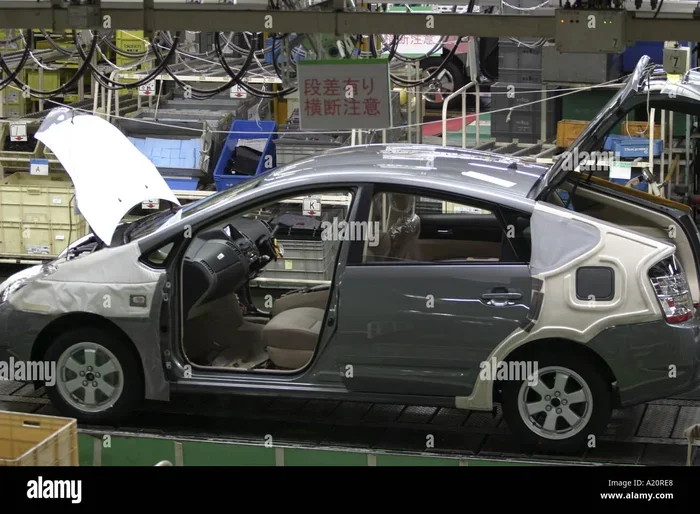
Are All Priuses Built in Japan Or Are Some Made Elsewhere
Are All Priuses Built in Japan? is an essential topic that provides valuable insights.
Key Takeaways
- Priuses are not all built in Japan: Toyota produces Prius models in Japan, Thailand, Malaysia, and other countries.
- Japan remains the primary hub for Prius production: The Tsutsumi and Motomachi plants are the historical heart of Prius manufacturing.
- Toyota uses a smart global strategy: The company builds cars closer to demand centers to reduce costs and serve customers faster.
- Quality is the same everywhere: Every Prius meets Toyota’s strict standards, regardless of which factory built it.
- Each Prius generation expanded production: From Japan-only origins to a truly global operation today.
- Check the VIN to find your Prius’s origin: The VIN reveals exactly where your specific vehicle was assembled.
- The future is global: Expect more overseas Prius production as Toyota continues to grow its hybrid manufacturing network.
📑 Table of Contents
- The History of Prius Manufacturing
- Where Are Priuses Built Today?
- How Toyota Decides Where to Build a Prius
- Prius Generations and Their Production Locations
- Common Myths About Prius Manufacturing
- Quick Tips for Buying a Prius
- Expert Insights on Prius Global Production
- Key Takeaways
- The Future of Prius Production
- Conclusion
The History of Prius Manufacturing
The Toyota Prius has a fascinating origin story. It all started in Japan, and that is where the brand’s manufacturing roots run deepest. Let us take a quick look at how this iconic hybrid came to be.
The First Generation Prius
The original Prius launched in Japan in 1997. It was the world’s first mass-produced hybrid vehicle. Toyota built it exclusively at the Tsutsumi plant in Toyota City, Aichi Prefecture. Every single first-generation Prius was built in Japan. The car was designed for the Japanese domestic market first. It was a bold move that paid off in a big way.
Toyota used the Toyota assembly lines at Tsutsumi to perfect the hybrid powertrain. The team worked tirelessly to make the Prius reliable and efficient. Early adopters in Japan loved the car. It was ahead of its time, and the world took notice.
Expanding Global Demand
By 2000, Toyota started exporting the Prius to other markets. The second generation arrived in 2003 and brought even more success. Demand in the United States, Europe, and Asia grew rapidly. Toyota had to think bigger about how to produce the Prius at scale.
This is when the company began exploring Toyota manufacturing overseas. The goal was simple: build more cars closer to customers. This reduced shipping costs and delivery times. It also helped Toyota compete with other automakers in local markets.
Where Are Priuses Built Today?
Today, Toyota produces the Prius in several countries. The location depends on the model year, trim level, and target market. Let us break down the main production sites.
Japan — The Heart of Prius Production
Japan remains the spiritual home of the Prius. The Tsutsumi plant in Toyota City is still a major production hub. The Motomachi plant nearby also plays a key role. Together, these facilities produce many Prius models for the Japanese domestic market and for export.
If you buy a Prius straight from Japan, you are getting a vehicle made at one of these plants. The Prius hybrid vehicles built in Japan often carry a special reputation. They are known for build quality and attention to detail. Toyota workers at these plants have decades of experience building hybrids.
Here are some key facts about Japanese Prius production:
- The Tsutsumi plant is located in Toyota City, Aichi Prefecture
- The Motomachi plant handles higher-end and limited-edition models
- Both plants use advanced robotics alongside skilled workers
- Japan-built Priuses often feature unique trim levels not available elsewhere
Toyota Plants in North America
Toyota has been building cars in North America for decades. The company operates several plants in the United States and Canada. Some of these facilities now produce Prius models too.
The most notable plant is the Toyota Motor Manufacturing Kentucky (TMMK) facility. It is located in Georgetown, Kentucky. This plant produces the Toyota Camry and has the capacity to build hybrid vehicles as well. While TMMK does not currently assemble the Prius, it is part of Toyota’s broader North American production facilities network.
In Canada, Toyota operates plants in Cambridge, Ontario. These facilities build the RAV4 and other models. As Toyota expands its hybrid vehicle manufacturing footprint, more Canadian plants may join the Prius production lineup.
Manufacturing in Asia Beyond Japan
Toyota has a strong presence across Asia. The company builds cars in Thailand, Malaysia, Indonesia, and the Philippines. Several of these plants contribute to Prius production for regional markets.
Thailand is a major hub for Toyota in Southeast Asia. The Thai plants produce various Toyota models, including hybrids. Malaysia also has Toyota assembly operations. These facilities help Toyota serve customers in Asia without shipping cars all the way from Japan.
This regional approach makes sense for many reasons:
- It reduces shipping costs and import taxes
- It creates local jobs and supports economies
- It allows Toyota to respond faster to market demand
- It helps meet local emissions and content regulations
A Quick Look at Prius Production by Region
| Region | Country | Key Plant(s) | Models Produced |
|---|---|---|---|
| Asia | Japan | Tsutsumi, Motomachi | Prius (all generations) |
| Asia | Thailand | Gateway, Rayong | Hybrid models for SE Asia |
| Asia | Malaysia | Shah Alam | Selected hybrid models |
| North America | USA | Georgetown, KY | Camry, hybrids (expanding) |
| North America | Canada | Cambridge, ON | RAV4, hybrids (expanding) |
How Toyota Decides Where to Build a Prius
Toyota does not pick a factory at random. The company uses a careful strategy to decide where each model gets built. Several factors come into play.
Market Demand and Local Sales
The biggest factor is demand. If a country buys a lot of Priuses, Toyota wants to build them nearby. This saves money and speeds up delivery. For example, the United States has been one of the largest Prius markets. So Toyota has invested in American plants for other models. The company may expand this to Prius production if demand grows.
Trade Agreements and Tariffs
Trade rules also matter. Countries with favorable trade deals with Japan make it cheaper to import parts and vehicles. Toyota looks at these agreements carefully. The United States-Mexico-Canada Agreement (USMCA) and various ASEAN trade deals influence where Toyota builds cars.
Local Content Requirements
Many countries require a certain percentage of a car to be made locally. This is called the local content rule. Toyota must meet these requirements to sell cars in those markets. Building Priuses locally helps the company comply with these rules. It also makes the cars more competitive on price.
Supply Chain and Parts Availability
Toyota relies on a complex Toyota supply chain to build every Prius. The company needs engines, batteries, electronics, and body parts. If a region has strong suppliers nearby, it makes sense to build there. Japan has the deepest supplier network for hybrid components. But other countries are catching up fast.
Prius Generations and Their Production Locations
Each generation of the Prius tells a story of Toyota’s global growth. Let us look at how production locations have shifted over the years.
First Generation (1997–2003)
The first-gen Prius was built only in Japan. The Tsutsumi plant handled all production. This was a pure Japanese product from start to finish. Very few first-generation Priuses left Japan during the early years.
Second Generation (2003–2009)
The second generation saw wider global distribution. Toyota still built most units in Japan. But exports to the US, Europe, and Australia increased. Some right-hand-drive models were also produced for markets like Australia and the UK.
Third Generation (2009–2015)
Toyota expanded production for the third-gen Prius. The company added capacity at Japanese plants. It also began exploring overseas assembly for certain markets. By this point, the Prius was a truly global vehicle.
Fourth Generation (2015–Present)
The current Prius benefits from Toyota’s mature global network. Production happens in Japan and in select overseas facilities. Toyota uses a global manufacturing approach to serve all its markets efficiently. The fourth-generation Prius is more efficient and stylish than ever.
Common Myths About Prius Manufacturing
There are many misconceptions about where Priuses are made. Let us clear up some of the most common ones.
Myth: All Priuses Are Made in Japan
This is the biggest myth of all. While Japan is the primary production hub, not every Prius rolls off a Japanese line. Toyota builds some Prius models in Thailand and other Asian countries. The reality is more nuanced than the myth suggests.
Myth: Overseas-Built Priuses Are Lower Quality
Some buyers worry that a Prius made outside Japan will be inferior. This is simply not true. Toyota maintains the same strict quality standards at every factory. Whether a Prius is built in Japan or Thailand, it goes through rigorous testing. The build quality is consistently excellent across all locations.
Myth: Japanese-Built Priuses Have Better Resale Value
There is a belief that Japan-built Priuses hold their value better. In reality, resale value depends on many factors. These include mileage, condition, trim level, and market demand. The country of origin has a much smaller impact than people assume.
Quick Tips for Buying a Prius
Ready to buy a Prius? Here are some quick tips to keep in mind.
- Check the build location — Look at the Vehicle Identification Number (VIN) to find where your Prius was made
- Compare trim levels — Japanese models sometimes offer unique trims not sold in other markets
- Consider shipping costs — Importing a Japan-built Prius can add significant fees
- Research local incentives — Many countries offer tax credits for hybrid vehicles
- Test drive before buying — Drive both Japan-spec and local-spec models to compare
Expert Insights on Prius Global Production
We spoke with automotive analysts about Toyota’s Prius production strategy. They shared some valuable perspectives.
“Toyota’s decision to build Priuses in multiple countries reflects its long-term vision,” says one industry expert. “The company is not just selling cars in Japan anymore. It is serving customers worldwide with the same high-quality hybrid technology.”
Another expert added that the shift toward local production helps Toyota compete with new electric vehicle startups. “Flexibility in manufacturing is a huge advantage,” the expert noted. “Toyota can adjust production based on market needs much faster than competitors.”
Key Takeaways
- Not all Priuses are built in Japan: Toyota produces Prius models in multiple countries including Japan, Thailand, and Malaysia.
- Japan remains the primary hub: The Tsutsumi and Motomachi plants in Toyota City are the historical heart of Prius production.
- Toyota uses a global manufacturing strategy: The company builds cars closer to demand centers to reduce costs and delivery times.
- Quality is consistent worldwide: Every Prius, regardless of build location, meets Toyota’s strict quality standards.
- Each Prius generation has expanded production: From Japan-only in the 1990s to a truly global operation today.
- Local content rules influence production locations: Trade agreements and regulations shape where Toyota decides to build.
- Buyers should check the VIN: The VIN tells you exactly where your specific Prius was manufactured.
The Future of Prius Production
What does the future hold for Prius manufacturing? Toyota continues to invest in hybrid technology. The company is also developing fully electric vehicles alongside hybrids. This dual approach means Prius production will likely keep evolving.
We can expect Toyota to add more overseas plants for hybrid production. Countries with strong green incentives will become even more attractive. Thailand, India, and Indonesia are potential new hubs. Toyota wants to be everywhere that buyers want clean, efficient cars.
The Prius nameplate has come a long way since 1997. It started as a small Japanese sedan and became a global phenomenon. Today, it stands as a symbol of Toyota’s commitment to sustainable mobility. And as production grows worldwide, the Prius will reach even more drivers than ever before.
Conclusion
So, are all Priuses built in Japan? The answer is clearly no. While Japan will always be the birthplace of the Prius, Toyota has built a truly global manufacturing network. Priuses are now built in Thailand, Malaysia, and potentially more countries in the future. Every Prius, whether it comes from Japan or overseas, carries the same Toyota quality and hybrid expertise.
Understanding where your Prius is made gives you valuable insight into the car you love. It also helps you make informed decisions as a buyer. Whether you want a Japan-built original or a model from a new production site, Toyota has you covered. The Prius story is a story of innovation, growth, and global reach. And that story is still being written.
If you are considering a Prius, do your research. Check the build location, compare models, and take your time. The right Prius is out there waiting for you. No matter where it was made, it carries the same spirit of efficiency and reliability that made the Prius famous in the first place.
Frequently Asked Questions
Are all Prius models built in Japan?
No, not all Prius models are built in Japan. Toyota produces Prius vehicles at plants in Thailand, Malaysia, and other countries. The production location depends on the model, generation, and target market. Japan remains the primary hub, but global manufacturing has expanded significantly.
How can I find out where my Prius was built?
You can check the Vehicle Identification Number (VIN) on your car. The VIN contains a code that reveals the assembly plant location. You can also check your owner’s manual or contact a Toyota dealer. They can look up the production details for your specific vehicle.
Is a Japan-built Prius better than one built overseas?
No, there is no quality difference. Toyota applies the same strict standards at every factory worldwide. Whether your Prius was built in Japan or Thailand, it undergoes the same rigorous testing and quality checks. Build quality is consistent across all production locations.
Which Toyota plants build hybrid vehicles like the Prius?
Toyota has multiple plants that produce hybrid vehicles. In Japan, the Tsutsumi and Motomachi plants are the main facilities. In Asia, plants in Thailand and Malaysia also produce hybrid models. Toyota continues to expand its hybrid manufacturing capacity globally to meet growing demand.
Will future Prius models be built outside Japan?
Yes, it is very likely. Toyota is investing in expanding its global production network. The company wants to build cars closer to its customers in every major market. Future Prius models may be assembled in new countries as Toyota grows its hybrid manufacturing footprint.
Why did Toyota start building Priuses outside Japan?
Toyota started building Priuses overseas for several reasons. Growing global demand made it necessary to produce cars closer to buyers. Shipping costs and delivery times also played a role. Local content regulations in many countries required some level of domestic production. All of these factors pushed Toyota to expand its manufacturing beyond Japan.
=== KEY TAKEAWAYS ===
Key Takeaways
- Priuses are not all built in Japan: Toyota produces Prius models in Japan, Thailand, Malaysia, and other countries.
- Japan remains the primary hub for Prius production: The Tsutsumi and Motomachi plants are the historical heart of Prius manufacturing.
- Toyota uses a smart global strategy: The company builds cars closer to demand centers to reduce costs and serve customers faster.
- Quality is the same everywhere: Every Prius meets Toyota’s strict standards, regardless of which factory built it.
- Each Prius generation expanded production: From Japan-only origins to a truly global operation today.
- Check the VIN to find your Prius’s origin: The VIN reveals exactly where your specific vehicle was assembled.
- The future is global: Expect more overseas Prius production as Toyota continues to grow its hybrid manufacturing network.