Can You Put a Tow Hitch on a Toyota Corolla Absolutely
Yes, you can put a tow hitch on a Toyota Corolla. The Corolla is a compact sedan, but with the right Class I hitch and proper installation, it can handle light towing jobs safely. This guide covers towing capacity, hitch types, installation steps, and towing safety tips for Corolla owners.
If you own a Toyota Corolla and have ever thought about towing something behind it, you are not alone. Many Corolla owners want to know Can You Put a Tow Hitch on a Toyota Corolla. The answer is a clear yes. But there is more to it than just bolting a hitch onto the back of your car. You need to understand towing capacity, choose the right hitch type, and follow proper installation steps. This guide will walk you through everything you need to know.
A tow hitch is a metal device that attaches to the frame or bumper of your vehicle. It lets you connect a trailer, a bike rack, or a tow bar. For a compact car like the Corolla, a tow hitch opens up new possibilities. You can haul small trailers, carry extra gear on road trips, or transport items that would not fit inside the car. But you must stay within the safe towing limits of your vehicle.
In this article, we will cover the towing capacity of the Toyota Corolla, the types of hitches that fit, how to install one, and what safety tips to follow. Whether you own a Corolla LE, SE, or XSE, this guide has you covered. Let us get started.
Key Takeaways
- Yes, it is possible: A tow hitch can be installed on a Toyota Corolla with the right equipment and proper techniques.
- Know your limits: The Corolla towing capacity is limited, so always check your owner manual before towing.
- Choose the right hitch type: Class I hitches are the best fit for most Corolla models.
- Installation is doable: You can install a hitch yourself or have a professional do it for you.
- Safety comes first: Always use the right wiring harness, trailer lights, and towing accessories for a safe setup.
- Weight matters: Understanding tongue weight and load distribution is key to safe towing.
- Avoid common mistakes: Overloading, skipping the wiring harness, and ignoring tongue weight are top errors Corolla owners make.
📑 Table of Contents
- What Is a Tow Hitch and Why Would You Want One?
- Can You Put a Tow Hitch on a Toyota Corolla?
- Understanding the Toyota Corolla Towing Capacity
- Types of Hitches That Fit a Toyota Corolla
- Step-by-Step Tow Hitch Installation Guide
- Safety Tips and Common Mistakes to Avoid
- Is It Worth Putting a Tow Hitch on a Toyota Corolla?
What Is a Tow Hitch and Why Would You Want One?
A tow hitch is a coupling device that connects your vehicle to a trailer or other towing equipment. It is the foundation of any towing setup. Without a hitch, you cannot safely pull a trailer behind your car.
There are several reasons why Corolla owners install a tow hitch:
- Hauling small trailers: You can tow a cargo trailer for moving, camping, or hauling furniture.
- Biking adventures: A hitch-mounted bike rack lets you carry your bikes on road trips.
- Boat or jet ski towing: With the right setup, you can tow a small boat or jet ski.
- Utility towing: A small bumper pull trailer is great for hauling yard waste or construction materials.
- RV towing: Some Corolla owners use a tow bar to flat-tow a small RV behind their car.
Before you decide to install a hitch, you need to know what your Corolla can handle. Every vehicle has a towing limit. Going over that limit can damage your engine, transmission, and brakes. It can also create dangerous driving conditions.
Can You Put a Tow Hitch on a Toyota Corolla?
The answer to Can You Put a Tow Hitch on a Toyota Corolla depends on your model year and trim level. Most Toyota Corolla models from the past two decades can support a tow hitch installation. However, the towing capacity varies by generation and engine type.
Here is what you need to know before you start:
- Check your owner manual: Toyota provides specific towing guidelines for each Corolla model. Always start here.
- Confirm the trim level: Some Corolla trims come with a factory towing package. Others do not.
- Look for pre-drilled holes: Some newer Corolla models have pre-drilled hitch mounting points. This makes installation much easier.
- Consider the engine: The 1.8-liter and 2.0-liter engines have different towing capacities. Check which engine you have.
For most Corolla models, a Class I hitch is the right choice. A Class I hitch is rated for light towing, typically up to 2,000 pounds of gross trailer weight. This is more than enough for small trailers, bike racks, and cargo carriers.
Factory Towing Package vs. Aftermarket Hitch
Some Toyota Corolla models come with a factory towing package. This package includes pre-installed hitch mounts and wiring for trailer lights. If your Corolla has this package, installing a hitch is straightforward.
However, most Corolla owners will need an aftermarket hitch. Aftermarket hitches are widely available and fit most Corolla models. Popular brands include Curt, Draw-Tite, and Reese. These hitches are designed specifically for the Corolla frame and bumper structure.
A Toyota towing adapter may be needed for certain hitch models. This adapter connects the hitch receiver to the trailer coupler. Make sure you get the right adapter for your setup.
Understanding the Toyota Corolla Towing Capacity
Before you install a hitch, you must understand the towing capacity of your Corolla. Towing capacity is the maximum weight your vehicle can safely pull. Exceeding this limit is dangerous and can void your warranty.
Here is a general overview of Corolla towing capacity by generation:
| Generation | Engine | Max Towing Capacity | Hitch Class |
|---|---|---|---|
| 2014-2019 | 1.8L | 1,500 lbs | Class I |
| 2014-2019 | 1.8L (SE) | 1,500 lbs | Class I |
| 2020-Present | 2.0L | 2,000 lbs | Class I |
| 2003-2013 | 1.8L | 1,000-1,500 lbs | Class I |
| 2002 and Earlier | 1.6L-1.8L | 1,000 lbs | Class I |
These numbers are approximate. Always check your specific model year and trim for the exact towing capacity. You can find this information in the owner manual or on the Toyota website.
What Is Tongue Weight?
Tongue weight is the downward force the trailer puts on the hitch ball. It is a critical part of towing safety. The general rule is that tongue weight should be about 10 to 15 percent of the total trailer weight.
Too much tongue weight can make the rear of your Corolla sag. Too little tongue weight can cause the trailer to sway. Either situation is dangerous on the road.
To measure tongue weight, you can use a tongue weight scale. These are inexpensive and easy to find at auto parts stores. Weigh your trailer fully loaded, then check the tongue weight before you hit the road.
Understanding Load Distribution
Load distribution is how the weight is spread across the trailer. A well-loaded trailer keeps the weight centered and balanced. Uneven load distribution can cause the trailer to pull to one side.
Here are some tips for proper load distribution:
- Place heavy items over the axle of the trailer.
- Distribute weight evenly from side to side.
- Secure all cargo so it does not shift during towing.
- Do not overload one side of the trailer.
Types of Hitches That Fit a Toyota Corolla
Not all hitches are the same. Different hitch types serve different towing needs. Here are the most common hitches that fit a Toyota Corolla.
Class I Receiver Hitch
A Class I receiver hitch is the most popular choice for Corolla owners. It is designed for light towing and can handle up to 2,000 pounds of gross trailer weight. The hitch receiver tube is typically 1.25 inches in diameter.
Class I hitches are perfect for:
- Small cargo trailers
- Bike racks
- Kayak carriers
- Light utility trailers
These hitches are affordable and easy to install. Most cost between $150 and $300 for the hitch alone. Installation takes about 30 to 60 minutes.
Tow Bar and Towing Accessories
Some Corolla owners use a tow bar instead of a traditional hitch. A tow bar connects the front of the towed vehicle to the rear of the pulling vehicle. This is common for flat-towing a small RV behind a Corolla.
Towing accessories that pair well with a Corolla hitch setup include:
- Wiring harness: Connects your Corolla’s lights to the trailer lights.
- Trailer lights: Ensure your trailer has working brake lights and turn signals.
- Towing mirror: Extended mirrors give you better visibility when towing a trailer.
- Hitch pin and clip: These secure the hitch receiver to the trailer coupler.
Bumper Pull vs. Gooseneck Hitch
A bumper pull hitch connects to the trailer via a coupler mounted on the trailer tongue. This is the most common type of trailer hitch. It works well for small to medium trailers.
A gooseneck hitch mounts inside the truck bed and connects to a ball mounted on a plate in the bed. Gooseneck hitches are not suitable for a Toyota Corolla. They are designed for full-size trucks and heavy-duty towing.
For a Corolla, stick with a bumper pull hitch setup. It is the safest and most practical option for light towing.
Quick Tips for Choosing the Right Hitch
- Always match the hitch class to your Corolla’s towing capacity.
- Buy a hitch from a reputable brand with good reviews.
- Check if your Corolla model has pre-drilled hitch holes.
- Consider a hitch with a removable receiver tube for versatility.
- Make sure the hitch is compatible with your trailer coupler size.
Step-by-Step Tow Hitch Installation Guide
Installing a tow hitch on a Toyota Corolla is a manageable DIY project. With the right tools and a little patience, you can do it in about an hour. Here is a step-by-step guide.
Tools You Will Need
- Socket wrench set
- Torque wrench
- Screwdriver set
- Drill with appropriate bits (if pre-drilling is needed)
- Rust penetrant spray
- Safety glasses and gloves
Installation Steps
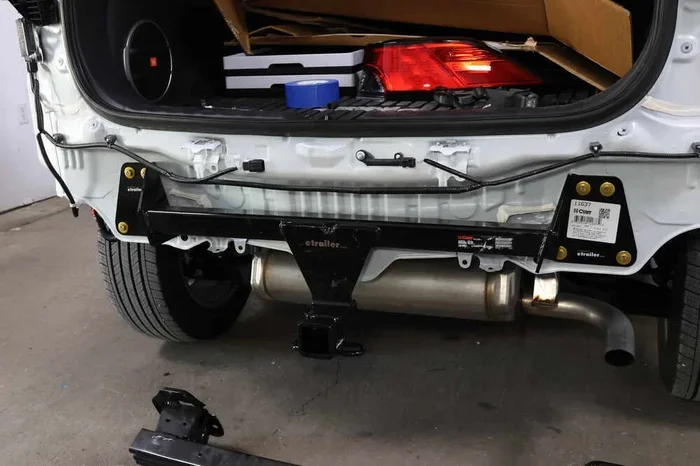
- Position the hitch: Place the hitch mounting bracket against the rear bumper or frame. Align the holes with the existing mounting points.
- Mark the drill holes: If your Corolla does not have pre-drilled holes, mark the positions carefully. Use a center punch to make precise marks.
- Drill the holes: Drill the mounting holes using the appropriate drill bit. Apply rust penetrant to any rusted bolts before removing them.
- Mount the hitch bracket: Secure the bracket with the provided bolts. Hand-tighten first, then use a torque wrench to tighten to the manufacturer’s specifications.
- Install the receiver tube: Slide the receiver tube into the hitch bracket. Insert the hitch pin and clip to secure it in place.
- Connect the wiring harness: Run the wiring harness from the hitch to the rear light harness. This connects your trailer lights to the Corolla’s electrical system.
- Test everything: Turn on your headlights and hazard lights. Have someone check that the trailer lights work properly.
Should You Hire a Professional?
If you are not comfortable drilling into your bumper or working with electrical wiring, hire a professional. Many auto parts stores offer hitch installation services. The cost is usually between $100 and $200. This is a small price to pay for a safe and secure installation.
An expert from a trusted auto shop can also check your Corolla’s towing setup and make sure everything is up to standard. They can advise on the best hitch for your specific model and help you avoid common installation mistakes.
Common Mistakes During Installation
- Skipping the wiring harness: This is one of the most common mistakes. Without a proper wiring harness, your trailer lights will not work, which is illegal and dangerous.
- Over-tightening bolts: Use a torque wrench. Over-tightening can strip the threads or crack the bumper.
- Ignoring rust: If your Corolla has rust around the mounting area, treat it before installing the hitch.
- Using the wrong hitch class: A Class III or IV hitch is too heavy for a Corolla. Stick with Class I.
Safety Tips and Common Mistakes to Avoid
Towing safety is the most important part of the entire process. A poorly set up towing setup can lead to accidents, damage to your vehicle, and even injury.
Towing Safety Checklist
Before every trip, go through this safety checklist:
- Check that the hitch pin and clip are securely in place.
- Verify that all trailer lights are working.
- Make sure the trailer tires are properly inflated.
- Check the trailer brake system (if equipped).
- Confirm the tongue weight is within the safe range.
- Inspect the wiring harness for any frayed or damaged wires.
- Adjust your towing mirrors for proper visibility.
- Drive slower than usual and allow extra stopping distance.
Common Mistakes Corolla Owners Make
Here are the most common mistakes people make when towing with a Toyota Corolla:
- Overloading the trailer: This is the number one mistake. Never exceed the Corolla towing capacity. Overloading puts stress on the engine, transmission, and brakes.
- Ignoring tongue weight: Improper tongue weight causes trailer sway and instability. Always check this before you drive.
- Skipping the wiring harness: Driving without connected trailer lights is illegal and extremely dangerous.
- Not using a towing mirror: Without proper mirrors, you cannot see the trailer. This limits your visibility and creates blind spots.
- Rushing the installation: Take your time. A loose hitch can detach while driving, causing a serious accident.
Expert Insights on Corolla Towing
According to Toyota’s official towing guidelines, the Corolla is designed for light-duty towing only. The company recommends that Corolla owners never exceed the rated towing capacity for their specific model year.
Automotive experts also emphasize the importance of using a wiring harness. The Corolla’s electrical system is not designed to handle the additional load of trailer lights without a proper harness. Skipping this component can damage the vehicle’s wiring and cause electrical issues.
Additionally, experts recommend that first-time Corolla towers practice in a safe, empty area before hitting the road. Get a feel for how the trailer handles, how braking changes, and how turning feels with a trailer behind you.
Quick Tips for Safe Towing
- Always do a safety check before every trip.
- Practice towing in an empty parking lot before hitting the highway.
- Keep your speed under 55 mph when towing a trailer.
- Allow at least four seconds of following distance.
- Use trailer brake controllers for trailers over 1,000 pounds.
- Never tow with a damaged or worn hitch.
Is It Worth Putting a Tow Hitch on a Toyota Corolla?
After reading through all the details, you might be wondering if it is worth it. The answer depends on your needs. If you regularly haul small trailers, carry bikes, or need extra cargo space, a tow hitch is a great investment.
A Class I hitch for a Toyota Corolla is affordable, easy to install, and practical for light towing. It gives you flexibility and convenience that your Corolla would not have without one.
However, if you plan to tow heavy loads, a Corolla is not the right vehicle for that job. Consider a truck or SUV with a higher towing capacity for heavy-duty towing needs.
The key is to stay within the towing limits of your Corolla, use the right hitch and accessories, and always prioritize safety. When done correctly, a tow hitch on a Toyota Corolla works great for light-duty towing and hauling.
So to answer Can You Put a Tow Hitch on a Toyota Corolla once and for all: yes, absolutely. Just do it the right way, stay within the limits, and enjoy the added versatility your Corolla can offer.
Final Thoughts
Installing a tow hitch on your Toyota Corolla is a smart move for anyone who needs extra hauling capability. The process is straightforward, the equipment is affordable, and the benefits are real. Whether you are a weekend camper, a bike enthusiast, or someone who needs to move small loads, a hitch makes it all possible.
Just remember to respect the towing capacity of your Corolla. Use the right hitch class, install everything properly, and never skip safety checks. With the right setup, your Corolla can handle light towing jobs with confidence and ease.
Take the time to research your specific model year, choose a quality hitch, and follow the installation steps carefully. Your future self will thank you every time you hitch up a trailer and hit the road.
Frequently Asked Questions
What is the towing capacity of a Toyota Corolla?
The towing capacity varies by model year and engine. Most modern Corollas can tow between 1,500 and 2,000 pounds when equipped with a Class I hitch. Always check your owner manual for the exact towing capacity of your specific model.
Can I install a tow hitch on my Toyota Corolla myself?
Yes, many Corolla owners install a tow hitch themselves. The process involves mounting the hitch bracket, drilling holes if needed, and connecting the wiring harness. If you are not comfortable with DIY installation, you can have a professional install it for around $100 to $200.
What type of hitch is best for a Toyota Corolla?
A Class I receiver hitch is the best option for most Corolla models. It is rated for light towing up to 2,000 pounds and fits the compact frame of the Corolla perfectly. Popular brands include Curt, Draw-Tite, and Reese.
Do I need a wiring harness for my Corolla hitch setup?
Yes, a wiring harness is essential. It connects your trailer lights to the Corolla’s electrical system so your brake lights and turn signals work when towing. Skipping the wiring harness is illegal and dangerous.
Can a Toyota Corolla tow a small travel trailer?
A Corolla can tow a small travel trailer as long as the total trailer weight stays within the vehicle’s towing capacity. Most Corollas can handle small bumper pull trailers weighing up to 1,500 to 2,000 pounds. Always check tongue weight and load distribution before towing.
Is towing with a Corolla safe?
Towing with a Corolla is safe as long as you stay within the manufacturer’s towing limits. Use the right hitch class, install all accessories properly, and follow all towing safety guidelines. Never overload the trailer or ignore tongue weight.