Can You Turbocharge and Supercharge a Car Find Out Now
Yes, you can turbocharge and supercharge a car, but the process depends on your engine type, budget, and goals. Both forced induction systems boost engine power by forcing more air into the combustion chamber. This guide covers how each system works, the key differences, and what you need to know before making the upgrade.
So, can you turbocharge and supercharge a car? The short answer is yes. But the real question is whether your specific vehicle is a good candidate for forced induction. Whether you want more horsepower, better fuel efficiency at altitude, or just more fun behind the wheel, adding a turbo or supercharger changes everything. This guide breaks down how each system works, what makes them different, and what you need to know before you start.
Forced induction has been around for over a century. Race cars, trucks, and everyday sedans all use these systems to squeeze more power from smaller engines. Today, millions of drivers trust turbo and supercharger setups to get the performance they want without buying a bigger engine. Let us dive into the details.
Key Takeaways
- Forced induction boosts power: Both turbochargers and superchargers increase horsepower by pushing more air into the engine.
- Turbochargers use exhaust gases: They are more efficient but can have lag issues.
- Superchargers are belt-driven: They deliver instant power but consume more engine energy.
- Not every car can handle forced induction: Stock engines may need upgrades to handle the extra stress.
- Proper tuning is essential: Without correct fuel and ignition tuning, forced induction can damage your engine.
- Budget matters: Turbo kits and supercharger kits vary widely in price and complexity.
📑 Table of Contents
- What Is Forced Induction and Why Does It Matter?
- How a Turbocharger Works
- How a Supercharger Works
- Turbocharger vs Supercharger: Head-to-Head
- Can You Turbocharge or Supercharge Any Car?
- Tips for a Successful Forced Induction Build
- Common Mistakes to Avoid
- Expert Insights on Forced Induction
- Final Thoughts on Turbocharging and Supercharging
What Is Forced Induction and Why Does It Matter?
Forced induction is the process of pushing extra air into your engine’s combustion chambers. A naturally aspirated engine relies on atmospheric pressure to pull air in. Forced induction uses a device to force more air in, which allows the engine to burn more fuel. More fuel burned means more power. Simple as that.
There are two main types of forced induction: turbochargers and superchargers. Both serve the same basic purpose, but they work in very different ways. Understanding how each one operates is the first step toward making the right choice for your car.
Why Do People Add Forced Induction?
There are many reasons drivers choose to add a turbo or supercharger. Here are the most common ones:
- More horsepower: Even a small turbo can add 50 to 200 horsepower or more.
- Better torque: Forced induction gives you stronger low-end pull, which makes daily driving feel much more responsive.
- Smaller engine options: Car makers use turbos to build smaller engines that still deliver strong performance.
- Altitude performance: At high elevations, air is thinner. A forced induction system compensates for this loss of air density.
- Fuel efficiency: A turbo on a small engine can give you the power of a bigger engine while using less fuel under normal driving conditions.
No matter your goal, forced induction is one of the most effective ways to transform your car’s performance. But the path you choose matters a lot.
How a Turbocharger Works
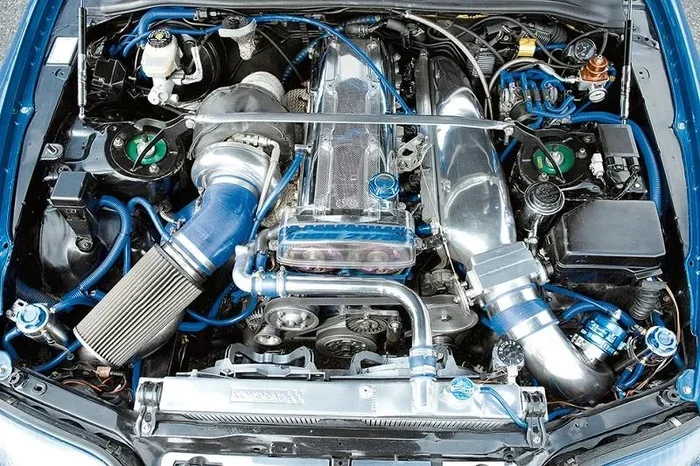
A turbocharger uses your engine’s exhaust gases to spin a turbine. That turbine is connected to a compressor on the other side. As exhaust gases spin the turbine, the compressor pulls in fresh air and pushes it into the intake manifold at high pressure. This is called boost pressure.
The key components of a turbocharger include:
- Turbine housing: This is where hot exhaust gases enter and spin the turbine wheel.
- Compressor wheel: This draws in fresh air and compresses it before sending it to the engine.
- Center housing: This connects the turbine and compressor and houses the shaft that connects them.
- Wastegate: This valve controls boost pressure by diverting excess exhaust gases away from the turbine.
- Intercooler: This cools the compressed air before it enters the engine, which increases air density and prevents knock.
The Lag Factor
One thing you will hear a lot about with turbos is lag. Turbo lag is the delay between pressing the accelerator and feeling the boost. This happens because the turbine needs exhaust gas flow to spin up to speed. At low RPMs, there may not be enough exhaust to spool the turbo quickly. Modern turbos with twin-scroll designs and variable geometry have greatly reduced this problem, but some lag is still present in most setups.
Think of it like this: you are waiting for a fan to start spinning. At first, it is slow. Then it picks up speed. That is turbo lag in a nutshell. The good news is that once the turbo is spooled up, the power delivery is strong and smooth.
Common Turbo Setup Types
Not all turbo setups are the same. Here are the most common types you will encounter:
- Single turbo: One turbo handles all the cylinders. This is the simplest and most common setup.
- Twin turbo: Two smaller turbos work together, often one for low RPM and one for high RPM. This reduces lag and improves response.
- Twin-scroll turbo: A single turbo with divided exhaust routing that improves response and efficiency.
- Sequential turbo: A small turbo kicks in at low RPMs, and a larger one takes over at higher RPMs.
Each setup has its pros and cons. Your choice depends on your budget, your car, and your performance goals.
How a Supercharger Works
A supercharger is driven directly by the engine through a belt, chain, or gear system. It sits on top of the engine and draws in air, compresses it, and sends it into the intake manifold. Because it is connected to the engine crankshaft, it spins as the engine spins. This means there is zero lag.
The main types of superchargers include:
- Roots supercharger: This is the oldest design. It uses two lobed rotors that trap air and push it into the intake. It provides a lot of boost at low RPMs but can be bulky and less efficient at high boost levels.
- Centrifugal supercharger: This looks like a small turbo. It uses a spinning impeller to compress air. It is very efficient and provides smooth power delivery, but boost builds gradually as RPMs increase.
- Twin-screw supercharger: This uses two meshing screws to compress air as it moves through the unit. It offers excellent low-end torque and is more efficient than the roots design.
Why Choose a Supercharger?
Superchargers have a few big advantages. First, they deliver power instantly. There is no waiting for exhaust gases to build up. Step on the gas, and the boost is right there. This makes superchargers great for street driving and situations where you need immediate response.
Second, superchargers are generally easier to install than turbos. They bolt onto the top of the engine and use the existing intake system. Many manufacturers offer bolt-on supercharger kits that do not require extensive fabrication or custom plumbing.
The downside is that superchargers consume engine power to operate. The belt that drives the supercharger steals some horsepower from the crankshaft. This means a supercharger is less efficient than a turbo in terms of power per dollar spent. However, the convenience and reliability of a supercharger setup make it a popular choice for many enthusiasts.
Turbocharger vs Supercharger: Head-to-Head
Choosing between a turbo and a supercharger is one of the biggest decisions you will make. Let us break down the key differences.
Power Delivery
A supercharger delivers power right away. There is no delay. A turbocharger has some lag, but once the boost kicks in, the power surge can be incredible. If you want instant response, a supercharger wins. If you want maximum peak power, a turbo usually delivers more.
Efficiency
Turbochargers are more efficient because they use waste energy from exhaust gases. A supercharger takes power directly from the engine to operate. In simple terms, a turbo gives you free power, while a supercharger costs you some power to make more. This efficiency gap is one reason why most modern performance cars use turbochargers.
Heat and Stress
Turbos deal with extremely hot exhaust gases. The compressed air coming out of a turbo is also very hot, which is why intercoolers are almost always required. Superchargers generate less heat because they compress air at a lower temperature overall. However, both systems put extra stress on your engine, so proper cooling and tuning are essential.
Installation Complexity
Supercharger kits tend to be simpler to install. They bolt onto the engine and connect to the existing intake and cooling systems. Turbo kits require more work, including exhaust piping, wastegate setup, intercooler installation, and oil line routing. If you are not experienced with engine work, a supercharger kit may be the easier path.
Cost Comparison
| Factor | Turbocharger | Supercharger |
|---|---|---|
| Upfront Cost | Generally lower for basic kits | Higher, especially for quality kits |
| Installation Complexity | More complex | Simpler, bolt-on design |
| Power Potential | Higher peak power possible | Great low-end torque |
| Lag | Some lag at low RPMs | Instant response |
| Fuel Efficiency | Better overall efficiency | Slightly less efficient |
| Maintenance | More components to maintain | Fewer moving parts in the system |
As you can see, both systems have clear strengths. Your choice depends on what you value most in your driving experience.
Can You Turbocharge or Supercharge Any Car?
This is one of the most common questions people ask. The answer is not a simple yes or no. While you can technically add forced induction to many engines, not every car is a good candidate. Here is what you need to consider.
Engine Design Matters
Some engines are better suited for forced induction than others. Engines with cast-iron blocks, forged internals, and robust bottom ends handle the extra stress much better. Stock engines with aluminum blocks and cast pistons may not hold up under high boost levels without upgrades.
Before you invest in a forced induction kit, ask yourself these questions:
- Is my engine block strong enough to handle increased cylinder pressure?
- Are the connecting rods and pistons forged or cast?
- Does the head gasket quality support higher boost levels?
- Is the cooling system adequate for the added heat?
If you are not sure about the answers, a compression test and a inspection by a qualified mechanic can help. These checks tell you a lot about the health of your engine before you add forced induction.
Fuel System Upgrades
More air means you need more fuel to maintain the correct air-fuel ratio. Stock fuel injectors and fuel pumps may not be able to keep up with the demands of forced induction. You will likely need to upgrade to larger injectors, a high-pressure fuel pump, and possibly a standalone fuel management system.
Running too lean under boost is one of the fastest ways to damage an engine. The mixture becomes too hot, and pistons can crack, valves can burn, and head gaskets can fail. Always make sure your fuel system can support the power you are trying to make.
ECU Tuning Is Non-Negotiable
A forced induction kit without proper ECU tuning is a recipe for disaster. The engine control unit manages fuel delivery, ignition timing, boost pressure, and more. When you add a turbo or supercharger, all of these parameters change. A custom tune ensures your engine runs safely and makes the most power possible.
Never run a forced induction car without a proper tune. This is not optional. It is one of the most important steps in the entire process. A professional tuner will adjust your ignition timing, fuel maps, boost levels, and rev limits to match your new setup.
Tips for a Successful Forced Induction Build
If you have decided to add forced induction to your car, here are some practical tips to help you get the best results.
Start with a Solid Foundation
Your engine should be in good mechanical condition before you add a turbo or supercharger. Make sure you have fresh oil, new spark plugs, and a healthy cooling system. Do not build on top of a tired engine. The extra stress from forced induction will only make existing problems worse.
Invest in Quality Parts
It can be tempting to go with the cheapest turbo or supercharger kit you can find. But cheap parts often mean cheap reliability. Look for kits from reputable brands with good reviews and proven track records. Your turbo, intercooler, blow-off valve, and wastegate are all critical components. Do not cut corners here.
Do Not Forget the Intercooler
An intercooler is essential for any forced induction setup. It cools the compressed air before it enters the engine. Cooler air is denser air, which means more oxygen per intake cycle. More oxygen means more complete combustion and more power. Without an intercooler, your engine will run hotter and less efficiently.
Plan for Supporting Modifications
A forced induction kit is not a standalone modification. You will likely need to upgrade several other parts at the same time. Common supporting mods include:
- Upgraded exhaust system: A free-flowing downpipe and cat-back exhaust help the turbo spool faster.
- Performance intake: A cold air intake feeds the turbo or supercharger with cooler, denser air.
- Upgraded clutch or torque converter: More power means you need a drivetrain that can handle it.
- Suspension and braking upgrades: More power is useless if you cannot stop or corner properly.
Get Professional Help If Needed
If you are not experienced with engine building, do not be afraid to hire a professional. A forced induction installation involves precise fitting, custom fabrication, and critical tuning. A single mistake can cost you thousands in engine damage. A professional installer and tuner will save you time, money, and headaches in the long run.
Common Mistakes to Avoid
Many first-time forced induction builders make the same mistakes. Here are the ones you should watch out for.
- Skipping the tune: Running without a custom ECU tune is the number one mistake. It can lead to engine failure very quickly.
- Undersized intercooler: A small intercooler cannot keep up with the heat buildup. This leads to power loss and potential engine damage.
- Ignoring boost leaks: Even a small leak in the intake system can cause boost pressure to drop. This reduces power and can cause the engine to run lean.
- Over-boosting: More boost does not always mean more power. Pushing too much boost without supporting mods is a great way to blow your engine.
- Neglecting oil changes: Turbochargers rely on clean oil for lubrication. Dirty oil can destroy a turbo very quickly.
- Forgetting about the cooling system: Forced induction generates a lot of heat. Make sure your radiator, fans, and coolant are up to the task.
Avoiding these mistakes will help you build a reliable and powerful forced induction setup that lasts for years.
Expert Insights on Forced Induction
Experienced tuners and engine builders agree on a few key principles when it comes to forced induction. First, always match your turbo or supercharger to your engine size. A tiny turbo on a large engine will not make much power, and a massive turbo on a small engine will have terrible response. The goal is to find the right balance between lag, power, and reliability.
Second, invest in a quality tune from someone who understands your specific setup. Every engine, every kit, and every combination of parts is different. A generic tune will never unlock the full potential of your build. A custom tune tailored to your exact setup is worth every penny.
Third, be patient. Forced induction builds take time, research, and money. Rushing the process leads to mistakes. Take your time, do your research, and build smart. The result will be a car that delivers exactly the performance you are looking for.
Final Thoughts on Turbocharging and Supercharging
So, can you turbocharge and supercharge a car? Absolutely. Whether you choose a turbo or a supercharger depends on your goals, your budget, and your driving style. Turbochargers offer better efficiency and higher peak power, while superchargers deliver instant response and simpler installation. Both systems can transform a stock engine into a performance powerhouse.
The key to success lies in proper planning, quality parts, and professional tuning. Do not skip the supporting mods, do not ignore the intercooler, and never underestimate the importance of a custom ECU tune. With the right approach, forced induction is one of the most rewarding upgrades you can make to any car.
Start with a solid engine foundation, choose the right system for your needs, and invest in the tuning and supporting parts that make it all work. Whether you are chasing track times or just want more fun on your daily commute, forced induction is the answer. Now you know what it takes. The only question left is, are you ready to build?
Frequently Asked Questions
Is it cheaper to turbocharge or supercharge a car?
Turbocharger kits are generally less expensive upfront, especially for popular platforms with many aftermarket options. Supercharger kits tend to cost more but are often simpler to install, which can reduce labor costs. The total price depends on the kit quality, your car, and whether you need supporting modifications.
Can I turbocharge a stock engine without upgrading anything else?
You can add a turbo to a stock engine, but it is not recommended. Stock fuel systems, internals, and cooling systems are usually not designed for the extra stress of forced induction. At minimum, you will need a proper tune, upgraded fuel injectors, and a quality intercooler. Without these, you risk serious engine damage.
How much horsepower can a turbo add to a car?
The amount of horsepower gain depends on many factors, including the size of the turbo, the boost level, and the supporting mods. A well-built turbo setup can add anywhere from 50 to 300 or more horsepower. The exact number varies based on your engine, the turbo kit, and the tuning quality.
Do superchargers use more fuel than turbos?
Superchargers consume engine power directly through the belt drive, which can reduce fuel efficiency slightly. Turbochargers use waste exhaust energy, making them more efficient overall. However, if you drive hard with either system, fuel consumption will increase regardless of the type.
How long does it take to install a turbo or supercharger kit?
A supercharger kit can often be installed in one to two days by a experienced mechanic. A turbo kit usually takes longer, often three to five days, due to the additional exhaust plumbing, intercooler setup, and oil line routing. The exact time depends on your car model and the complexity of the kit.
Do I need to use premium fuel with a forced induction setup?
In most cases, yes. Forced induction raises the compression and temperature inside the cylinders, which increases the risk of engine knock. Premium fuel has a higher octane rating, which resists knock and allows for more aggressive timing and boost levels. Always check your tuner’s recommendations for the correct fuel type.
=== CONCLUSION ===
Adding forced induction to your car is one of the most exciting upgrades you can make. Whether you go with a turbocharger or a supercharger, the result is more power, more torque, and a more thrilling driving experience. The process requires research, planning, and investment, but the payoff is well worth it.
Remember to start with a healthy engine, choose quality parts, and always get a professional tune. Avoid the common mistakes that can lead to costly repairs. And most importantly, enjoy the journey of building something that is uniquely yours.
Now that you know the answer to can you turbocharge and supercharge a car, it is time to take the next step. Research your options, talk to experienced builders, and start planning your forced induction build today.