Does Clear Window Tint Protect Against Harmful UV Rays
Does clear window tint protect against UV rays? The short answer is yes. Clear window tint films are designed to block up to 99% of harmful UV rays without darkening your windows, offering UV protection for your skin, car interior, and overall health while you drive.
Have you ever wondered whether your car windows actually protect you from the sun? Many drivers assume that their factory glass blocks all harmful rays. But here is the truth. Standard car windows let a significant amount of ultraviolet radiation pass through. This means you and your passengers are exposed to UV rays every time you hit the road. That is where clear window tint comes in. It offers a simple, effective way to shield yourself from invisible sun damage without changing the look of your vehicle.
Does clear window tint protect against harmful UV rays? Absolutely. In this guide, we will walk you through everything you need to know. You will learn how clear window film works, what science says about UV protection, and why this upgrade is worth considering for your daily drive. We will also cover the benefits, compare options, and share practical tips to help you make the best choice for your car and your health.
Whether you drive a sedan, SUV, or truck, this article has something for you. By the end, you will understand exactly why clear window tint is one of the smartest investments you can make for your vehicle and your well-being. Let us get into it.
Key Takeaways
- Clear window tint blocks up to 99% of UV rays without darkening your car windows.
- UV protection is essential for preventing skin damage, premature aging, and reducing skin cancer risk while driving.
- Clear tint preserves your car interior by stopping sun damage to dashboards, seats, and upholstery.
- Not all clear tints are equal — look for high UV rejection ratings and quality film materials.
- Clear tint offers added benefits like heat reduction, glare control, and added privacy.
- Professional installation matters for achieving the best UV blocking results and long-lasting performance.
📑 Table of Contents
- What Is Clear Window Tint and How Does It Work?
- The Science Behind UV Rays and Car Windows
- Does Clear Window Tint Actually Block UV Rays?
- Benefits of Clear Window Tint Beyond UV Protection
- Clear Tint vs. Traditional Tint: Which Is Better?
- How to Choose the Right Clear Window Tint for Your Vehicle
- Conclusion
What Is Clear Window Tint and How Does It Work?
Before we dive into the details, let us start with the basics. Clear window tint is a thin film applied to the inside of your car windows. Unlike traditional tinted films, it is nearly invisible. You can still see through your windows clearly. But underneath that transparent layer, powerful technology is at work.
How Clear Window Film Differs from Dark Tint
Dark window tint reduces visible light. It makes your windows look shaded or colored. Clear window tint does something different. It targets specific wavelengths of light, especially ultraviolet radiation. The film contains special layers that absorb or reflect UV rays before they enter your car. This means you get protection without sacrificing visibility or style.
Some people think clear tint is just a gimmick. That is not true. High-quality clear window film uses advanced materials like ceramic particles and nano-coatings. These components are specifically engineered to block UV radiation while remaining completely transparent. The result is a virtually undetectable layer of defense against the sun.
What Makes Clear Tint Effective for UV Blocking?
The effectiveness of any clear window tint depends on its construction. Most quality films have multiple layers. Each layer serves a specific purpose. The outer layer resists scratches and debris. The middle layers contain the UV-blocking agents. The inner layer adheres smoothly to your glass.
When sunlight hits your window, the film intercepts the harmful rays. UVA and UVB radiation are either absorbed into the film or reflected away. Visible light passes through normally. This selective filtering is what makes clear window tint so effective. You get all the protection you need without any visible change to your car’s appearance.
Quick Tips
- Always ask about the UV rejection rate before purchasing any film.
- Look for films that block at least 99% of UVA and UVB rays.
- Do not assume that darker tint means better UV protection. Clear films can outperform dark ones.
- Check if the film comes with a manufacturer warranty for long-term peace of mind.
The Science Behind UV Rays and Car Windows
To fully understand why clear window tint matters, you need to know a little about ultraviolet radiation. The sun emits different types of UV rays. Two of the most common are UVA and UVB. Both can cause serious damage to your skin and your car interior.
Understanding UVA and UVB Rays
UVA rays have longer wavelengths. They penetrate deep into the skin. Over time, UVA exposure causes premature aging, wrinkles, and long-term skin damage. These rays are present all day, every day, even on cloudy days. They also pass through glass more easily than you might think.
UVB rays are shorter but more intense. They cause sunburns and contribute directly to skin cancer. UVB rays are strongest during midday hours. While car glass blocks a portion of UVB, it does not block all of it. This is where UV protection through window tint becomes essential.
Why Car Windows Are Not Enough on Their Own
Here is a surprising fact. Your car’s windshield blocks most UVB rays. But your side windows and rear windows do not. Studies show that drivers who spend long hours on the road have higher rates of skin damage on the left side of their face. This is because the left side is more exposed to sunlight coming through the side windows.
Factory glass typically blocks only about 25% to 50% of UVA radiation. That leaves a large gap in your protection. Applying clear window tint closes that gap completely. It acts as an extra layer of defense that your original car glass simply cannot provide on its own.
Expert Insight
Dermatologists consistently recommend UV protection for anyone who spends significant time driving. The American Academy of Dermatology notes that cumulative sun exposure through car windows contributes to photoaging and increases long-term skin cancer risk. Adding a quality clear window film is one of the easiest ways to reduce this exposure.
Does Clear Window Tint Actually Block UV Rays?
This is the question most drivers want answered. The simple answer is yes. Clear window tint is specifically designed to block harmful UV radiation. But not all films are created equal. Let us look at the numbers and what you should expect.
UV Protection Ratings You Should Know
When shopping for clear window tint, you will encounter different UV rejection ratings. Here is what to look for:
- 99% UV rejection: This is the gold standard. Premium clear films block 99% of both UVA and UVB rays.
- 90-98% UV rejection: Still very effective. Good quality films in this range offer strong daily protection.
- Below 90%: Avoid these. They provide minimal benefit and are not worth the investment.
A high-quality clear window film should always advertise its UV rejection rate clearly. If a product does not list this information, be cautious. Reputable brands make this data easy to find because they stand behind their claims.
Real-World Testing and Results
Independent testing has confirmed the effectiveness of clear window tint for UV blocking. In laboratory tests, films are exposed to controlled UV light sources. Measurements are taken before and after the film is applied. The results consistently show dramatic reductions in UV transmission.
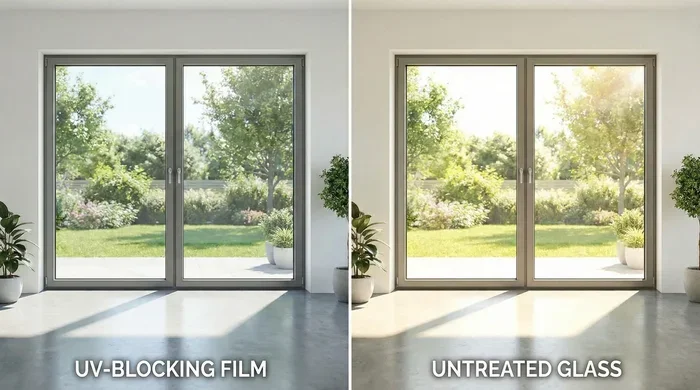
For example, a standard untreated car window might allow 60% or more of UVA rays to pass through. After applying a quality clear window tint, that number drops to less than 1%. That is an incredible difference. You are essentially replacing a weak link in your sun protection with a nearly impenetrable barrier.
| Window Type | UV Rejection (Untreated) | UV Rejection (With Clear Tint) |
|---|---|---|
| Front Windshield | ~96% blocked naturally | ~99% blocked |
| Side Windows | ~50% blocked naturally | ~99% blocked |
| Rear Windows | ~50% blocked naturally | ~99% blocked |
| Sunroof | ~60% blocked naturally | ~99% blocked |
As you can see from the table, the biggest gains come from your side and rear windows. These areas benefit the most from clear window tint because factory glass provides the least protection there.
Quick Tips
- Ask your installer for a UV transmission report from the specific film brand.
- Do not rely on the darkness of the tint as a measure of UV protection.
- Reapply or replace your film every 5-7 years for optimal UV rejection performance.
Benefits of Clear Window Tint Beyond UV Protection
While UV protection is the main reason most people choose clear window tint, the benefits go far beyond that. Let us explore the other advantages that make this upgrade so valuable.
Protecting Your Car Interior from Sun Damage
Sun damage does not just affect your skin. It also wrecks havoc on your car’s interior. Dashboards crack, seats fade, and leather dries out over time. All of this is caused by prolonged exposure to ultraviolet radiation and heat.
Clear window tint helps preserve your car’s interior. By blocking UV rays, it slows down the fading and deterioration process. Your dashboard stays looking newer for longer. Your seats retain their color and texture. This alone can save you money on interior repairs and replacements down the road.
Reducing Heat and Glare While Driving
Have you ever noticed how hot your car gets parked in the sun? That heat comes in part from solar energy passing through your windows. Clear window tint can reduce the amount of heat that enters your vehicle by up to 50% or more.
Less heat means a more comfortable driving experience. Your air conditioning does not have to work as hard. This can even improve your fuel efficiency slightly. On top of that, glare reduction is a major benefit. Glare from the sun or other vehicles can be distracting and dangerous. Clear tint helps minimize this without making your windows darker.
Adding Privacy Without Darkening Your Windows
One of the challenges with traditional tint is privacy. Dark windows make it hard for people outside to see into your car. But they can also make it harder for you to see out, especially at night. Clear window tint solves this problem. It provides a subtle level of privacy by reflecting some light outward. At the same time, your visibility from the inside remains excellent.
This makes clear window film a great option for people who want the benefits of tinting without the dark look. It is especially popular among drivers who live in areas with strict tinting laws or who prefer a more factory-stock appearance.
Common Mistakes to Avoid
- Buying the cheapest film you can find. Low-quality clear tints often have poor UV rejection rates. You get what you pay for.
- Ignoring local tinting laws. Even clear tint may have regulations in some areas. Check your state or country rules before installing.
- Applying tint yourself without experience. Poor installation leads to bubbles, peeling, and uneven coverage. Always hire a professional.
- Assuming one application lasts forever. Most clear window film needs replacement after 5-7 years for best performance.
Clear Tint vs. Traditional Tint: Which Is Better?
Choosing between clear window tint and traditional dark tint is a common dilemma. Both options offer UV protection, but they serve different needs. Let us compare them side by side.
Comparing UV Blocking Performance
When it comes to blocking UV rays, clear tint and dark tint can perform similarly. A high-quality clear film can block just as much UV radiation as a dark film. The darkness of the tint has very little to do with its UV blocking ability. What matters most is the film’s construction and the materials used.
This is an important point. Many people assume darker tint equals better protection. That is a misconception. A premium clear window film with ceramic or metallized particles can outperform a cheap dark tint in UV rejection. Always check the specifications rather than making assumptions based on appearance.
Legal Considerations and Visibility
Tinting laws vary widely from state to state and country to country. Some regions restrict how dark your windows can be. In these areas, clear window tint is often the perfect solution. It provides all the benefits of tinting while staying within legal limits.
Visibility is another factor. Dark tint can reduce your ability to see clearly at night or in poor weather. Clear window tint maintains excellent visibility in all conditions. This makes it a safer choice for many drivers, especially those who frequently drive at night or in areas with heavy rain or fog.
| Feature | Clear Window Tint | Traditional Dark Tint |
|---|---|---|
| UV Ray Blocking | Up to 99% | Up to 99% |
| Visible Appearance | Nearly invisible | Noticeably darkened |
| Night Visibility | Excellent | Reduced |
| Legal Compliance | Usually compliant | May violate laws |
| Heat Reduction | Good to excellent | Good to excellent |
| Privacy Level | Subtle | High |
| Interior Protection | Excellent | Excellent |
As the table shows, clear window tint holds its own against traditional tint in nearly every category. The main difference is appearance. If you want protection without changing how your car looks, clear tint is the clear winner.
Expert Insight
Auto detailing professionals often recommend clear window tint as the best all-around choice. It delivers strong UV protection, heat reduction, and glare control without any of the downsides associated with darker films. For daily drivers, family cars, and vehicles that see a lot of sun exposure, it is the most practical option available.
How to Choose the Right Clear Window Tint for Your Vehicle
Not all clear window tint products are the same. Choosing the right one for your vehicle and your needs requires a bit of research. Here is what you should consider.
Key Features to Look For
When shopping for clear window film, focus on these essential features:
- UV rejection rate: Aim for 99% or higher. This is the most important metric for sun protection.
- Heat rejection: Look for films that block at least 50% of infrared heat for maximum comfort.
- Scratch resistance: A durable top coat extends the life of your tint significantly.
- Warranty: Reputable brands offer warranties of 5 years or more. This shows confidence in their product.
- Easy installation: Some films are designed for DIY application. Others require professional installation. Know your comfort level before buying.
Quick Tips for Getting the Best Results
Once you have chosen your clear window tint, follow these tips to ensure the best outcome:
- Clean your windows thoroughly before installation. Any dust or debris can cause bubbles under the film.
- Avoid rolling down your windows for at least 48 hours after application. This allows the adhesive to cure properly.
- Use a soft cloth when cleaning your tinted windows. Harsh chemicals can damage the film over time.
- Park in the shade when possible. Even with UV protection, minimizing direct sun exposure helps your tint last longer.
- Inspect your film regularly for peeling or bubbling. Catching problems early makes repairs easier.
Common Mistakes That Reduce UV Protection
Even the best clear window tint can underperform if you make certain mistakes. Here are the most common ones:
- Choosing a low-quality film. Budget films often use inferior materials that degrade quickly and lose UV blocking ability.
- Skipping professional installation. Poorly applied film has gaps and bubbles that let UV rays through.
- Ignoring the edges. UV rays can enter through gaps at the edges of the film. Make sure your installer seals the edges properly.
- Not replacing worn film. Over time, clear window film loses its effectiveness. Replace it every 5-7 years for consistent protection.
Quick Tips
- Ask your installer about ceramic clear tint options. These offer top-tier UV blocking with zero color shift.
- If you have children in the car frequently, prioritize UV protection for rear windows where they sit.
- Consider combining clear window tint with a windshield sun shade for maximum sun defense on hot days.
Conclusion
The answer to the question does clear window tint protect against UV rays is a definitive yes. Clear window tint is a highly effective way to block up to 99% of harmful UV radiation from entering your vehicle. It protects your skin, preserves your car interior, reduces heat and glare, and adds a subtle level of privacy. All without changing the appearance of your windows.
Investing in quality clear window film is one of the simplest steps you can take for your health and your car. The science is clear. The benefits are real. And the process is straightforward. Whether you are concerned about skin cancer prevention, interior fading, or just staying more comfortable on long drives, clear window tint delivers.
Do not wait until you notice sun damage. Take action today. Research your options, choose a reputable brand, and have your clear window tint professionally installed. Your future self will thank you every time you get behind the wheel. Protect yourself. Protect your car. Make the smart choice with clear window tint for lasting UV protection.
Frequently Asked Questions
Can clear window tint really block 99% of UV rays?
Yes, high-quality clear window tint films are engineered to block up to 99% of both UVA and UVB rays. The key is choosing a reputable brand with verified UV rejection ratings. Always ask for the product specifications before purchasing.
Will clear window tint make my car windows look different?
No. Clear window tint is designed to be virtually invisible. It does not change the color or darkness of your windows. Your car will look exactly the same from the outside, but with significantly better UV protection inside.
Is clear window tint legal everywhere?
Most clear window tint products are legal because they do not change the visible appearance of your windows. However, laws vary by location. Always check your local tinting regulations before installation to ensure compliance.
How long does clear window tint last?
A quality clear window film typically lasts between 5 and 7 years with proper care. Factors like sun exposure, cleaning methods, and installation quality can affect the lifespan. Look for products with strong warranties for the best longevity.
Can I install clear window tint myself?
Yes, some clear window tint kits are designed for DIY application. However, professional installation is recommended for the best results. A professional ensures bubble-free application, proper edge sealing, and maximum UV protection performance.
Does clear window tint help with heat inside the car?
Yes. In addition to UV protection, clear window tint can reduce heat buildup inside your car by blocking a significant portion of infrared radiation. This keeps your interior cooler and makes your air conditioning more efficient during hot days.