Does Tesla Have a Transmission and Why It Really Matters
Does Tesla Have a Transmission? Yes, but it works very differently from what you are used to. Tesla vehicles use a single-speed gearbox that eliminates the need for traditional gear shifting. This unique electric car transmission design delivers smooth power, reduces maintenance, and contributes to the instant torque that makes Teslas so fun to drive.
You might think every car needs a transmission with multiple gears. But when it comes to Teslas, things work differently. So, does Tesla Have a Transmission? The short answer is yes, but not in the way you might expect. Tesla vehicles use a single-speed gearbox that operates very differently from what you find in most cars on the road today.
If you have driven a traditional car, you know about shifting gears. You feel the clutch engage and hear the engine rev up through each gear. Teslas skip all of that entirely. The electric motor delivers power in a way that makes multiple gears unnecessary. This design choice affects everything from how the car accelerates to how much maintenance it needs over the years.
In this article, we will explore exactly what kind of transmission a Tesla uses. We will look at how the system works, why Tesla chose this approach, and what it means for you as a driver. Whether you own a Tesla or are thinking about buying one, understanding the electric car transmission helps you make smarter decisions about your vehicle.
Key Takeaways
- Tesla uses a single-speed gearbox: Unlike traditional cars with multiple gears, Tesla vehicles rely on one fixed gear ratio for all driving conditions.
- No manual or automatic shifting needed: The electric motor delivers smooth, seamless power without any gear changes or clutch engagement.
- Less maintenance required: With fewer moving parts, Tesla drivetrains need far less car maintenance than conventional transmissions.
- Transmission fluid is still used: Tesla vehicles do require fluid changes, though the schedule is much less frequent than for traditional gearboxes.
- Instant torque is the real advantage: Electric motors deliver maximum power from zero RPM, making multi-speed gearboxes unnecessary.
- Regenerative braking works with the drivetrain: The single-speed system integrates smoothly with energy recovery during deceleration.
- Reliability is a major benefit: The simpler design means fewer parts that can wear out or fail over time.
📑 Table of Contents
- What Kind of Transmission Does a Tesla Use?
- Why Tesla Doesn’t Need a Multi-Speed Transmission
- How Tesla’s Transmission System Works in Practice
- Comparing Tesla’s System to Traditional Transmissions
- Does Tesla Have Transmission Fluid?
- Common Misconceptions About Tesla Transmissions
- The Future of Tesla Drivetrain Technology
- Conclusion
- Frequently Asked Questions
What Kind of Transmission Does a Tesla Use?
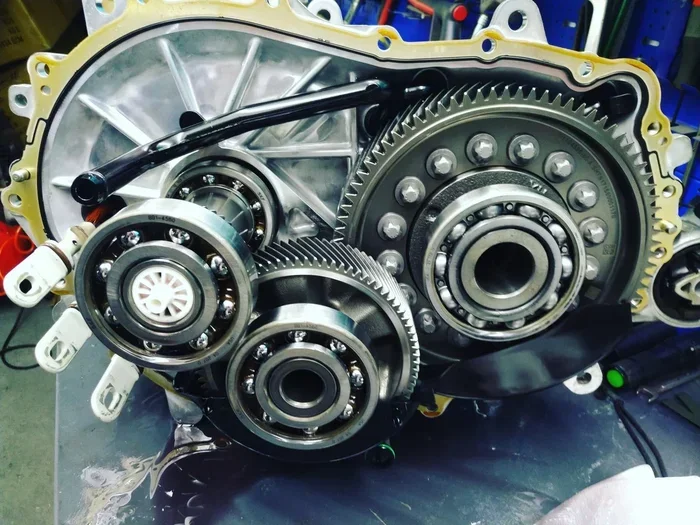
When people ask does Tesla Have a Transmission, they usually picture the complex multi-gear systems found in traditional cars. The reality is simpler and more elegant. Tesla vehicles use what engineers call a single-speed gearbox, also known as a fixed-gear reduction unit. This is a core part of the Tesla drivetrain that sets electric vehicles apart from their gasoline-powered counterparts.
The Single-Speed Gearbox Explained
A single-speed gearbox does exactly what the name suggests. It uses one gear ratio to transfer power from the electric motor to the wheels. There is no clutch pedal. There is no gear shifter. You simply press the accelerator and the car moves forward smoothly. This is why many people describe the driving experience as automatic, even though technically there is no traditional automatic transmission involved.
The gearbox in a Tesla Model S or Tesla Model 3 contains a set of planetary gears that reduce the high rotational speed of the electric motor to a more usable output speed at the wheels. Think of it like a bike with only one gear. It works perfectly well because the electric motor can operate across a wide range of speeds without needing to shift.
How It Differs from Traditional Transmissions
A conventional automatic transmission has multiple gear ratios, typically between four and ten gears. Each gear is designed for a specific speed range. The transmission shifts between these gears based on your speed, throttle input, and engine load. A manual transmission requires the driver to shift gears manually using a clutch pedal and gear stick.
Tesla skips all of this complexity. The electric motor in a Tesla can produce strong power across a very wide RPM range. This means the gear ratio stays fixed and the car still performs brilliantly at low speeds, highway speeds, and everything in between. There is no need for the driver to do anything. The car just goes.
This gearless transmission approach is one of the biggest advantages of the EV drivetrain. It removes a whole category of potential mechanical failures and simplifies the entire power delivery system.
Why Tesla Doesn’t Need a Multi-Speed Transmission
The reason Tesla can get away with a single-speed gearbox comes down to how electric motors work. Understanding this helps you appreciate why does Tesla Have a Transmission is such a different question than it is for gas-powered cars.
The Magic of Electric Motors
An internal combustion engine needs multiple gears because it operates efficiently only within a narrow RPM band. At low speeds, it needs a lower gear to get moving. At high speeds, it needs a higher gear to avoid over-revving. This is why traditional cars have transmission types with several ratios.
An electric motor, on the other hand, produces strong torque across a very wide RPM range. It can go from zero to its maximum speed without needing a gear change. The power delivery is smooth and consistent from the moment you step on the accelerator. This is the fundamental reason Tesla does not need a multi-speed gearbox.
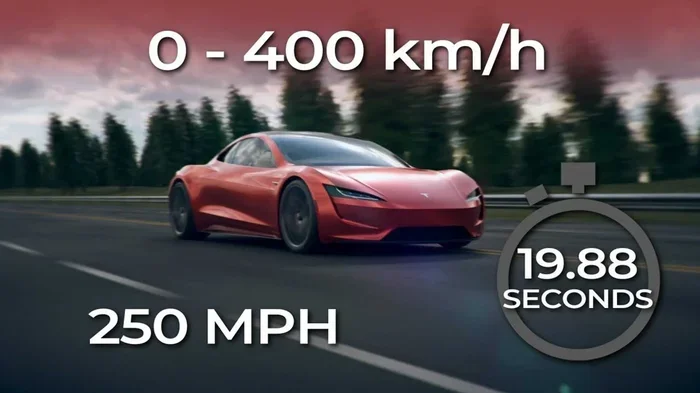
The electric motor’s ability to deliver full torque at zero RPM is what gives Teslas their famous instant acceleration. You press the pedal and the car surges forward immediately. There is no waiting for a gear to engage or a torque converter to lock up.
Torque and Power Delivery
Torque is the twisting force that turns the wheels. Electric motors produce peak torque from the very first rotation. A gasoline engine needs to reach a certain RPM before it can produce its maximum torque. This is why sports cars with powerful engines still feel sluggish at low speeds.
Tesla’s electric motor eliminates this problem entirely. The acceleration is immediate and relentless. Whether you are pulling away from a stoplight or merging onto a highway, the power is always there. The single-speed gearbox simply passes this power along to the wheels without any interruption.
Expert Insights: According to Tesla’s engineering team, the single-speed design was chosen deliberately to maximize simplicity and reliability. Fewer parts mean fewer things that can go wrong. It also reduces the weight of the drivetrain, which improves efficiency and range.
How Tesla’s Transmission System Works in Practice
Now that you understand the theory, let us look at how this system feels and performs in real-world driving. If you have ever wondered what it is actually like to drive a car with no gears, here is your answer.
Driving Experience and Gear Ratios
When you drive a Tesla, you never think about gears. There is no gear indicator on the dashboard blinking through first, second, and third. There is no sensation of the car lurching as it shifts. The acceleration is perfectly linear and smooth from zero to top speed.
The fixed gear ratio in a Tesla is optimized for both city driving and highway cruising. At low speeds, the gear ratio provides enough torque to move the car smoothly. At highway speeds, the electric motor can spin fast enough to maintain speed without straining. This one-size-fits-all approach works remarkably well across all driving conditions.
One thing you might notice is that Tesla vehicles do not have a traditional automatic transmission feel. There is no slight delay when you shift from Park to Drive. The car responds instantly. This seamless operation is one of the things that makes driving a Tesla feel so futuristic.
Regenerative Braking and the Drivetrain
Regenerative braking is another feature that works hand-in-hand with Tesla’s single-speed drivetrain. When you take your foot off the accelerator, the electric motor reverses its role and becomes a generator. It captures kinetic energy and sends it back to the battery.
This process works smoothly because there are no gears to disengage or change. The motor simply switches modes and starts recovering energy. The result is that Tesla drivers can often go long stretches without using the brake pedal at all. This not only saves brake pad wear but also extends the driving range.
Quick Tips for Tesla Owners
- Use regenerative braking settings: Tesla allows you to adjust the strength of regenerative braking. Find the level that feels most natural to you.
- Avoid riding the brake pedal: Let the regen system do most of the slowing work. This saves your actual brake pads and recharges the battery.
- Plan for one-pedal driving: Once you get used to it, you may find you rarely need the brake pedal in city traffic.
- Keep your software updated: Tesla frequently improves regen behavior through over-the-air updates.
Comparing Tesla’s System to Traditional Transmissions
To truly understand why Tesla’s approach is special, it helps to compare it side by side with conventional transmission types. The differences are striking and they affect your ownership experience in real ways.
Maintenance Differences
A traditional automatic transmission has hundreds of moving parts. It needs transmission fluid changes, clutch replacements, and valve body repairs over its lifetime. These are expensive repairs that can cost hundreds or even thousands of dollars.
Tesla’s single-speed gearbox has far fewer parts. There is no clutch to wear out. There are no bands or solenoids to fail. The main maintenance task is checking and changing the transmission fluid at intervals, though Tesla designs their systems to go very long between fluid changes.
Common Mistakes: Many new Tesla owners assume the car needs zero maintenance because it has no traditional transmission. This is not true. While the maintenance is minimal, it is not zero. Regular checks of the drivetrain fluid and components are still important for long-term reliability.
Reliability and Longevity
Fewer parts means fewer things that can break. This is the core advantage of Tesla’s drivetrain design. The electric motor itself is extremely durable and can last for hundreds of thousands of miles with proper care. The single-speed gearbox is even simpler and more reliable than any multi-speed transmission.
Tesla vehicles are known for their low drivetrain failure rates. The EV drivetrain is inherently more reliable because it does not have the complex hydraulic systems, torque converters, or planetary gear sets that can fail in traditional transmissions.
| Feature | Tesla Single-Speed Gearbox | Traditional Automatic Transmission |
|---|---|---|
| Number of Gears | 1 | 4 to 10 |
| Gear Shifting | None | Automatic or Manual |
| Moving Parts | Very Few | Hundreds |
| Maintenance Needs | Minimal | Regular Fluid Changes |
| Clutch Required | No | No (Automatic) / Yes (Manual) |
| Typical Lifespan | 300,000+ miles | 150,000 to 250,000 miles |
| Driver Input Needed | None | None (Auto) / Clutch & Shift (Manual) |
| Common Failure Points | Very Rare | Torque Converter, Solenoids, Bands |
As you can see from the comparison, Tesla’s approach to the electric car transmission is fundamentally simpler and more reliable. This is a major reason why electric vehicles are gaining popularity. The drivetrain is not just more efficient, it is also more durable.
Does Tesla Have Transmission Fluid?
This is a common question that comes up in discussions about Tesla maintenance. The answer might surprise you. Yes, Tesla vehicles do use transmission fluid, but the system is much simpler than what you find in a traditional car.
What Fluids Are Used in Tesla Vehicles
Tesla vehicles use a specialized gear oil for the single-speed gearbox. This fluid lubricates the planetary gears inside the reduction unit and helps keep everything running smoothly. Unlike conventional automatic transmissions that use complex multi-speed fluid formulas, Tesla’s fluid is relatively straightforward.
The transmission fluid in a Tesla also plays a role in cooling the electric motor. Because the motor and gearbox are integrated into a single unit, the fluid helps dissipate heat generated during driving. This is especially important during fast acceleration or when towing a load.
Maintenance Schedule and Tips
Tesla recommends checking the gearbox fluid at regular intervals. However, the fluid does not need to be changed as frequently as in a traditional car. Many Tesla owners go 50,000 miles or more before needing a fluid change.
- Check fluid level annually: Even though changes are infrequent, regular checks help catch any issues early.
- Use Tesla-approved fluid: Always use the fluid specified by Tesla for your specific model.
- Watch for leaks: Though rare, gearbox leaks can occur. Check under the car periodically.
- Follow your model’s service guide: Different Tesla models may have slightly different maintenance requirements.
Keeping the gearbox fluid fresh is one of the simplest things you can do to extend the life of your Tesla’s drivetrain. It takes just a few minutes and can prevent costly repairs down the road.
Common Misconceptions About Tesla Transmissions
There are several myths and misunderstandings that circulate about Tesla drivetrains. Let us clear up the most common ones so you have accurate information.
Misconception 1: Tesla has no transmission at all. This is not true. Tesla vehicles do have a transmission, but it is a single-speed unit. The term “transmission” refers to any system that transfers power from the motor to the wheels, and Tesla’s gearbox does exactly that.
Misconception 2: Teslas need a torque converter like traditional automatics. Tesla does not use a torque converter. The electric motor connects directly to the gearbox. This eliminates a common failure point found in traditional automatic transmissions.
Misconception 3: The single gear limits top speed. While it is true that some early Tesla models had a top speed limited by their single gear ratio, Tesla has continuously improved the motor and gear design. Modern Teslas achieve highway speeds comfortably and even compete with high-performance gasoline cars in acceleration.
Misconception 4: You cannot tow with a Tesla because of the transmission. Tesla vehicles can tow within their rated capacity. The single-speed gearbox handles the load just fine. Always check your specific model’s towing specifications before towing.
Understanding these misconceptions helps you appreciate the engineering behind Tesla’s drivetrain. The design is intentional, well-tested, and proven in real-world conditions across millions of miles of driving.
The Future of Tesla Drivetrain Technology
Tesla continues to innovate its drivetrain technology. Newer models feature improved motors with better efficiency and power output. The company is also exploring dual-motor and tri-motor configurations that use multiple electric motors, each with its own single-speed gearbox, to power different axles.
This multi-motor approach gives Tesla the ability to adjust power delivery to individual wheels in real time. It is a sophisticated system that still relies on the fundamental principle of single-speed gearboxes per motor. The future of Tesla drivetrains is exciting and points toward even greater performance and efficiency.
As electric vehicle technology evolves, we can expect drivetrains to become even simpler and more reliable. The trend is clear: the future of automotive power delivery is electric, gearless, and incredibly efficient.
Conclusion
So, does Tesla Have a Transmission? Absolutely. But it is nothing like the transmissions you are used to. Tesla uses a single-speed gearbox that works in harmony with the electric motor to deliver smooth, instant power. This design eliminates the need for gear shifting, reduces maintenance, and improves reliability.
The Tesla drivetrain is one of the most elegant solutions in modern automotive engineering. It takes advantage of the natural strengths of electric motors to create a driving experience that is simple, efficient, and incredibly fun. Whether you are a current Tesla owner or considering making the switch, understanding how the transmission works gives you a deeper appreciation for what makes these vehicles special.
The next time someone asks you about Tesla transmissions, you can confidently explain that yes, Teslas have transmissions, but they are a world apart from what you find under the hood of a gasoline car. It is one of the many reasons why electric vehicles are the future of driving.
Frequently Asked Questions
Can you manually shift gears in a Tesla?
No, Tesla vehicles do not offer manual gear shifting. The single-speed gearbox is fixed and cannot be changed by the driver. The car handles all gear selection automatically through the electric motor’s controller. Some Tesla owners use the paddle shifters on the steering wheel, but these only adjust regenerative braking intensity, not actual gears.
Do Teslas have a clutch pedal?
No, Teslas do not have a clutch pedal. The electric motor connects directly to the single-speed gearbox without any need for a clutch. This is one of the simplest aspects of driving a Tesla. You just select Drive, Release the brake, and go.
How often does Tesla transmission fluid need to be changed?
Tesla recommends checking the gearbox fluid regularly and changing it approximately every 50,000 to 100,000 miles depending on the model and driving conditions. This is significantly less frequent than traditional automatic transmissions, which often need fluid changes every 30,000 to 60,000 miles.
Why do Teslas accelerate so fast if they only have one gear?
Teslas accelerate quickly because electric motors produce maximum torque from zero RPM. There is no need to wait for a gear shift to deliver power. The single gear ratio is optimized to take full advantage of this torque delivery across all driving speeds, from standstill to highway cruising.
Can a Tesla transmission be repaired if it breaks?
Tesla single-speed gearboxes are extremely reliable and failures are rare. However, if a problem does occur, repair options are more limited because the entire unit may need replacement. Tesla’s service centers can diagnose and address drivetrain issues. The good news is that the simplicity of the design means fewer things can go wrong in the first place.
Does the Tesla Model 3 use the same transmission as the Model S?
Both the Tesla Model 3 and Model S use single-speed gearboxes, but the specific design and gear ratios differ between models. The Model 3 uses a more compact and efficient gearbox designed for its smaller platform. The Model S, being a larger vehicle, uses a slightly different reduction unit optimized for its size and weight. Both follow the same fundamental principle of a fixed gear ratio with no shifting.