How Bugattis Quad-Turbo Tech Revolutionizes Performance
Bugatti quad-turbo technology redefines what a supercar can do on the road and track. This innovative forced induction system packs insane horsepower into the legendary W16 engine, delivering mind-blowing torque and acceleration. Whether you are a car enthusiast or a curious driver, understanding this tech gives you a new appreciation for automotive engineering at its finest.
There are cars, and then there are machines that redefine what speed feels like. Bugatti has always lived in that second category. For decades, the French automaker has pushed the boundaries of what an engine can do. And at the heart of that relentless pursuit of speed lies a technology that truly stands out: the quad-turbo system.
If you have ever wondered how a single engine produces over 1,500 horsepower, the answer starts with forced induction. Bugatti quad-turbo technology takes the concept of turbocharging and multiplies it by four. The result is a driving experience that feels almost otherworldly. In this article, we will break down exactly how this system works, why it matters, and what it means for the future of supercar performance.
Whether you are a seasoned car enthusiast or someone who simply loves fast machines, this deep dive into Bugatti’s engineering will give you a whole new perspective on what makes these cars so extraordinary. Let us get into it.
Key Takeaways
- Quad-Turbo Power: Four turbochargers work together to deliver massive horsepower and torque from the W16 engine.
- Forced Induction Mastery: Bugatti refined boost pressure and intercooling to eliminate lag and maximize combustion efficiency.
- Real-World Gains: The quad-turbo setup pushes Bugatti supercars to record-breaking speeds and lightning-fast acceleration.
- Maintenance Matters: Regular care of the turbocharger system, exhaust, and intercooler keeps performance at its peak.
- Engineering Legacy: Bugatti’s quad-turbo design sets the standard for high-performance automotive engineering worldwide.
- Future Innovation: Ongoing advances in variable geometry and twin-scroll tech promise even more power in future models.
📑 Table of Contents
What Is Quad-Turbo Technology?
Breaking Down the Basics of Forced Induction
To understand quad-turbo, you first need to understand turbocharging itself. A turbocharger is a device that forces more air into an engine’s combustion chambers. More air means more fuel can be burned. More fuel burned means more power. It is a simple concept, but the execution is anything but simple.
Traditional cars use naturally aspirated engines. That means air flows in naturally, driven only by the downward stroke of the pistons. A turbocharger changes this by using exhaust gases to spin a turbine. That turbine compresses incoming air and pushes it into the engine at higher pressure. This is called boost pressure, and it is the key to unlocking serious horsepower.
Now imagine doing this with not one, not two, but four turbochargers. That is exactly what Bugatti quad-turbo technology does. Each turbocharger handles a specific set of cylinders, ensuring balanced airflow and consistent power delivery across the entire engine.
Why Four Turbos Instead of Two?
You might be wondering why Bugatti did not just use two larger turbochargers. The answer comes down to response and efficiency. Larger turbochargers tend to suffer from lag. That is the delay between pressing the accelerator and feeling the power kick in. By using four smaller turbos, Bugatti minimizes this lag dramatically.
Each turbocharger spins up faster because it has less work to do. This means boost pressure builds almost instantly. The driver gets immediate throttle response, which is critical for high-performance driving. The quad-turbo setup also allows for more precise engine tuning across different RPM ranges.
Here are the key advantages of a four-turbo configuration:
- Reduced turbo lag for quicker power delivery
- Better airflow distribution across all cylinders
- Higher combustion efficiency from optimized boost pressure
- Improved thermal management with smaller, more manageable turbo units
- Greater reliability since no single turbo bears the full load
These benefits are not just theoretical. They show up in every aspect of how a Bugatti performs on the road and track. The quad-turbo system is the reason these cars can go from zero to 60 in under 2.5 seconds and still keep going.
How the W16 Engine Powers Bugatti
The Heart of the Machine
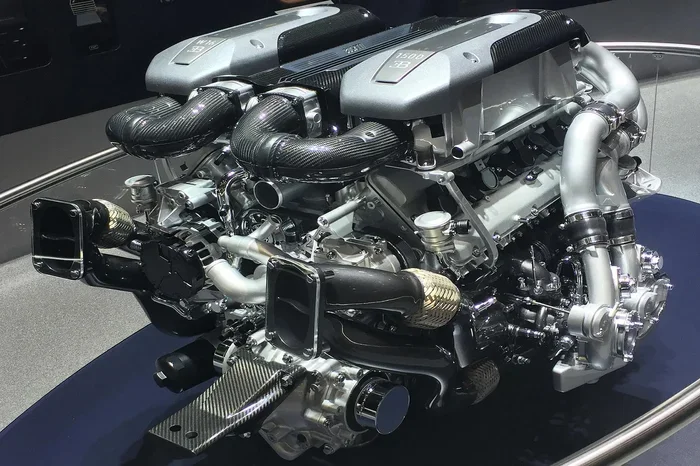
At the center of Bugatti quad-turbo technology is the W16 engine. This is not your typical engine. Most cars have four, six, or eight cylinders arranged in a straight line or a V shape. The W16 takes a completely different approach. It essentially combines two V8 engines into a single block, creating a 16-cylinder powerhouse that looks like the letter W when viewed from the end.
This engine architecture is incredibly compact for the amount of cylinders it packs. That compactness allows engineers to place four turbochargers in optimal positions around the engine block. Each turbo connects to a specific bank of cylinders, ensuring that exhaust gases are used as efficiently as possible.
The Bugatti Chiron is the most famous example of this engineering marvel. Its W16 engine with quad-turbo setup produces an astonishing 1,479 horsepower in its standard form. That is more power than most supercars produce in their entire engines. And it does it with a level of refinement that makes the car usable as a daily driver, not just a track toy.
Horsepower and Torque: The Numbers That Matter
Let us talk numbers because they tell the real story. The W16 quad-turbo engine delivers peak torque of over 1,100 pound-feet. To put that in perspective, that is enough twisting force to overwhelm most sports cars several times over.
Here is a quick look at the power figures across Bugatti models:
- Bugatti Chiron: 1,479 horsepower, 1,180 lb-ft of torque
- Bugatti Chiron Super Sport: 1,578 horsepower, 1,180 lb-ft of torque
- Bugatti Bolide: Over 1,800 horsepower, 1,180 lb-ft of torque
These numbers are not just for bragging rights. They translate directly into real-world performance. The quad-turbo system ensures that this enormous power is delivered smoothly and predictably. You get linear acceleration that builds and builds without any sudden surges or dips. That is the hallmark of expert engine tuning.
The exhaust system also plays a crucial role. Each turbocharger routes exhaust gases through carefully designed manifolds. This ensures that the energy from spent gases is captured and used to spin the next set of compressors. It is a continuous cycle of energy recycling that makes the whole system incredibly efficient.
The Engineering Behind Quad-Turbo Boost
Boost Pressure and Intercooling
Forced induction only works if the air entering the engine is dense and cool. When air gets compressed by a turbocharger, it heats up. Hot air is less dense, which means less oxygen per volume. That reduces combustion efficiency and can actually hurt performance. This is where the intercooler comes in.
Bugatti quad-turbo systems use advanced air-to-water intercoolers. These cool the compressed air before it enters the combustion chamber. The result is denser, cooler air that burns more efficiently. More efficient combustion means more power from the same amount of fuel. It also means the engine runs cooler, which extends its lifespan.
The boost pressure in a Bugatti quad-turbo system is carefully managed by an electronic control unit. This computer monitors dozens of sensors in real time. It adjusts the wastegate, which is the valve that regulates how much exhaust gas goes to each turbocharger. By fine-tuning boost pressure on the fly, the system maximizes performance in every driving condition.
Variable Geometry and Twin-Scroll Innovations
Bugatti does not rely on basic turbocharger designs. The quad-turbo system incorporates elements of variable geometry turbo technology. This means the internal components of each turbo can adjust their shape based on engine speed and load. At low RPMs, the turbo uses a smaller path to spool up quickly. At high RPMs, it opens up to allow maximum airflow.
Twin-scroll turbo design is another trick in Bugatti’s arsenal. In a traditional turbo, exhaust pulses from all cylinders can interfere with each other. A twin-scroll design separates these pulses so they do not clash. This reduces turbulence and improves the overall efficiency of the exhaust system.
These innovations work together to create a seamless power delivery experience. The driver never feels the turbos spooling up or kicking in. The power just appears, smooth and relentless. That is what separates Bugatti quad-turbo technology from simpler turbo setups found in other high-performance cars.
Combustion Efficiency at Extreme Levels
Getting more air into the engine is only half the battle. The fuel must be delivered at exactly the right moment and in the right amount. Bugatti uses direct fuel injection with extremely precise control. Each cylinder gets its own injector, and the system can adjust fuel delivery multiple times per combustion cycle.
The ignition timing is equally sophisticated. Spark plugs fire at the exact optimal moment to extract maximum energy from each combustion event. All of this is coordinated by the engine management system, which processes data faster than any human could.
The result is a combustion process that is almost perfectly efficient. Every drop of fuel contributes to forward motion. Every combustion event adds to the total horsepower output. This level of precision is what makes Bugatti quad-turbo engineering so impressive.
Real-World Performance Gains
Speed Records and Acceleration Feats
Numbers on a spec sheet are one thing. Real-world performance is another. Bugatti quad-turbo technology has proven itself on some of the most demanding stages in the automotive world. The Bugatti Chiron Super Sport 300+ hit a verified top speed of over 300 miles per hour. That milestone was made possible by the quad-turbo W16 engine delivering consistent power at extreme velocities.
Acceleration figures are equally staggering. The Bugatti Bolide, a track-focused variant, rockets from zero to 60 miles per hour in just 2.2 seconds. It hits 100 miles per hour in 4.4 seconds. These numbers belong in the realm of rocket ships, not road cars.
What makes these achievements possible is the way the quad-turbo system maintains boost pressure even at extreme engine speeds. Many turbocharged engines lose power as RPMs climb because the turbos cannot keep up. Bugatti’s system does not have this problem. The four turbos work in harmony to deliver peak power across a wide RPM band.
The Driving Experience
Beyond the numbers, the driving experience is what truly sets Bugatti apart. When you press the accelerator in a quad-turbo Bugatti, the response is immediate and ferocious. The car surges forward with a force that pins you to your seat. Yet the ride remains surprisingly refined and composed.
This is because the quad-turbo system eliminates the abrupt power spikes that plague some twin-turbo designs. The power builds in a smooth, linear fashion. You can modulate throttle input with surgical precision, even at full boost. This makes the car incredibly versatile, equally at home on a winding mountain road or a straight stretch of autobahn.
For high-performance driving enthusiasts, this predictability is invaluable. You can push the car hard without worrying about unpredictable surges or sudden loss of traction. The quad-turbo system delivers power in a way that inspires confidence, even at the limits of grip.
Maintaining Your Quad-Turbo System
Regular Inspection and Care
Owning a Bugatti with quad-turbo technology comes with responsibilities. These are not ordinary cars, and their engine systems require specialized care. Regular maintenance of the turbocharger system is essential to keep performance at its peak.
Here are the key maintenance tasks every Bugatti owner should stay on top of:
- Oil changes at strict intervals: Turbochargers spin at extremely high speeds. Clean oil keeps them lubricated and prevents premature wear.
- Intercooler inspections: Check for leaks, clogs, or damage that could reduce cooling efficiency.
- Exhaust system checks: Look for cracks, leaks, or corrosion in the exhaust manifolds and pipes.
- Wastegate function tests: Ensure the wastegate opens and closes properly to maintain correct boost pressure.
- Coolant system flushes: The intercooler relies on coolant circulation, so fresh coolant is critical.
Common Mistakes to Avoid
Even experienced car owners can make mistakes when it comes to maintaining a quad-turbo system. Here are some pitfalls to watch out for:
One common mistake is ignoring oil quality. Turbocharged engines are much more demanding on oil than naturally aspirated ones. Using low-grade or incorrect oil can lead to turbo failure. Always use the manufacturer-recommended oil and change it on schedule.
Another mistake is letting the car idle for too long after hard driving. Turbochargers get extremely hot during spirited use. Shutting the engine off immediately can cause heat soak, which damages turbo bearings. Let the car idle for a minute or two to allow the system to cool down properly.
Finally, do not neglect the electrical sensors that monitor the quad-turbo system. Faulty sensors can send incorrect data to the engine management unit, leading to poor performance or even engine damage. Have all diagnostics run regularly by a qualified technician.
Finding the Right Specialist
Not every mechanic is equipped to work on Bugatti quad-turbo systems. These engines require specialized knowledge and tools. When searching for a service provider, look for technicians who have specific experience with Bugatti and W16 engines.
A qualified specialist will understand the nuances of boost pressure calibration, turbo balance, and intercooler maintenance. They will also have access to the diagnostic equipment needed to read the complex data streams from the engine management system. Investing in the right care pays off in longevity and consistent performance.
The Future of Bugatti’s Turbo Engineering
What Comes Next for Quad-Turbo Technology?
Bugatti has always been at the forefront of automotive innovation. The quad-turbo system is no exception. As the automotive industry evolves, so does the technology that powers these extraordinary machines. The future of Bugatti turbo engineering promises even more power, better efficiency, and smarter systems.
One area of development is advanced variable geometry turbos. These systems can adjust the angle of the turbine blades in real time. This allows for even more precise control of boost pressure across the entire RPM range. The result would be even faster response and smoother power delivery.
Another exciting possibility is the integration of electric turbochargers. Electric motors could spin up the turbos even faster than exhaust gases alone. This would virtually eliminate any remaining turbo lag and provide instant boost from low RPMs. Bugatti has already hinted at electrified powertrains, and a hybrid quad-turbo system could be the next frontier.
Sustainability Without Sacrifice
The automotive world is moving toward electrification and stricter emissions standards. Bugatti faces the challenge of maintaining its legendary performance while adapting to these new realities. The quad-turbo system offers a path forward by maximizing the efficiency of combustion engines.
By squeezing every last bit of power from each combustion event, Bugatti can reduce fuel consumption and emissions without sacrificing the performance that defines the brand. Combined with mild hybrid systems or electric assist, future Bugatti models could set new standards for both speed and sustainability.
The company has also explored synthetic fuels and biofuels as alternative energy sources. These fuels can work with existing turbo systems, potentially allowing Bugatti to meet future regulations without completely redesigning their powertrains. The quad-turbo platform is flexible enough to adapt to these emerging technologies.
Setting the Standard for Automotive Engineering
Bugatti quad-turbo technology has influenced the entire supercar industry. Other manufacturers have taken note of how effectively four turbochargers can be used to maximize engine output. The principles of reduced lag, efficient boost management, and precise combustion control have become benchmarks for high-performance engineering.
As other brands develop their own multi-turbo systems, Bugatti continues to refine and improve its approach. Each new model pushes the boundaries further. The W16 quad-turbo engine remains the gold standard for forced induction in the automotive world. Its legacy will influence engine design for decades to come.
Conclusion
Bugatti quad-turbo technology represents the pinnacle of forced induction engineering. From the W16 engine block to the intercooler and exhaust system, every component works in perfect harmony to deliver extraordinary performance. The system eliminates turbo lag, maximizes combustion efficiency, and delivers power in a way that feels almost magical.
Whether you are marveling at the speed records or simply enjoying the smooth, linear acceleration on a weekend drive, the quad-turbo system is what makes it all possible. It is a testament to what happens when world-class engineers refuse to accept limitations and instead find new ways to push past them.
If you own a Bugatti or dream of owning one, understanding this technology gives you a deeper appreciation for what makes these cars so special. And if you are simply a fan of automotive excellence, Bugatti quad-turbo engineering is a fascinating story of innovation, precision, and relentless pursuit of perfection. The road ahead for this technology is bright, and the best is yet to come.
Frequently Asked Questions
What does quad-turbo mean on a Bugatti?
Quad-turbo means the engine uses four turbochargers instead of one or two. In Bugatti models, the W16 engine has four turbochargers that work together to force more air into the combustion chambers. This produces massive horsepower and torque while minimizing turbo lag and maximizing efficiency.
How much horsepower does a Bugatti quad-turbo engine produce?
The amount varies by model. The standard Bugatti Chiron produces 1,479 horsepower, while the Super Sport version reaches 1,578 horsepower. The track-focused Bolide pushes beyond 1,800 horsepower. All of these figures come from the quad-turbo W16 engine with carefully tuned boost pressure and combustion efficiency.
Is maintaining a quad-turbo Bugatti expensive?
Yes, maintaining a Bugatti with quad-turbo technology is significantly more expensive than maintaining a standard car. The turbochargers, intercooler, exhaust system, and engine management components all require specialized care. Regular oil changes, coolant flushes, and diagnostic checks are essential. However, proper maintenance ensures the system delivers peak performance for years.
Can you retrofit a quad-turbo system onto a different engine?
In theory, it is possible, but in practice it is extremely complex. A quad-turbo system is engineered specifically for the W16 engine architecture. The exhaust manifold design, intercooler placement, wastegate calibration, and engine management software are all custom-built for this configuration. Retrofitting would require extensive engineering and is not practical for most applications.
What makes Bugatti’s quad-turbo system different from other turbo setups?
Bugatti’s quad-turbo system uses four smaller turbochargers instead of fewer larger ones. This reduces turbo lag significantly and provides more consistent boost pressure across the RPM range. The system also incorporates variable geometry and twin-scroll designs, advanced intercooling, and precision fuel injection that work together for unmatched combustion efficiency and power delivery.
Will Bugatti continue to use quad-turbo technology in future models?
Bugatti has signaled that quad-turbo technology will remain a core part of its engineering philosophy. While the brand is exploring electrification and hybrid systems, the fundamentals of multi-turbo forced induction will likely continue to evolve. Future models may feature electric-assisted turbochargers or even more advanced variable geometry systems built on the proven quad-turbo foundation.
=== CONCLUSION ===
Bugatti quad-turbo technology is more than an engineering novelty. It is a revolution in how forced induction systems can deliver power, efficiency, and driving pleasure. From the W16 engine to the smallest wastegate, every element works together to create a supercar experience that is truly unmatched. Whether you are reading about it for knowledge or dreaming of owning one, the quad-turbo system represents the absolute best of what automotive engineering can achieve. Keep exploring, keep learning, and keep appreciating the machines that push the limits of what is possible on four wheels.