How Do I Know If My Mazda Has i-ELOOP Regeneration
Knowing if your Mazda has i-ELOOP regeneration is easier than you think. You can check your dashboard, owner manual, or vehicle badge to confirm. This smart system recovers energy and boosts fuel efficiency. Whether you drive a Mazda 3 or a CX-5, understanding i-ELOOP helps you get the most from your car.
Want to know if your Mazda has i-ELOOP regeneration? You have come to the right place. This guide will show you exactly how to check if your Mazda has the i-ELOOP system. We will cover dashboard signs, model compatibility, and what i-ELOOP does for your car. By the end, you will know everything about i-ELOOP regeneration and how it helps your Mazda run better.
i-ELOOP stands for Intelligent Energy Loop. It is a regenerative braking system made by Mazda. The system captures energy normally lost during braking. It then stores that energy in a capacitor. This stored power runs your car’s electronics. That means your engine does less work. The result? Better fuel economy and a smoother ride.
Many Mazda owners do not even know they have i-ELOOP. The system works quietly in the background. You might not notice it unless you look for the signs. This article will help you spot those signs. We will also cover which Mazda models come with i-ELOOP. Let us get started.
Key Takeaways
- Check your dashboard: Look for the i-ELOOP indicator light near the speedometer.
- Read your owner manual: It will clearly list i-ELOOP as a feature if your model has it.
- Look for the badge: Some Mazda models display an i-ELOOP badge on the trunk or rear.
- Know your model year: i-ELOOP became standard on many Mazda models starting in 2012.
- Listen and observe: A subtle buzzing sound or gauge movement can signal i-ELOOP is active.
- Check the fuse box: A dedicated i-ELOOP fuse confirms the system is factory-installed.
- Visit a Mazda dealer: They can run a diagnostic check to confirm i-ELOOP presence instantly.
📑 Table of Contents
- What Is i-ELOOP Regeneration in Mazda Vehicles?
- How to Check If Your Mazda Has i-ELOOP
- Which Mazda Models Support i-ELOOP?
- Signs That i-ELOOP Is Working in Your Mazda
- Benefits of i-ELOOP Regeneration for Mazda Owners
- Common i-ELOOP Problems and How to Fix Them
- i-ELOOP vs. Traditional Regenerative Braking Systems
What Is i-ELOOP Regeneration in Mazda Vehicles?
i-ELOOP regeneration is a clever technology. It turns wasted energy into useful power. When you slow down or brake, your car normally loses energy as heat. i-ELOOP captures that energy instead. It sends it to a special capacitor. The capacitor then powers things like your lights, audio system, and climate control.
This process is called regenerative energy recovery. It is the same idea used in hybrid cars. But Mazda made it work with traditional engines. That is what makes i-ELOOP so smart. It works with Skyactiv engines to improve fuel efficiency. You get the benefits without needing a full hybrid system.
How Does the i-ELOOP Capacitor Work?
The i-ELOOP capacitor is different from a regular car battery. A battery stores energy chemically. A capacitor stores energy electrically. This means the i-ELOOP capacitor can charge and discharge very fast. It responds quickly when you brake. Then it delivers power just as fast to your car’s systems.
The capacitor is usually located in the trunk area. It is a small, compact unit. It does not take up much space. But it makes a big difference in how your Mazda uses energy. Over time, the capacitor may lose some efficiency. That is normal. But it should last the life of the vehicle.
Why Does i-ELOOP Regeneration Matter?
Fuel economy is a big deal for most drivers. i-ELOOP helps you get more miles per gallon. It reduces the load on your engine. Your alternator does not have to work as hard. That means less drag on the engine. Less drag means better fuel efficiency. Studies show i-ELOOP can improve fuel economy by up to 10 percent in city driving.
Beyond fuel savings, i-ELOOP also reduces wear on your engine parts. Less strain on the alternator means fewer repairs over time. It is a win for your wallet and the environment.
How to Check If Your Mazda Has i-ELOOP
Checking for i-ELOOP is simple. You do not need special tools. You can do it at home in just a few minutes. There are several ways to confirm your Mazda has this feature. Let us walk through each method.
Method 1: Check the Dashboard Indicator
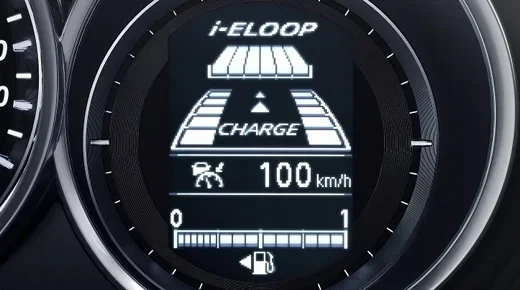
The easiest way to check is to look at your dashboard. When you start your Mazda, several lights come on briefly. Look for the i-ELOOP indicator. It usually looks like a small battery with a recycling symbol. If you see this light, your car has i-ELOOP regeneration.
The i-ELOOP dashboard light may also appear while driving. It shows up when the system is actively capturing energy. You might see it when you slow down or coast. If the light never appears, the system may not be present. Or it could be turned off. Check your settings if you are unsure.
Method 2: Read Your Owner Manual
Your owner manual is a goldmine of information. Open to the technology or features section. Look for mentions of i-ELOOP or regenerative braking. The manual will clearly state if your model has it. If you do not have the paper manual, check the digital version on the Mazda website.
Search for your specific model and year. The features list will include i-ELOOP if it is equipped. This is the most reliable method. The owner manual does not leave room for guesswork.
Method 3: Look for the i-ELOOP Badge
Some Mazda models have an i-ELOOP badge. Check the rear of your car. Look near the trunk or on the tailgate. The badge may be small. It usually has the i-ELOOP logo on it. Not all models have this badge. But if you see it, you have i-ELOOP.
You can also check inside the car. Look near the steering column or on the dashboard trim. Some models have a small i-ELOOP emblem there. It is an easy visual clue that saves you time.
Method 4: Check the Fuse Box
This method is for the more hands-on owner. Open your fuse box cover. Look for a fuse labeled i-ELOOP or regenerative brake. The label is usually printed on the fuse box diagram. If you see a dedicated i-ELOOP fuse, your car has the system.
Be careful when opening the fuse box. Make sure your car is turned off. If you are not comfortable, skip this method. The dashboard check and owner manual are safer options.
Method 5: Visit a Mazda Dealer
If you are still unsure, visit a Mazda dealer. They can run a diagnostic check on your car. The diagnostic tool will confirm if i-ELOOP is present. Dealers have access to detailed vehicle specs. This is the fastest and most accurate method. Best of all, the diagnostic check is usually free.
Bring your VIN number with you. The dealer can pull up your exact model details. You will know for sure within minutes. It is the most foolproof way to confirm i-ELOOP.
Which Mazda Models Support i-ELOOP?
Not every Mazda has i-ELOOP. The system is available on select models. It became standard on many Mazdas starting around 2012. But availability depends on your model, trim level, and year. Let us break it down.
Mazda 3 and i-ELOOP
The Mazda 3 was one of the first models to get i-ELOOP. Many 2012 and newer Mazda 3 models include it. The system is standard on most trims. It is especially common on the i-Tech and top-tier trims. If you drive a Mazda 3 from 2012 or later, there is a good chance you have i-ELOOP.
Mazda CX-5 and i-ELOOP
The Mazda CX-5 also features i-ELOOP on most models. The 2013 CX-5 was the first to include it. Since then, it has been standard on nearly all trims. The CX-5 is one of Mazda’s best-selling SUVs. Most owners benefit from i-ELOOP without even knowing it.
Mazda CX-9 and i-ELOOP
The Mazda CX-9 is a larger SUV. It also comes with i-ELOOP on most models from 2016 onward. The system works well with the CX-9’s turbocharged engine. It helps offset the fuel use of a bigger vehicle. If you drive a CX-9, check your dashboard for the i-ELOOP light.
Mazda 6 and i-ELOOP
The Mazda 6 sedan also supports i-ELOOP. Most models from 2013 onward include the system. It is standard on higher trims. The Mazda 6 is known for its smooth ride. i-ELOOP adds to that by improving fuel economy on long drives.
Other Mazda Models with i-ELOOP
Several other Mazda models include i-ELOOP. The Mazda CX-3, CX-30, and CX-50 all feature the system on select trims. The Mazda MX-5 Miata does not have i-ELOOP. It is a lightweight sports car with different priorities. Always check your specific model year and trim to be sure.
Signs That i-ELOOP Is Working in Your Mazda
So you think your Mazda has i-ELOOP. How do you know it is working? There are several signs to watch for. These clues tell you the system is active and doing its job.
The Dashboard Light Comes On During Braking
When you slow down or brake gently, the i-ELOOP light may turn on. This means the system is capturing energy. It is storing power in the capacitor. The light usually goes off when you accelerate again. This is normal behavior.
If the light stays on constantly, something may be wrong. Check for error codes. A persistent light could indicate a capacitor issue. Visit a mechanic if the light does not turn off.
You Notice Improved Fuel Economy
One of the best signs of i-ELOOP is better fuel economy. Keep an eye on your trip meter. Compare your mileage before and after noticing i-ELOOP signs. You may see a small but steady improvement. City driving benefits the most from i-ELOOP. Stop-and-go traffic is where the system shines.
Your Electronics Run Smoothly
i-ELOOP powers your car’s electronics. If the system is working, your lights and audio stay strong. You may notice less battery drain when the engine is off. Your climate control and power steering also benefit. Smooth operation of these systems is a good sign.
You Hear a Subtle Buzzing Sound
Some Mazda owners report a soft buzzing sound. This happens when i-ELOOP is actively charging the capacitor. The sound is very quiet. You may only notice it in silence. It usually comes from the trunk area. Do not worry. This is normal and means the system is working.
Benefits of i-ELOOP Regeneration for Mazda Owners
i-ELOOP offers real benefits for Mazda drivers. Let us look at the key advantages. These are the reasons Mazda developed this system in the first place.
- Better Fuel Economy: i-ELOOP reduces engine load. This directly improves your miles per gallon. Over time, the savings add up at the pump.
- Less Engine Wear: The alternator works less. That means less strain on engine components. Your Mazda lasts longer with less maintenance.
- Smoother Electronics: The capacitor provides stable power. Your lights, radio, and screens work better. No flickering or dimming when braking.
- Eco-Friendly Driving: i-ELOOP reduces fuel consumption. Less fuel burned means fewer emissions. It is a greener way to drive.
- No Charging Needed: Unlike hybrid batteries, the capacitor self-charges. You never need to plug in your car. The system works automatically every time you drive.
- Better Resale Value: Mazdas with i-ELOOP are more desirable. Buyers love fuel-efficient features. Your car holds its value better.
Common i-ELOOP Problems and How to Fix Them
i-ELOOP is a reliable system. But like any car feature, it can have issues. Knowing common problems helps you address them quickly.
The i-ELOOP Light Stays On
A constantly lit i-ELOOP light can mean a capacitor problem. The capacitor may be failing or fully discharged. In most cases, a simple reset fixes the issue. Turn off your car and wait 30 seconds. Restart and see if the light clears. If it does not, visit a Mazda service center.
Reduced Fuel Economy
If you notice worse fuel economy, i-ELOOP may not be working. A faulty capacitor cannot store energy properly. The system may be disabled to protect itself. Have a mechanic check the capacitor and related wiring. Replacing the capacitor is usually affordable.
Electrical Gremlins
If your lights flicker or your audio cuts out, check i-ELOOP. A weak capacitor cannot power electronics well. This is especially noticeable when idling at traffic lights. A new capacitor usually solves these issues fast.
Warning Messages on the Dashboard
Some Mazdas display a warning message about i-ELOOP. The message may say “i-ELOOP System Malfunction.” Do not panic. This is usually a sensor issue. A dealer diagnostic can pinpoint the exact cause. Most fixes are simple and inexpensive.
Quick Tips for i-ELOOP Owners:
- Keep your capacitor connections clean and tight.
- Avoid fully draining your car battery. It affects i-ELOOP performance.
- Drive smoothly to maximize energy recovery.
- Have i-ELOOP checked during regular Mazda service visits.
- Do not ignore warning lights. Address them early.
i-ELOOP vs. Traditional Regenerative Braking Systems
i-ELOOP is not the only regenerative braking system out there. Hybrid cars like the Toyota Prius use a similar concept. But there are key differences. Understanding these helps you appreciate what makes i-ELOOP unique.
Traditional hybrid systems use a battery pack. They store recovered energy in large, heavy batteries. These batteries are expensive to replace. They also add weight to the car. i-ELOOP uses a small capacitor instead. The capacitor is lighter and cheaper. It also charges and discharges faster than a battery. This makes i-ELOOP more responsive.
Another difference is simplicity. i-ELOOP works with a standard gasoline engine. You do not need a plug-in hybrid setup. It is a bolt-on system that fits seamlessly into Mazda’s design philosophy. This is why Mazda calls it “smart” energy recovery.
Common Mistakes to Avoid with i-ELOOP:
- Do not ignore the i-ELOOP warning light.
- Do not assume all Mazda models have it.
- Do not confuse i-ELOOP with a hybrid battery.
- Do not skip regular maintenance checks.
- Do not drive aggressively if you want to maximize i-ELOOP benefits.
Expert Insight from Mazda Engineers:
Mazda designed i-ELOOP to be invisible to the driver. You should not have to think about it. The system works in the background, making your car more efficient every time you brake. The best thing you can do is drive normally and let i-ELOOP do its job. Trust the system. It has been refined over years of development and real-world testing.
Key Takeaways to Remember:
- Check your dashboard for the i-ELOOP light to confirm the system is present.
- Your owner manual is the most reliable source for i-ELOOP information.
- Most Mazda models from 2012 onward support i-ELOOP regeneration.
- The system uses a capacitor, not a traditional battery, for energy storage.
- i-ELOOP improves fuel economy, especially in city and stop-and-go driving.
- Common issues like a stuck warning light are usually easy and affordable to fix.
- Regular Mazda service visits keep your i-ELOOP system running at its best.
Now you know how to check if your Mazda has i-ELOOP regeneration. The process is simple and does not require a trip to the shop. Start with your dashboard light and owner manual. Those two steps answer the question for most Mazda owners. If you still have doubts, a dealer visit will give you a definitive answer.
i-ELOOP is one of Mazda’s smartest innovations. It makes your daily drive more efficient without any extra effort from you. Whether you have a Mazda 3, CX-5, or CX-9, the system works quietly to save fuel and reduce wear. Take a moment to confirm your Mazda has it. Then enjoy the benefits of smarter, greener driving with i-ELOOP regeneration.
Frequently Asked Questions
What does the i-ELOOP light look like on a Mazda dashboard?
The i-ELOOP indicator looks like a small battery icon with a circular arrow around it. It is usually located near the speedometer or on the instrument cluster. When the system is active, the light glows green or blue. A red or flashing light means there is a problem that needs attention.
Can I add i-ELOOP to a Mazda that does not have it?
No, i-ELOOP is a factory-installed system. It requires specific wiring, a capacitor, and integration with the car’s electronics. Retrofitting i-ELOOP is not practical or recommended. If your Mazda does not have it, consider other ways to improve fuel economy like gentle driving and regular maintenance.
Does i-ELOOP work with all Mazda Skyactiv engines?
i-ELOOP works with most Skyactiv engines. However, availability depends on your specific model and trim level. Newer Skyactiv engines are more likely to include i-ELOOP as standard. Check your vehicle features list or ask a Mazda dealer to confirm compatibility.
How often does the i-ELOOP capacitor need to be replaced?
The i-ELOOP capacitor is designed to last the life of the vehicle. Most owners never need to replace it. However, capacitors can degrade over very high mileage. If you notice electrical issues or a persistent i-ELOOP warning light, have a technician inspect the capacitor. Replacement cost is usually reasonable.
Is i-ELOOP the same as regenerative braking in hybrid cars?
The concept is similar, but the technology differs. Hybrid cars use a large battery pack to store recovered energy. i-ELOOP uses a small capacitor instead. The capacitor charges and discharges faster. It is lighter and simpler. Both systems recover energy during braking, but i-ELOOP is designed for conventional gasoline engines.
Will i-ELOOP regeneration void my Mazda warranty?
No, i-ELOOP is a factory feature. Using it as designed will not void your warranty. In fact, Mazda encourages drivers to benefit from the system. If you experience i-ELOOP problems, have them diagnosed at an authorized Mazda dealer. This ensures your warranty coverage remains intact.
=== CONCLUSION ===
i-ELOOP regeneration is a great feature that many Mazda owners overlook. Now you know exactly how to check if your Mazda has it. You can look at the dashboard, read the owner manual, or visit a dealer. The system is simple, effective, and works automatically every time you drive. It captures wasted energy and turns it into real fuel savings.
Take a few minutes today to confirm whether your Mazda has i-ELOOP. The knowledge empowers you to get the most from your vehicle. Whether you drive a compact Mazda 3 or a spacious CX-9, i-ELOOP works hard for you in the background. Drive smart, maintain your car, and enjoy the benefits of Mazda’s intelligent energy recovery system.