How to Get Approved for a Car Lease Without Stress
How to Get Approved for a Car Lease is an essential topic that provides valuable insights.
Key Takeaways
- Check your credit score first: Knowing your score before applying helps you set realistic expectations and prepare accordingly.
- Gather documents early: Having proof of income, residence, and ID ready speeds up the lease application process significantly.
- Boost your approval odds: A larger down payment, a co-signer, and lower debt all improve your chances of getting approved for a car lease.
- Compare lease options carefully: Look beyond the monthly payment and consider total cost, mileage limits, and fees.
- Avoid common mistakes: Read the fine print, do not ignore fees, and never rush into signing without understanding the terms.
- Pre-approval gives you power: Getting pre-approved before visiting a dealer puts you in a stronger negotiating position.
- Plan for lease-end: Understanding your options at the end of the lease helps you avoid surprises and extra costs.
📑 Table of Contents
Understanding the Car Lease Approval Process
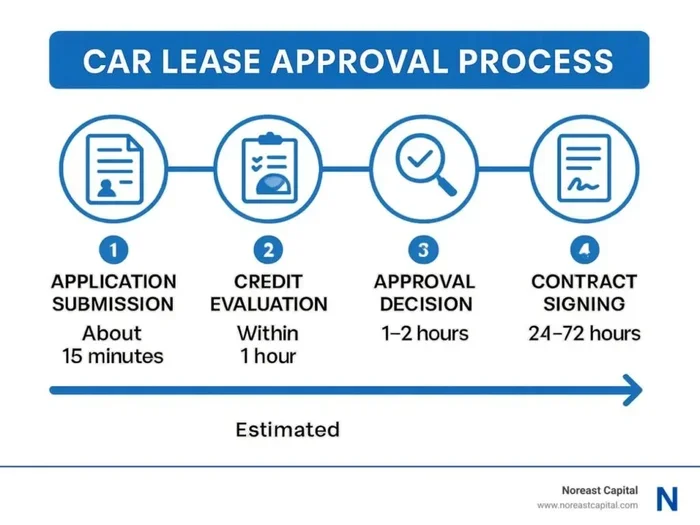
Before you apply for anything, it helps to understand how the approval process actually works. When you lease a car, the lender (often called the lessor) evaluates your financial profile. They want to know if you can make consistent monthly payments. Think of it like a rental agreement for a vehicle, but with more paperwork.
What Lenders Look At
Leasing companies review several factors before approving your application. Here are the main ones:
- Credit score — This is the biggest factor. Most lenders prefer a score of 670 or higher.
- Income stability — They want proof that you earn enough to cover the monthly payment and living expenses.
- Debt-to-income ratio — This compares what you owe to what you earn. Lower is always better.
- Employment history — A steady job signals reliability to lenders.
- Existing credit accounts — They check your credit utilization and payment history on current accounts.
Understanding these factors puts you ahead of most applicants. You will walk into the dealership knowing exactly what they are evaluating.
Check Your Credit Score Before Applying
Your credit score is the single most important piece of the puzzle. It determines whether you get approved, and it influences your interest rate. A higher score means better lease terms and lower payments. So before you fill out any application, pull your credit report and check for errors.
What Credit Score Do You Need for a Lease?
Different lenders have different thresholds, but here is a general breakdown:
- 720+ — Excellent. You will likely qualify for the best rates and offers.
- 680–719 — Good. You should get approved with competitive terms.
- 620–679 — Fair. Approval is possible, but expect higher interest rates.
- Below 620 — Subprime. You may need a co-signer or a special finance program.
If your score is lower than you hoped, do not panic. There are real steps you can take to improve it before applying. Paying down existing debt, catching up on late payments, and keeping credit utilization below 30 percent all help. Even a 20-point improvement can make a meaningful difference in your lease approval odds.
Quick Tip
Check your credit report for free at AnnualCreditReport.com. Dispute any errors immediately. A single removed negative item can boost your score significantly.
Gather the Right Documents
Lenders want proof, not promises. Having your documents ready speeds up the lease application process and shows lenders you are organized. Here is what you typically need:
- Proof of income — Pay stubs from the last 30 days or your most recent tax return.
- Proof of residence — A utility bill or lease agreement in your name.
- Driver’s license — A valid government-issued ID.
- Bank statements — Usually the last two to three months.
- References — Some lenders ask for personal or professional references.
Having these ready before you visit the dealer gives you a huge advantage. You will feel more confident, and the process will move faster. Think of it like packing a suitcase before a trip — when everything is ready, the journey goes smoothly.
Boost Your Chances of Lease Approval
Even if your credit is not perfect, there are several strategies you can use to improve your odds. These practical steps make a real difference and show lenders you are a low-risk borrower.
1. Make a Larger Down Payment
A bigger down payment reduces the risk for the lender. It also lowers your monthly payment. While you do not always need a down payment, putting money down — even a few hundred dollars — can strengthen your application significantly.
2. Get Pre-Approved
Lease pre-approval means a lender reviews your finances before you shop. You walk into the dealership already approved, which gives you negotiating power. It also saves time and prevents surprises at the final stage.
3. Choose a Shorter Lease Term
Shorter lease terms (24–36 months) often come with easier approval. Lenders see shorter commitments as less risky. Plus, you get to drive a new car more frequently, which many people love.
4. Consider a Co-Signer
If your credit score is on the lower side, a co-signer with strong credit can help you get approved. The co-signer agrees to pay if you cannot. This is a common path for first-time lessees or those rebuilding credit.
5. Keep Your Debt Low
Paying down existing debt before applying improves your debt-to-income ratio. Lenders love to see that you are not stretched thin. Even paying off a small credit card balance can shift the numbers in your favor.
Expert Insight
According to industry experts, applicants who prepare at least 30 days before applying see higher approval rates. Use that time to check your credit, reduce debt, and gather documents. Preparation is the secret weapon in the lease approval process.
Compare Lease Options to Find the Best Fit
Not all leases are created equal. Different vehicles, terms, and dealers offer different conditions. Comparing your options helps you find a lease that fits your budget and lifestyle. Here is a quick comparison of popular lease options:
| Lease Option | Typical Term | Avg. Monthly Payment | Best For |
|---|---|---|---|
| Compact Sedan | 36 months | $250–$350 | Daily commuters |
| SUV | 36 months | $350–$500 | Families |
| Luxury Sedan | 36 months | $500–$800 | Premium comfort |
| Truck | 36 months | $400–$600 | Work or outdoor use |
| Electric Vehicle | 36 months | $300–$450 | Eco-conscious drivers |
As you compare, pay attention to more than just the monthly payment. Look at the total cost over the lease, the mileage limit, and any fees at lease-end. A low monthly payment sounds great, but a strict lease mileage limit could cost you extra if you drive a lot.
Key Lease Terms to Understand
- Residual value — This is what the car is expected to be worth at the end of the lease. Higher residual values mean lower payments.
- Money factor — This is like the interest rate on a lease. Lower is better.
- Mileage allowance — Most leases allow 10,000–15,000 miles per year. Overage fees apply if you go over.
- Wear and tear — Normal use is fine, but excessive damage can lead to charges at lease-end.
- Gap insurance — This covers the difference between what you owe and what the car is worth if it gets totaled.
Common Mistakes to Avoid
Many applicants make avoidable errors during the lease process. Here are the biggest ones:
- Not reading the fine print — Always review every detail of the lease terms before signing.
- Ignoring fees — Acquisition fees, disposition fees, and early termination charges add up fast.
- Underestimating mileage — Choose a mileage limit that matches your real driving habits.
- Skipping gap insurance — This protection can save you thousands if something goes wrong.
- Rushing the decision — Take your time. The best car lease deals come to those who compare.
What Happens After You Get Approved
Congratulations — your lease approval is in hand! Now what? The next steps are straightforward but important. First, review the final lease terms carefully. Make sure everything matches what was discussed. Double-check the monthly payment, the lease length, and the mileage allowance.
Next, you will sign the lease agreement. This is a legally binding contract, so do not feel pressured to sign on the spot if you need time to review. Once signed, you can pick up your vehicle and start enjoying it. Remember to keep up with your payments on time, maintain the vehicle properly, and stay within the mileage limit to avoid extra charges.
Tips for a Smooth Lease Experience
- Set up automatic payments to avoid missed due dates.
- Keep a maintenance log for all service appointments.
- Document any existing damage when you pick up the car.
- Plan ahead for lease-end options like purchase or return.
- Contact your lessor early if you anticipate any payment issues.
Following these simple steps keeps your car lease experience positive from start to finish. A little effort upfront saves you headaches down the road.
Final Thoughts on Getting Approved for a Car Lease
The car lease approval process is simpler than most people think. You do not need perfect credit, and you do not need to be a financial expert. What you do need is preparation, patience, and a clear understanding of what lenders expect.
Start by checking your credit score and addressing any issues. Gather your documents, compare your options, and never rush into a deal you do not fully understand. Whether you are a first-time lessee or someone looking to switch vehicles, the steps in this guide will help you navigate the process with confidence.
Getting approved for a car lease without stress is entirely possible. Use the tips and strategies in this article, and you will be well on your way to driving a great vehicle on favorable terms. The road to lease approval starts with a single step — and now you know exactly how to take it.
Frequently Asked Questions
What credit score do you need to lease a car?
Most lenders prefer a credit score of 670 or higher for a standard car lease. However, some dealers work with applicants who have scores as low as 620. The higher your score, the better the interest rates and lease terms you will qualify for. If your score is below 670, consider improving it before applying or finding a co-signer.
Can I lease a car with no credit history?
Yes, but it is more challenging. Lenders have no credit history to evaluate, so they rely heavily on your income and employment stability. You may need a co-signer or a larger down payment. Some dealerships offer special programs for first-time lessees that focus on alternative financial factors.
How long does the lease approval process take?
Most lease approvals take between one and three business days. If you have all your documents ready, the process can be even faster. Pre-approval can cut the wait time further, since the lender has already reviewed your finances before you visit the dealership.
What is the difference between a lease and a loan?
With a car lease, you pay to use the vehicle for a set period and return it at the end. With a loan, you borrow money to purchase the vehicle outright. Lease payments are typically lower because you are only paying for vehicle depreciation during the lease term, not the full purchase price.
Do I need gap insurance for a lease?
Gap insurance is highly recommended for any car lease. It covers the difference between what you owe on the lease and what the car is actually worth if it gets stolen or totaled. Without gap insurance, you could be stuck paying for a vehicle you no longer have. Many lease terms include gap coverage automatically, but always verify this before signing.
Can I get out of a car lease early?
Yes, but early lease termination usually comes with penalties. These fees can be expensive, sometimes equal to the remaining lease payments plus additional charges. If you think you might need to end the lease early, look for leases with flexible terms or discuss early termination options with the dealer before signing.
=== CONCLUSION ===
Getting approved for a car lease without stress is within your reach. By understanding the process, checking your credit, gathering the right documents, and comparing your options, you set yourself up for success. The car lease journey does not have to be overwhelming — with the right preparation, it can be smooth and even enjoyable.
Remember to avoid the common pitfalls, take advantage of pre-approval, and never rush a decision you are not fully comfortable with. Your dream vehicle is closer than you think, and the right lease approval is just a few smart steps away. Start today, and drive away in the car you deserve.