Is 5W-40 Better Than 5W-30 Here Is the Real Answer
Is 5W-40 better than 5W-30? The answer depends on your engine type, driving habits, and climate. Both oils offer distinct advantages in protection, fuel economy, and thermal stability. This guide breaks down the real differences so you can choose the right oil with confidence.
Is 5W-40 better than 5W-30? Many car owners ask this question when choosing engine oil. The answer is not a simple yes or no. It depends on your engine type, driving habits, and climate. Both oils have their place. The right choice protects your engine and improves performance. This guide will help you decide.
Engine oil is the lifeblood of your vehicle. It reduces friction, cools components, and prevents sludge buildup. The numbers on the bottle tell you how the oil behaves at different temperatures. Understanding those numbers is the first step. Let us break it down in plain language.
Key Takeaways
- 5W-40 oil excels in high-mileage and older engines: It provides a thicker protective film at operating temperature, reducing engine wear.
- 5W-30 oil boosts fuel economy: Its thinner viscosity reduces drag, making it ideal for modern fuel-efficient engines.
- Manufacturer recommendation is king: Always check your owner’s manual before switching oil weights.
- 5W-40 performs better in hot climates and towing: It maintains viscosity under extreme heat and heavy loads.
- Cold starts favor 5W-30: The lower viscosity allows faster oil flow during winter mornings.
- Mixing oils is generally safe in emergencies: But regular use of a mismatched blend can affect engine protection.
📑 Table of Contents
Understanding Oil Viscosity Numbers
Viscosity refers to a fluid’s resistance to flow. Think of honey versus water. Honey has high viscosity. Water has low viscosity. Engine oil works the same way. The numbers on the label describe its thickness at cold and hot temperatures.
What Do the Numbers Mean?
The first number, followed by the letter W, measures cold-temperature viscosity. W stands for winter. A lower number means the oil flows more easily in cold conditions. The second number measures viscosity at operating temperature. A higher number means the oil stays thicker when the engine is hot.
For example, 5W-30 oil flows well in winter but thins out at high heat. 5W-40 oil shares the same cold-flow ability but remains thicker at operating temperature. This difference shapes how each oil protects your engine.
Cold Weather vs. Hot Engine Performance
Cold starts are the most stressful moment for any engine. When you turn the key, oil must reach critical components fast. A 5W-30 oil delivers quick lubrication in chilly mornings. A 5W-40 oil also flows well but may take a fraction of a second longer to reach the top of the engine.
Once the engine warms up, oil temperature rises dramatically. In hot climates or during heavy towing, the oil faces thermal breakdown. A higher viscosity number like 40 offers better thermal stability. It resists thinning and maintains a protective film. This is why many drivers prefer 5W-40 oil for summer driving.
5W-30 vs. 5W-40: The Core Differences
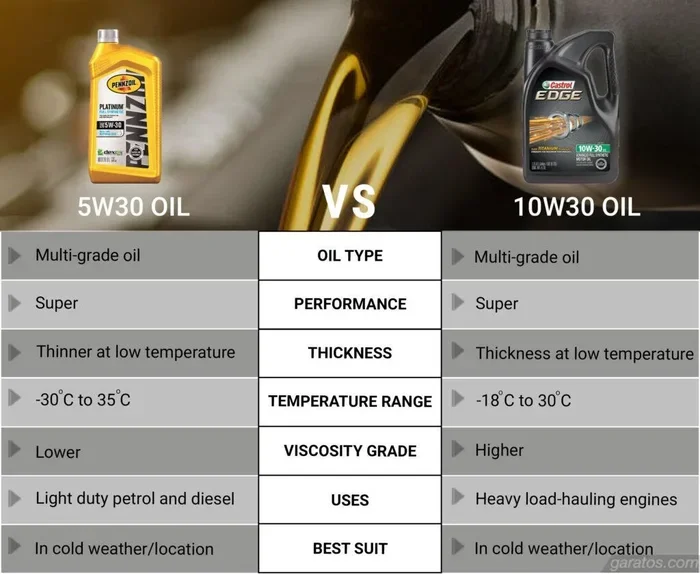
The core difference lies in the oil’s behavior at operating temperature. Both oils start the same way in cold weather. They flow easily during cold starts. But once the engine reaches full operating temperature, their paths diverge. Let us compare them side by side.
| Feature | 5W-30 Oil | 5W-40 Oil |
|---|---|---|
| Viscosity at Operating Temperature | Thinner | Thicker |
| Fuel Economy Impact | Better (less drag) | Slightly lower |
| Engine Protection at High Heat | Good | Excellent |
| Cold Start Flow | Excellent | Excellent |
| Best Suited For | Modern engines, cold climates | Older engines, hot climates, towing |
| Typical Oil Change Interval | 5,000–7,500 miles | 5,000–7,500 miles |
Viscosity at Operating Temperature
At 100°C (212°F), 5W-30 oil has a lower dynamic viscosity than 5W-40 oil. In simple terms, it is thinner. This thinner film reduces internal friction. Less friction means the engine does not work as hard. The result is better fuel economy and slightly improved acceleration.
However, a thinner film also means less cushioning between metal parts. In engines with wider bearing clearances, this can lead to increased engine wear. That is where 5W-40 oil shines. Its thicker film fills those gaps and provides a robust buffer. It is like choosing a firm mattress versus a soft one. Both comfort you, but the firm one supports heavy weight better.
Fuel Economy Impact
Fuel economy matters to most drivers. A thinner oil like 5W-30 reduces parasitic drag inside the engine. The crankshaft and camshaft spin with less resistance. Over thousands of miles, this adds up to real savings at the pump. Many modern cars are engineered specifically for 5W-30 oil to maximize efficiency.
On the other hand, 5W-40 oil creates slightly more drag. The difference is small, often less than 1–2% in fuel economy. For most drivers, that is barely noticeable. But if you drive a lot of highway miles, those small savings can add up. Still, protection should always come before a few cents per gallon.
When to Choose 5W-40 Over 5W-30
Not every engine benefits from a thinner oil. Certain conditions and engine types demand the extra protection of a higher viscosity. Here are the scenarios where 5W-40 oil is the better choice.
High-Mileage and Older Engines
As engines age, they develop tiny clearances between moving parts. Piston rings wear, cylinder walls develop micro-scoring, and gaskets may seep. A high-mileage engine often burns oil and runs slightly looser. In these cases, a thicker oil like 5W-40 oil helps reduce blow-by and oil consumption.
It also provides a stronger protective layer on worn bearing surfaces. Think of it as adding extra padding to an old pair of shoes. The cushioning may not be perfect, but it prevents further damage. If your car has over 100,000 miles, consider switching to 5W-40 for better engine protection.
Turbocharged and Performance Vehicles
Turbocharged engines run hotter than naturally aspirated ones. The turbocharger spools up and pushes hot air into the intake. This heat transfers to the oil. A 5W-40 oil with high thermal stability handles this heat without breaking down as quickly.
Performance vehicles also demand consistent oil pressure under hard driving. A thinner 5W-30 oil may thin out too much during track days or sustained high-speed driving. 5W-40 oil maintains its viscosity and keeps the turbocharger bearings properly lubricated. If you drive a European car with a turbo, check if the manufacturer recommends 5W-40 oil.
Hot Climates and Towing
Living in a desert climate means your engine regularly operates at extreme temperatures. The oil sump can reach 120°C or more during summer traffic. In such conditions, 5W-30 oil may become too thin and lose its protective film. 5W-40 oil resists thermal breakdown and keeps your engine safe.
Towing a trailer or hauling heavy loads puts immense stress on the engine. The oil temperature rises faster and stays elevated. A thicker oil film prevents metal-to-metal contact under these heavy loads. If you tow boats, trailers, or RVs, 5W-40 oil offers peace of mind during long summer hauls.
Quick Tip: If you live in a hot climate and drive in stop-and-go traffic, consider switching to 5W-40 oil. Monitor your oil temperature gauge if your vehicle has one. Consistently high readings are a sign that a thicker oil may help.
When 5W-30 Is the Better Choice
5W-30 oil is the most popular viscosity worldwide. It suits a wide range of modern engines. Here are the situations where it is the clear winner.
Modern Fuel-Efficient Engines
Car manufacturers design today’s engines with tight tolerances. They use precision-machined bearings and advanced materials. These engines are optimized for a thinner oil like 5W-30. Using a thicker oil can actually reduce efficiency and increase fuel consumption.
Many automakers explicitly state 5W-30 oil in the owner’s manual. Following this recommendation ensures your warranty remains valid. It also keeps the engine running as the engineers intended. If you drive a newer sedan, SUV, or crossover, stick with 5W-30 unless the manual says otherwise.
Cold Weather Advantages
In regions with harsh winters, cold starts are a daily challenge. The oil thickens overnight and must pump through narrow passages quickly. 5W-30 oil flows faster than 5W-40 oil during a cold start. This reduces wear on the starter motor and battery.
Faster oil circulation means your engine reaches full lubrication sooner. Less wear occurs during the critical first 30 seconds of operation. If you live in a northern state or Canada, 5W-30 oil is often the smarter seasonal choice. It keeps your engine happy even on the coldest mornings.
Expert Insight: Some drivers believe thicker oil always means better protection. This is a myth. Modern engines are designed with specific oil weights in mind. Using the wrong viscosity can cause more harm than good. Always trust the manufacturer’s recommendation first.
Manufacturer Recommendations and Common Mistakes
The owner’s manual is your best friend when choosing engine oil. It contains the manufacturer’s exact recommendation for oil weight and specification. Ignoring this advice can lead to poor performance or even engine damage. Let us explore why this matters so much.
Checking Your Owner’s Manual
Open your owner’s manual to the maintenance section. Look for the recommended oil viscosity. It might say something like “Use 5W-30 engine oil meeting API SP specification.” This is not a suggestion. It is an engineering requirement based on thousands of hours of testing.
If the manual says 5W-30, use 5W-30. If it says 5W-40, use 5W-40. Some vehicles offer a range, such as 0W-20 or 5W-30. In those cases, choose the one that matches your driving conditions. When in doubt, contact your local dealer. They can confirm the correct oil weight for your specific engine.
Common Mistakes People Make
Many drivers make avoidable errors when selecting engine oil. Here are the most common mistakes and how to avoid them.
- Ignoring the manual: Choosing oil based on a friend’s advice or online forum can lead to the wrong viscosity. Always check the manual first.
- Assuming higher viscosity equals better protection: A thicker oil does not always mean better protection. It can increase drag and reduce fuel economy in engines designed for thinner oil.
- Overlooking oil change intervals: No matter which oil you choose, sticking to the recommended oil change interval is crucial. Old oil loses its viscosity index and protective additives.
- Switching oil weights without reason: If your engine runs fine on 5W-30, there is no need to switch to 5W-40. Consistency is key for engine longevity.
- Using conventional oil in high-performance engines: Many turbocharged and performance engines require full synthetic oil. Conventional oil may break down too quickly under high heat.
Final Verdict: Which Oil Is Right for You?
So, is 5W-40 better than 5W-30? The honest answer is neither is universally better. Each oil serves a specific purpose. 5W-40 oil is better for older engines, turbocharged vehicles, hot climates, and towing. It provides superior thermal stability and a robust protective film at high temperatures.
5W-30 oil is better for modern fuel-efficient engines, cold climates, and daily commuting. It reduces friction, improves fuel economy, and flows quickly during cold starts. The best oil is the one that matches your engine’s design and your driving conditions.
Always start with the manufacturer’s recommendation. If you have a high-mileage vehicle and notice increased oil consumption, consider switching to 5W-40 oil. If you drive a newer car in a moderate climate, stick with 5W-30. When in doubt, consult a trusted mechanic. They can assess your engine’s condition and suggest the right oil weight.
Engine protection should always be your top priority. Choose the oil that keeps your engine running smoothly for years to come. Whether you pick 5W-30 or 5W-40, regular oil changes and quality products will keep your engine healthy.
Now you have the real answer. Use this knowledge to make an informed decision at your next oil change. Your engine will thank you.
Frequently Asked Questions
Can I use 5W-40 instead of 5W-30 in my car?
In an emergency, yes. But long-term use of the wrong viscosity can affect engine performance. Always check your owner’s manual first. If the manual recommends 5W-30, stick with it for best results.
Is 5W-40 better for high-mileage engines?
Yes, 5W-40 oil is often better for high-mileage engines. Its thicker film helps reduce oil consumption and protects worn bearing surfaces. It provides extra cushioning in engines with wider clearances.
Does 5W-40 reduce engine wear better than 5W-30?
At high operating temperatures, 5W-40 oil maintains a thicker protective layer. This can reduce engine wear in hot climates or during heavy towing. In normal driving conditions, both oils provide excellent wear protection when used as recommended.
Will 5W-40 hurt my fuel economy?
Slightly, yes. A thicker oil creates more internal drag. The difference is usually less than 2% in fuel economy. For most drivers, this is negligible. The trade-off is better engine protection under extreme heat and load.
What happens if I mix 5W-30 and 5W-40 oil?
Mixing them in an emergency is generally safe. The resulting blend will have a viscosity somewhere between the two. However, regular mixing is not recommended. It is best to stick with one oil weight for consistent engine protection.
Is 5W-40 good for cold weather?
Yes, the 5W rating means it flows well in cold temperatures. However, 5W-30 oil flows slightly faster during a cold start. In very cold climates, 5W-30 may offer a minor advantage in immediate lubrication.