When to Shift With Paddle Shifters for Better Control
Knowing when to shift with paddle shifters gives you real control over your car’s power and speed. Paddle shifters let you manually change gears in an automatic car without touching a clutch pedal. This guide covers the exact moments to upshift, downshift, and use paddle shifters for a better driving experience. You will learn practical tips, common mistakes, and expert techniques that work on any road.
Paddle shifters have changed the way people drive cars. What once belonged only to race cars and sports vehicles is now found in many everyday models. If you have ever sat behind the wheel and wished you could take more control, when to shift with paddle shifters is a question worth answering. This guide breaks down the right moments, the wrong moments, and everything in between. You will learn how to use paddle shifters like a pro, even if you have never tried them before.
Many drivers own cars with paddle shifters and never touch them. That is a missed opportunity. Knowing when to shift with paddle shifters can make your drives smoother, safer, and more fun. Whether you are cruising on the highway, winding through mountain roads, or just trying to overtake a slow truck, the right gear change makes all the difference. Let us dive into the details and help you get the most out of your car.
The beauty of paddle shifters is their simplicity. You do not need a third pedal. You do not need to learn a whole new system. Just tap the left paddle to downshift and the right paddle to upshift. But simple does not mean you should guess. Timing matters. Gear selection matters. And understanding your car’s shift points makes all the difference between a jerky ride and a silky smooth one.
Key Takeaways
- Upshift at 2,500–3,500 RPM for the best balance of power and fuel efficiency.
- Downshift before a turn to set up the right gear for exiting the curve smoothly.
- Use paddle shifters for highway overtaking to get instant acceleration without waiting for the car to decide.
- Avoid holding the paddle too long — a quick tap is all you need for most shifts.
- Engine braking works best with downshifts on downhill roads, saving your brake pads.
- Paddle shifters work in automatic and semi-automatic transmissions — they are not the same as a full manual gearbox.
📑 Table of Contents
What Are Paddle Shifters and How Do They Work?
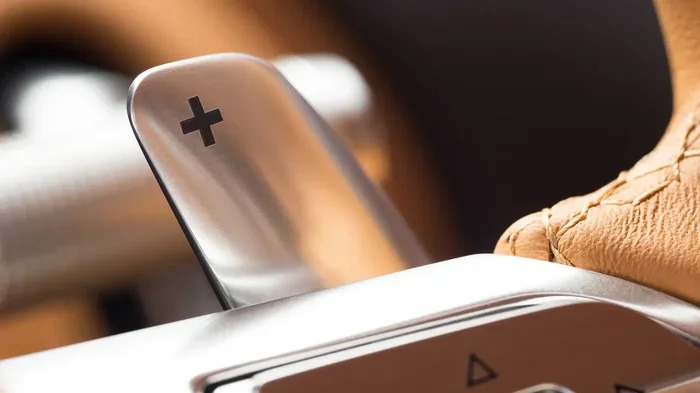
Paddle shifters are small levers located behind the steering wheel. One is usually on the left side of the steering column, and one is on the right. Pull the left paddle to go to a lower gear. Pull the right paddle to go to a higher gear. That is the basic idea. But there is more going on under the hood than most people realize.
How Paddle Shifters Connect to Your Transmission
Most cars with paddle shifters use an automatic transmission or a semi-automatic transmission. When you pull a paddle, the car’s computer receives a signal and changes the gear for you. There is no clutch pedal involved. The torque converter or clutch pack handles the connection between gears. This means you get the feel of a manual transmission without the hassle of managing a clutch.
Some systems respond almost instantly. Others may have a slight delay. The speed of response depends on the car’s make, model, and year. High-performance vehicles tend to have faster systems. Economy cars may have a slower response. Either way, the principle stays the same. You request a gear change, and the car delivers.
Manual Mode vs Automatic Mode
Most cars with paddle shifters have a manual mode you can switch into. In automatic mode, the car decides when to shift. In manual mode, you take over. You can stay in a gear as long as you want. You can force a downshift before a curve. You can hold a lower gear for more power. Knowing when to shift with paddle shifters means knowing when to stay in manual mode and when to let the car handle things on its own.
Here are a few quick tips for switching between modes:
- Use manual mode when you want more control, such as on steep roads or during overtaking.
- Use automatic mode for daily driving, city traffic, and relaxed cruising.
- Most cars will return to automatic mode if you do not shift for a period of time.
- Some cars have a sport mode that changes shift points and makes the car more responsive.
When to Upshift With Paddle Shifters
Upshifting means moving to a higher gear. It reduces engine speed and lets the car cruise more efficiently. But when exactly should you upshift? The answer depends on your driving situation, your car, and your goals.
Understanding RPM Limits for Upshifting
Every engine has a sweet spot. For most cars, that sweet spot is between 2,000 and 3,500 RPM. Upshifting with paddle shifters in this range gives you a good balance of power and fuel economy. If you wait too long and let the RPM climb above 4,000, you waste fuel and put extra strain on the engine. If you shift too early, below 1,500 RPM, the engine may lug and feel sluggish.
Here is a simple way to think about it. Imagine your engine is a person running. At low RPM, the person is walking. At mid-range RPM, the person is jogging comfortably. At very high RPM, the person is sprinting and will get tired fast. You want to keep the person jogging — not walking, not sprinting.
Quick Tips for Smooth Upshifts
- Watch your tachometer (RPM gauge) and upshift when you reach 2,500–3,000 RPM for normal driving.
- Lift off the throttle slightly before pulling the upshift paddle. This reduces stress on the gears.
- Do not hold the paddle — a quick tap is enough. Holding it may cause the car to skip multiple gears.
- Match your speed to the gear — if you are in too high a gear for your speed, the engine will strain.
Quick Tip: If you are unsure when to upshift, listen to your engine. A high-pitched whining sound usually means it is time to shift up. A low, strained rumble means you are in too high a gear.
When to Downshift With Paddle Shifters
Downshifting is the opposite of upshifting. You move to a lower gear, which increases engine RPM and gives you more power. Downshifting is one of the most important skills for paddle shifter drivers. Done right, it makes your car more responsive and safer. Done wrong, it can cause wear and a jerky ride.
The Art of Engine Braking
One of the best reasons to downshift is engine braking. When you let off the gas pedal, the engine slows the car down naturally. But when you downshift, you increase that effect. This is especially useful on downhill roads. Instead of riding the brakes, which can cause them to overheat, you use engine braking to control your speed.
When to shift with paddle shifters for a downshift is simple: do it before you need the extra power or braking force. For example, if you are approaching a steep downhill, downshift a gear or two before the slope starts. This gives the engine time to respond and gives you better control from the start.
Common Mistakes to Avoid When Downshifting
Many drivers make mistakes when downshifting. Here are the most common ones:
- Downshifting at too high a speed. This can cause the engine to rev violently and may damage the transmission over time.
- Downshifting without braking first. Always slow down with the brakes before downshifting. The paddle shifter changes gears, not speed.
- Holding the downshift paddle too long. A single quick pull is usually enough. Holding it may cause the car to skip gears or shift roughly.
- Downshifting into the wrong gear. Make sure you are pulling the left paddle the right number of times. Going from sixth gear straight to second gear is a bad idea.
Expert Insight: Professional drivers use a technique called rev matching when downshifting. This means briefly blip the throttle while pulling the downshift paddle. It matches the engine speed to the wheel speed, making the shift smooth and reducing wear on the drivetrain.
Best Driving Situations for Paddle Shifter Use
Paddle shifters are not just for racing tracks. They are useful in many real-world driving situations. Knowing when to shift with paddle shifters in everyday driving can improve your safety, comfort, and fuel economy.
Highway Overtaking
When you need to pass a slow-moving vehicle on the highway, you want instant power. In automatic mode, the car may hesitate or take a moment to decide to downshift. By pulling the right paddle to downshift yourself, you get an immediate surge of torque. The engine RPM rises, and the car accelerates faster. This is one of the most practical uses of paddle shifters in daily driving.
Here is how to do it safely:
- Check your mirrors and blind spots.
- Press the accelerator firmly to signal your intent to pass.
- Pull the right paddle to downshift one or two gears.
- Accelerate smoothly through the overtaking lane.
- Once you have cleared the vehicle, upshift back to your cruising gear.
Mountain Driving and Curves
Winding mountain roads are where paddle shifters truly shine. When you approach a curve, you want to be in the right gear before you turn. Downshifting before the curve gives you better control and lets the engine provide power right when you need it for exiting the turn.
Using paddle shifters on mountain roads also helps with engine braking. On long descents, downshifting to a lower gear keeps your speed in check without overworking the brake pads. This is safer and extends the life of your braking system.
City Traffic and Stop-and-Go Driving
In heavy city traffic, paddle shifters may not seem useful at first. But they can help in specific moments. For example, if you are creeping forward in traffic and need a small burst of power to merge, a quick downshift gives you that response. Similarly, if you are on a slight incline and need to hold your position, staying in a lower gear prevents the car from rolling.
However, in stop-and-go traffic, it is often better to let the car stay in automatic mode. Constantly shifting gears in slow traffic can be tiring and does not always provide a benefit. Use paddle shifters selectively in the city, not constantly.
Paddle Shifters vs Traditional Manual Transmission
Many people wonder how paddle shifters compare to a traditional manual transmission. Both give you control over gear selection, but they work very differently. Here is a closer look at the key differences.
| Feature | Paddle Shifters | Manual Transmission |
|---|---|---|
| Clutch Pedal | Not needed | Required |
| Gear Selection | Paddles behind steering wheel | Gear stick on center console |
| Ease of Use | Very easy — just tap a paddle | Requires coordination of clutch and gear |
| Shift Speed | Fast, computer-assisted | Depends on driver skill |
| Best For | Drivers who want control without complexity | Purists who want full mechanical control |
| Fuel Efficiency | Good to excellent | Good, depends on driver skill |
| Learning Curve | Low — easy to pick up | Moderate to high |
The main advantage of paddle shifters is convenience. You get the feel of a manual transmission without the complexity of a clutch pedal. For most drivers, this is the perfect middle ground. You get control when you need it and automatic convenience the rest of the time.
Expert Tips for Mastering Paddle Shifter Shifting
Once you understand the basics, you can start refining your technique. These expert tips will help you get the most out of your paddle shifters and make every drive better.
Timing Your Shifts Perfectly
Timing is everything when it comes to shifting with paddle shifters. A well-timed shift feels seamless. A poorly timed shift can be jerky and uncomfortable. Here is how to get the timing right:
- Pay attention to the sound of your engine. A smooth, steady hum means you are in the right gear. A strained or whining sound means it is time to shift.
- Use the tachometer as your guide. Most drivers upshift between 2,500 and 3,500 RPM and downshift when RPM drops below 1,500.
- Anticipate road conditions. Look ahead and plan your shifts. If you see a curve coming, downshift before you enter it, not during it.
- Practice on empty roads. Find a quiet stretch of road and experiment with different shift points. This builds your intuition and timing.
Using Sport Mode and Driving Modes
Many modern cars come with multiple driving modes, such as Eco, Normal, Sport, and Sport+. Each mode changes how the car responds to paddle shifter inputs. In Sport mode, the car holds gears longer and responds more aggressively to your paddle taps. In Eco mode, the car may limit your ability to shift manually or may shift earlier to save fuel.
Here is how to use driving modes with paddle shifters:
- Sport mode is great for spirited driving, mountain roads, and overtaking. It makes the car more responsive to your shift inputs.
- Eco mode is ideal for daily commuting and highway cruising. It prioritizes fuel efficiency over sporty feel.
- Custom or Individual modes in some cars let you set your own shift preferences. This is the best option for enthusiasts who want full control.
Common Mistakes to Avoid
Even experienced drivers make mistakes with paddle shifters. Here are the ones to watch out for:
- Shifting too aggressively. Rapid, forceful paddle taps can cause harsh shifts that wear on the transmission over time.
- Shifting into a gear that is too low for your speed. This can cause the engine to rev extremely high and may trigger the rev limiter.
- Forgetting to return to automatic mode. Some drivers leave the car in manual mode and forget it. This can lead to the engine over-revving if you are not paying attention.
- Using paddle shifters as a substitute for good brakes. Paddle shifters control gears, not speed. Always use your brakes to slow down first.
Expert Insight: The best paddle shifter drivers think ahead. They look two or three cars ahead, read the road, and plan their shifts before they need them. This proactive approach makes every drive smoother and safer.
Key Takeaways
- Upshift at 2,500–3,500 RPM for the best balance of power and fuel efficiency.
- Downshift before a turn to set up the right gear for exiting the curve smoothly.
- Use paddle shifters for highway overtaking to get instant acceleration without waiting for the car to decide.
- Avoid holding the paddle too long — a quick tap is all you need for most shifts.
- Engine braking works best with downshifts on downhill roads, saving your brake pads.
- Paddle shifters work in automatic and semi-automatic transmissions — they are not the same as a full manual gearbox.
- Match your driving mode to your situation — Sport for performance, Eco for efficiency, Normal for everyday driving.
Conclusion
Knowing when to shift with paddle shifters is a skill that transforms your driving experience. It gives you more control, better responsiveness, and a deeper connection to your car. Whether you are upshifting for fuel efficiency, downshifting for engine braking, or using paddle shifters to overtake on the highway, the right gear change makes all the difference.
The key is practice and awareness. Pay attention to your RPM, listen to your engine, and think ahead about the road. Over time, shifting with paddle shifters becomes second nature. You will not even think about it — you will just do it, and your drives will be better for it.
Start small. Try using paddle shifters on your next drive. Focus on one technique at a time, like smooth downshifts before curves or quick downshifts for overtaking. As you build confidence, you will discover just how much fun and control paddle shifters can add to your daily driving. The road ahead is yours to take control of.
Frequently Asked Questions
Can you use paddle shifters in any automatic car?
Not all automatic cars have paddle shifters. They are most commonly found in sport models, turbocharged vehicles, and cars with semi-automatic or automatic transmissions that offer a manual mode. Check your car’s manual or look behind the steering wheel to see if paddle shifters are present.
Is it bad to shift with paddle shifters too often?
No, it is not bad at all. Modern cars with paddle shifters are designed to handle frequent manual shifts. The car’s computer protects the transmission from damage. However, shifting too aggressively or at extreme RPM levels can cause unnecessary wear over a very long period.
Do paddle shifters save fuel?
They can, if you use them wisely. By upshifting early and staying in the right gear ratio for your speed, you can improve fuel efficiency. However, if you constantly hold the engine at high RPM, you will use more fuel. The key is to shift at the right shift points for optimal efficiency.
Can you shift with paddle shifters while braking?
Yes, you can. The car’s computer allows you to pull the paddle while applying the brakes. In fact, downshifting while braking is a common and effective technique, especially when approaching a turn or slowing down on a downhill slope. Just make sure to brake first and shift second for the smoothest result.
What happens if you shift into too low a gear at high speed?
If you shift into a gear that is too low for your speed, the engine RPM will spike dramatically. Most modern cars have a rev limiter that will cut engine power to prevent damage. However, doing this repeatedly can cause excessive wear on the engine and transmission components over time.
Are paddle shifters the same as a manual transmission?
They are similar in that both give you control over gear selection, but they are not the same. Paddle shifters work with an automatic transmission and do not require a clutch pedal. A traditional manual transmission requires you to operate a clutch pedal and a gear stick. Paddle shifters offer a simpler, more convenient way to get manual-like control.
=== CONCLUSION ===
Knowing when to shift with paddle shifters is one of the most useful skills you can develop as a driver. It puts you in charge of your car’s performance and gives you a more engaging, responsive driving experience. From highway overtaking to mountain descents, the right gear change at the right moment makes everything better. Practice the techniques in this guide, pay attention to your car’s feedback, and you will quickly see the difference. Your car has the tools — now it is your turn to use them.