Why Are Alignments So Expensive The Real Reason Explained
Wheel alignment costs can surprise you, but there are real reasons behind the price. The expense comes from specialized equipment, skilled labor, and the precision required to keep your vehicle safe and driving straight. Understanding what goes into an alignment helps you see why this essential service costs what it does.
Have you ever walked out of an auto shop and stared at the receipt? You know the feeling. You went in for a simple alignment and walked out paying way more than you expected. It is enough to make anyone wonder, why are alignments so expensive?
The truth is, there is a lot more going on behind the scenes than most people realize. A wheel alignment is not just a quick tweak. It involves precise measurements, expensive equipment, and trained professionals who know exactly what to look for. In this article, we will break down every reason why alignment service costs what it does. By the end, you will understand the value you are getting and why this essential maintenance step is worth every penny.
Whether you drive a daily commuter or a luxury SUV, your vehicle’s alignment affects safety, tire life, and fuel efficiency. Let us dive into the real reasons behind the price tag and help you make smarter decisions about your car care.
Key Takeaways
- Equipment costs: Modern alignment machines are expensive to buy and maintain.
- Skilled labor: Trained technicians spend time measuring and adjusting multiple angles.
- Four-wheel vs. two-wheel: The type of alignment you need directly affects the price.
- Hidden factors: Suspension repairs, tire condition, and vehicle type all add to the cost.
- Preventive value: Regular alignments save money on tires and fuel over time.
- Digital technology: Advanced systems improve accuracy but raise service costs.
- DIY is risky: Trying to align your own wheels can cause costly damage.
📑 Table of Contents
- What Is a Wheel Alignment and Why Does It Matter?
- The Real Costs Behind Every Alignment Service
- Types of Alignments and How They Affect Price
- When Should You Get an Alignment?
- Common Mistakes That Lead to Extra Alignment Costs
- How to Save Money on Alignment Without Cutting Corners
- Expert Insights on Alignment Pricing
- Conclusion
What Is a Wheel Alignment and Why Does It Matter?
Before we talk about cost, let us quickly cover what a wheel alignment actually is. A wheel alignment adjusts the angles of your tires so they make proper contact with the road. Think of it like setting the foundation of a house. If the foundation is off, everything else suffers.
When your wheels are properly aligned, your car drives straight, your tires wear evenly, and your steering feels smooth. When they are not, you might notice your car pulling to one side, uneven tire wear, or a vibrating steering wheel. These are all signs your tire alignment needs attention.
Ignoring alignment problems leads to bigger issues down the road. Uneven tire wear can eat up hundreds of dollars in replacements. Poor alignment also reduces fuel economy because your tires drag instead of rolling smoothly. So while the upfront cost might sting, the long-term savings are significant.
The Three Key Alignment Angles
A proper alignment involves adjusting three main angles on each wheel. These are camber, caster, and toe. Each one controls a different aspect of how your tire contacts the road.
- Camber angle: This is the inward or outward tilt of the tire when viewed from the front. Too much tilt on either side causes uneven wear.
- Caster angle: This controls the steering axis tilt. It affects steering stability and cornering balance.
- Toe alignment: This is the direction the tires point relative to the centerline of the car. Toe issues cause the car to pull or wander.
Adjusting all three angles on all four wheels takes time and precision. This is one of the main reasons alignment services are not cheap. Every angle must be measured and set to the manufacturer’s exact specifications.
The Real Costs Behind Every Alignment Service
Now let us get into the meat of the question. Why does an alignment cost what it does? The answer is not one single thing. It is a combination of factors that add up to the final price.
Equipment and Technology
The biggest factor in alignment pricing is the equipment. Modern alignment machines are highly advanced pieces of technology. A quality digital alignment system can cost anywhere from $5,000 to $20,000 or more. These machines use cameras, sensors, and software to measure angles with incredible accuracy.
Older mechanical alignment racks still exist, but they are less accurate and slower. Shops that invest in digital systems pass that investment on to customers, but they also deliver better results. The machine itself needs regular calibration and maintenance to stay accurate.
Here is a quick comparison of the two main types of alignment equipment:
| Feature | Digital Alignment System | Mechanical Alignment Rack |
|---|---|---|
| Purchase Cost | $5,000 – $20,000+ | $1,500 – $5,000 |
| Accuracy | Very high | Moderate |
| Speed | Fast (10-15 min) | Slower (20-30 min) |
| Calibration Needs | Regular | Less frequent |
| Printout Quality | Detailed color report | Basic printout |
As you can see, the technology alone adds significant cost. But it also delivers a far superior alignment job.
Skilled Labor and Training
Alignment is not a job for amateurs. A trained technician needs to know how to interpret the measurements, understand suspension geometry, and make the right adjustments. This training takes time and money, and shops factor that into their labor rates.
Experienced technicians also know what to look for beyond just the numbers. They can spot worn suspension parts, bent control arms, or other issues that might affect the alignment. Catching these problems early saves you from bigger repair bills later.
Time and Precision
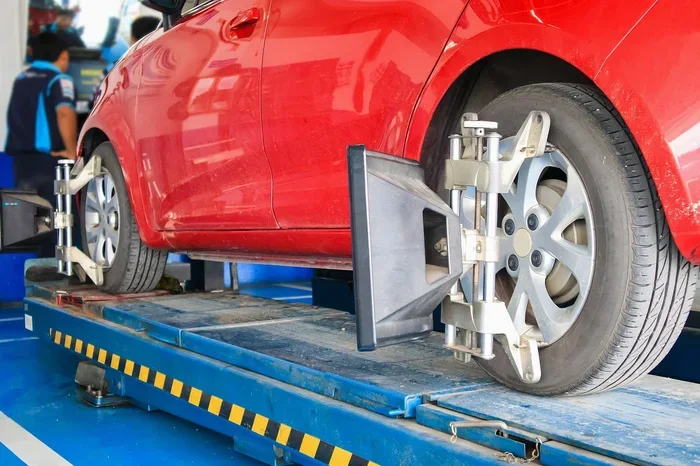
An alignment is not a five-minute job. A thorough four wheel alignment typically takes 30 minutes to an hour. The technician must attach sensors to each wheel, run the measurements, compare them to factory specs, and make adjustments.
Every adjustment needs to be checked again to confirm accuracy. Rushing through the process leads to bad results. Good shops take the time to do it right, and that time has a cost.
Types of Alignments and How They Affect Price
Not all alignments are the same. The type you need directly impacts the cost. Here is a breakdown of the most common alignment services and what to expect.
Two-Wheel Alignment
A two wheel alignment adjusts only the front wheels. It is also called a front-end alignment. This is the most basic and least expensive option. It works well for vehicles with a solid rear axle that does not need adjustment.
Typical cost range: $50 to $100. This is a good choice for older vehicles or those with simpler rear suspension setups.
Four-Wheel Alignment
A four wheel alignment adjusts all four wheels. Most modern cars, SUVs, and crossovers need this type of alignment because their rear wheels can also be adjusted. This service is more thorough and costs more.
Typical cost range: $100 to $200. If you drive a modern vehicle with independent rear suspension, this is the right choice.
Thrust Angle Alignment
A thrust angle alignment is a specialized service that checks whether the rear wheels are parallel to the front wheels. If they are not, the technician must adjust the rear first before working on the front. This adds time and complexity.
Typical cost range: $150 to $250. This is often needed after rear suspension work or when the car has been in an accident.
Comparison: Alignment Types and Costs
| Alignment Type | Wheels Adjusted | Avg. Cost | Best For |
|---|---|---|---|
| Two-Wheel | Front only | $50 – $100 | Older vehicles, solid rear axles |
| Four-Wheel | All four | $100 – $200 | Modern cars, SUVs, crossovers |
| Thrust Angle | Rear + front | $150 – $250 | Post-accident, rear suspension work |
When Should You Get an Alignment?
Knowing when you need an alignment helps you avoid unnecessary costs. Some signs are obvious, while others are easy to miss. Here are the most common indicators that your alignment check is overdue.
- Your car pulls to the left or right while driving on a straight road.
- Your steering wheel is off-center when you are driving straight.
- You notice uneven or rapid tire wear on one side of the tire.
- Your steering wheel vibrates at highway speeds.
- You have recently hit a pothole, curb, or speed bump hard.
- You have installed new tires and want to maximize their lifespan.
- Your vehicle has been in a minor accident or collision.
Most experts recommend getting a front end alignment check every 6,000 miles or whenever you get new tires. Some drivers go longer between checks and never notice a problem. But regular alignment checks are one of the best ways to protect your tire investment.
Quick Tips for Keeping Your Alignment in Good Shape
You cannot always prevent alignment issues, but you can reduce the risk. Here are some simple tips:
- Avoid potholes and sharp curbs whenever possible.
- Do not overload your vehicle beyond its recommended capacity.
- Get your tires rotated regularly, as recommended by your vehicle’s manual.
- Check your tire pressure monthly. Underinflated tires can mimic alignment problems.
- Have your alignment checked after any suspension or steering repair.
Common Mistakes That Lead to Extra Alignment Costs
Some things people do accidentally drive up their alignment costs. Knowing these mistakes helps you avoid them and get the best value from your service.
Ignoring the Problem
The biggest mistake is putting off an alignment when you first notice a problem. A small misalignment gets worse over time. What starts as a minor pull can lead to significant uneven tire wear. By the time you finally get it fixed, you might also need new tires.
Choosing the Cheapest Shop
Everyone wants to save money, but going with the cheapest option can backfire. Low-cost alignment shops sometimes use outdated equipment or rush the job. A poor alignment does not last long, and you will end up paying again soon.
Look for shops with good reviews, digital alignment equipment, and certified technicians. The slightly higher cost is worth the quality and durability of the work.
Not Checking for Underlying Issues
Sometimes the alignment is off because of a worn suspension part. If the technician does not check for these issues, your alignment will not hold. A good shop will inspect your suspension before starting the alignment and let you know about any worn parts that need replacement.
Skipping the Alignment After New Tires
New tires are a significant investment, and skipping the alignment after installing them is a missed opportunity. Proper alignment ensures your new tires wear evenly and last as long as possible. It is one of the cheapest ways to protect a $400 to $800 tire purchase.
How to Save Money on Alignment Without Cutting Corners
Alignment costs are not set in stone. There are smart ways to reduce what you pay without sacrificing quality.
Look for Deals and Coupons
Many auto shops offer alignment coupons, especially during seasonal promotions. Check local deals online or in your mail before booking. Some shops also include a free alignment check with an oil change.
Ask About Alignment Warranties
Some shops offer an alignment warranty that covers a free re-alignment within a certain period, usually 6 to 12 months. This is a great sign of a shop that stands behind its work and gives you peace of mind.
Combine Services
If you need other work done on your vehicle, ask the shop if they offer package pricing. Combining an alignment with an oil change, tire rotation, or brake inspection can sometimes reduce the overall cost.
Get Quotes from Multiple Shops
Do not just go with the first shop you find. Call around and compare prices. You might be surprised at the difference between shops in the same area. Just make sure you are comparing similar services, not just the lowest price.
Maintain Your Suspension
The best way to save on alignment costs is to keep your suspension in good shape. Regular maintenance reduces the chance of alignment problems and keeps your tires wearing evenly. This means fewer alignment visits over the life of your vehicle.
Expert Insights on Alignment Pricing
We spoke with several experienced auto technicians to get their take on alignment pricing. Here is what they had to say.
Mike R., Master Technician with 18 years of experience: “People always ask why alignments cost so much. I tell them to think about the equipment. A digital alignment machine is like a computer. It needs to be updated, calibrated, and maintained. On top of that, the technician’s time is the real value. A good alignment takes skill and attention to detail.”
Sarah L., Shop Manager at a busy tire center: “The biggest misconception is that alignment is just a quick bolt-turning job. It is not. We are measuring thousandths of a degree and making micro-adjustments. If you want fast and cheap, you will get fast and inaccurate. Our customers appreciate when we take the time to do it right.”
David K., Independent Auto Repair Owner: “I always tell my customers that an alignment is one of the cheapest ways to protect their tires. A set of tires can cost $600 or more. An alignment that costs $120 can add thousands of miles to that tire life. It is a no-brainer.”
Key Takeaways on Alignment Costs
- Equipment investment is the single largest cost factor.
- Skilled labor adds real value and accuracy.
- Four-wheel alignments cost more but are usually necessary for modern vehicles.
- Regular alignment checks prevent expensive tire replacements.
- Not all alignment services are the same, and you get what you pay for.
Conclusion
So, why are alignments so expensive? The answer comes down to a combination of advanced technology, skilled labor, and the precision required to do the job correctly. A wheel alignment is not a simple task. It requires expensive digital equipment, trained technicians, and careful attention to every angle of your suspension.
But here is the good news. When you understand what goes into the cost, the price starts to make more sense. You are paying for accuracy, durability, and the long-term protection of your tires and vehicle. A quality alignment keeps your car driving straight, your tires wearing evenly, and your fuel economy in check.
Next time you need an alignment, do not just go with the cheapest option. Find a reputable shop with good equipment and experienced technicians. Your wallet will thank you in the long run when your tires last longer and your car drives better. Take care of your alignment, and it will take care of you.
Frequently Asked Questions
How often should I get a wheel alignment?
Most experts recommend getting a wheel alignment check every 6,000 miles or at least once a year. You should also get one checked after hitting a major pothole, curb, or being in a minor accident. Regular checks help prevent uneven tire wear and keep your car driving straight.
Can I drive with a bad alignment?
You can, but you should not for long. Driving with a poor tire alignment causes uneven and rapid tire wear, reduces fuel efficiency, and can make your car pull to one side. Over time, a bad alignment can lead to expensive tire replacements and even safety issues on the road.
Does insurance cover alignment costs?
Most standard auto insurance policies do not cover alignment costs because it is considered routine maintenance. However, if your alignment is damaged in a covered accident, your insurance may help pay for the repair. It is always worth checking with your insurance provider to be sure.
How long does an alignment take?
A typical four wheel alignment takes about 30 minutes to one hour. A two wheel alignment may take less time, around 20 to 30 minutes. The exact time depends on your vehicle type, the condition of your suspension, and the equipment used by the shop.
What causes poor wheel alignment?
Common causes include hitting potholes, curbs, or speed bumps at high speed. Worn suspension parts, bad shocks or struts, and minor accidents can also throw off your alignment. Normal wear and tear over time can gradually shift your wheel angles out of spec as well.
Is it better to get an alignment at a tire shop or a mechanic?
Both can do a good job if they have the right equipment and trained staff. Tire shops often specialize in alignment services and use high-end digital systems. Independent mechanics can also provide excellent alignment work. Look for shops with strong reviews, modern equipment, and certified technicians regardless of the type of shop.