The Ultimate Guide to 1 64 Scale Cars for Collectors
1/64 scale cars are among the most popular miniature diecast models in the world. Collectors love them for their incredible detail, affordability, and wide variety of vehicles. Whether you are a beginner or a seasoned collector, this guide covers everything you need to know about 1/64 scale cars, from top brands and types to grading, valuing, and building your dream collection.
There is something magical about holding a tiny, perfectly detailed car in the palm of your hand. 1/64 scale cars capture the spirit of real vehicles in a compact, affordable package. They sit on shelves, fill display cases, and bring joy to collectors of all ages around the globe.
If you have ever wondered what makes these little models so special, you are in the right place. This guide walks you through everything you need to know about 1/64 scale diecast cars. From understanding scale and brands to building and valuing your collection, we have you covered.
Whether you are just starting out or looking to deepen your knowledge, the tips and insights here will help you become a more confident and successful collector. Let us dive in.
Key Takeaways
- 1/64 scale cars are miniature diecast models that are roughly 2.5 to 3 inches long, making them perfect for display and collection.
- Hot Wheels and Matchbox are the two biggest brands, but there are many other high-quality manufacturers to explore.
- Understanding scale measurements and grading standards helps you make informed purchasing decisions.
- Limited edition and vintage models can hold or increase their value over time.
- Proper storage and display protect your collection and keep it looking great for years.
- Starting a collection is affordable, and you can build a impressive set on any budget.
- Common mistakes like ignoring condition and buying from unreliable sellers can hurt your collection’s value.
📑 Table of Contents
What Are 1/64 Scale Cars?
1/64 scale cars are miniature replicas of real vehicles. The scale means that every inch on the model represents 64 inches on the actual car. This results in a small but highly detailed figure that typically measures between 2.5 and 3 inches in length.
These models are made from diecast metal, which gives them a solid, premium feel. Unlike plastic toys, diecast 1/64 scale models feature metal bodies, chrome accents, and realistic paint finishes. This combination of durability and detail is why they are so beloved by collectors.
Understanding Scale Measurements
Scale can be confusing at first, but it is actually quite simple. A 1/64 scale model means the real car is 64 times larger than the replica. For comparison, a full-size car that is 16 feet long would be about 3 inches long in 1/64 scale.
Here are some common scale sizes for reference:
- 1/64 scale — approximately 2.5 to 3 inches long. The most popular size for diecast cars.
- 1/43 scale — approximately 4 to 5 inches long. Larger and more detailed, but also more expensive.
- 1/18 scale — approximately 8 to 12 inches long. Highly detailed display models.
- 1/87 scale — approximately 1.5 to 2 inches long. Popular for HO scale model railroads.
The 1/64 size hits a sweet spot. It is small enough to collect many models without taking up too much space, yet large enough to showcase fine details like opening doors, detailed interiors, and realistic wheels.
Why 1/64 Scale Is So Popular
Several factors make 1/64 scale cars the go-to choice for millions of collectors worldwide.
- Affordability: Most models cost between a few dollars and twenty dollars, making collecting accessible to everyone.
- Variety: Hundreds of different car models, colors, and editions are available in this scale.
- Portability: Their small size makes them easy to store, transport, and display.
- Detail: Modern diecast replicas feature impressive levels of accuracy and craftsmanship.
- Nostalgia: Many collectors grew up playing with 1/64 diecast cars and continue the hobby into adulthood.
Top Brands and Manufacturers
The world of 1/64 scale cars is dominated by a handful of major brands. Each brand brings its own style, quality level, and target audience. Knowing the differences helps you choose the right models for your collection.
Hot Wheels
Hot Wheels is arguably the most famous name in diecast cars. Created by Mattel in 1968, Hot Wheels revolutionized the toy car industry. The brand is known for its flashy designs, vibrant colors, and fast-paced racing themes.
Hot Wheels produces thousands of 1/64 scale models each year. Their lineup includes everything from cartoonish fantasy cars to highly accurate replicas of real vehicles. Some editions are mass-produced and very affordable, while others are rare and highly sought after by collectors.
Key highlights of Hot Wheels include:
- Over 50 years of continuous production
- Thousands of unique castings and designs
- Special editions like the Treasure Hunts and Conventions series
- Wide availability in toy stores, online shops, and specialty retailers
- Strong collector community with active trading and selling markets
Matchbox
Matchbox is the other giant in the 1/64 scale diecast world. Created by Lesney Products in 1953, Matchbox predates Hot Wheels by 15 years. The brand got its name because the first models were sold in boxes that looked like matchboxes.
Matchbox cars are known for their realistic, understated designs. They focus on accurately representing real-world vehicles rather than flashy fantasy models. This makes them especially popular among collectors who value authenticity.
Popular Matchbox series include:
- The Mainline series — their flagship line with detailed models
- The Superfast series — models with low-friction wheels for faster play
- The Vintage series — retro-styled models that appeal to nostalgia collectors
- The Premium series — higher-end models with enhanced detail
Other Notable Brands
While Hot Wheels and Matchbox dominate the market, several other brands produce excellent 1/64 scale model cars.
- Johnny Lightning: Known for fast cars and racing-themed models. They offer a wide range of liveries and special editions.
- GreenLight Collectibles: Focused on movie, TV, and music-themed diecast cars. Their Hollywood car models are especially popular.
- Auto World: Produces highly detailed models often used in racing simulations and collections.
- Welly: A Taiwanese brand that offers affordable models with good build quality.
- Maisto: Known for larger scale models but also produces select 1/64 scale vehicles.
Types of 1/64 Scale Cars
1/64 scale diecast cars come in many different types and categories. Understanding these categories helps you focus your collection and find models that truly interest you.
Classic and Vintage Models
Classic car models are some of the most popular items in the 1/64 scale world. Think of iconic vehicles from the 1950s, 1960s, and 1970s. Muscle cars like the Ford Mustang, Chevrolet Corvette, and Dodge Charger are perennial favorites.
Vintage models often feature:
- Chrome bumpers and grille details
- Authentic two-tone paint schemes
- Racing stripes and dealer decals
- Opening hoods that reveal detailed engines
Collecting vintage diecast replicas of classic cars is a wonderful way to preserve automotive history in miniature form. Many collectors focus on specific eras or brands, such as only collecting 1960s muscle cars or American classics.
Modern and Racing Models
Modern 1/64 scale cars include current production vehicles and racing models. These models capture the latest designs from manufacturers like Ford, Chevrolet, Toyota, and BMW.
Racing models are a huge subcategory. They include:
- NASCAR race cars with sponsor liveries
- Formula 1 models with detailed aerodynamic features
- Drag racing models with flame paint jobs
- Rally cars with dirt track accessories
- Le Mans and endurance racing models
Racing 1/64 diecast cars are especially popular among fans of motorsports. They make great gifts for racing enthusiasts and can be surprisingly valuable if they are limited editions or special event releases.
Limited Edition and Specialty Models
Limited edition models are the crown jewels of any 1/64 scale car collection. These are produced in small quantities, often with unique packaging, serial numbers, or special features.
Examples of specialty models include:
- Convention exclusives — sold only at diecast car shows and conventions
- Treasure Hunts — Hot Wheels special editions with metallic paint and flame logos
- Movie and TV tie-ins — models based on films like Fast and Furious or shows like The Batman
- Memorial editions — models released to honor famous drivers or historic races
- Custom releases — one-off or very small batch models from independent creators
These models tend to hold or increase their value over time, making them smart purchases for serious collectors.
How to Start Your Collection
Starting a collection of 1/64 scale cars is easier than you might think. You do not need a huge budget or a lot of space. With a clear plan and some basic knowledge, you can build a fantastic collection in no time.
Setting a Budget
Before you buy your first model, decide how much you are willing to spend. 1/64 scale cars range from about $1 for common models to $50 or more for rare editions.
Here are some budget tiers to consider:
- Casual collector: $10 to $30 per month. You can buy a few new models each month and occasionally hunt for a special edition.
- Serious collector: $50 to $150 per month. This allows you to buy multiple models, attend conventions, and bid on rare items online.
- Dedicated collector: $150+. At this level, you can focus on high-value limited editions and vintage finds.
The key is to set a budget you are comfortable with and stick to it. Collecting should be fun, not stressful.
Where to Buy
There are many places to find 1/64 scale diecast cars. Each source has its own advantages.
- Local toy stores: Great for browsing and finding common Hot Wheels and Matchbox models.
- Online marketplaces: eBay, Amazon, and Etsy offer the widest selection, including rare and vintage models.
- Diecast specialty shops: These stores often carry higher-end and limited edition models.
- Swap meets and conventions: The best places to find rare models and connect with other collectors.
- Garage sales and thrift stores: You can find vintage models at very low prices, though selection is unpredictable.
Pro tip: Always compare prices across multiple sources before making a purchase. This ensures you get the best deal and avoid overpaying.
Storage and Display Tips
Once you start collecting, you need a plan for storing and displaying your 1/64 scale cars. Proper care protects your models and keeps them looking their best.
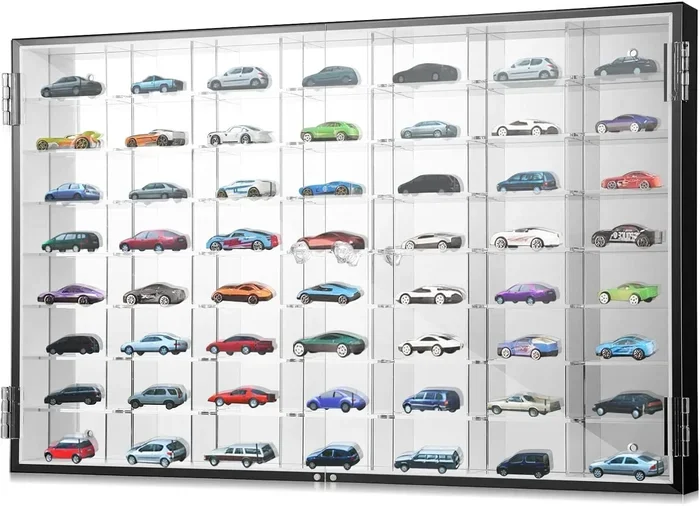
- Display cases: Glass or acrylic cases protect models from dust while showcasing them beautifully.
- Shelving units: Wall-mounted shelves save floor space and create an attractive display.
- Original packaging: Keep boxes for limited edition models, as they add value.
- Avoid direct sunlight: UV rays can fade paint and damage chrome finishes over time.
- Handle with care: Always hold models by the base, not the body, to avoid bending or scratching.
Quick tip: Use small acrylic stands or display cases with removable tops. This makes it easy to rearrange your collection and show off new additions.
Valuing and Grading Your Collection
Understanding how to value and grade your 1/64 scale cars is essential for any serious collector. It helps you make smart buying decisions and know what your collection is truly worth.
What Affects Value
Several factors determine the value of a diecast model car:
- Rarity: Limited edition and discontinued models are worth more than mass-produced ones.
- Condition: Mint models in perfect condition command the highest prices.
- Age: Vintage models from the 1960s and 1970s tend to be more valuable.
- Demand: Popular castings and sought-after designs hold their value better.
- Original packaging: Models in sealed or near-seal packaging are worth significantly more.
- Completeness: Models with all original parts, including wheels and accessories, are more valuable.
Grading Standards
Grading is the process of assessing a model’s condition. Most collectors use a simple scale:
- Mint: Perfect condition. No scratches, no paint chips, no wheel flaws. Still in original packaging if possible.
- Near Mint: Almost perfect. May have very minor imperfections that are only visible under close inspection.
- Excellent: Very good condition with minor wear. No major damage or defects.
- Good: Visible wear and minor damage. Still a nice display piece but not perfect.
- Fair: Significant wear, paint chips, or missing parts. Suitable for play or parts.
- Poor: Heavily damaged or incomplete. Only suitable for parts or restoration projects.
Always be honest when grading your own models. Accurate grading builds trust when buying or trading with other collectors.
| Grade | Description | Typical Value Range |
|---|---|---|
| Mint | Perfect, no flaws, original packaging | $20 – $100+ |
| Near Mint | Almost perfect, very minor flaws | $15 – $75 |
| Excellent | Minor visible wear, no major damage | $10 – $50 |
| Good | Noticeable wear, still presentable | $5 – $25 |
| Fair/Poor | Significant damage or missing parts | $1 – $5 |
Quick Tips for Collectors
Here are some practical tips that experienced collectors swear by:
- Start small. Do not try to buy everything at once. Pick a theme or category and build from there.
- Focus on what you love. Collect models of cars you genuinely enjoy, not just what you think will be valuable.
- Check for authenticity. Look for official branding, proper packaging, and consistent paint quality.
- Join online communities. Forums and social media groups are great for learning, trading, and finding rare models.
- Keep a inventory list. Track what you own, what you want, and what you have paid. This prevents duplicates and helps with valuation.
- Attend local events. Diecast car shows and swap meets are excellent places to find deals and connect with fellow collectors.
- Buy from reputable sellers. Check reviews and ratings before purchasing online, especially for expensive or rare models.
Common Mistakes to Avoid
Even experienced collectors make mistakes. Being aware of common pitfalls helps you avoid them and protect your investment.
Ignoring Condition
Condition is the single biggest factor in determining the value of a 1/64 scale car. Always inspect a model carefully before buying. Look for paint chips, scratches, bent wheels, and loose parts.
Even a small flaw can significantly reduce the value of a limited edition model. When in doubt, ask the seller for detailed photos and an honest condition description.
Overpaying for Common Models
Not every diecast car is a valuable investment. Many mass-produced models are worth only a few dollars, even if they are new. Do your research on current market prices before making a purchase.
Use price guide websites, online auction results, and collector forums to understand fair market values. This knowledge saves you money and helps you make smarter buying decisions.
Skipping Research
Jumping into collecting without proper research is a recipe for disappointment. Take time to learn about different brands, editions, and market trends before spending significant money.
Start by reading collector guides, watching YouTube reviews, and joining online forums. The more you know, the better decisions you will make.
Expert Insights
We spoke with several experienced 1/64 scale car collectors to gather their top advice for beginners and intermediate collectors alike.
Maria Torres, a collector with over 15 years of experience, shares this insight: “Start with a theme that excites you. Whether it is muscle cars, racing models, or movie cars, having a focus makes collecting more enjoyable and more rewarding.”
James Chen, a diecast dealer and longtime enthusiast, adds: “Always check the condition before buying, even for models that seem inexpensive. Small flaws add up and can affect the overall quality of your collection.”
Sarah Williams, a collector who specializes in vintage Matchbox models, recommends: “Patience is your best tool. The best finds come to those who wait. Do not rush into purchases, and you will be rewarded with better quality models at better prices.”
These expert tips highlight the importance of passion, patience, and knowledge in the world of 1/64 scale diecast collecting.
Conclusion
1/64 scale cars offer a wonderful and rewarding hobby for people of all ages and budgets. From the iconic Hot Wheels and Matchbox brands to specialty limited editions and vintage finds, there is always something new and exciting to discover.
By understanding scale measurements, knowing the top manufacturers, and learning how to value and grade your models, you can build a collection that brings you joy for years to come. Remember to start small, focus on what you love, and take good care of your models.
Whether you are looking for a fun new hobby or wanting to deepen an existing passion, 1/64 scale diecast cars are the perfect choice. Start your collection today and enjoy the thrill of the hunt for your next perfect model.
Frequently Asked Questions
What size are 1/64 scale cars?
1/64 scale cars are typically between 2.5 and 3 inches long. The exact size can vary slightly depending on the vehicle being modeled, but most models in this scale fall within that range. This makes them a perfect size for display cases, shelves, and portable collections.
Are Hot Wheels 1/64 scale?
Yes, the vast majority of Hot Wheels cars are produced in 1/64 scale. However, some Hot Wheels models are produced in larger scales like 1/43 or 1/18 for premium lines. Always check the packaging or product description to confirm the scale before purchasing.
How can I tell if a 1/64 scale car is valuable?
The value of a 1/64 scale diecast car depends on several factors including rarity, condition, age, and demand. Limited edition models, vintage releases, and models in mint condition with original packaging tend to be the most valuable. Use online price guides and auction results to check current market values.
Where can I sell my 1/64 scale car collection?
You can sell 1/64 scale cars on platforms like eBay, Etsy, and Facebook Marketplace. Local diecast car shows and swap meets are also excellent venues. Specialty diecast forums and collector groups on social media can connect you with buyers who are actively looking for specific models.
What is the difference between diecast and plastic model cars?
Diecast cars are made from metal alloys, giving them a solid weight, realistic finish, and durable construction. Plastic model cars are lighter and less detailed. 1/64 scale diecast cars are generally preferred by collectors for their quality and authenticity compared to plastic alternatives.
Can children collect 1/64 scale cars?
Absolutely. 1/64 scale cars are a great hobby for children and adults alike. The small size makes them easy to handle, and the affordable price point allows kids to build a collection without a large budget. Just be sure to supervise younger children with models that have small detachable parts.