What Is the Bank Code for System Too Lean at Idle Explained
The bank code for system too lean at idle is a diagnostic trouble code that flags a lean fuel condition in your engine at low RPM. The most common codes are P0171 for Bank 1 and P0174 for Bank 2. Understanding these codes helps you fix the problem fast and avoid costly repairs.
You are driving down the road, and the check engine light suddenly pops on. You grab an OBD-II scanner and see a code you have never seen before. It says something like P0171 System Too Lean Bank 1 or P0174 System Too Lean Bank 2. What does that even mean?
If you have ever wondered about the bank code for system too lean at idle, you are in the right place. This article will walk you through everything in simple, plain English. You will learn what the code means, why it happens, and how to fix it without spending a fortune at the mechanic. Let us dive in.
Key Takeaways
- P0171 and P0174 are the main bank codes for system too lean at idle, each pointing to a different cylinder bank.
- A lean condition means too much air and not enough fuel is reaching the engine at idle speed.
- Common causes include vacuum leaks, dirty MAF sensors, and faulty oxygen sensors.
- Ignoring these codes can damage your catalytic converter and lead to expensive repairs.
- A simple diagnostic scan tool can read the bank code and point you in the right direction.
- Fuel trim values give you real-time data to help pinpoint the root cause quickly.
- DIY fixes are often possible if you catch the problem early and follow the right steps.
📑 Table of Contents
- What Is the Bank Code for System Too Lean at Idle?
- Common Symptoms of a Lean Condition at Idle
- Top Causes of System Too Lean at Idle
- How to Diagnose the Bank Code for System Too Lean at Idle
- Comparison: Bank 1 vs Bank 2 Lean Codes
- Quick Tips to Prevent Lean Conditions
- Common Mistakes When Fixing a Lean Code
- Expert Insights on the Bank Code for System Too Lean at Idle
- When Should You See a Professional?
- Conclusion
What Is the Bank Code for System Too Lean at Idle?
The bank code for system too lean at idle is a trouble code stored in your car’s computer when the engine runs lean while idling. The term “lean” means there is too much air and not enough fuel in the combustion chamber. The “bank” part tells you which side of the engine the problem is on.
Cars with V6 or V8 engines have two banks of cylinders. Bank 1 is the side with cylinder number one. Bank 2 is the opposite side. A four-cylinder engine only has one bank, so the code will always refer to Bank 1.
The two most common codes you will see are:
- P0171 – System Too Lean, Bank 1
- P0174 – System Too Lean, Bank 2
These codes are part of the OBD-II system. OBD-II stands for On-Board Diagnostics II. It is a standard system in all cars made after 1996. The bank code for system too lean at idle helps you and your mechanic figure out exactly what is going wrong.
How Does the ECU Detect a Lean Condition?
Your car’s Engine Control Unit (ECU) constantly monitors the air-fuel mixture. It uses sensors like the oxygen sensor and the mass airflow sensor (MAF) to do this. When these sensors detect too much air and too little fuel, the ECU logs the bank code for system too lean at idle.
The ECU also tracks short-term fuel trim and long-term fuel trim values. These numbers tell you how much the ECU is adjusting the fuel mix. If the fuel trim goes above plus 10 to 15 percent, that is a strong sign of a lean condition. This is a great clue to look at the bank code for system too lean at idle more closely.
Common Symptoms of a Lean Condition at Idle
Do not ignore the signs. A lean condition at idle can cause several problems. Here are the most common symptoms to watch for:
- Rough or unstable idle. The engine shakes or feels rough when stopped.
- Check engine light stays on. This is the most obvious sign.
- Stalling at idle. The engine shuts off when stopped at a light.
- Hesitation when accelerating. The car feels sluggish or jerky.
- Increased fuel consumption. You may notice you are visiting the gas station more often.
- Hard starting. The engine takes longer to turn over.
- Unusual exhaust smell. You might smell raw fuel or a sulfur-like odor.
If you notice any of these symptoms, it is time to check for the bank code for system too lean at idle. The sooner you act, the less damage you will have to worry about.
Top Causes of System Too Lean at Idle
Finding the root cause is the key to fixing this problem. There are several reasons why your engine might run lean at idle. Let us go through them one by one.
1. Vacuum Leaks
A vacuum leak is the number one cause of a lean condition. The engine relies on a sealed intake system to work properly. If there is a crack or loose hose, extra air sneaks in. This throws off the air-fuel ratio.
Common places for vacuum leaks include:
- Intake manifold gaskets.
- Cracked vacuum hoses.
- PCV valve or hose leaks.
- Brake booster lines.
- Throttle body gasket leaks.
To find a vacuum leak, you can use a smoke test or spray carb cleaner around the intake while the engine is idling. If the RPM changes, you found your leak. This is a quick and cheap way to diagnose the bank code for system too lean at idle.
2. Dirty or Faulty Mass Airflow Sensor (MAF)
The MAF sensor measures the amount of air entering the engine. When it gets dirty or fails, it sends wrong readings to the ECU. The ECU then adds or removes fuel based on bad data. This often causes a lean condition.
You can clean a dirty MAF sensor with a special MAF cleaner spray. Do not use regular cleaning products. They can damage the sensor. If cleaning does not work, the sensor may need to be replaced.
3. Faulty Oxygen Sensor
The oxygen sensor measures how much oxygen is in the exhaust. It tells the ECU whether the mixture is rich or lean. When the sensor goes bad, it can send incorrect signals. The ECU then adjusts the fuel mix the wrong way.
Oxygen sensors wear out over time. They typically last between 60,000 and 100,000 miles. If your car has high mileage, a bad oxygen sensor is a likely culprit behind the bank code for system too lean at idle.
4. Fuel Injector Problems
Fuel injectors spray fuel into the combustion chamber. If an injector is clogged or leaking, it does not deliver the right amount of fuel. This creates a lean condition on that particular bank.
You can clean injectors with a fuel system cleaner. For stubborn clogs, you may need to remove and ultrasonic clean them. In rare cases, a dead injector needs full replacement.
5. Low Fuel Pressure
The fuel pump and fuel pressure regulator work together to keep the right fuel pressure. If the fuel pump is weak or the regulator fails, not enough fuel reaches the engine. This causes a lean condition, especially at idle.
You can test fuel pressure with a gauge attached to the fuel rail. Compare your readings to the manufacturer’s specs. Low pressure is a clear sign of a problem.
6. Exhaust Gas Recirculation (EGR) Valve Issues
The EGR valve recirculates exhaust gas back into the intake to reduce emissions. If the valve sticks open, it lets too much exhaust into the intake. This dilutes the air-fuel mixture and causes a lean condition at idle.
A stuck EGR valve is a common cause of the bank code for system too lean at idle. Cleaning or replacing the valve usually fixes the problem.
7. Air Leaks After the MAF Sensor
Any air that enters the engine after the MAF sensor is not measured. The ECU does not know about it, so it does not add fuel to compensate. This is sometimes called a “false lean” condition.
Check the intake boot, throttle body, and all connections after the MAF sensor. Even a tiny crack can cause the bank code for system too lean at idle.
How to Diagnose the Bank Code for System Too Lean at Idle
Diagnosing a lean condition does not have to be hard. With the right tools and approach, you can find the problem yourself. Here is a step-by-step guide.
Step 1: Read the Code with a Scanner
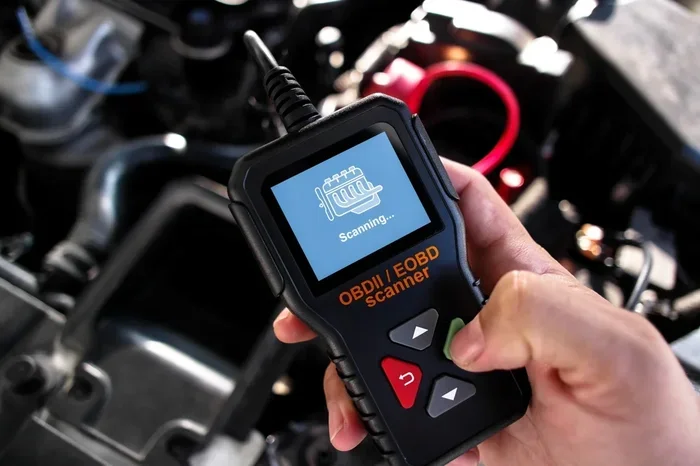
Plug in your OBD-II scanner and read the code. Confirm that you are seeing P0171 or P0174. Note which bank the code refers to. This tells you which side of the engine to focus on.
Step 2: Check Fuel Trim Values
Look at the short-term fuel trim (STFT) and long-term fuel trim (LTFT) values. High positive numbers (above 10 to 15 percent) confirm a lean condition. If both banks show high trims, the problem is likely global. If only one bank is high, the problem is bank-specific.
Step 3: Inspect for Vacuum Leaks
Visually inspect all vacuum hoses and the intake manifold. Use a smoke machine or carb cleaner spray to find hidden leaks. Pay close attention to hoses that are cracked or brittle.
Step 4: Test the MAF Sensor
Unplug the MAF sensor and drive the car. If the idle improves, the MAF sensor is likely the problem. Clean it first. If that does not work, replace it.
Step 5: Check the Oxygen Sensor
Use the scanner to watch the oxygen sensor readings in real time. The sensor should oscillate between rich and lean at a steady rate. If it stays stuck lean, the sensor is bad.
Step 6: Test Fuel Pressure
Attach a fuel pressure gauge and compare the readings to specs. Low pressure means a weak pump or bad regulator. Replace the faulty part and clear the code.
Comparison: Bank 1 vs Bank 2 Lean Codes
Understanding the difference between Bank 1 and Bank 2 helps you narrow down the problem faster. Here is a simple comparison.
| Feature | Bank 1 (P0171) | Bank 2 (P0174) |
|---|---|---|
| Cylinder One Location | Side with cylinder number one | Opposite side of cylinder one |
| Common in Engines | V6, V8, V10, V12 engines | V6, V8, V10, V12 engines |
| Typical Lean Cause | Intake manifold leak, Bank 1 MAF issues | Exhaust leak, Bank 2 sensor faults |
| Shared Causes | Vacuum leaks, dirty MAF, bad O2 sensor, low fuel pressure | |
| DIY Fix Difficulty | Moderate | Moderate to High |
Both codes point to the same type of problem. The difference is only which side of the engine is affected. The bank code for system too lean at idle gives you a starting point, not the full answer. You still need to dig deeper to find the exact cause.
Quick Tips to Prevent Lean Conditions
Prevention is always better than repair. Here are some simple tips to keep your engine running rich and healthy:
- Change your air filter regularly. A clogged filter restricts airflow and messes with the MAF sensor readings.
- Use quality fuel. Bad fuel can cause lean misfires and sensor issues.
- Inspect vacuum hoses during oil changes. Catching a small crack early saves you big headaches.
- Clean the MAF sensor every 30,000 miles. This keeps your air readings accurate.
- Do not ignore the check engine light. Even a small code can become a big problem fast.
- Keep up with fuel filter replacements. A clogged filter causes low fuel pressure and lean conditions.
Common Mistakes When Fixing a Lean Code
Many people make mistakes when trying to fix the bank code for system too lean at idle. Here are the most common ones to avoid:
- Replacing parts without diagnosing. Do not just swap sensors and hope for the best. Find the real cause first.
- Ignoring vacuum leaks. Vacuum leaks are the most common cause and the easiest to fix. Start here.
- Cleaning instead of replacing. Sometimes a sensor is too far gone for cleaning. Know when to replace.
- Clearing the code without fixing the problem. The code will just come back. Always fix the root cause.
- Assuming it is one sensor. Multiple things can cause a lean condition. Check all possibilities.
Expert Insights on the Bank Code for System Too Lean at Idle
Experienced mechanics agree that the bank code for system too lean at idle is one of the most common OBD-II codes they see. According to automotive experts, the key is to follow a logical diagnostic sequence. Start with the easiest and cheapest fixes first, like vacuum leaks and dirty sensors.
Many pros also recommend checking the EVAP system and the positive crankcase ventilation (PCV) valve. These systems can introduce unmetered air into the intake. That unmetered air is the invisible culprit behind many lean codes.
One senior technician shared this tip: “When I see a P0171 or P0174 code, I always check the intake boot first. Nine times out of ten, it is a small crack that lets in extra air. It takes five minutes to find and costs almost nothing to fix.”
Another important insight is about the catalytic converter. A lean condition can cause the converter to overheat and fail. If the code has been present for a long time, it is wise to inspect the converter as well. A failed converter is an expensive repair, so catching it early saves a lot of money.
When Should You See a Professional?
Some lean conditions are simple to fix. But others need a professional touch. You should see a mechanic if:
- The code keeps coming back after you try to fix it.
- You notice a strong fuel smell or black smoke from the exhaust.
- The engine is stalling frequently or shutting off at idle.
- You have checked vacuum lines, MAF, and sensors with no clear cause.
- You suspect a fuel pump or internal engine problem.
A professional has advanced tools like a smoke machine and a lab scope that can pinpoint problems faster. If you are stuck, do not hesitate to get help. The bank code for system too lean at idle is a clear signal that something needs attention.
Conclusion
The bank code for system too lean at idle is a common but important OBD-II code that every car owner should understand. It tells you that your engine is running with too much air and too little fuel at idle. The codes P0171 and P0174 point to Bank 1 and Bank 2 respectively.
The most common causes are vacuum leaks, dirty MAF sensors, faulty oxygen sensors, and fuel delivery problems. By following a systematic diagnostic approach, you can find and fix the problem. Start with the easy and cheap fixes before moving to more expensive repairs.
Remember, ignoring a lean code can lead to bigger problems. Your catalytic converter, engine performance, and fuel economy all suffer when the air-fuel mixture is off. Take action when you see the bank code for system too lean at idle on your scanner. Your wallet and your car will thank you.
Now that you know what the code means and how to fix it, you are ready to tackle the problem with confidence. Grab your scanner, follow the steps, and get your engine running smooth again.
Frequently Asked Questions
Can I drive my car with a P0171 or P0174 code?
You can drive a short distance, but it is not recommended. A lean condition can cause rough idling, stalling, and poor acceleration. Over time, it can also damage your catalytic converter. Get the code checked and fixed as soon as possible.
What is the difference between P0171 and P0174?
P0171 means Bank 1 is too lean, while P0174 means Bank 2 is too lean. Bank 1 is the side of the engine with cylinder number one. Both codes point to the same type of problem but on different sides of the engine.
How much does it cost to fix a system too lean code?
The cost varies widely depending on the cause. A vacuum leak repair might cost 50 to 150 dollars. Replacing a MAF sensor could run 100 to 300 dollars. A fuel pump replacement can be 400 to 800 dollars. Always diagnose the exact cause before committing to a repair.
Can a dirty air filter cause a system too lean code?
Yes, a severely clogged air filter can restrict airflow and cause incorrect readings. However, this is less common than vacuum leaks or sensor issues. Replacing the air filter is a cheap and easy first step when dealing with the bank code for system too lean at idle.
Will the code clear itself after fixing the problem?
The code will not clear automatically. You need to use an OBD-II scanner to clear it. After clearing, drive the car for a few drive cycles. If the problem is fixed, the code will not return. If it does come back, the root cause is still present.
How do I know if my oxygen sensor is bad?
Use an OBD-II scanner to watch the oxygen sensor readings in real time. A healthy sensor should oscillate rapidly between rich and lean. If it stays stuck on one side, the sensor is likely faulty. A delay in response or a flat line also indicates a bad oxygen sensor.