A Car Starts From Rest and Accelerates So What Happens
When a car starts from rest and accelerates, it transforms stationary energy into forward motion through a fascinating interplay of physics and engineering. Understanding what happens during this process helps drivers appreciate how their vehicles work and why certain factors like engine power, weight, and friction matter so much. This guide breaks down the science, the real-world scenarios, and the tips that make every launch smoother and safer.
Have you ever watched a car sit still at a red light and then suddenly shoot forward the moment the light turns green? That moment — when a car starts from rest and accelerates — is one of the most basic yet fascinating events in driving. It is also one of the most important concepts in both everyday driving and physics class.
When a car starts from rest and accelerates, several forces come into play almost instantly. The engine burns fuel, the wheels spin, and the vehicle moves forward. But there is so much more happening beneath the surface. From Newton’s laws of motion to the role of torque and friction, every part of this process tells a story about how machines and nature work together.
This article dives deep into what really happens when a car starts from rest and accelerates. You will learn the science behind the motion, the factors that change how fast or slow a car picks up speed, and practical tips that can help you understand and even improve your driving experience. Whether you are a curious beginner or a seasoned driver, this guide has something valuable for you.
Key Takeaways
- Physics drives every launch: Newton’s laws explain exactly how a car starts from rest and accelerates forward.
- Engine power and torque are key: These two forces determine how quickly a vehicle gains speed from a standstill.
- Friction and resistance matter: Rolling resistance and air drag slow down acceleration significantly.
- Weight plays a big role: A heavier car takes more force to start moving and accelerate.
- Gear ratios affect performance: The right gear choice makes a huge difference in how a car starts from rest and accelerates.
- Driver behavior impacts results: Smooth throttle control and proper technique improve both safety and acceleration.
- Kinematic equations predict motion: Simple math lets you calculate speed, distance, and time during acceleration.
📑 Table of Contents
- Understanding What Happens When a Car Starts From Rest and Accelerates
- The Physics Behind a Car Starting From Rest and Accelerating
- Key Factors That Affect How a Car Starts From Rest and Accelerates
- Common Scenarios Where a Car Starts From Rest and Accelerates
- Tips to Improve How Your Car Starts From Rest and Accelerates
- Common Mistakes People Make When Analyzing a Car Starting From Rest and Accelerating
- Expert Insights on Vehicle Acceleration From Standstill
- Key Takeaways
- Conclusion
Understanding What Happens When a Car Starts From Rest and Accelerates
Let us start with the basics. When a car is sitting still, its velocity is zero. This is what we mean by “starts from rest.” The car has no forward motion. No speed. No momentum. It is simply waiting.
The moment the driver presses the gas pedal, something changes. The engine begins to produce power. That power travels through the drivetrain and reaches the wheels. The wheels push against the road surface, and the road pushes back. This push is what we call the force that makes the car move forward.
From a physics standpoint, a car starts from rest and accelerates because an unbalanced force acts on it. Before the driver hits the gas, all forces are balanced. The car sits still because gravity pulls it down and the road pushes it up equally. The moment the engine applies force to the wheels, that balance breaks. The car begins to move forward and its speed increases over time.
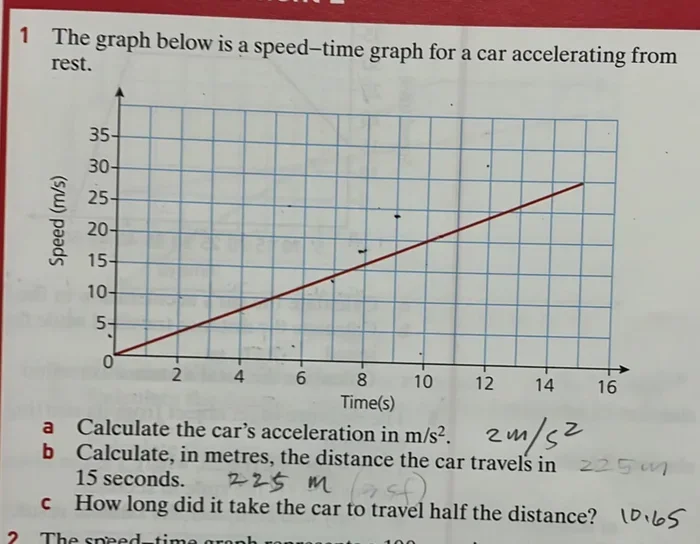
This increase in speed is what we call acceleration. In simple terms, acceleration is how fast the speed of an object changes. When a car starts from rest and accelerates, its velocity goes from zero to some positive value. The faster that change happens, the greater the acceleration.
What Does “Starts From Rest” Actually Mean?
The phrase “starts from rest” has a very specific meaning in physics. It means the initial velocity of the object is exactly zero. The object is not moving at all before the motion begins. This is a key starting point for many physics problems and real-world situations.
In everyday driving, a car starts from rest when it is parked or stopped at a traffic light. The driver releases the brake and applies the throttle. The car transitions from a zero-velocity state to a moving state. This transition is the acceleration phase.
Understanding this concept helps you appreciate why some cars feel sluggish when pulling away from a stop. If the engine does not produce enough force quickly, the acceleration feels slow. On the other hand, powerful engines can make a car feel like it launches forward almost instantly.
The Role of Velocity and Speed in Acceleration
Velocity and speed are not the same thing, even though people use them interchangeably every day. Speed is how fast something moves. Velocity includes both speed and direction. When a car starts from rest and accelerates in a straight line, its velocity increases in the direction of motion.
At the very beginning, the velocity is zero. As time passes, the velocity grows. If the acceleration stays constant, the velocity increases at a steady rate. This is known as uniformly accelerated motion, and it is one of the simplest and most common types of motion in the physical world.
The Physics Behind a Car Starting From Rest and Accelerating
Now let us get into the science. The physics behind a car starting from rest and accelerating is governed by a few fundamental laws that have been understood for centuries. These laws explain not just cars, but every object that moves when a force is applied to it.
Newton’s Second Law and Forward Motion
Newton’s second law of motion is the star of the show here. The law states that force equals mass times acceleration, or F equals m times a. This simple equation explains everything about how a car starts from rest and accelerates.
When the engine produces force, that force is transmitted to the wheels. The wheels apply a backward push on the road. By Newton’s third law, the road applies an equal and opposite forward push on the wheels. This forward push is the net force that causes the car to accelerate.
The greater the force, the greater the acceleration. But the mass of the car also matters. A heavier car needs more force to achieve the same acceleration as a lighter car. This is why sports cars, which are lighter and have more powerful engines, can accelerate so much faster than heavy trucks.
Newton’s First Law: The Inertia Factor
Before a car can accelerate, it has to overcome inertia. Newton’s first law tells us that an object at rest stays at rest unless acted upon by an external force. A parked car wants to stay parked. Its inertia resists any change in its state of motion.
The engine must produce enough force to overcome this inertia. Once the force exceeds the resistance, the car begins to move. This is why pressing the gas pedal gently at first creates a smooth start, while slamming the pedal creates a jerky, aggressive launch.
Kinematic Equations for Uniformly Accelerated Motion
Physicists use kinematic equations to describe motion with constant acceleration. These equations are incredibly useful for understanding how a car starts from rest and accelerates.
Here are the key equations:
- Velocity equation: v equals u plus a times t. Since the car starts from rest, the initial velocity u is zero. So v equals a times t.
- Distance equation: s equals u times t plus one-half times a times t squared. Again, with u equal to zero, this simplifies to s equals one-half times a times t squared.
- Velocity-distance relation: v squared equals u squared plus two times a times s. With u equal to zero, this becomes v squared equals two times a times s.
These equations let you calculate exactly how fast a car is going after a certain amount of time, or how far it travels during acceleration. They are powerful tools for both students and engineers.
Kinetic Energy and the Energy Transfer
When a car starts from rest and accelerates, energy is transformed. The chemical energy stored in fuel is converted into thermal energy through combustion. That thermal energy is then converted into mechanical energy that turns the wheels.
As the car gains speed, it gains kinetic energy. Kinetic energy depends on both the mass of the car and the square of its velocity. This means that doubling the speed requires four times the energy. It is one reason why high-speed acceleration demands so much more power from the engine.
Key Factors That Affect How a Car Starts From Rest and Accelerates
Not all cars accelerate the same way. Many factors determine how quickly and smoothly a car picks up speed from a standstill. Let us explore the most important ones.
Engine Power and Horsepower
Engine power is measured in horsepower or kilowatts. More power generally means faster acceleration. When a car starts from rest and accelerates, the engine needs to deliver power quickly to the wheels. Cars with higher horsepower can apply more force in less time, resulting in stronger acceleration.
However, power alone does not tell the whole story. How that power is delivered matters just as much. Some engines produce peak power at high RPMs, which means they may feel slow off the line. Others produce strong torque at low RPMs, giving them an instant punch when the driver steps on the gas.
Torque and Its Role in Launch Performance
Torque is the twisting force that the engine produces. It is what actually turns the wheels. When a car starts from rest and accelerates, torque is the initial driver of motion. Higher torque at low engine speeds means the car can pull away from a stop more aggressively.
This is why diesel trucks and electric vehicles often feel so strong when launching from a standstill. Electric motors deliver maximum torque instantly, which is why electric cars can accelerate so quickly from zero speed. Even without a high-horsepower engine, high torque makes a huge difference.
Vehicle Weight and Mass
We touched on this earlier, but weight deserves its own spotlight. A heavier vehicle has more inertia. It requires more force to start moving and to keep accelerating. This is a simple fact of physics that affects every car on the road.
If you have ever noticed that a lightly loaded car feels quicker off the line than the same car loaded with passengers and cargo, you have seen this principle in action. The engine produces the same force, but the lighter car accelerates faster because there is less mass to move.
Friction, Rolling Resistance, and Air Drag
As a car starts from rest and accelerates, it faces several resistive forces. Rolling resistance comes from the tires deforming against the road surface. Air drag increases with speed and becomes more significant as the car picks up velocity.
At very low speeds, rolling resistance is the main opponent. As the car gains speed, air drag grows rapidly. These forces reduce the net force available for acceleration. This is why a car may feel faster in first gear than in higher gears during a standing start.
Drivetrain and Gear Ratios
The drivetrain connects the engine to the wheels. It includes the transmission, driveshaft, differential, and axles. Gear ratios determine how much of the engine’s force reaches the wheels and at what speed.
Lower gears have higher ratios, which means more force at the wheels but less speed. This is why first gear is used when a car starts from rest and accelerates from a stop. The high gear ratio gives the wheels maximum turning force to overcome inertia and get the car moving.
As the car gains speed, the driver shifts to higher gears. Each shift reduces the force at the wheels but allows the car to go faster. The art of smooth gear shifting is a big part of what makes a car feel responsive during acceleration.
Common Scenarios Where a Car Starts From Rest and Accelerates
Acceleration from rest happens in many real-world situations. Each scenario presents its own challenges and dynamics. Let us look at the most common ones.
Pulling Away from a Stoplight
This is the most everyday example of a car starting from rest and accelerating. The driver sees the light turn green, releases the brake, and applies the throttle. The car moves forward and its speed increases until it reaches the speed limit.
How quickly the car accelerates depends on the factors we discussed above. A small economy car might take several seconds to reach 30 miles per hour. A sports car might do it in under two seconds. Both are accelerating from rest, but the experience is very different.
Merging Onto a Highway
Highway merges require acceleration from rest or near-rest. The driver enters the acceleration lane and increases speed to match the flow of traffic. This is a critical moment where acceleration performance directly affects safety.
A car that starts from rest and accelerates quickly gives the driver more time and space to merge safely. A car with sluggish acceleration may force the driver to slow down and wait for a larger gap in traffic.
Overtaking Another Vehicle
When passing another car on a two-lane road, the driver needs to accelerate quickly. The car may already be moving, but the driver often needs to increase speed rapidly to complete the pass safely.
The ability to accelerate strongly from any speed depends on the engine’s power band and the transmission’s ability to deliver force at the right moment. A well-tuned drivetrain makes overtaking feel confident and effortless.
Hill Starts and Inclined Surfaces
Starting on a hill adds gravity to the mix. When a car starts from rest and accelerates uphill, the engine must overcome both inertia and the gravitational pull pulling the car backward down the slope.
This is why hill starts can be challenging, especially for manual transmission vehicles. The driver must balance the throttle, clutch, and brake to prevent rolling backward. Modern cars with hill-start assist make this much easier, but the physics remain the same.
Tips to Improve How Your Car Starts From Rest and Accelerates
Whether you want a smoother ride or a quicker launch, there are practical steps you can take to improve how your car accelerates from a standstill.
Maintain Your Engine and Drivetrain
A well-maintained engine produces more power and delivers it more efficiently. Regular oil changes, spark plug replacements, and air filter updates keep the engine running at its best. A clean fuel system ensures that the engine receives the right fuel-air mixture for optimal combustion.
Do not ignore transmission fluid either. Fresh fluid keeps the gears shifting smoothly, which directly affects how the car feels during acceleration from rest.
Keep Tires Properly Inflated
Tire pressure affects rolling resistance significantly. Underinflated tires create more friction with the road, which slows down acceleration. Overinflated tires reduce the contact patch, which can also hurt grip and acceleration.
Check your tire pressure regularly and keep it at the manufacturer’s recommended level. This simple habit can make a noticeable difference in how your car starts from rest and accelerates.
Use the Right Gear
For manual transmission cars, starting in too high a gear is a common mistake. First gear provides the best ratio for launching from a stop. Shifting to second gear too early can cause the engine to lug, which reduces acceleration and can strain the drivetrain.
For automatic transmissions, avoid flooring the throttle from a standstill if you want to preserve the transmission and tires. A gentle, progressive throttle application gives the best balance of speed and control.
Reduce Unnecessary Weight
The less weight your car carries, the faster it can accelerate. Remove heavy items from the trunk and back seat that you do not need. Every extra kilogram adds to the inertia the engine must overcome.
This does not mean you should remove safety equipment or essential items. But clearing out unnecessary cargo is an easy and free way to improve acceleration performance.
Common Mistakes People Make When Analyzing a Car Starting From Rest and Accelerating
Even people who understand the basics of motion can make mistakes when thinking about how a car accelerates from rest. Let us clear up some of the most common errors.
Confusing Speed with Acceleration
Speed tells you how fast a car is moving. Acceleration tells you how quickly the speed is changing. A car can have high speed but low acceleration, or low speed but high acceleration. When a car starts from rest and accelerates, the focus is on the change in speed, not the speed itself.
Ignoring Friction and Drag
Many people assume that all the engine’s force goes into making the car faster. In reality, a significant portion of that force is lost to friction, rolling resistance, and air drag. Ignoring these forces leads to an overestimation of how fast a car can realistically accelerate.
Forgetting the Role of Traction
The engine can produce all the force it wants, but if the tires cannot grip the road, the wheels just spin. Traction is the limiting factor in many acceleration scenarios. This is why tire quality, road surface, and weight distribution all matter so much.
Assuming Constant Acceleration
In real life, acceleration is rarely constant. The engine produces different amounts of force at different RPMs. The transmission shifts gears. Air drag increases with speed. Assuming constant acceleration is a useful simplification for physics problems, but it does not perfectly describe what happens in the real world.
Expert Insights on Vehicle Acceleration From Standstill
Automotive engineers spend years studying how vehicles accelerate from rest. Their insights reveal why some cars feel so much better off the line than others.
According to drivetrain specialists, the key to strong launch performance is matching the engine’s torque curve to the gear ratio. An engine that produces peak torque at low RPMs paired with a short first gear ratio creates the best possible launch. This is why many performance cars use close-ratio transmissions that keep the engine in its power band during acceleration.
Tire engineers add that the contact patch — the area of the tire touching the road — is critical. Wider tires and softer compounds increase the contact patch, improving grip and allowing more engine force to translate into forward motion without wheel spin.
Electric vehicle engineers point out a unique advantage: instant torque delivery. When a driver presses the pedal in an EV, maximum torque is available immediately. This eliminates the lag that traditional internal combustion engines experience while building RPMs. It is a big reason why electric cars often feel so quick from a standstill.
Key Takeaways
- Physics drives every launch: Newton’s laws explain exactly how a car starts from rest and accelerates.
- Engine power and torque are key: These two forces determine how quickly a vehicle gains speed from a standstill.
- Friction and resistance matter: Rolling resistance and air drag slow down acceleration significantly.
- Weight plays a big role: A heavier car takes more force to start moving and accelerate.
- Gear ratios affect performance: The right gear choice makes a huge difference in how a car starts from rest and accelerates.
- Driver behavior impacts results: Smooth throttle control and proper technique improve both safety and acceleration.
- Kinematic equations predict motion: Simple math lets you calculate speed, distance, and time during acceleration.
Conclusion
When a car starts from rest and accelerates, it is not just about pressing a pedal and moving forward. A complex and beautiful interplay of forces, energy, and engineering makes that simple action possible. From Newton’s laws to torque delivery, from gear ratios to tire grip, every element plays a role in determining how the car performs.
Understanding what happens during acceleration helps you become a better driver and a more informed car owner. You begin to appreciate why your car feels the way it does and what you can do to improve its performance. Whether you are merging onto a highway, passing on a two-lane road, or simply pulling away from a curb, the physics behind your motion is always at work.
So the next time you press the gas pedal and feel the car surge forward, take a moment to appreciate the science behind it. A car starts from rest and accelerates because of forces that have been studied and understood for centuries. And every time you drive, you are experiencing that science in action.
Frequently Asked Questions
Why does a car feel slow when it starts from rest and accelerates?
A car may feel slow off the line if the engine produces low torque at low RPMs or if the vehicle is heavy. Other factors like underinflated tires, a worn drivetrain, or being in too high a gear can also reduce acceleration feel. Regular maintenance and proper gear selection help improve launch performance.
What is the difference between acceleration and velocity when a car starts from rest?
Velocity is how fast the car is moving in a specific direction. Acceleration is how quickly the velocity is changing. When a car starts from rest, its initial velocity is zero. As it accelerates, the velocity increases over time. The two concepts are related but describe different aspects of motion.
Does a heavier car always accelerate slower than a lighter car?
Generally, yes. A heavier car has more inertia and requires more force to accelerate. However, if the heavier car has a significantly more powerful engine, it can still accelerate faster. The relationship between mass, force, and acceleration is governed by Newton’s second law.
Can tire type affect how a car starts from rest and accelerates?
Absolutely. Tires with better grip provide more traction, which allows the engine’s force to translate more effectively into forward motion. Wide, soft-compound tires increase the contact patch and improve acceleration. Worn or underinflated tires reduce grip and can cause wheel spin, slowing down the launch.
Is acceleration from rest the same for electric cars and gasoline cars?
Electric cars often accelerate faster from rest because electric motors deliver maximum torque instantly. Gasoline engines need time to build RPMs and reach their peak torque. This instant torque delivery gives electric vehicles a significant advantage in launch acceleration from a standstill.
What role does the transmission play when a car starts from rest and accelerates?
The transmission uses gear ratios to multiply the engine’s force at the wheels. Lower gears provide more force for acceleration from a stop. As the car gains speed, higher gears reduce the force but allow greater speed. A well-functioning transmission ensures smooth and efficient power delivery during the acceleration phase.