Is 20 Window Tint Really Dark And What You Need To Know
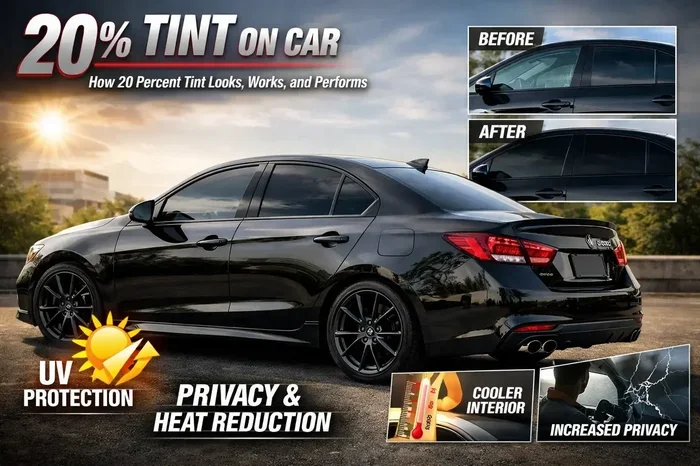
20 window tint is a medium-dark shade that blocks about 80% of light from entering your vehicle. It offers a great balance between style, privacy, and UV protection without making your car look like a blacked-out limousine. Many car owners choose 20% tint because it looks sleek, keeps the interior cooler, and still allows safe driving at night.
Have you ever driven behind a car and wondered, “Is 20 window tint really dark?” You’re not alone. This is one of the most common questions among car owners who want to add tint to their windows. The answer might surprise you. 20% tint is darker than most factory tints but not as dark as the blackout tints you see on some modified cars. It sits right in the sweet spot for people who want style, privacy, and protection without going overboard.
In this guide, we’ll break down everything you need to know about 20 window tint. We’ll cover how dark it really is, what the legal limits are, the benefits it offers, and how it compares to other tint levels. Whether you’re a first-time tint buyer or thinking about re-tinting your car, this article has you covered. Let’s dive in.
Key Takeaways
- 20% tint is medium-dark: It blocks 80% of visible light but still allows decent visibility during the day.
- Legal status varies by state: Some states allow 20% tint on all windows, while others restrict it to the rear windows only.
- It offers strong UV protection: A good 20 tint can block up to 99% of harmful UV rays.
- Heat rejection is impressive: 20 window tint can reduce cabin temperatures by up to 30-40 degrees Fahrenheit.
- Visibility at night may be reduced: Drivers should be cautious when driving in low-light conditions with 20% tint.
- Professional installation matters: A skilled installer ensures bubble-free, even application for the best results.
- Cost is moderate: 20 tint typically costs between $100 and $400 depending on the vehicle and film type.
📑 Table of Contents
What Is 20 Window Tint?
When we talk about 20 window tint, we’re referring to the visible light transmission, or VLT, percentage. VLT measures how much light the tint film allows to pass through your car windows. A 20% tint means that only 20% of visible light gets through. The other 80% gets blocked. That’s why it’s often called a medium-dark tint.
Most factory-tinted cars come with a VLT of around 70% to 80%. That’s barely noticeable. Aftermarket tint films like 20 window tint are applied directly to the glass and can dramatically change the look and feel of your vehicle. The film itself is a thin polyester layer coated with dyes, metals, or ceramics that filter out light and heat.
How Is Tint Darkness Measured?
Tint darkness is measured using the VLT scale. The scale goes from 0% to 100%. A 0% tint would be completely black — no light passes through at all. A 100% tint means no tint is applied, and all light passes through freely. Here’s a quick breakdown of common tint levels:
- 5% tint: Very dark. Often called “limo tint.” Almost no light passes through.
- 20% tint: Medium-dark. A popular choice for a sleek, stylish look.
- 35% tint: Medium. Noticeably tinted but still quite clear.
- 50% tint: Light tint. Blocks glare and some heat without darkening the glass much.
So where does 20 window tint fall on this spectrum? Right in the middle of the darker options. It’s dark enough to make a noticeable difference in your car’s appearance and functionality, but light enough to still see through during the day.
How Dark Is 20% Tint Really?
This is the question most people ask, and the honest answer is: it depends on several factors. 20 window tint is noticeably darker than factory tint, but it’s not as dark as you might think if you’ve only seen blackout-tinted cars. During the daytime, you can generally see through 20% tint from the outside, especially if the glass is clean and the lighting is good.
However, at night or in dimly lit areas, visibility drops significantly. If you’re driving on a poorly lit road, you may need to roll down the windows to see clearly. This is an important consideration for anyone thinking about getting 20% tint on their driver or passenger side windows.
What Does 20 Tint Look Like From the Outside?
From the outside, a car with 20 window tint has a dark, uniform appearance. The windows look smoky and sleek. The exact look can vary depending on the film brand and whether it’s a dyed, metalized, carbon, or ceramic film. Ceramic films tend to have a more natural, non-reflective look, while dyed films may appear slightly more purple or blue over time.
Here’s what you can generally expect from 20% tint:
- Daytime visibility from outside: Moderate. You can see shapes and movement inside the car but not clearly.
- Daytime visibility from inside: Good. Driving is comfortable with natural light still entering the cabin.
- Nighttime visibility from outside: Poor. The windows appear almost opaque from the outside.
- Nighttime visibility from inside: Reduced. You’ll need to rely more on your mirrors and headlights.
The darkness you experience also depends on the color of the tint film. Some 20 window tint films have a slight green, blue, or bronze hue that can affect how dark the windows appear. Carbon tints, for example, have a matte black finish that looks very sleek and doesn’t fade over time.
Does 20 Tint Get Lighter Over Time?
Yes and no. Lower-quality dyed tints can fade or bubble, which might make them look lighter or uneven. High-quality films like ceramic or carbon tints maintain their darkness and clarity for many years. This is why investing in a good 20 tint film from a reputable brand is so important. A quality film can last 10 to 15 years without significant fading.
Benefits of 20 Window Tint
There are many reasons why 20 window tint has become one of the most popular choices among car owners. It’s not just about looks — although the sleek appearance is a big draw. Let’s explore the real-world benefits of choosing this tint level for your vehicle.
UV Protection
One of the biggest benefits of 20 window tint is its ability to block harmful ultraviolet rays. Quality 20 tint films can block up to 99% of UVA and UVB radiation. This is crucial because prolonged sun exposure can cause skin damage and accelerate the fading of your car’s interior. Your dashboard, seats, and steering wheel will all last longer with proper tint protection.
Heat Rejection
If you’ve ever sat in a hot car after it’s been parked in the sun, you know how unbearable it can be. 20 window tint significantly reduces the amount of solar heat that enters your vehicle. Many car owners report a temperature difference of 30 to 40 degrees Fahrenheit inside their cars after applying 20% tint. That means a cooler, more comfortable cabin, even on the hottest days.
Glare Reduction
Driving with glare from the sun or headlights can be dangerous and annoying. 20 tint reduces glare significantly, making it easier to see the road during bright, sunny days and at night when oncoming headlights hit your windshield. This can reduce eye strain and improve overall driving safety.
Privacy and Security
20 window tint gives you a good level of privacy without going to the extreme. People on the outside can’t easily see into your car, which protects your personal belongings. This is especially useful if you regularly leave items in your trunk or back seat. A car with 20 tint looks less appealing to potential thieves because they can’t see what’s inside.
Sleek Aesthetic
Let’s be honest — 20 window tint looks fantastic. It gives your car a polished, finished look that elevates the overall appearance. Whether you drive a sedan, SUV, or truck, 20 tint adds a touch of sophistication. It’s the kind of upgrade that makes your car stand out in a subtle, classy way.
20 Tint vs. Other Darkness Levels
To truly understand how dark 20 window tint is, it helps to compare it with other popular tint levels. Each darkness level serves a different purpose, and the right choice depends on your personal preferences, local laws, and how you use your car.
20% vs. 35% Tint
35% tint is lighter and more transparent than 20% tint. If you want a subtle look that still offers some UV protection and heat rejection, 35% might be the way to go. However, if you want a more dramatic, darker appearance, 20 window tint is the better choice. The difference between the two is noticeable but not extreme.
20% vs. 5% Tint
5% tint, also known as limo tint, is extremely dark. You can barely see through it from the outside. While it offers maximum privacy, it’s also the most restricted by law and the most dangerous for nighttime driving. 20% tint provides a much more practical balance between darkness and visibility.
20% vs. 50% Tint
50% tint is a light tint that mainly reduces glare and blocks some UV rays. It’s barely noticeable in terms of darkness. 20 window tint, on the other hand, makes a bold visual statement while still allowing comfortable visibility. If you want noticeable tint without going too dark, 20% hits the sweet spot.
Comparison Table
| Tint Level | Light Blocked | Visibility | Best For |
|---|---|---|---|
| 5% (Limo Tint) | 95% | Very Low | Maximum privacy, show cars |
| 20% Tint | 80% | Moderate | Style, UV protection, heat rejection |
| 35% Tint | 65% | Good | Subtle look, daily driving |
| 50% Tint | 50% | High | Glare reduction, light tinting |
As you can see from this comparison, 20 window tint offers a middle-ground option that balances style and function. It’s dark enough to make a difference but light enough to remain practical for everyday driving.
Is 20 Window Tint Legal?
Tint laws vary widely from state to state, and even from country to country. This is one of the most important things to consider before getting 20% tint on your car. In some states, 20 window tint is legal on all windows. In others, it’s only allowed on the rear and back windows, with the front windshield and side windows required to have a lighter tint.
General Legal Guidelines in the US
Here are some general guidelines, but always check your specific state’s laws before getting tinted:
- Front side windows: Many states require a VLT of 70% or higher on front side windows. This means 20% tint is usually NOT legal on front side windows in most states.
- Rear side windows: More lenient laws apply here. Many states allow 20% tint or darker on rear side windows.
- Rear windshield: Most states allow darker tint on the rear windshield, often with a required mirror reflection limit.
- Front windshield: Almost no state allows full tint on the front windshield. Some allow a small strip at the top, known as an AS-1 line.
States That Allow 20% Tint
Some states are more tint-friendly than others. States like Arizona, California, Colorado, and Texas have specific regulations that may allow 20% tint on certain windows. Always verify the current laws in your area, as tint regulations can change. Getting pulled over for illegal tint can result in fines and even a requirement to remove the tint.
Medical Exemptions
Some states offer medical exemptions for darker tint. If you or a passenger have a condition that makes you sensitive to sunlight, you may be able to get a waiver that allows 20 window tint on all windows, including the front. Check with your local Department of Motor Vehicles for details on how to apply for a medical exemption.
Tips for Getting the Best 20 Window Tint Results
If you’ve decided that 20% tint is right for you, here are some practical tips to ensure you get the best possible results. The quality of your tint job can make a huge difference in how it looks, how long it lasts, and how well it performs.
Choose the Right Film Type
Not all tint films are created equal. There are several types of 20 tint films on the market:
- Dyed film: Affordable but prone to fading and bubbling over time.
- Metalized film: More durable and offers better heat rejection, but can interfere with cell phone and GPS signals.
- Carbon film: Non-fading, matte finish, and excellent heat rejection without signal interference.
- Ceramic film: The premium option. Offers the best heat rejection, UV protection, and clarity without signal disruption.
For the best long-term results with 20 window tint, ceramic or carbon films are highly recommended. They cost more upfront but last significantly longer and perform better.
Hire a Professional Installer
DIY tint kits are tempting because they’re cheaper, but they often lead to bubbles, peeling, and uneven application. A professional installer has the tools, experience, and clean environment needed to apply 20 tint film flawlessly. The difference in the final result is night and day — literally.
Let the Tint Cure Properly
After installation, your 20 window tint needs time to cure. This process can take anywhere from a few days to a few weeks, depending on the film type and weather conditions. During this time, avoid rolling down your windows, cleaning the windows, or pressing on the tinted glass. Rushing this process can cause the film to peel or shift.
Maintain Your Tint
To keep your 20 tint looking great for years, use a non-ammonia-based cleaner and a soft cloth when washing your windows. Ammonia-based cleaners can break down the tint film over time. Also, be gentle when drying the windows to avoid scratching the film.
Common Mistakes to Avoid
Here are some common mistakes car owners make when getting 20 window tint:
- Choosing the cheapest option: Budget tints often fade, bubble, and look terrible within a year or two.
- Ignoring local laws: Getting caught with illegal tint is costly and inconvenient. Always verify legality first.
- Skipping the warranty: Quality tint comes with a warranty. Make sure yours includes coverage for fading, bubbling, and peeling.
- Tinting in winter: Cold, humid conditions can slow the curing process and lead to moisture bubbles. Spring and summer are ideal for tinting.
How Much Does 20 Tint Cost?
The cost of 20 window tint varies depending on your vehicle, the film quality, and where you live. On average, you can expect to pay between $100 and $400 for a full sedan tint job. Larger vehicles like SUVs and trucks may cost more, sometimes up to $600. Ceramic films, which offer the best performance, tend to be on the higher end of the price range. However, considering the long-term benefits of UV protection, heat rejection, and interior preservation, most car owners find it to be a worthwhile investment.
Frequently Asked Questions About 20 Window Tint
Can you see through 20% tint at night?
Visibility through 20 window tint at night is significantly reduced. You can still see some light and movement from inside the car, but it’s much harder to see clearly through the tinted glass from the outside. For safety, many drivers choose to keep their interior lights on or reduce driving in poorly lit areas when they have 20% tint on their front windows.
Is 20 tint good for hot climates?
Absolutely. 20 window tint is excellent for hot climates because it blocks a large portion of solar energy from entering your car. This keeps the interior cooler and reduces the workload on your air conditioning system. Ceramic and carbon 20 tint films are especially effective in hot, sunny regions.
Does 20 tint affect GPS or cell phone signals?
It depends on the type of film. Dyed and metalized films can interfere with GPS, cell phone, and radio signals because of the metallic particles in the film. Ceramic and carbon films, however, do not interfere with electronic signals. If you’re concerned about signal disruption, choose a ceramic or carbon 20 tint film.
How long does 20 window tint last?
The lifespan of 20 tint depends on the film quality and how well it’s maintained. High-quality ceramic and carbon films can last 10 to 15 years or more. Lower-quality dyed films may start to fade or bubble within 2 to 5 years. Investing in a premium film pays off in the long run.
Can I tint my front windows with 20% film?
This depends entirely on your local tint laws. Many states in the US require front side windows to have a VLT of 70% or higher, which means 20% tint is not legal on front windows in those states. Always check your state’s specific regulations before tinting your front windows.
What’s the difference between 20 tint and factory tint?
Factory tint, which comes on the car from the manufacturer, typically has a VLT of around 70% to 80%. It’s very subtle and barely noticeable. 20 window tint, on the other hand, is aftermarket and has a VLT of 20%, making it significantly darker and more effective at blocking light, heat, and UV rays. Factory tint also cannot be replaced, while aftermarket tint can be removed or reapplied.
Final Thoughts on 20 Window Tint
So, is 20 window tint really dark? The answer is yes — it’s dark enough to make a real difference in the look, comfort, and functionality of your car, but not so dark that it becomes impractical for everyday driving. It’s the kind of tint that offers the best of both worlds: style and substance.
Whether you’re looking to protect your skin from UV rays, keep your car cooler in the summer, add a layer of privacy, or simply give your car a sleek new appearance, 20% tint delivers on all fronts. Just make sure you understand the legal requirements in your area, choose a high-quality film, and have it installed by a professional for the best results.
The world of auto tinting can feel overwhelming with all the options and regulations, but 20 window tint remains one of the most popular and versatile choices for good reason. It works. It looks great. And it protects your car inside and out. If you’ve been on the fence about getting your windows tinted, now might be the perfect time to take the leap.