Are Camrys Expensive to Maintain or Surprisingly Affordable
Are Camrys Expensive to Maintain? The answer might surprise you. Toyota Camrys are known for their reliability and low upkeep costs, making them one of the most affordable sedans to own over time. From routine oil changes to major repairs, this guide covers everything you need to know about keeping your Camry running without breaking the bank.
When you buy a car, the sticker price is only half the story. The real question is what it costs to keep that car on the road. Are Camrys Expensive to Maintain? This is a question that crosses the minds of many buyers. The Toyota Camry has been a best-selling sedan for decades. People love it for a reason. It is reliable, comfortable, and surprisingly kind to your wallet.
Maintenance costs play a big role in your total ownership experience. Some cars cost a fortune to keep running. Others are much more forgiving. The Camry falls firmly into the affordable side. Whether you drive a new model or a used one, understanding what lies ahead helps you plan better. In this article, we break down every major cost category. We look at common repairs, compare the Camry to rival sedans, and share practical tips to keep expenses low. By the end, you will have a clear picture of what owning a Camry really costs.
The Toyota Camry has earned a reputation as one of the most dependable sedans on the market. Its Toyota reliability rating speaks for itself. But reliability does not mean zero costs. Every car needs oil changes, brake pads, tires, and occasional repairs. The key is understanding those costs before they surprise you. This guide gives you that knowledge. You will learn what to expect, what to watch for, and how to save money along the way.
Key Takeaways
- Low Overall Cost: Camrys consistently rank among the most affordable sedans to maintain over their lifetime.
- Reliability Matters: Toyota’s strong reputation for durability means fewer unexpected repairs and lower long-term expenses.
- Affordable Parts: Toyota parts are widely available and reasonably priced compared to luxury and European brands.
- Hybrid Savings: Camry Hybrid models offer additional fuel savings that offset maintenance costs over time.
- DIY-Friendly: Many routine maintenance tasks can be done at home, saving you dealership labor fees.
- Strong Resale Value: Camrys hold their value well, which reduces the overall cost of ownership.
- Warranty Coverage: Toyota’s warranty helps cover early repair costs, adding to the affordability.
📑 Table of Contents
Understanding Toyota Camry Maintenance Costs
Before we dive into specific repairs, let us look at the big picture. What makes up the total Toyota Camry maintenance cost? Understanding the pieces helps you budget smarter.
What Makes Up Camry Maintenance Costs
Camry maintenance costs fall into a few main categories. Routine services like oil changes and tire rotations are the most common. These happen every few thousand miles. They keep your car running smoothly and prevent bigger problems later.
Then there are wear-and-tear items. Brake pads, wiper blades, and belts wear out over time. These are predictable costs that every owner faces. They are not exciting, but they are necessary.
Less frequent but more expensive are major repairs. Transmission work, engine issues, and electrical problems can cost hundreds or even thousands of dollars. The good news is that Camrys rarely need these expensive fixes, especially if you stay on top of routine maintenance.
Your driving habits also play a role. City driving with lots of stops wears brakes faster. Highway driving is gentler on most components. Where and how you drive affects your overall costs more than you might think.
Toyota Maintenance Schedule Basics
Toyota provides a clear maintenance schedule for every Camry model. Following this schedule is the single best way to control costs. The schedule outlines when to change oil, replace fluids, inspect brakes, and rotate tires.
For most Camry models, oil changes are recommended every 5,000 to 10,000 miles. This depends on whether you use conventional or synthetic oil. The Toyota maintenance schedule also includes periodic checks of the transmission fluid, coolant, and brake fluid.
Sticking to the factory schedule keeps your warranty intact. It also helps your car run at peak efficiency. A well-maintained Camry will serve you faithfully for many years. Skipping services, on the other hand, can lead to costly problems down the road.
Quick Tips
- Keep a log of all maintenance services. This helps you track spending and stay organized.
- Set calendar reminders for upcoming services. Do not rely on memory alone.
- Use genuine Toyota parts or OEM-equivalent alternatives for best results.
- Check your owner’s manual for model-specific maintenance intervals.
Common Mistakes That Increase Camry Costs
Many Camry owners make mistakes that raise their maintenance bills unnecessarily. One of the biggest is ignoring warning lights on the dashboard. That check engine light is there for a reason. Ignoring it can turn a small fix into a major repair.
Another common mistake is skipping oil changes. Some owners push their oil change intervals too far. Old oil loses its lubricating properties. This increases engine wear over time. The small savings from skipping an oil change are never worth the risk.
Using the wrong type of fuel or fluids is another pitfall. Always follow Toyota’s recommendations in the owner’s manual. Cheap aftermarket fluids may seem like a bargain, but they can cause damage that costs far more to fix.
Finally, choosing the cheapest repair shop without checking reviews can backfire. Poor workmanship leads to repeat repairs. You end up spending more in the long run. Quality service, even if slightly more expensive upfront, saves money over time.
Common Repairs and What They Cost
Knowing what repairs are common on a Camry helps you prepare. Some fixes are simple and cheap. Others require more attention and budget. Let us break down the most frequent repair categories.
Oil Changes and Fluid Replacements
Oil changes are the most frequent maintenance item for any Camry. A standard oil change at a Toyota dealership typically costs between $50 and $80. Independent shops often charge less, sometimes around $35 to $50.
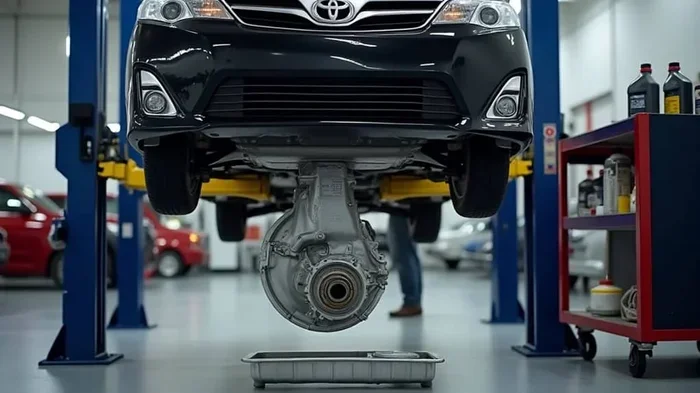
Transmission fluid changes usually run $150 to $250. Coolant flushes cost around $100 to $150. Brake fluid replacements are similar in price. These are all routine services that keep your Camry running smoothly.
The Camry oil change cost is one of the lowest in the sedan class. This is one of the reasons the Camry is so affordable to own long-term. Regular fluid changes prevent internal wear and extend engine life.
Brake System Repairs
Brake pads on a Camry typically last between 30,000 and 70,000 miles. Replacement costs range from $150 to $300 per axle, depending on whether you choose ceramic or semi-metallic pads.
Brake rotors usually need replacement every 60,000 to 80,000 miles. Rotor replacement runs about $200 to $400 per axle. Brake calipers are less common to fail but can cost $300 to $600 each when they do.
Overall, brake maintenance on a Camry is very reasonable. The Camry brake pads and rotors are widely available, which keeps parts costs low. Many owners find that brake jobs are one of the few significant recurring expenses.
Transmission and Engine Concerns
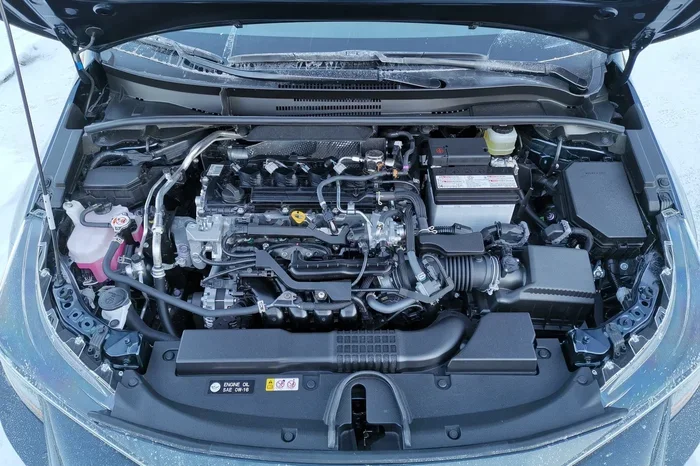
The good news is that Camrys rarely have serious transmission or engine problems. The 2.5-liter four-cylinder engine is known for its durability. Most Camrys reach 200,000 miles or more with proper care.
When transmission issues do arise, they are often related to fluid neglect. Regular fluid changes prevent most transmission problems. If a transmission rebuild becomes necessary, expect costs of $1,800 to $3,500.
Engine repairs are uncommon on well-maintained Camrys. The most frequent engine-related issue involves the valve cover gasket, which can leak oil. Replacement costs typically range from $300 to $600. This is a straightforward repair that most shops handle without difficulty.
Quick Tips for Repair Savings
- Get multiple quotes before authorizing major repairs.
- Ask your mechanic about refurbished or remanufactured parts.
- Stay current on fluid changes to prevent expensive transmission and engine repairs.
- Consider an extended warranty if you plan to keep your Camry beyond 100,000 miles.
How the Camry Compares to Other Popular Sedans
The Camry does not exist in a vacuum. When evaluating maintenance costs, it helps to compare against similar sedans. How does the Camry stack up against the Honda Accord, Nissan Altima, and Hyundai Sonata?
Camry vs Honda Accord Maintenance
The Honda Accord is the Camry’s closest rival. Both are mid-size sedans known for reliability. When it comes to maintenance costs, the two are very similar. Oil changes, brake jobs, and routine services cost about the same for both models.
Where they differ slightly is in parts availability. Toyota parts are available through a wider network of dealerships. Honda parts are also easy to find. Both brands offer reasonable Toyota parts cost and Honda parts cost compared to luxury brands.
Camry vs Nissan Altima Upkeep
The Nissan Altima tends to have slightly higher maintenance costs than the Camry. Altima owners report more frequent brake and suspension repairs. The Altima’s CVT transmission has also drawn criticism for reliability concerns, which can increase long-term costs.
The Camry’s more conservative engineering pays off here. Fewer surprises mean fewer unexpected repair bills. This is a key advantage of the Camry over some competitors.
Camry vs Hyundai Sonata Costs
The Hyundai Sonata offers competitive pricing upfront, but maintenance costs can be slightly higher. Sonata owners sometimes face pricier electrical and electronics repairs. The Camry’s simpler, proven design tends to be more affordable to service over time.
| Model | Avg. Annual Maintenance Cost | Oil Change Cost | Brake Job Cost | 5-Year Repair Estimate |
|---|---|---|---|---|
| Toyota Camry | $350 – $450 | $50 – $80 | $150 – $300 | $1,200 – $1,800 |
| Honda Accord | $370 – $470 | $55 – $85 | $160 – $320 | $1,300 – $1,900 |
| Nissan Altima | $420 – $550 | $50 – $80 | $170 – $350 | $1,600 – $2,400 |
| Hyundai Sonata | $400 – $520 | $55 – $85 | $160 – $330 | $1,500 – $2,200 |
These numbers are estimates based on owner reports and industry data. Your actual costs will vary based on driving habits, location, and the specific model year. However, the table clearly shows the Camry’s position as one of the most affordable sedans to maintain.
Tips to Keep Your Camry Maintenance Costs Low
Saving money on Camry maintenance is easier than you might think. A few smart habits can significantly reduce your long-term ownership costs.
Follow the Manufacturer’s Schedule
This cannot be stressed enough. The Toyota maintenance schedule exists for a reason. It is based on extensive testing and engineering. Following it keeps your warranty valid and prevents premature wear.
Do not skip services to save a few dollars in the short term. The money you save today can become thousands in repairs tomorrow. Prevention is always cheaper than cure, especially when it comes to car maintenance.
DIY Maintenance You Can Do at Home
Some Camry maintenance tasks are simple enough for home mechanics. Checking and topping off fluids is a great starting point. You can check your oil, coolant, and brake fluid levels yourself with minimal tools.
Replacing wiper blades is another easy DIY job. Air filters and cabin filters can also be swapped at home with basic tools. These small tasks save you labor costs at the shop.
Tire rotations are straightforward if you have a jack and lug wrench. Doing your own tire rotation every 5,000 miles extends tire life and saves you money. Just make sure you follow the correct rotation pattern for your Camry model.
Choose the Right Service Provider
Not all repair shops are created equal. Toyota dealerships offer factory-trained technicians and genuine parts. But they also charge premium labor rates. Independent shops can offer significant savings for routine services.
Look for shops that specialize in Toyotas or Asian vehicles. Ask friends, family, and online communities for recommendations. A good independent mechanic can save you 30 to 50 percent on labor costs compared to a dealership.
For major repairs, consider getting quotes from both a dealership and an independent shop. You may find that the dealership is competitive for certain repairs, especially if your car is still under warranty.
Expert Insights
According to automotive analysts, the Camry’s Camry longevity is directly tied to maintenance consistency. Owners who follow the factory schedule regularly spend 20 to 30 percent less on repairs over the life of the vehicle compared to those who do not. The investment in routine care pays dividends in reliability and savings.
The Long-Term Cost of Owning a Camry
Maintenance costs are just one piece of the ownership puzzle. To truly understand the affordability of a Camry, you need to look at the bigger picture.
Depreciation and Resale Value
Toyota Camrys hold their value remarkably well. The Toyota depreciation rate for Camrys is lower than most competitors in the sedan class. This means you lose less money when it is time to sell or trade in.
A new Camry might lose about 15 to 20 percent of its value in the first year. Over five years, total depreciation typically ranges from 35 to 45 percent. Compare this to luxury brands, where depreciation can exceed 50 percent in the same timeframe.
The Camry resale value is a major factor in overall ownership cost. When you factor in what you get back when selling, the true cost of ownership drops significantly. This is one of the Camry’s biggest hidden advantages.
Insurance and Fuel Economy Impact
Insurance costs for a Camry are generally reasonable. The car’s strong safety ratings and low theft risk help keep premiums down. The Camry insurance cost is typically lower than for sportier or luxury sedans.
Fuel economy is another area where the Camry shines. The standard 2.5-liter engine delivers around 28 to 32 mpg combined. The Camry Hybrid achieves 40 to 52 mpg combined. Over years of driving, these fuel savings add up to thousands of dollars.
When you combine low maintenance costs, good fuel economy, and strong resale value, the Camry becomes one of the most cost-effective sedans you can buy. The Camry fuel economy advantage is especially pronounced for hybrid models.
Camry Longevity and Mileage
One of the most compelling arguments for the Camry’s affordability is its longevity. Many Camrys easily surpass 200,000 miles with proper care. Some owners report reaching 300,000 miles or more.
This means you get more miles per dollar spent on the vehicle. A car that lasts 200,000 miles spreads its ownership cost over a much longer period than one that lasts 100,000 miles. The Camry longevity is a direct result of Toyota’s engineering and the engine’s simplicity.
The Camry common problems tend to be minor and inexpensive to fix when they do occur. This is a stark contrast to some competitors where certain model years are plagued by costly design flaws.
Common Mistakes That Affect Long-Term Costs
- Ignoring small noises or vibrations. They often signal problems that get worse and more expensive over time.
- Neglecting tire alignment. Poor alignment causes uneven tire wear and reduces fuel economy.
- Overlooking the cooling system. Overheating can cause catastrophic engine damage that costs thousands to repair.
- Buying extended warranties without reading the fine print. Some policies exclude common issues or have high deductibles.
Final Verdict: Are Camrys Expensive to Maintain?
So, are Camrys expensive to maintain? The answer is a clear and resounding no. The Toyota Camry consistently ranks among the most affordable sedans to own and operate. Its combination of reliability, parts availability, and simple engineering keeps costs low across the board.
When you compare the Camry to competitors like the Honda Accord, Nissan Altima, and Hyundai Sonata, it holds its own or comes out ahead. The annual maintenance costs are among the lowest in the class. Major repairs are rare and usually covered by Toyota’s strong warranty program.
The Camry repair cost profile is one of the best in the industry. Routine services are affordable. Parts are widely available and reasonably priced. And the car’s reputation for durability means you are less likely to face surprise expenses.
If you are looking for a sedan that offers great value, low ownership costs, and peace of mind, the Camry is hard to beat. It is a car that rewards you for doing the simple things right: following the maintenance schedule, using quality parts, and staying on top of routine services.
The bottom line is that Are Camrys Expensive to Maintain is a question with a very reassuring answer. The Camry proves that you do not need to spend a fortune to own a reliable, comfortable, and enjoyable sedan. It is one of the smartest purchases you can make for long-term affordability.
Frequently Asked Questions
How often should I service my Toyota Camry?
Toyota recommends servicing your Camry every 5,000 to 10,000 miles, depending on driving conditions and the model year. Following the factory maintenance schedule is the best way to keep your car running reliably and avoid costly repairs down the road.
What are the most common Camry problems owners face?
The most common issues include occasional brake wear, transmission fluid leaks in older models, and minor electrical glitches. However, serious mechanical problems are rare on the Camry, especially when you stay current with routine maintenance and fluid changes.
Is Camry maintenance cheaper than Honda Accord maintenance?
The two are very close in maintenance cost, with the Camry often coming in slightly lower. Both are affordable mid-size sedans with widely available parts. Your actual costs will depend on your driving habits, location, and the specific model year you own.
Does the Toyota warranty cover maintenance costs?
Toyota’s factory warranty covers repairs for defects in materials or workmanship, but it does not cover routine maintenance like oil changes and brake pads. However, the warranty provides valuable protection against unexpected major repair costs during the coverage period.
How much does a Camry oil change cost?
A standard Camry oil change typically costs between $50 and $80 at a Toyota dealership. Independent shops often charge less, around $35 to $50. Using synthetic oil may cost slightly more but can extend oil change intervals and improve engine protection.
Are Camry parts easy to find and affordable?
Yes, Toyota Camry parts are among the easiest to find and very affordable compared to luxury brands. The Camry’s popularity means parts are widely available at dealerships, auto parts stores, and online retailers. This availability keeps both parts costs and labor costs low.