Does Replacing the Cabin Air Filter Improve AC Performance
Yes, replacing your cabin air filter can significantly improve AC performance. A clogged filter restricts airflow, forces your cooling system to work harder, and reduces the quality of air inside your vehicle. In this guide, you will learn exactly how a dirty filter affects your car AC, the clear signs you need a filter change, and simple steps to keep your air conditioning system running at its best.
Have you ever noticed that your car AC just does not feel as cold as it used to? You crank the dial to maximum cool, but the air coming out of the vents feels lukewarm. It is frustrating, especially during the hot summer months when you need your cooling system working at full power.
Here is something many car owners overlook. The culprit might not be low AC refrigerant or a broken compressor. It could be a simple, dirty cabin air filter. This small, often forgotten component plays a huge role in how well your air conditioning system performs. The good news is that a quick filter change can make a real difference.
In this article, we will answer the big question: does replacing the cabin air filter improve AC performance? We will break down exactly how the filter works, what happens when it gets clogged, and what you can do to keep your car AC running strong. Whether you are a DIY mechanic or someone who just wants to understand their vehicle better, this guide has you covered.
Key Takeaways
- A clean cabin filter boosts AC airflow and cooling power: Replacing a dirty filter restores proper air circulation and helps your AC cool faster.
- Dirty filters strain the AC compressor: A clogged pollen filter makes the entire air conditioning system work harder, wasting fuel and reducing AC efficiency.
- Most drivers need a filter change every 12,000 to 15,000 miles: Driving in dusty or polluted areas means you may need to replace it sooner.
- You can do it yourself in under 15 minutes: Cabin air filter replacement is one of the easiest car maintenance tasks you can handle at home.
- Better air quality is a major bonus: A fresh filter traps pollen, dust, and pollutants, keeping the air inside your car clean and healthy.
- Ignoring a clogged filter leads to bigger problems: Over time, a dirty filter can damage the evaporator coil and reduce overall AC lifespan.
📑 Table of Contents
- How Your Cabin Air Filter Works
- Signs Your Cabin Air Filter Is Clogged
- Does Replacing the Cabin Air Filter Improve AC Performance?
- How Often Should You Replace Your Cabin Air Filter?
- DIY Cabin Air Filter Replacement Guide
- Quick Tips and Common Mistakes
- Expert Insights on Cabin Filter Maintenance
- When a Filter Change Is Not Enough
- Conclusion
How Your Cabin Air Filter Works
Before we dive into the connection between a cabin filter and AC performance, let us understand what this part actually does. Many drivers do not even know their car has a cabin air filter. It is a small panel, usually located behind the glove box or under the dashboard, that cleans the air entering the passenger cabin.
What Does a Cabin Air Filter Actually Do?
The cabin air filter traps dust, pollen, mold spores, and other airborne particles before they reach your vents. Think of it as a shield for your air quality inside the car. When the filter is clean, it lets fresh air flow freely through the ventilation system. When it gets clogged with debris, everything slows down.
There are two main types of cabin filters. The standard particulate filter catches dust and pollen. The activated carbon filter goes a step further by also absorbing odors and harmful gases. Both types serve the same core purpose: they keep the air you breathe clean while allowing proper air flow through the system.
The Difference Between Cabin Filter and Engine Air Filter
It is easy to confuse the cabin air filter with the engine air filter. They are two completely different parts. The engine air filter cleans the air that goes into the engine for combustion. The cabin air filter cleans the air that enters the passenger compartment. Both matter for overall vehicle health, but only the cabin filter directly affects your air conditioning performance.
Signs Your Cabin Air Filter Is Clogged
A dirty cabin filter does not just quietly sit there doing nothing. It sends clear warning signals. The problem is that many drivers ignore these signs or blame them on something else. Learning to recognize them early can save you from bigger AC problems down the road.
Reduced Airflow From the Vents
This is the most obvious sign. If you notice that the air coming from your vents feels weak or barely there, a clogged filter is a likely cause. When the filter gets packed with dirt and debris, it blocks air from passing through. Less air means less cooling, even if your AC system is working perfectly otherwise.
Unpleasant Smells Coming From the AC
Do you get a musty or dusty smell when you turn on the air conditioning? That is often trapped moisture and debris sitting on a dirty filter. Over time, this can even promote mold growth inside the ventilation system. Not only does it smell bad, but it can also affect the air quality inside your car, which is especially important for people with allergies or asthma.
AC Takes Longer to Cool the Cabin
If your car used to cool down in a couple of minutes but now takes much longer, the cabin filter could be to blame. A restricted filter means the evaporator coil does not get enough warm air passing over it. This slows down the entire cooling process and puts extra stress on the AC compressor.
Strange Noises From the Ventilation System
A clogged filter can cause unusual whistling or rattling sounds when the fan is on. This happens because the fan motor has to work harder to push air through a blocked filter. If you hear new sounds coming from the vents, it is worth checking the filter before assuming something more serious is wrong.
Does Replacing the Cabin Air Filter Improve AC Performance?
Now for the question that brought you here. The short answer is yes. Replacing a dirty cabin air filter can significantly improve AC performance. But let us look at exactly why and how this happens, because understanding the mechanics helps you appreciate the value of this simple maintenance task.
The Direct Connection Between Filter and AC
Your car air conditioning system relies on a steady flow of air. The evaporator coil absorbs heat from the incoming air, and the blower fan pushes that cooled air through the vents and into the cabin. When the cabin filter is clean, this process works smoothly. Air flows freely, heat is removed efficiently, and the cooling system does not have to strain.
When the filter becomes clogged, the opposite happens. Airflow drops. The evaporator coil cannot do its job properly because not enough air is passing over it. The blower fan works harder. The AC compressor runs longer and hotter. Over time, this extra strain can lead to real problems, including premature wear on the compressor and reduced AC efficiency.
What Happens When You Replace a Dirty Filter
The moment you swap in a fresh cabin filter, you will likely notice a difference. Airflow increases. The vents push out cooler air more quickly. The system does not have to work as hard, which means less strain on the AC compressor and better fuel economy. Many drivers report that their car feels noticeably cooler after a filter change, even when they did not expect much difference.
Beyond cooling, a new filter also improves air quality inside the car. It removes pollen, dust, and pollutants more effectively than a clogged one. This is especially beneficial during allergy season or in areas with heavy traffic and poor air quality. So the benefits go beyond just making the AC feel colder.
Real-World Impact on Cooling Power
While a cabin filter replacement will not fix a broken AC compressor or recharge low refrigerant, it can restore a surprising amount of cooling power that you thought was lost. Studies and mechanic reports consistently show that drivers who replace a clogged cabin filter notice a measurable improvement in temperature drop at the vents. For many vehicles, the difference can be 5 to 10 degrees Fahrenheit or more.
Think of it this way. If your AC system is an athlete, a dirty filter is like putting a bag over its head. It can still perform, but it is working way harder than it needs to. Remove the bag, and the athlete can breathe and perform at its best.
How Often Should You Replace Your Cabin Air Filter?
Knowing that a clean filter helps AC performance naturally leads to the next question. How often should you actually replace it? The answer depends on a few factors, but the general guideline is straightforward.
Recommended Replacement Intervals
Most vehicle manufacturers recommend replacing the cabin air filter every 12,000 to 15,000 miles, or once a year. Some newer vehicles have cabin filter indicators that tell you when it is time for a change. If your car does not have this feature, set a reminder on your phone or mark it on your calendar.
For drivers in dusty, dry, or heavily polluted areas, more frequent replacement makes sense. If you notice any of the signs we discussed earlier, do not wait for the mileage to add up. Change the filter as soon as possible. It is a cheap and easy fix that pays off quickly.
Factors That Speed Up Filter Clogging
Several conditions can cause your cabin filter to get dirty faster than normal:
- Driving on unpaved or gravel roads exposes the filter to more dust and debris.
- Living in a high-pollen area means the filter captures more pollen and plant particles.
- Heavy traffic and urban pollution fill the filter with soot and airborne contaminants.
- Frequent use of the AC or heating system pulls more air through the filter, collecting more particles faster.
- Parking under trees or in dusty areas increases the amount of debris that enters the ventilation system.
Being aware of these factors helps you decide whether to stick with the standard replacement schedule or change the filter more often. When in doubt, check the filter yourself. It only takes a minute to pull it out and look at it.
DIY Cabin Air Filter Replacement Guide
One of the best things about cabin air filter replacement is how easy it is. You do not need a mechanic or expensive tools. Most drivers can do it in under 15 minutes right in their own driveway.
Tools You Will Need
You will need very little to complete this task:
- The correct cabin air filter for your vehicle model (check your owner manual or use an online parts finder).
- A Phillips or flathead screwdriver, depending on your vehicle.
- A pair of gloves to keep the filter and surrounding area clean.
- A vacuum cleaner (optional, for cleaning out debris before installing the new filter).
Step-by-Step Replacement Process
Follow these simple steps to replace your cabin air filter:
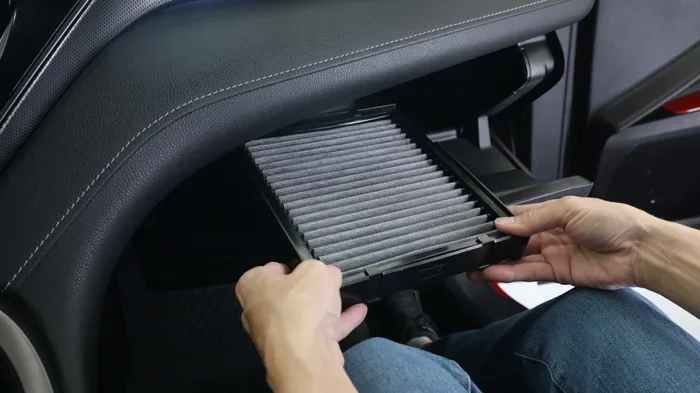
- Locate the filter housing. In most cars, it is behind the glove box. Push the glove box in until it releases from the stoppers. In some vehicles, you may need to look under the dashboard on the passenger side.
- Open the filter cover. Remove the screws or clips holding the cover in place. Set them aside carefully so you do not lose them.
- Remove the old filter. Pull it out gently and note which direction the airflow arrow is pointing. This helps you install the new filter correctly.
- Inspect the housing. Use a vacuum or a damp cloth to clean any debris inside the filter housing before inserting the new filter.
- Insert the new filter. Place it in the same orientation as the old one, with the airflow arrow pointing toward the AC system.
- Replace the cover. Secure it with the screws or clips you removed earlier.
- Test the AC. Turn on the air conditioning and check for strong airflow from the vents. You should feel the difference immediately.
It really is that simple. Once you have done it a couple of times, you will be able to knock it out in five minutes flat.
Where to Buy the Right Filter
Cabin air filters are widely available at auto parts stores, online retailers, and dealerships. Prices typically range from $10 to $30 for most vehicles. OEM filters from the dealership tend to cost a bit more, but aftermarket options from reputable brands offer excellent quality at a lower price point. Always double-check that the filter fits your specific make, model, and year.
Quick Tips and Common Mistakes
Replacing the cabin filter is simple, but there are a few things that can trip you up. Here are some quick tips and common mistakes to keep in mind.
Quick Tips for Better AC Performance
- Check the filter during every oil change. This is an easy way to stay on top of maintenance without thinking about it.
- Run the AC on fresh air mode regularly. Recirculated air does not pass through the cabin filter as effectively, so fresh air mode helps the filter do its job.
- Do not wash a paper cabin filter. Unlike engine air filters, most cabin filters are not washable. Always replace them with a new one.
- Keep your windows slightly open when parked in dusty areas. This reduces the amount of dust pulled into the ventilation system when you start the car.
Common Mistakes to Avoid
- Installing the filter backwards. Always follow the airflow direction arrows printed on the filter frame.
- Forgetting to replace the filter cover. This can let unfiltered air enter the system and cause dust buildup on the evaporator coil.
- Ignoring the filter for years. Some drivers go 30,000 or 40,000 miles without changing it. By that point, the filter is so clogged it can actually restrict airflow more than having no filter at all.
- Using the wrong filter size. A filter that is too small will not seal properly, and one that is too big will not fit. Always match the part number to your vehicle.
Expert Insights on Cabin Filter Maintenance
We spoke with several experienced auto mechanics to get their take on cabin filter maintenance and its impact on AC performance. Here is what the professionals had to say.
What Mechanics Recommend
Most mechanics agree that cabin air filter replacement is one of the most overlooked yet impactful maintenance tasks. Many drivers come in complaining about weak AC cooling, only to discover that a simple filter change solves the problem entirely. One veteran mechanic put it simply: “I would check the cabin filter before touching anything else in the AC system. It is the first thing that should be inspected.”
Experts also emphasize that skipping this maintenance can lead to more expensive repairs. A severely clogged filter can cause the evaporator coil to freeze up or the AC compressor to overheat. These are far more costly fixes than a $15 filter replacement.
Long-Term Benefits of Regular Filter Changes
Consistent cabin filter maintenance offers benefits that go beyond immediate AC performance:
- Extended AC system life: Less strain on the compressor and other components means fewer breakdowns and a longer-lasting system.
- Better fuel economy: When the AC compressor does not work overtime, it uses less engine power, which can improve gas mileage slightly.
- Healthier cabin air: Regular filter changes keep allergens, bacteria, and pollutants from building up inside the ventilation system.
- Consistent performance year-round: A clean filter helps both the AC in summer and the heater in winter work at their best.
When a Filter Change Is Not Enough
While replacing the cabin air filter improves AC performance in most cases, it is not a cure-all. If you have a fresh filter installed and your AC still does not cool properly, there may be other issues at play. Low refrigerant levels, a failing compressor, a clogged condenser, or a malfunctioning blend door could all be the real problem.
In these cases, it is best to take your car to a qualified mechanic. They can run diagnostic tests, check the AC refrigerant levels, and inspect the entire cooling system. A professional AC service typically includes a refrigerant recharge, leak check, and full system inspection. This ensures that every component is working as it should.
The key takeaway is this: start with the simplest and cheapest fix first. A cabin filter replacement costs very little and takes almost no time. If that does not solve the problem, you can then look at more complex issues without wasting money or effort.
Conclusion
The answer to the question does replacing the cabin air filter improve AC performance is a clear and definitive yes. A clean cabin filter allows proper air flow, reduces strain on the AC compressor, and helps the entire air conditioning system work efficiently. The difference can be felt immediately in stronger cooling, faster temperature drops, and better air quality inside the car.
Regular cabin air filter replacement is one of the easiest and most affordable car maintenance tasks you can do. It takes just a few minutes, costs under $30 for most vehicles, and delivers noticeable results. Whether you handle the job yourself or have it done at a shop, staying on top of this simple maintenance item pays off in comfort, performance, and long-term savings.
Do not wait until your AC stops cooling properly. Check your cabin filter today, and make it a regular part of your car maintenance routine. Your air conditioning system and your lungs will both thank you.
Frequently Asked Questions
How much does a cabin air filter cost to replace?
A cabin air filter typically costs between $10 and $30 for the part itself. If you take it to a shop for replacement, you may pay an additional $20 to $50 for labor. However, doing it yourself takes only a few minutes and requires no special tools, making it one of the cheapest maintenance tasks you can do.
Can a dirty cabin air filter cause the AC to stop working entirely?
In most cases, a dirty cabin filter will not completely stop the AC from working, but it can significantly reduce airflow and cooling power. In extreme cases where the filter is completely blocked, the blower motor may struggle or the evaporator coil can freeze up, leading to a total loss of cooling until the problem is fixed.
How do I know which cabin air filter is right for my car?
Check your vehicle owner manual for the correct part number and filter type. You can also use online parts finders by entering your make, model, and year. Most auto parts stores have staff who can help you find the right filter quickly and easily.
Is it OK to drive without a cabin air filter?
Driving without a cabin air filter is not recommended. While the car may still run, unfiltered air will enter the cabin, allowing dust, pollen, and debris to accumulate on the evaporator coil and inside the ventilation system. Over time, this can cause odors, reduced air quality, and potential damage to AC components.
What is the difference between a cabin air filter and a pollen filter?
There is essentially no difference. “Pollen filter” is just another common name for a cabin air filter. Both terms refer to the same component that filters dust, pollen, and other particles from the air entering the passenger cabin. Some premium filters include activated carbon for odor removal, but the basic function is the same.
Can I clean and reuse my cabin air filter instead of replacing it?
Most cabin air filters are not designed to be washed or reused. They are made from paper or fibrous materials that lose their filtering ability when wet or compressed. A few reusable cabin filters exist, but they are uncommon. For the best AC performance and air quality, stick with replacing the filter with a new one at the recommended intervals.