Hawaii Window Tint Law A Complete Guide for Residents
Hawaii Window Tint Law sets clear rules for how dark and reflective your vehicle windows can be. Every car owner in the Aloha State should know the legal tint limits before hitting the road. This guide covers VLT percentages, exemptions, fines, and practical tips to keep you compliant and protected from Hawaii’s intense sun.
If you live in Hawaii and want to tint your car windows, you need to know the rules. Hawaii Window Tint Law is specific and enforceable. The state has clear regulations about how dark, how reflective, and where you can apply tint on your vehicle. Understanding these rules before you visit a shop can save you time, money, and frustration. This guide breaks down everything you need to know about car window tinting laws in Hawaii.
Hawaii is known for its beautiful beaches and strong sunshine. The sun can be intense year-round, which is why many car owners want vehicle window tinting. Tint helps block harmful UV rays, reduces heat inside your car, and adds privacy. But the state also has safety concerns that led to automotive tint regulations. The goal is to balance driver comfort with road safety. Whether you drive a sedan, SUV, or van, knowing the legal tint limits Hawaii is essential.
Key Takeaways
- Legal VLT Limits: Front side windows must allow at least 70% of light through for sedans, while rear windows have more flexibility for SUVs and vans.
- Windshield Rules: Only the top four inches of the windshield can have a non-reflective tint strip under the windshield tint law.
- Medical Exemptions: Hawaii offers a window tint exemption for residents with verified medical conditions that require extra sun protection.
- Penalties Are Real: Illegal tint can result in fines starting around $200 and may require you to remove the tint immediately.
- Reflective Tint Is Banned: Reflective tint Hawaii regulations prohibit metallic or mirrored-looking tint on all vehicle windows.
- Choose the Right Tint: Ceramic and high-quality UV-blocking films offer the best protection and stay within legal tint limits Hawaii requirements.
📑 Table of Contents
- What Are Hawaii Window Tint Laws?
- Legal Tint Limits by Vehicle Window
- Tint Exemptions and Special Permits
- Penalties for Illegal Window Tint in Hawaii
- Choosing the Right Tint for Your Vehicle
- Quick Tips for Staying Compliant
- Expert Insights on Window Tinting in Hawaii
- Common Mistakes and How to Avoid Them
- Benefits of Legal Window Tinting in Hawaii
- Frequently Asked Questions
- Conclusion
What Are Hawaii Window Tint Laws?
Hawaii Window Tint Law is part of the state’s vehicle code. These rules control the tint darkness law for every window on your car. The main measurement used is called Visible Light Transmission, or VLT. VLT tells you how much light the tint allows to pass through your window. A higher VLT means more light comes through, while a lower VLT means a darker tint.
Understanding VLT (Visible Light Transmission)
VLT is the key number in Hawaii Window Tint Law. It is measured as a percentage. For example, a tint with 70% VLT lets 70% of outside light into your car. A tint with 35% VLT only lets 35% of light through. The state sets minimum VLT levels for each window. If your tint is darker than allowed, you are breaking the law. Always ask your tint installer about the VLT percentage before they apply the film.
Here is a simple way to think about it. Imagine holding your tinted window up to a light source. The visible light transmission tells you how much light passes through the glass and tint combined. Factory tint on new cars usually has a VLT around 70% to 80%. Aftermarket tint will lower that number. You need to make sure the combined VLT meets the state minimum.
Why These Laws Exist
The state of Hawaii created car window tinting laws for important reasons. Safety is the top priority. Dark tint can make it hard for drivers to see at night or in tunnels. It can also make it difficult for police officers to see inside your vehicle during a traffic stop. The laws also help ensure that drivers can see pedestrians and other cars clearly. In a place like Hawaii, where driving conditions can change quickly, keeping windows clear is crucial.
Another reason is medical safety. Some people need darker tint for health reasons, such as light sensitivity or skin conditions. That is why the state has a window tint exemption process. But for most drivers, the standard rules apply. Understanding why these laws exist can help you make better choices about your tint.
Legal Tint Limits by Vehicle Window
Hawaii Window Tint Law sets different limits depending on the type of vehicle you drive. The rules for sedans are different from the rules for SUVs and vans. Let us break down the legal tint limits Hawaii for each window type.
Sedans and Passenger Vehicles
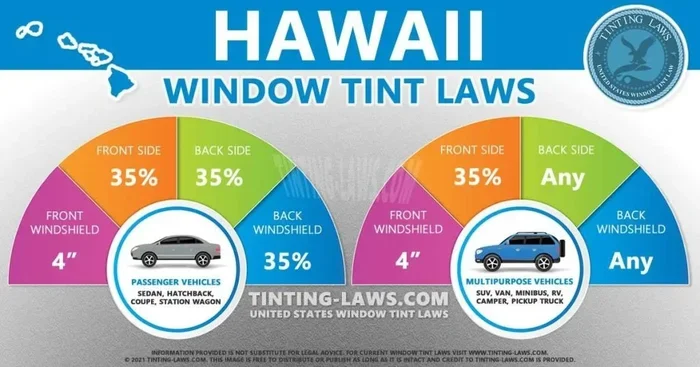
For sedans, the rules are strict on the front windows. The windshield tint law in Hawaii allows a non-reflective tint strip on the top four inches of the windshield. Below that strip, the windshield must remain clear. The front side windows must allow at least 70% of light through. This means you can only apply a very light tint to the driver and passenger side windows.
The rear side windows and rear windshield on sedans have more flexibility. You can apply tint to these windows at any darkness level. There is no minimum VLT requirement for the rear windows on sedans. This gives sedan owners some freedom to add darker tint to the back of their car for privacy or heat reduction.
SUVs and Vans
For SUVs and vans, the front side window rules are the same as sedans. The front side windows must have a VLT of at least 70%. The windshield can have a non-reflective strip on the top four inches only.
However, SUVs and vans have more relaxed rules for the rear side windows and rear windshield. You can apply tint of any darkness to these windows. This is great news for SUV and van owners who want better sun protection or more privacy. Just remember that the front windows still need to meet the 70% VLT requirement. Always check with your tint installation Hawaii provider to confirm the right film for your vehicle type.
Tint Exemptions and Special Permits
Not everyone can follow the standard Hawaii Window Tint Law rules. Some people have medical conditions that make them very sensitive to sunlight. For these individuals, Hawaii offers a special window tint exemption. This allows them to use darker tint than what is normally legal.
Medical Exemption
The medical tint exemption Hawaii process requires documentation from a licensed physician. You must provide a written statement explaining your condition and why darker tint is medically necessary. This statement must be kept in your vehicle at all times. You can present it to law enforcement if you are stopped.
Common conditions that qualify include lupus, photosensitivity disorders, and certain skin conditions. The exemption is not automatic. You must apply through the proper channels and carry the documentation with you. If you are pulled over, the exemption form helps explain why your tint is darker than the legal limit. Without this documentation, you could still receive a tint ticket fine Hawaii law enforcement issues.
Law Enforcement and Government Vehicles
Police cars and government vehicles may have different tint rules. These vehicles often need darker windows for officer safety and privacy. However, these exceptions are specific and regulated. Regular car owners cannot apply the same tint as government vehicles. Stick to the standard automotive tint regulations for your personal vehicle.
Penalties for Illegal Window Tint in Hawaii
Breaking Hawaii Window Tint Law comes with real consequences. The state takes tint violations seriously. If you are caught driving with illegal tint, you will face fines and possible requirements to remove the tint.
First-Time Violation
A first-time tint ticket fine Hawaii can cost around $200 or more. The exact amount depends on the county and the severity of the violation. In addition to the fine, you may be required to remove the illegal tint before you can continue driving. This means you will pay for the tint removal and potentially the cost of new, legal tint.
Some officers may give you a warning on the first offense. However, this is not guaranteed. Do not assume you will get a pass. The safest approach is to make sure your tint is legal from the start. Always ask your installer for a certificate that proves the VLT of your tint.
Repeated Offenses
If you get caught again with illegal tint, the penalties increase. Fines can go up, and you may face additional charges. Repeated violations can also lead to your vehicle being cited or impounded in extreme cases. Beyond the legal trouble, illegal tint can cause problems when you try to sell or register your vehicle. Hawaii law enforcement regularly checks for illegal tint during traffic stops and vehicle inspections.
Choosing the Right Tint for Your Vehicle
Now that you know the rules, it is time to choose the right tint. Not all tint films are the same. The type of tint you pick affects your comfort, your legal compliance, and your budget. Hawaii Window Tint Law gives you a framework, but the choices are up to you.
Ceramic vs. Dyed Tint
Ceramic tint is one of the best options for Hawaii’s climate. It blocks a lot of heat and UV rays without making your windows too dark. Ceramic tint Hawaii drivers love is popular because it stays within legal VLT limits while still offering excellent protection. Ceramic tint does not fade quickly and does not interfere with electronic signals like GPS or phone reception.
Dyed tint is the more affordable option. It looks good and provides decent heat rejection. However, dyed tint can fade over time, especially in Hawaii’s strong sun. It may also bubble or peel after a few years. If you want a budget-friendly option, dyed tint works. But for long-lasting performance, ceramic is the better choice.
Comparison Table: Tint Types
| Tint Type | Heat Rejection | UV Protection | Durability | Cost | Legal Compliance |
|---|---|---|---|---|---|
| Ceramic | Excellent | 99% Blocked | 10+ Years | Higher | Easy to Stay Compliant |
| Dyed | Good | Good | 3-5 Years | Lower | Risk of Fading |
| Metallic | Very Good | Good | 5-7 Years | Medium | Banned in Hawaii |
As the table shows, metallic tint is banned in Hawaii. This is because reflective tint Hawaii regulations prohibit any metallic or mirrored appearance. Ceramic and dyed tints are your best legal options. Choose based on your budget and how long you want the tint to last.
Best Tint Brands for Hawaii’s Climate
Hawaii’s climate is unique. The strong sun and high humidity demand tint that can handle the heat. Look for brands that offer high heat rejection and UV protection. Some top brands include 3M, Llumar, and SunTek. These brands offer films specifically designed for sun protection tint in tropical climates.
When choosing a brand, ask about the warranty. Quality tint brands offer warranties that cover bubbling, peeling, and fading. This gives you peace of mind and protects your investment. Your tint installation Hawaii shop can help you compare brands and find the best film for your vehicle.
Quick Tips for Staying Compliant
- Always ask for a VLT certificate from your installer after the tint is applied. This document proves your tint is legal.
- Keep your medical exemption paperwork in your glove box if you have a special permit.
- Avoid aftermarket tint shops that promise “no questions asked” dark tint. They may not follow Hawaii Window Tint Law.
- Check your local county rules as some counties may have additional enforcement policies.
- Re-tint when your film fades to maintain the correct VLT level over time.
Expert Insights on Window Tinting in Hawaii
Expert Insights: Professionals in the tint installation Hawaii industry recommend ceramic film for most vehicle owners. It provides the best balance of heat rejection, UV protection, and legal compliance. Experts also advise against going too dark on the front windows, even if the rear windows allow it. Keeping your front side windows at 70% VLT ensures you stay safe and avoid fines.
Another expert tip is to consider UV protection car windows even if you choose a lighter tint. Many high-quality films block 99% of UV rays regardless of their darkness level. This means you can stay legal and still get excellent sun protection. Ask your installer about heat rejection tint options that meet the side window tint Hawaii requirements.
Professionals also stress the importance of proper curing time. In Hawaii’s humid climate, tint can take longer to cure fully. Avoid rolling down your windows for at least 3-5 days after installation. This allows the film to bond properly and prevents peeling or bubbling. Following this simple step extends the life of your vehicle window tinting significantly.
Common Mistakes and How to Avoid Them
Many car owners make mistakes when tinting their windows in Hawaii. These mistakes can lead to fines, wasted money, and frustration. Here are some common errors and how to avoid them.
Wrong VLT Selection
The most common mistake is choosing a tint that is too dark. Some shops may apply a tint that looks great but does not meet the legal tint limits Hawaii requirements. Always ask for the VLT percentage of the film before it is applied. If you are unsure, request a VLT certificate from the installer. This document proves your tint is legal and can protect you during a traffic stop.
Another mistake is confusing factory tint with aftermarket tint. Your car may already have some tint from the factory. When adding aftermarket tint, the combined VLT must still meet the state minimum. Ask your installer to measure the VLT after application to be sure.
DIY Installation Risks
Some people try to tint their own windows to save money. DIY tint kits are widely available online. However, self-installation often leads to bubbles, peeling, and uneven application. Poorly installed tint can also violate Hawaii Window Tint Law if it is too dark or applied incorrectly. Professional installation ensures the tint meets legal requirements and looks great. It is worth the investment.
DIY tinting can also void your vehicle warranty if the tint interferes with electronic systems. Professional installers know how to apply tint safely. They also understand the automotive tint regulations in Hawaii and can guide you to the right product.
Benefits of Legal Window Tinting in Hawaii
Staying within the law has many benefits. Legal vehicle window tinting protects you from the sun’s harmful rays. It also keeps your car cooler in Hawaii’s tropical heat. Here are some key benefits of getting your tint done right.
- UV Protection: Quality tint blocks up to 99% of UV rays. This protects your skin and reduces your risk of skin cancer. It also protects your car’s interior from fading and cracking.
- Heat Rejection: Tint can reduce the interior temperature of your car by up to 60%. This means a cooler, more comfortable ride. You will rely less on your air conditioning, which saves fuel.
- Glare Reduction: Tint reduces glare from the sun and headlights at night. This makes driving safer and more comfortable, especially on Hawaii’s bright roads.
- Privacy and Security: Legal tint adds a layer of privacy. It makes it harder for people to see your belongings inside the car. This can deter theft.
- Style: Tinted windows give your car a sleek, polished look. It is a simple way to enhance your vehicle’s appearance.
All of these benefits are available while staying within the Hawaii Window Tint Law limits. The key is to choose the right film and have it installed professionally. A quality tint job pays for itself over time through comfort, protection, and savings.
Also consider the resale value of your vehicle. A well-maintained tint job can make your car more attractive to buyers. It shows that the vehicle has been cared for. Just make sure the tint is legal and does not have any bubbles or peeling. First impressions matter, and clean, compliant tint adds to your car’s appeal.
Frequently Asked Questions
Can I tint my windshield in Hawaii?
Yes, but only the top four inches of the windshield can have a non-reflective tint strip. The rest of the windshield must remain clear. This rule is part of the windshield tint law in Hawaii. The strip helps reduce glare from the sun without blocking your view of the road. Any tint below the four-inch line is illegal and can result in a fine.
How much does a window tint ticket cost in Hawaii?
A tint ticket fine Hawaii law enforcement issues typically starts around $200 for a first offense. The exact amount varies by county and the severity of the violation. You may also be required to remove the illegal tint immediately. Repeated offenses can lead to higher fines and additional penalties. Always carry documentation if you have a medical exemption.
Is reflective tint legal in Hawaii?
No. Hawaii Window Tint Law bans metallic or mirrored-looking tint on all vehicle windows. Reflective tint can create glare for other drivers, which is a safety hazard. Stick to non-reflective tint films that meet the VLT requirements. Your installer can help you choose a legal, non-reflective option that still looks great.
Can I get a tint exemption for a medical condition?
Yes. Hawaii offers a medical tint exemption for residents with verified medical conditions. You will need a written statement from a licensed physician explaining why darker tint is necessary. Keep this documentation in your vehicle at all times. Without it, you could still be fined for illegal tint. The exemption allows you to use darker tint safely and legally.
What is the VLT requirement for front side windows in Hawaii?
The visible light transmission requirement for front side windows is at least 70% VLT. This applies to both sedans and SUVs. The front side windows must let at least 70% of outside light pass through. This ensures drivers can see clearly, especially at night or in low-light conditions. Ask your installer to provide a VLT certificate for your records.
How long does window tint last in Hawaii?
With proper care, quality tint can last five to ten years. Ceramic tint tends to last longer than dyed tint. Hawaii’s strong sun and humidity can shorten the lifespan of lower-quality films. To make your tint last, avoid rolling down your windows for a few days after installation. Choose a reputable tint installation Hawaii provider and ask about the warranty. Regular maintenance and avoiding harsh cleaners will also extend the life of your tint.
Conclusion
Hawaii Window Tint Law is clear and enforceable. Understanding the rules before you tint your windows is the smartest thing you can do as a car owner. From VLT limits to exemptions and penalties, this guide has covered the essentials. Always choose legal tint that meets the state’s requirements for your vehicle type.
Whether you want heat protection, UV defense, or added privacy, there is a legal tint option for you. Work with a trusted tint installation Hawaii provider who understands the local regulations. Keep your documentation handy, especially if you have a medical exemption. By following the law, you enjoy all the benefits of window tint without the risk of fines or removal orders.
Take the time to research your options. Choose quality film, get professional installation, and stay compliant with Hawaii Window Tint Law. Your car, your health, and your wallet will thank you. Drive safe, stay protected, and enjoy the ride in your beautifully tinted vehicle.