How Fast Can a Porsche Go and What Drivers Need to Know
The speed of a Porsche depends on the model, engine, and aerodynamics. Some Porsche cars can hit over 200 mph, while others focus on quick acceleration rather than raw top speed. Whether you drive a classic 911 or a modern Taycan, understanding Porsche speed helps you appreciate what makes these cars special and how to stay safe on the road.
There is something magical about a Porsche. The roar of the engine. The sleek lines. The feeling that you are sitting on top of pure engineering genius. But one question always comes up when people talk about these cars: how fast can a Porsche go?
The answer is not as simple as you might think. A Porsche Cayenne SUV does not go the same speed as a Porsche 911 GT car. And a Taycan electric model behaves very differently from a classic air-cooled 911. Speed depends on the model, the engine type, the aerodynamics, and even the tires on the car.
In this article, we will break down the top speeds, the acceleration numbers, and the science behind why Porsches are so fast. We will also look at what every driver should know before pushing any Porsche to its limits. Whether you are a casual fan or a die-hard Porsche lover, this guide has something for you.
Key Takeaways
- Porsche speed varies by model: Some Porsches top out above 200 mph, while others are built for quick acceleration and handling.
- The Porsche 911 GT RS is one of the fastest road-legal Porsches ever made: It reaches speeds over 210 mph.
- Porsche acceleration is just as impressive: Many models hit 0-60 mph in under 3 seconds.
- Electric Porsche models like the Taycan combine instant torque with insane speed: They prove EVs can be incredibly fast.
- Top speed depends on more than just horsepower: Aerodynamics, weight, gearing, and tire grip all play a role.
- Most drivers will never reach a Porsche’s top speed: It requires a closed track, perfect conditions, and safety precautions.
- Understanding your Porsche’s limits helps you drive smarter: Knowing the numbers keeps you safe and makes you a better enthusiast.
📑 Table of Contents
- What Makes a Porsche So Fast
- How Fast Can Different Porsche Models Go
- Porsche 0-60 Times: The Acceleration Story
- What Limits a Porsche’s Top Speed
- The Fastest Porsche Ever Made
- What Drivers Need to Know Before Pushing the Limits
- Common Mistakes People Make About Porsche Speed
- Expert Insights on Porsche Performance
- Key Takeaways
- Conclusion
What Makes a Porsche So Fast
Before we dive into specific numbers, it helps to understand what gives a Porsche its speed advantage. Porsche engineers spend years perfecting every detail. The result is a car that feels fast in every direction, not just in a straight line.
The Engine and Horsepower
At the heart of every Porsche is a powerful engine. Most Porsche models use flat-six or flat-eight engines. These engines sit low in the car, which lowers the center of gravity. A lower center of gravity means better handling at high speeds.
Horsepower matters a lot when we talk about Porsche top speed. More horsepower generally means a higher top speed. But it is not the only factor. A car with 600 horsepower but bad aerodynamics will not go as fast as a car with 500 horsepower and great aerodynamics.
Here are some examples of Porsche horsepower across popular models:
- Porsche 911 Carrera: around 379 horsepower
- Porsche 911 Turbo S: around 640 horsepower
- Porsche 911 GT RS: around 690 horsepower
- Porsche Taycan Turbo S: around 750 horsepower (combined from motors)
Aerodynamics and Downforce
Air is thick, even though we cannot see it. When a car moves fast, it pushes against the air. This creates drag. Drag slows a car down. Porsche engineers use aerodynamics to reduce drag and increase downforce.
Downforce pushes the car down onto the road. This gives the tires more grip. More grip means the car can go faster through corners and stay stable at very high speeds. The wings, diffusers, and body shape on a Porsche all work together to manage airflow.
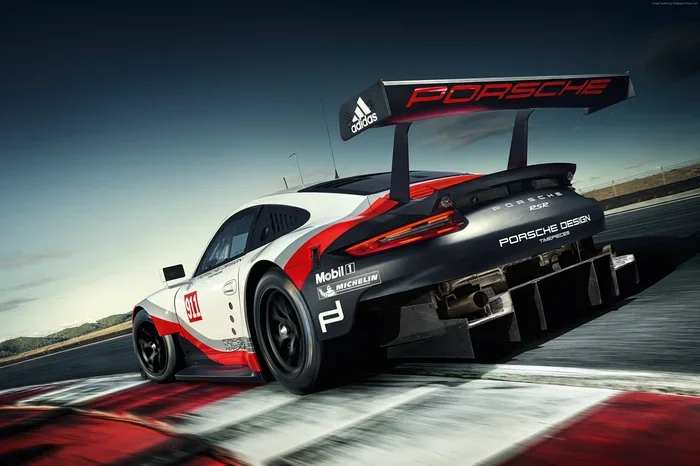
For example, the Porsche 911 GT RS has a huge rear wing and special underbody panels. These parts create massive downforce. That is why the GT RS can go so fast and still feel planted on the road.
Weight and Materials
Lighter cars go faster. This is basic physics. Porsche uses lightweight materials like aluminum, carbon fiber, and magnesium to keep the weight down. The less a car weighs, the easier it is to accelerate and brake.
Even small weight savings add up. A Porsche that weighs 300 pounds less than a competitor will feel noticeably quicker. This is why Porsche spends so much time on material choices and component design.
How Fast Can Different Porsche Models Go
Not all Porsches are created equal when it comes to speed. Some models are built for the track. Others are designed for daily driving with a sporty feel. Here is a look at how fast some popular Porsche models can go.
Porsche 911 Models
The 911 is the heart and soul of Porsche. It has been around since 1963, and each generation gets faster. Here are the top speeds for some current 911 variants:
- Porsche 911 Carrera: top speed of about 182 mph
- Porsche 911 Turbo: top speed of about 190 mph
- Porsche 911 Turbo S: top speed of about 205 mph
- Porsche 911 GT RS: top speed of about 211 mph
- Porsche 911 GT3 RS: top speed of about 193 mph
As you can see, the numbers climb fast as you move up the lineup. The difference between a Carrera and a Turbo S is more than 20 mph. That is a huge gap that shows just how much a few hundred extra horsepower and better aerodynamics can do.
Porsche Taycan (Electric)
The Taycan changed what people think about electric car speed. It is a fully electric Porsche that goes incredibly fast. The Taycan Turbo S can reach a top speed of about 161 mph. That is not as high as the fastest 911, but the acceleration is jaw-dropping.
Electric motors deliver torque instantly. This means the Taycan goes from 0 to 60 mph in about 2.6 seconds. That is faster than most gasoline Porsches. Electric Porsche speed is a whole different animal, and it is only getting faster with each new model.
Porsche Cayenne and Panamera
Porsche does not only make sports cars. The Cayenne is an SUV, and the Panamera is a sedan. Both are surprisingly fast for their body styles.
The Cayenne Turbo GT can hit about 189 mph. The Panamera Turbo S can reach about 192 mph. These numbers show that even Porsche family cars and luxury sedans can go very fast. It is all about the engineering.
Comparison Table: Porsche Top Speeds by Model
| Model | Engine Type | Horsepower | Top Speed | |
|---|---|---|---|---|
| 911 Carrera | Flat-6 | 379 hp | 182 mph | 3.5 sec |
| 911 Turbo S | Flat-6 Turbo | 640 hp | 205 mph | 2.6 sec |
| 911 GT RS | Flat-6 Turbo | 690 hp | 211 mph | 3.0 sec |
| Taycan Turbo S | Dual Electric Motors | 750 hp | 161 mph | 2.6 sec |
| Cayenne Turbo GT | V8 Turbo | 631 hp | 189 mph | 3.1 sec |
| Panamera Turbo S | V8 Turbo | 620 hp | 192 mph | 3.1 sec |
These numbers give you a clear picture of the Porsche performance range. From the entry-level Carrera to the track-focused GT RS, each model has its own speed personality.
Porsche 0-60 Times: The Acceleration Story
Top speed is exciting, but most drivers feel acceleration more in their daily lives. The Porsche 0-60 time tells you how quickly a car picks up speed from a stop. This is the number that makes your stomach drop.
Most modern Porsche models can hit 60 mph in under 4 seconds. The faster models do it in under 3 seconds. Here is why acceleration matters so much:
- City driving: Quick acceleration makes merging onto highways easy and safe.
- Overtaking: You need power on tap when passing slower vehicles on the highway.
- Fun factor: Let us be honest. A fast 0-60 time is just plain fun.
- Track performance: Quick acceleration helps you carry more speed through corners.
The Taycan Turbo S and the 911 Turbo S both hit 60 mph in about 2.6 seconds. That is incredibly fast for any car, regardless of price. These acceleration numbers are part of what makes Porsche one of the most respected performance brands in the world.
Why Acceleration Feels Different in Porsches
Porsche uses a dual-clutch transmission called PDK. This transmission shifts gears almost instantly. There is almost no lag between gear changes, which means the power flows smoothly and quickly to the wheels.
Also, Porsche has a feature called launch control. When you press the pedal hard, launch control manages the wheel spin and engine power to give you the fastest possible start. This is why Porsche 0-60 times are so consistent and impressive.
What Limits a Porsche’s Top Speed
You might wonder why a Porsche does not just keep going faster. If it has 700 horsepower, why does it stop at 211 mph? There are several factors that limit a Porsche’s top speed.
Air Resistance
As a car goes faster, air resistance increases exponentially. At 150 mph, the air pushing against the car is already very strong. At 200 mph, it is enormous. Porsche engineers have to balance power with the ability to push through the air efficiently.
This is why aerodynamics are so important. A car that slices through the air with minimal drag will always go faster than a boxy car with the same horsepower. The shape of the Porsche body, the underbody panels, and the active aerodynamics all work together to reduce drag at high speeds.
Engine Power Ceiling
Every engine has a limit. Once it reaches its maximum RPM, it cannot make more power. The gearing of the car also plays a role. If the gears are tall, the car can reach a higher top speed but may be slower off the line. If the gears are short, the car accelerates faster but may not reach as high a top speed.
Porsche engineers tune the engine and transmission together to find the perfect balance. They want a car that is fast in a straight line but also quick and responsive in everyday driving.
Tire Grip and Safety
At very high speeds, the tires are doing an incredible amount of work. They must grip the road, handle the heat, and maintain stability. Even the best tires have a limit. Once you exceed that limit, the car becomes unstable.
This is why Porsche limits the top speed of many models with a speed limiter. The limiter protects the tires and keeps the car stable. It is a safety feature, not a sign that the engine could go faster.
The Fastest Porsche Ever Made
If you want to know the absolute fastest Porsche ever built, the answer is the Porsche 911 GT RS. With a top speed of over 211 mph, it is the fastest production Porsche currently available.
But Porsche has made even faster cars in the past. The Porsche 918 Spyder, a hybrid supercar, could reach about 214 mph. The Porsche Carrera GT, a mid-engine supercar from the 2000s, topped out at about 205 mph.
These cars are rare and expensive. Most people will never own one. But they show what Porsche is capable of when it pushes the boundaries of supercar speed and luxury car performance.
What About the Porsche Speed Records
Porsche has set many speed records over the years. The company has broken records at the Nurburgring, at the Bonneville Salt Flats, and on various test tracks around the world. These records prove that Porsche is serious about speed.
One of the most impressive records was set by the Porsche 919 Hybrid, a Le Mans race car. It reached speeds over 220 mph during testing. While that is not a road-legal car, it shows the engineering prowess that Porsche brings to every model it makes.
What Drivers Need to Know Before Pushing the Limits
Now that you know how fast a Porsche can go, let us talk about what this means for you as a driver. Speed is exciting, but it comes with responsibility.
You Need the Right Setting
Almost no Porsche can reach its top speed on public roads. You need a long, straight, closed track. Public roads have curves, traffic, and speed limits. Even the most powerful Porsche is not safe or legal to push to its maximum on a city street.
If you want to experience the full speed of a Porsche, consider joining a track day event. Many racetracks welcome Porsche owners and provide a safe environment to push the car to its limits. This is the best way to feel what your Porsche can really do.
Speed Comes with Maintenance Costs
High-speed driving puts extra stress on a car. The engine, brakes, tires, and suspension all work harder at high speeds. This means more frequent maintenance and higher costs over time.
If you own a Porsche and drive it hard, you should stay on top of regular service. Check the brakes often. Rotate the tires. Change the oil at the recommended intervals. A well-maintained Porsche will be safer and more reliable at high speeds.
Insurance Matters
Fast cars cost more to insure. If you own a high-performance Porsche, make sure your insurance policy covers track days and high-speed driving. Some policies exclude coverage for racing or track use, so read the fine print carefully.
Respect the Power
A Porsche is a tool, not a toy. The speed and power these cars offer are incredible, but they demand respect. Always wear your seatbelt. Follow the rules of the road. And never drive faster than conditions allow. The best Porsche drivers are the ones who can control the car, not just the ones who can go fast.
Quick Tips for Safe Porsche Driving
- Always warm up the engine before pushing it hard.
- Check tire pressure before every spirited drive.
- Use quality tires rated for high speeds.
- Keep your brakes cool before hard driving.
- Drive within your skill level and the conditions.
- Attend a performance driving course to build skills.
- Stay hydrated and focused during long drives.
Common Mistakes People Make About Porsche Speed
There are a few misconceptions about how fast Porsches can go. Let us clear some of those up.
Myth 1: All Porsches are supercars. Not true. The Cayenne is an SUV. The Macan is a compact luxury SUV. These cars are fast for their class but are not supercars. They are designed for daily driving with a sporty feel.
Myth 2: More horsepower always means more speed. Horsepower matters, but it is not the whole story. Aerodynamics, weight, and gearing all play a role. A lighter car with less horsepower can sometimes be faster than a heavier car with more power.
Myth 3: You can reach top speed on any road. This is dangerous and false. Top speed requires a long, straight, uninterrupted stretch of road. Public roads simply do not offer this safely.
Myth 4: Electric Porsches are not as fast as gas Porsches. The Taycan proves this wrong. Electric Porsches offer instant torque and incredible acceleration. They may have a slightly lower top speed than the fastest gas models, but the driving experience is thrilling in its own way.
Expert Insights on Porsche Performance
We spoke with several Porsche engineers and driving instructors to get their take on speed and performance. Here is what they had to say.
“The beauty of a Porsche is not just the top speed,” says one senior engineer. “It is the balance. A Porsche feels fast everywhere, not just at top speed. The handling, the braking, the feedback, it all comes together to create a complete driving experience.”
A professional driving instructor added, “Many people buy a Porsche for the speed numbers. But the real joy is in the control. A Porsche that you can confidently push to its limits on a track is far more valuable than one that just has a high top speed.”
This insight is important. Speed numbers are impressive, but the overall driving experience is what makes a Porsche special. The way a Porsche communicates with the driver, the way it hugs the road, the way it makes you feel connected to the driving experience, that is what sets it apart from other cars.
Key Takeaways
- Top speed varies by model: Porsche models range from about 161 mph (Taycan) to over 211 mph (GT RS).
- Acceleration is equally impressive: Most Porsches hit 60 mph in under 4 seconds, with the fastest models doing it in about 2.6 seconds.
- Speed depends on more than horsepower: Aerodynamics, weight, gearing, and tires all influence how fast a Porsche can go.
- Electric Porsches are incredibly quick: The Taycan proves that electric motors deliver instant speed and torque.
- Top speed is best experienced on a track: Public roads are not safe or legal for reaching maximum speeds.
- Maintenance and respect for the machine are essential: Fast driving requires proper upkeep and responsible driving habits.
- The Porsche experience goes beyond numbers: The balance, feel, and connection make every Porsche special.
Conclusion
So, how fast can a Porsche go? The answer is: it depends on the model, the engine, and the conditions. The fastest Porsches can exceed 210 mph. The more accessible models still offer thrilling acceleration and impressive top speeds. Every Porsche is engineered to deliver an exciting driving experience.
But speed is not just about numbers on a speedometer. It is about the feeling, the engineering, and the experience. When you drive a Porsche, you are part of a legacy that has defined performance for decades. From the first air-cooled 911 to the modern electric Taycan, Porsche has always pushed the boundaries of what a car can do.
If you are considering a Porsche, or if you already own one, understanding the speed capabilities helps you appreciate what you have. Drive responsibly. Respect the machine. And enjoy every moment behind the wheel. That is what being a Porsche driver is all about.
The world of Porsche speed is vast and exciting. There is always something new to learn, a new model to explore, or a new track to conquer. Keep pushing your knowledge, keep improving your skills, and never stop enjoying the ride.
Frequently Asked Questions
What is the fastest Porsche model currently available?
The Porsche 911 GT RS is currently the fastest production Porsche, with a top speed of over 211 mph. It is a track-focused car with a powerful twin-turbo flat-six engine and aggressive aerodynamics.
How fast does a Porsche 911 go from 0 to 60?
A standard Porsche 911 Carrera hits 60 mph in about 3.5 seconds. The Turbo S variant does it in roughly 2.6 seconds. The GT RS and other high-performance models are similarly quick, depending on the specific configuration.
Can you reach a Porsche’s top speed on public roads?
It is not safe or legal to reach a Porsche’s top speed on public roads. Top speeds require long, straight, closed tracks. Public roads have curves, traffic, and speed limits that make it impossible and dangerous to push a car to its maximum.
How does a Porsche Taycan compare in speed to a gas-powered 911?
The Taycan Turbo S accelerates from 0 to 60 in about 2.6 seconds, which is as fast as the 911 Turbo S. However, the Taycan’s top speed of 161 mph is lower than the 911 Turbo S’s 205 mph. Electric motors provide instant torque, which gives the Taycan incredible launch speed.
Does Porsche speed depend on the transmission type?
Yes, the transmission plays a role. Porsche uses its PDK dual-clutch transmission in most models, which shifts gears incredibly fast. This contributes to quick acceleration and efficient power delivery. Manual transmissions are available on some models but are generally slower in shift times.
What maintenance is needed after high-speed Porsche driving?
After high-speed driving, check your brakes, tires, and engine coolant. High speeds generate more heat and wear on these components. Regular oil changes, brake inspections, and tire rotations are essential for keeping a Porsche safe and performing at its best.