How Long to Leave Battery Disconnected for Check Engine
Leaving your battery disconnected for 15 to 30 minutes is usually enough to reset the check engine light. This simple trick clears the ECU memory and wipes out minor fault codes that trigger the dashboard warning. However, the right disconnect time depends on your vehicle model, the type of code stored, and whether the issue has been fully resolved.
That little yellow engine-shaped light on your dashboard can send anyone into a panic. One moment your car feels fine, and the next you see the check engine light glowing steadily on the dash. It is a scary sight, but it does not always mean something is seriously wrong.
Many car owners search for a quick fix, and one of the most popular suggestions is to disconnect the battery. It sounds simple enough, right? Just pull the cables off, wait a bit, and reconnect. The check engine light should go away. But here is the real question: how long to leave battery disconnected for check engine reset? The answer is not always as straightforward as you might hope.
The truth is, the disconnect time varies depending on your vehicle, the type of fault code stored, and the age of your car. In most cases, 15 to 30 minutes does the job. But there is more to it than just pulling a cable and setting a timer. Let us walk through everything you need to know about resetting your check engine light with a battery disconnect.
Key Takeaways
- 15 to 30 minutes is the standard disconnect time for most vehicles to reset the check engine light.
- Always disconnect the negative terminal first to prevent short circuits and electrical damage.
- A check engine light that returns after a reset means there is an underlying problem that needs real repair.
- An OBD-II scanner is a faster and safer alternative to a full battery disconnect for clearing codes.
- Driving a full drive cycle after the reset allows the ECU to relearn and recalibrate properly.
- Some modern vehicles reset the ECU automatically after the battery is reconnected, but others may need a manual relearn procedure.
- Never disconnect the battery while the engine is running or the key is in the ignition.
📑 Table of Contents
- Why the Check Engine Light Comes On
- How Long to Leave Battery Disconnected for Check Engine Reset
- Step-by-Step Guide to Disconnecting Your Battery
- What Happens After You Reconnect the Battery
- When a Battery Disconnect Is Not Enough
- Battery Disconnect vs. OBD-II Scanner: Which Is Better?
- Common Mistakes to Avoid When Resetting the Check Engine Light
- How to Prevent the Check Engine Light from Coming Back
- Expert Insights on Battery Disconnect Resets
- Final Thoughts on How Long to Leave Battery Disconnected
Why the Check Engine Light Comes On
Before you dive into the reset process, it helps to understand why the light is there in the first place. Your car has a built-in computer called the Engine Control Unit, or ECU. This computer constantly monitors sensors throughout the vehicle. When something falls outside of normal range, the ECU stores a diagnostic trouble code, also known as a DTC.
These fault codes are what trigger the check engine light on your dashboard. Some codes point to minor issues, like a loose gas cap. Others signal serious problems, like a failing catalytic converter or oxygen sensor. The light can appear as a steady glow or a flashing warning, and each has a different meaning.
Steady vs. Flashing Check Engine Light
A steady check engine light usually means a non-emergency issue. It is a signal that something needs attention, but you do not need to pull over immediately. A flashing check engine light, on the other hand, is more urgent. It often indicates a misfire or another problem that could damage the catalytic converter if ignored.
Either way, the check engine light is your car’s way of telling you that the diagnostic system has detected something wrong. Simply resetting the light without fixing the root cause is only a temporary solution. The light will almost always come back.
How Long to Leave Battery Disconnected for Check Engine Reset
This is the question most car owners want answered, and the short answer is 15 to 30 minutes. But the full answer depends on a few factors. Let us break it down.
When you disconnect the battery, you cut power to the ECU. This clears the stored fault codes and resets the engine control module memory. However, some vehicles hold onto certain codes even after a disconnect. The wait time ensures that all residual power drains from the capacitors in the ECU.
The Standard Wait Time
For most vehicles, 15 minutes is sufficient to clear minor codes and reset the check engine light. If you want to be safe, wait a full 30 minutes. This gives the ECU enough time to fully power down and wipe its short-term memory.
Here is a simple breakdown of the typical wait times:
- 15 minutes: Enough for most older vehicles and minor codes.
- 30 minutes: Recommended for newer cars with more complex ECU systems.
- Over 30 minutes: Usually unnecessary, but some luxury or European models may benefit from a longer wait.
Does Vehicle Age Affect the Reset Time?
Yes, it does. Older vehicles from the 1990s and early 2000s often reset quickly because their ECU systems are simpler. Newer cars from 2010 and later have more advanced computers with multiple modules. These systems may take longer to fully reset after a battery disconnect.
If you drive a modern vehicle, it is a good idea to wait the full 30 minutes. Cutting the wait short might leave residual codes in the system, and the check engine light could return shortly after you reconnect the battery.
Step-by-Step Guide to Disconnecting Your Battery
A battery disconnect is a straightforward process, but safety matters. If you do not follow the right steps, you could damage your vehicle’s electrical system or even hurt yourself. Here is how to do it properly.
Step 1: Turn Off the Engine and Remove the Key
Make sure your car is completely off. Remove the key from the ignition or make sure the vehicle is in the off position with the push-button start system. Do not disconnect the battery while the engine is running.
Step 2: Locate the Battery
Open the hood and find your car battery. In most vehicles, the battery is in the engine bay. Some cars have the battery in the trunk or under a seat, so check your owner’s manual if you are not sure.
Step 3: Identify the Terminals
You will see two terminals on the battery: positive and negative. The positive terminal has a red cover or a plus sign. The negative terminal has a black cover or a minus sign. You will always disconnect the negative terminal first.
Step 4: Disconnect the Negative Terminal
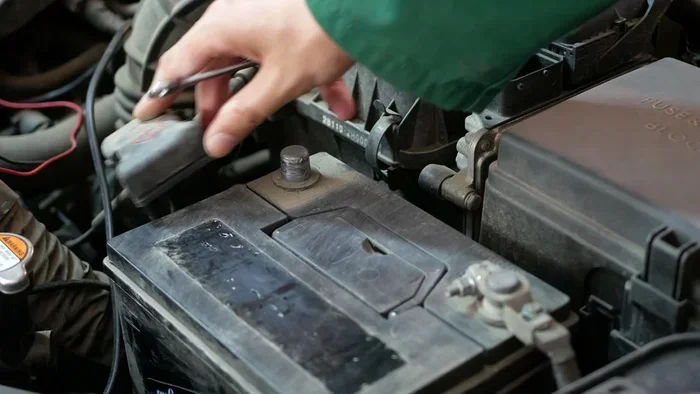
Use a wrench to loosen the nut on the negative terminal clamp. Once loose, carefully lift the cable off the battery post. Tuck the cable away so it cannot accidentally touch the terminal again.
Step 5: Wait the Required Time
This is where the timing matters. Wait at least 15 minutes, though 30 minutes is safer for most vehicles. During this time, the ECU drains its remaining power and clears stored codes.
Step 6: Reconnect the Battery
After the wait, place the negative cable back onto the battery post and tighten the clamp. Make sure the connection is snug but do not overtighten. Then start the engine and check if the check engine light has gone off.
What Happens After You Reconnect the Battery
Once you reconnect the battery, your vehicle’s computer boots back up. It may take a few moments for all the systems to initialize. You might notice a few things right away:
- The check engine light should be off if the reset was successful.
- The radio may ask for a security code. This is common in many vehicles and you can find the code in your owner’s manual or by contacting the dealer.
- Power windows may need to be reset. Some cars require you to hold the window switch all the way up and down to recalibrate.
- The clock and radio presets may reset to default settings.
- The ECU starts a new relearn cycle for idle speed and fuel trim settings.
One important thing to note: after a battery disconnect reset, your vehicle needs to complete a full drive cycle. This is a series of driving conditions that allow the ECU to relearn and calibrate all the sensors. A typical drive cycle involves idling, low-speed driving, highway driving, and stop-and-go conditions over about 20 to 30 minutes.
When a Battery Disconnect Is Not Enough
Sometimes, disconnecting the battery does not fix the problem. If the check engine light comes back on after a reset, there is a real issue that needs attention. A simple reset will not fix a broken sensor, a vacuum leak, or a failing emission component.
Here are some situations where a battery disconnect alone will not solve the problem:
- Loose or faulty gas cap: This is one of the most common triggers. Tightening or replacing the cap often clears the code on its own.
- Failing oxygen sensor: This sensor monitors exhaust gases and can cause the light to stay on even after a reset.
- Catalytic converter issues: A damaged converter is a serious and expensive problem that a reset will not fix.
- Spark plug or ignition coil problems: These can cause misfires that trigger persistent fault codes.
- EVAP system leaks: The evaporative emission control system can develop small leaks that keep the light on.
If the check engine light returns after you reset it, the best next step is to use an OBD-II scanner to read the stored codes. This tool plugs directly into your car’s diagnostic port and tells you exactly what the problem is. Many auto parts stores will read the codes for free.
Battery Disconnect vs. OBD-II Scanner: Which Is Better?
Both methods can reset the check engine light, but they work differently and have different pros and cons. Let us compare them side by side.
| Feature | Battery Disconnect | OBD-II Scanner |
|---|---|---|
| Cost | Free (uses what you already have) | $20 to $100 for a basic scanner |
| Time Required | 15 to 30 minutes of waiting | A few minutes |
| Effectiveness | Works for most basic resets | Works for all codes, including deep clears |
| Safety Risk | Low if done correctly | No electrical risk |
| Reset Depth | Clears short-term memory only | Clears both short and long-term memory |
| Risk of Data Loss | Higher (radio presets, clock, etc.) | None |
| Best For | Quick fixes and older vehicles | Thorough diagnostics and modern cars |
For most everyday situations, an OBD-II scanner is the better choice. It is faster, safer, and gives you access to the actual fault codes. However, if you do not have a scanner and need a quick fix, a battery disconnect works well enough.
Common Mistakes to Avoid When Resetting the Check Engine Light
There are a few mistakes that car owners make when trying to reset the check engine light with a battery disconnect. Avoiding these can save you time, money, and headaches.
Mistake 1: Disconnecting the Positive Terminal First
Always disconnect the negative terminal first. If you disconnect the positive terminal first, you risk creating a short circuit. The negative cable grounds the vehicle, and removing it first prevents accidental sparks near the battery.
Mistake 2: Not Waiting Long Enough
Some people disconnect the battery for only a few minutes and expect the reset to work. If you do not wait long enough, the ECU may not fully clear its memory. Stick with the 15 to 30 minute window for best results.
Mistake 3: Ignoring the Underlying Problem
The biggest mistake of all is treating the reset as a permanent fix. The check engine light exists for a reason. If you reset it without addressing the root cause, the light will return, and the problem may get worse over time.
Mistake 4: Disconnecting the Battery While Driving
This one sounds obvious, but it happens more than you would think. Never disconnect battery cables while the engine is running. Doing so can cause voltage spikes that damage the ECU and other sensitive electronics.
How to Prevent the Check Engine Light from Coming Back
Once you have successfully reset the check engine light, you probably want to keep it off. Here are a few tips to help prevent it from returning.
- Check your gas cap regularly: A loose or worn gas cap is the number one cause of the check engine light. Make sure it clicks tightly after every fill-up.
- Keep up with scheduled maintenance: Regular oil changes, spark plug replacements, and air filter changes go a long way in preventing issues.
- Address small problems early: Do not ignore minor warning signs like slight stalling, rough idling, or reduced fuel economy.
- Use quality fuel: Low-quality or contaminated fuel can trigger emission-related fault codes.
- Get periodic diagnostics: An annual OBD-II scan can catch small issues before they turn into big problems.
Taking these simple steps can keep your check engine light off and your car running smoothly for years to come.
Expert Insights on Battery Disconnect Resets
We spoke with a few certified auto mechanics to get their take on the battery disconnect method for resetting the check engine light. Here is what they had to say.
Mike R., ASE Certified Mechanic: “I tell my customers that a battery disconnect is a good quick fix, but it is not a diagnostic tool. If the light comes back, you need to find out why it came on in the first place. A battery disconnect just hides the symptom.”
Sarah T., Automotive Instructor: “For newer vehicles with complex computer systems, I always recommend using an OBD-II scanner instead. A full battery disconnect can sometimes reset settings that the driver did not intend to change, like adaptive learning for the transmission.”
James L., Hybrid Vehicle Specialist: “On hybrid and electric vehicles, a battery disconnect requires extra caution. These vehicles have high-voltage systems that are not the same as a standard 12-volt car battery. Always consult the service manual before attempting any disconnect on a hybrid or EV.”
Final Thoughts on How Long to Leave Battery Disconnected
The battery disconnect method is one of the simplest and most accessible ways to reset a check engine light. For most vehicles, 15 to 30 minutes is the right amount of time to wait after disconnecting the negative terminal. This gives the ECU enough time to fully power down and clear stored fault codes.
However, it is important to remember that resetting the light is only half the battle. If there is a real problem with your vehicle, the check engine light will return. Use an OBD-II scanner to read the codes, address the root cause, and then reset the light with confidence.
Whether you choose a battery disconnect or an OBD-II scanner, the key is to act quickly. A glowing check engine light should never be ignored. The sooner you diagnose and address the issue, the better off your car and your wallet will be in the long run.
So the next time that little yellow light pops on, do not panic. You now know exactly how long to leave battery disconnected for check engine reset, and you have the knowledge to handle it with confidence.
Frequently Asked Questions
Can I leave the battery disconnected for too long?
Leaving the battery disconnected for up to an hour is generally safe, but it is not necessary. Waiting longer than 30 minutes provides no additional benefit and may drain the battery completely. If your car has a security system or radio code, an extended disconnect could cause extra hassle when you reconnect.
Will disconnecting the battery erase my radio presets?
Yes, in most vehicles, disconnecting the battery will reset the radio presets and the clock. Some cars also require a security code to unlock the radio after a full battery disconnect. Check your owner’s manual for the code before you begin the process.
Can I disconnect just one battery terminal instead of both?
Yes, you only need to disconnect the negative terminal to reset the ECU. Disconnecting just one terminal is safer and faster than removing both cables. Always disconnect the negative terminal first and reconnect it last.
How do I know if the check engine light reset was successful?
After you reconnect the battery and start the engine, watch the dashboard. If the check engine light does not come back on within a few seconds, the reset was successful. If it returns after driving, there is an underlying issue that needs to be addressed.
Is it safe to drive with the check engine light on?
A steady check engine light is usually safe for short drives, but you should get the vehicle checked as soon as possible. A flashing check engine light is a sign of a serious problem, and you should stop driving immediately and have the car towed to a mechanic.
Do I need any special tools to reset the check engine light with a battery disconnect?
No special tools are needed. All you need is a basic wrench or socket set to loosen the negative terminal clamp. However, if you want a more thorough and precise reset, an OBD-II scanner is a worthwhile investment that gives you access to the actual fault codes stored in your vehicle’s computer.
=== CONCLUSION ===
How long to leave battery disconnected for check engine reset is a question with a fairly simple answer: 15 to 30 minutes for most vehicles. This method clears the ECU memory, wipes out minor fault codes, and turns off the annoying dashboard warning light. It is quick, free, and requires no special equipment.
But a reset is only a temporary fix if the underlying problem remains. Always use an OBD-II scanner or visit a mechanic to diagnose the real issue behind the check engine light. Address the root cause, then use the battery disconnect method to clear the codes with confidence.
With the right knowledge and a little patience, you can handle this common car issue like a pro. Your vehicle will run better, and you will save time and money by understanding exactly what to do when that dreaded yellow light appears on your dash.