How Fast Is a Tesla And Why Its Speed Is So Impressive
So how fast is a Tesla? The answer might surprise you — some Tesla models go from 0 to 60 mph in under 2 seconds, making them among the quickest production cars on Earth. Tesla speed comes from powerful electric motors, instant torque, and advanced software that puts the power down efficiently. Whether you are looking at the Model S Plaid, Model 3 Performance, or the upcoming Roadster, Tesla acceleration is a game-changer in the electric vehicle world.
So you want to know how fast is a Tesla? You are not alone. People have been amazed by Tesla speed for years, and the numbers keep getting better. From the moment you press the accelerator, a Tesla launches forward with a force that feels almost unfair compared to traditional cars.
In this article, we will break down the Tesla acceleration times, explain the technology behind the speed, and compare different models so you can see exactly what to expect. Whether you are a car enthusiast or just curious about electric vehicles, this guide covers everything you need to know.
The world of electric vehicle speed has changed dramatically thanks to Tesla. What used to take massive engines and expensive fuel now happens with a press of a pedal and a charge from an outlet. Let us dive in and explore why Tesla performance is so jaw-dropping.
Key Takeaways
- Tesla speed is incredible: Some models hit 60 mph in under 2 seconds, rivaling supercars.
- Instant torque is the secret: Electric motors deliver full power from zero RPM, unlike gas engines.
- Multiple modes boost performance: Ludicrous Mode and Plaid Mode unlock extra speed and power.
- Every model is fast: Even the more affordable Model 3 and Model Y offer impressive acceleration.
- Tesla speed is practical: It is not just for the track — these cars handle daily driving with ease.
- Battery and software matter: Smart power management keeps the car fast without draining the battery too quickly.
- Tesla keeps pushing limits: New updates and models continue to raise the bar for electric vehicle performance.
📑 Table of Contents
What Makes a Tesla So Fast?
To understand how fast is a Tesla, you first need to understand what makes electric cars different from gas-powered ones. The answer starts with the motor. A traditional car engine has hundreds of moving parts that need to build up power gradually. An electric motor is much simpler. It has fewer parts and delivers power almost instantly.
The Power of Electric Motors
Tesla acceleration comes from the electric motor’s ability to deliver 100 percent of its torque right from the start. In a gas car, the engine needs to rev up before it reaches peak power. This takes time. In a Tesla, the power is there the moment you step on the pedal. This is called instant torque, and it is the single biggest reason Tesla cars feel so fast.
Think of it like this. A gas engine is like a runner who needs a few steps to get up to full speed. An electric motor is like a sprinter who is already at full speed the instant the gun goes off. That difference matters a lot when you are trying to hit 60 mph quickly.
Instant Torque and Why It Matters
Instant torque is the term used to describe the immediate rotational force an electric motor produces. In a Tesla drivetrain, this torque goes straight to the wheels with very little loss. There is no transmission shifting gears. There is no lag. The power goes from the motor to the ground almost instantly.
This is why even the more affordable Tesla models feel surprisingly quick. A base Model 3 might not have the same horsepower as a Model S Plaid, but its instant torque delivery still makes it feel zippy in everyday driving. You do not need a massive engine to feel fast when the power arrives immediately.
Battery Power and Energy Delivery
The battery pack is the heart of every Tesla. It stores electrical energy and feeds it to the motors. Tesla uses large battery packs with thousands of individual cells. This setup allows for sustained power delivery without the motor overheating too quickly.
EV horsepower in a Tesla is not just about peak numbers. It is also about how long the car can maintain that power. The battery cooling system in Tesla vehicles keeps the cells at the right temperature, so you can push the car hard again and again without losing performance.
Tesla 0-60 MPH Times by Model
Numbers speak louder than words when it comes to Tesla speed. Here is a look at how different Tesla models perform in the 0-60 mph time test. This is the standard benchmark used to measure how quick a car really is.
Model S Plaid Performance
The Tesla Model S Plaid is one of the fastest production sedans ever made. It goes from 0 to 60 mph in about 1.99 seconds. That is faster than most supercars costing hundreds of thousands of dollars more. The Model S Plaid uses three electric motors — one in the front and two in the back — to push all four wheels.
Its top speed reaches 200 mph, which is remarkable for a family-friendly sedan. The combination of three motors and a massive battery pack gives the Model S Plaid both incredible straight-line speed and excellent range.
Model 3 Performance Stats
The Tesla Model 3 Performance is a more affordable option that still delivers thrilling electric vehicle speed. It hits 60 mph in about 3.1 seconds. That is quick enough to embarrass most sports cars from just a few years ago.
The Model 3 uses a dual-motor setup with all-wheel drive. Its quarter mile time is around 11.5 seconds, which is impressive for a car that starts at a much lower price point than the Model S. Many drivers are shocked at how quick the Model 3 feels in real-world driving.
Model X and Model Y Speed
The Tesla Model X is an SUV, and it still manages to go from 0 to 60 mph in about 2.5 seconds in its Plaid trim. That is faster than many sports cars. The Model X has three motors and all-wheel drive, giving it excellent traction even with its larger, heavier body.
The Tesla Model Y is a compact SUV that offers great performance for the price. The Performance version reaches 60 mph in about 3.5 seconds. It uses a dual-motor setup and still provides a fun, engaging driving experience. Tesla speed is not just for sedans — it works in SUVs too.
Comparison Table: Tesla Model Acceleration
| Model | 0-60 mph (seconds) | Top Speed (mph) | Motor Setup |
|---|---|---|---|
| Model S Plaid | 1.99 | 200 | Tri-motor AWD |
| Model 3 Performance | 3.1 | 162 | Dual-motor AWD |
| Model X Plaid | 2.5 | 163 | Tri-motor AWD |
| Model Y Performance | 3.5 | 155 | Dual-motor AWD |
| Model S (base) | 3.1 | 149 | Dual-motor AWD |
As you can see from the table, Tesla acceleration varies across the lineup, but even the base models are impressively quick. You do not need the most expensive trim to enjoy electric car speed that rivals traditional sports cars.
Tesla Ludicrous Mode and Plaid Mode
Tesla offers special performance modes that unlock extra speed and power. These modes are what separate a good Tesla from an absolutely mind-blowing one. If you want to experience Tesla performance at its peak, these are the modes you need to know about.
What Is Ludicrous Mode?
Ludicrous Mode was introduced with the Model S P90D back in 2015, and it changed everything. When you activate Ludicrous Mode, the car unlocks additional power from the electric motors. It does this by temporarily pushing more electrical current to the motors than the standard mode allows.
The result is a massive boost in acceleration. Cars in Ludicrous Mode can go from 0 to 60 mph in around 2.8 seconds depending on the model. The name is fitting — the speed feels almost ridiculous. Many owners say the first time they hit Ludicrous Mode, they laughed out loud at how fast they just went.
What Is Plaid Mode?
Plaid Mode is the evolution of Ludicrous Mode. It is available on the Model S Plaid, Model X Plaid, and some other Tesla vehicles. Plaid Mode uses three motors instead of two, which provides even more power and better traction.
In Plaid Mode, the Tesla Model S achieves its famous sub-2-second 0-60 mph time. The tri-motor setup also improves handling and stability at high speeds. Plaid Mode is not just about straight-line speed — it makes the car feel more confident and planted in corners too.
Expert Insight: Both Ludicrous Mode and Plaid Mode use sophisticated software to manage power delivery. Tesla’s engineers tune these modes to maximize grip and minimize tire spin, so you get the most speed possible without wasting energy.
How Does Tesla Speed Compare to Other Cars?
Tesla acceleration is impressive on its own, but how does it stack up against the competition? Let us look at how Tesla performance compares to both traditional sports cars and other electric vehicles.
Tesla vs. Traditional Sports Cars
A base Model 3 can go from 0 to 60 mph faster than a BMW M3. The Model S Plaid beats the Porsche 911 Turbo S in a straight line. These are not exaggerations — they are verified by independent testing.
What makes this even more remarkable is the price difference. A Tesla Model S Plaid costs significantly less than a Porsche or Ferrari with similar acceleration numbers. Tesla speed offers incredible value for the money, which is why so many car enthusiasts are switching to electric.
Of course, traditional sports cars still have advantages in other areas. The sound of a revving engine, the feel of a manual transmission, and the emotional connection to the car are things electric vehicles are still working to replicate. But in terms of raw electric vehicle speed, Tesla is leading the pack.
Tesla vs. Other Electric Vehicles
Tesla is not the only electric car maker making fast vehicles. Companies like Rimac, Lucid, and Porsche also produce very quick EVs. The Rimac Nevera, for example, claims a 0-60 mph time of around 1.74 seconds, which is faster than the Model S Plaid.
However, the Rimac Nevera costs over $2 million. The Lucid Air Grand Touring hits 60 mph in about 2.7 seconds and costs around $170,000. When you factor in price, Tesla acceleration remains some of the best value in the EV world.
Quick Tip: When comparing electric car speed across brands, always look at the 0-60 mph time, the quarter mile time, and the top speed. These three numbers give you the most complete picture of a car’s real-world performance.
The Technology Behind Tesla Speed
So what is really going on under the hood that makes how fast is a Tesla so impressive? It is not just one thing — it is a combination of clever engineering and advanced technology working together.
Battery and Motor Engineering
Tesla uses what is called a permanent magnet synchronous motor in most of its vehicles. This type of motor is highly efficient and produces strong, consistent power. The magnets inside the motor create a magnetic field that interacts with the stator to spin the rotor, which turns the wheels.
The battery pack is made up of thousands of lithium-ion cells arranged in modules. Tesla has invested heavily in battery technology, and their battery power density has improved dramatically over the years. More energy stored in a smaller space means more power available for acceleration.
Tesla also uses a liquid cooling system for both the battery and the motors. This keeps temperatures in check during hard driving, so performance does not drop off after a few runs. Many competing EVs struggle with overheating during sustained acceleration, but Tesla handles it well.
Software and Power Management
One of Tesla’s biggest advantages is its software. The car’s computer constantly monitors traction, battery temperature, motor output, and tire grip. It adjusts power delivery in real time to maximize acceleration while keeping the tires from spinning.
This is why Tesla drivetrain management is so effective. The software can send more power to the wheels with the most grip, which means faster launches and better control. Gas cars cannot do this as precisely because their power delivery is more mechanical and less adaptable.
Over-the-air updates also play a role in Tesla speed. Tesla regularly releases software updates that can improve acceleration, refine power delivery, and even unlock new performance features. Your car can literally get faster over time without any hardware changes.
Is Tesla Speed Safe and Practical?
All this talk about Tesla performance might make you wonder if these cars are safe to drive at high speeds. The short answer is yes — Tesla builds safety into everything, including their speed capabilities.
Everyday Driving Experience
Even though Tesla cars are incredibly fast, they are also designed to be practical daily drivers. The Model 3 and Model Y are comfortable, spacious, and packed with technology. You can commute to work, run errands, and take road trips without sacrificing electric vehicle speed when you want it.
Most drivers will never need to use Ludicrous Mode or Plaid Mode on a public road. But knowing the capability is there gives drivers confidence and peace of mind. It is like having a powerful engine that you rarely need to use at full power.
Safety Features at High Speed
Tesla vehicles come with advanced safety systems that help keep you in control at any speed. Autopilot and Full Self-Driving features assist with steering, braking, and lane keeping. The car’s low center of gravity — thanks to the battery pack being mounted low in the chassis — provides excellent stability.
Common Mistake: Some new Tesla owners get overconfident in the car’s acceleration and push too hard in traffic or wet conditions. Always be mindful of road conditions and leave enough stopping distance. The speed is there, but safe driving is always the priority.
The Quarter Mile: A Different Speed Test
While the 0-60 mph time is the most commonly cited metric, the quarter mile time is another important measure of Tesla speed. The quarter mile test shows how a car performs over a longer distance, which reveals both acceleration and top-end speed.
The Model S Plaid runs the quarter mile in about 9.2 seconds. The Model 3 Performance does it in around 11.5 seconds. These numbers put Tesla vehicles in the same league as many dedicated sports cars and even some supercars.
Key Takeaway: Whether you care about the 0-60 time or the quarter mile, Tesla delivers numbers that are hard to beat — especially at the price points they offer.
Future Tesla Speed: What Is Coming Next?
Tesla is not resting on its laurels. The company continues to push the boundaries of electric car speed with new technology and upcoming models.
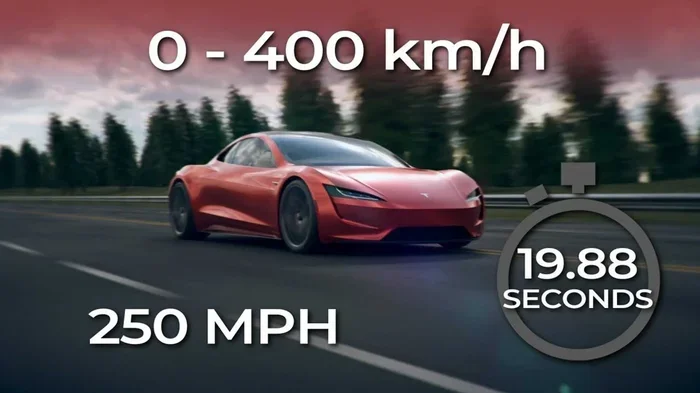
The next-generation Tesla Roadster is expected to be one of the fastest production cars ever made. It promises a 0-60 mph time of under 2 seconds and a top speed over 250 mph. The Tesla Roadster also features a removable glass roof and a massive range, proving that speed and practicality can coexist.
Tesla is also working on improving battery technology with its 4680 cells. These new cells promise more energy density, faster charging, and better thermal management. All of this translates to even better Tesla acceleration in future models.
As more automakers enter the electric vehicle space, EV horsepower and electric vehicle speed will continue to increase. But Tesla has a head start in software, battery tech, and motor design that keeps it at the forefront of performance.
Conclusion
How fast is a Tesla? The answer is faster than almost anything you can buy today. From the Model 3 to the Model S Plaid, Tesla vehicles deliver electric vehicle speed that rivals and often beats traditional sports cars. Tesla acceleration is made possible by instant torque, efficient electric motors, advanced battery technology, and brilliant software.
Whether you are looking for a practical daily driver that can still surprise you at a stoplight, or a weekend toy that can lap a track, Tesla has you covered. Tesla speed is not just a marketing claim — it is backed by real numbers and real-world performance.
If you have been on the fence about going electric, the performance alone should be enough to make you consider it. Tesla performance proves that electric cars are not just the future — they are the present. And they are incredibly fast.
So the next time someone asks you how fast is a Tesla, you will have all the answers. Share the numbers, share the excitement, and maybe even let them ride shotgun while you launch off the line in Ludicrous Mode.
Frequently Asked Questions
How fast can a Tesla go from 0 to 60 mph?
The 0-60 mph time varies by model. The Model S Plaid hits 60 mph in about 1.99 seconds, while the Model 3 Performance does it in around 3.1 seconds. Even the base Model Y is quick by traditional car standards.
What is the top speed of a Tesla Model S?
The Model S Plaid has a top speed of 200 mph, making it one of the fastest sedans available. The base Model S tops out at around 149 mph, which is still very impressive for a family vehicle.
Is Tesla speed only for expensive models?
No. While the Model S Plaid and Model X Plaid offer the most extreme Tesla acceleration, even the more affordable Model 3 and Model Y deliver impressive electric vehicle speed that outperforms many gas-powered sports cars.
What is Ludicrous Mode on a Tesla?
Ludicrous Mode is a performance feature that unlocks extra power from the electric motors. It allows the car to accelerate harder and faster by pushing more electrical current to the motors during launch.
Does Tesla speed affect battery life?
Driving at maximum Tesla performance uses more battery energy than normal driving. However, Tesla’s battery management system is designed to handle repeated hard acceleration without significant long-term damage to the battery.
How does Tesla compare to other electric cars in speed?
Tesla leads the industry in electric car speed for the price. While companies like Rimac and Lucid make very fast EVs, Tesla offers comparable or better acceleration times at a much more accessible price point.