How Long Can Your Car Overheat Before Damage Occurs
Your car can suffer permanent damage in as little as 10 to 15 minutes of overheating. When the temperature gauge climbs into the red zone, the clock is ticking fast. Understanding how long a car can overheat before damage occurs helps you act quickly and save thousands in repairs. This guide covers every stage of overheating, from the first warning signs to catastrophic engine failure.
There is nothing more alarming than seeing steam curl up from under your hood. Your heart races. Your hands tighten on the steering wheel. And one question races through your mind faster than anything else: how long can your car overheat before damage occurs?
The answer might surprise you. Most engines begin sustaining damage within just 10 to 15 minutes of running at dangerously high temperatures. Some components can fail in as little as a few minutes. The timeline depends on how hot the engine gets, how long it stays hot, and what you do in that critical window.
Understanding the heat damage timeline gives you power. It helps you make smart decisions in the moment. It can save you from a roadside breakdown that turns into a three-thousand-dollar engine rebuild. This article breaks down exactly what happens when your car overheats, why it happens, and what you should do about it.
We will walk through every stage of overheating. We will cover the warning signs you should never ignore. We will look at the most common causes of engine overheating. And we will give you practical steps to protect your car and your wallet. Let’s dive in.
Key Takeaways
- Damage can start in 10-15 minutes: Even brief overheating can warp engine components and cause serious harm.
- Know the warning signs: Steam, strange smells, and a rising temperature gauge are clear signals to pull over immediately.
- Common causes include coolant leaks, thermostat failure, and radiator problems: Regular maintenance helps prevent most of these issues.
- Never ignore an overheating engine: Driving through heat damage leads to costly repairs or a total engine replacement.
- Quick action saves engines: Pulling over and shutting off the engine at the first sign of overheating can prevent catastrophic failure.
- Prevention is cheaper than repair: Routine coolant checks and system inspections keep your car running cool and safe.
📑 Table of Contents
What Happens When a Car Overheats
Your car’s engine runs hot. Really hot. Normal operating temperature sits between 195 and 220 degrees Fahrenheit. The cooling system works hard to keep things in that safe range. But when something goes wrong, temperatures can spike fast.
Here is what happens inside your engine when heat builds up past the safe zone.
The Cooling System Fails to Regulate Temperature
Your cooling system relies on a delicate balance. Coolant flows through the engine block. The water pump pushes it through hoses. The radiator releases heat into the air. The thermostat opens and closes to control flow. When any part of this system fails, heat has nowhere to go.
Engine coolant becomes less effective as it breaks down over time. Old coolant loses its ability to transfer heat efficiently. A low coolant level means there is not enough fluid to absorb warmth from the engine block. Both situations lead to a rapid climb in coolant temperature.
Metal Components Expand Under Extreme Heat
Your engine is made of metal. Metal expands when it gets hot. Normal expansion is fine. But extreme heat causes abnormal expansion. This is where the real trouble starts.
The cylinder head can warp under intense heat. Warped heads prevent the head gasket from sealing properly. Once the head gasket fails, coolant can leak into the combustion chamber. Oil can leak into the cooling system. Both scenarios create a dangerous mix that accelerates engine damage.
Pistons and Cylinders Suffer Heat Damage
Pistons move up and down thousands of times per minute. They rely on a thin layer of oil for lubrication. When the engine runs too hot, oil breaks down and loses its viscosity. Metal-on-metal contact starts to happen.
Overheated pistons can seize inside the cylinders. This is one of the most catastrophic forms of heat damage. A seized engine means the car stops dead. Repair costs skyrocket. In many cases, a full engine replacement becomes the only realistic option.
How Long Until Real Damage Starts
Not all overheating episodes lead to disaster. The timeline of heat damage depends on several factors. Let us break it down by severity level.
Mild Overheating (5-10 Minutes Above Normal)
Mild overheating happens when the temperature gauge rises above normal but stays in the upper range. At this stage, your engine is stressed but not yet in crisis mode.
You might notice the heater blowing hot air instead of cool air. The engine oil starts to thin out. A minor gasket seal might weaken. If you catch this early and pull over, the damage is often minimal.
Key point: A few minutes of mild overheating usually does not cause permanent harm. But it is a warning sign you should never ignore.
Moderate Overheating (10-20 Minutes in the Red Zone)
Once the temperature needle enters the red zone, the clock starts ticking seriously. After about 10 to 15 minutes in this range, real damage begins to occur.
The head gasket starts to fail under sustained heat. Coolant may boil and create steam. The expansion of metal components becomes noticeable. Warping of the cylinder head becomes a real risk.
At this stage, pulling over and shutting off the engine is critical. Continuing to drive will almost certainly lead to expensive repairs. A head gasket replacement alone can cost between 1,000 and 2,000 dollars.
Severe Overheating (20+ Minutes or Boiling Coolant)
Severe overheating is the worst-case scenario. When coolant reaches its boiling point, it turns to steam. The pressure inside the cooling system spikes. Hoses can burst. The radiator cap may blow off.
At this point, the engine has been cooking for a long time. The cylinder head is likely warped. The head gasket is almost certainly blown. Pistons may be seized. Cracks in the engine block become a real possibility.
Here is the hard truth: Severe overheating often means the engine is a total loss. The repair cost can exceed the value of the vehicle. This is why every second counts when your temperature gauge climbs into the danger zone.
Overheating Damage Timeline at a Glance
| Overheating Level | Duration | Potential Damage | Estimated Repair Cost |
|---|---|---|---|
| Mild | 5-10 minutes above normal | Minor gasket stress, oil thinning | 50-200 dollars |
| Moderate | 10-20 minutes in red zone | Head gasket failure, head warping | 1,000-2,500 dollars |
| Severe | 20+ minutes or boiling coolant | Warped head, seized pistons, cracked block | 3,000-7,000+ dollars |
| Catastrophic | Extended severe overheating | Engine seizure, total engine failure | 4,000-8,000+ dollars or total loss |
The numbers speak for themselves. Acting fast when your car starts overheating can mean the difference between a minor fix and a complete engine replacement.
Common Causes of Engine Overheating
Overheating does not happen randomly. There is almost always an underlying cause. Knowing what triggers overheating helps you prevent it from happening in the first place.
Low Coolant Level
This is the number one cause of overheating. Coolant circulates through the engine and absorbs heat. When the level drops too low, there is not enough fluid to do its job.
Coolant leaks happen over time. Hoses crack. Radiators develop pinholes. Water pumps fail. Even a small leak can drain the system enough to cause problems. Checking your coolant level regularly is one of the simplest things you can do.
Thermostat Malfunction
The thermostat controls coolant flow. It opens when the engine needs cooling and closes when it needs to warm up. When the thermostat gets stuck closed, coolant cannot reach the radiator. Heat builds up fast.
A stuck thermostat is a common and relatively inexpensive fix. But if you ignore it, the resulting overheating can cause major damage. Do not let a small part create a big problem.
Water Pump Failure
The water pump is the heart of your cooling system. It pushes coolant through the engine block and hoses. When the pump fails, coolant stops moving. Heat has nowhere to go.
Water pump failures often come with warning signs. You might hear a whining noise from the front of the engine. Coolant may leak near the pump. Addressing these signs early can prevent a full pump failure and the overheating that follows.
Radiator Fan Problems
The radiator fan pulls air through the radiator when the car is moving slowly or idling. When the fan stops working, the radiator cannot release heat properly.
You may notice the fan not kicking on when the engine gets hot. This often happens at stoplights or in heavy traffic. A faulty fan relay, a blown fuse, or a bad motor can all cause this issue. Getting it fixed quickly prevents heat buildup during everyday driving.
Clogged Radiator or Coolant Passages
Over time, rust and debris can build up inside the radiator and coolant passages. This restricts flow and reduces cooling efficiency. Old coolant that has not been changed contributes to this buildup.
A radiator flush at regular intervals helps prevent clogs. Most manufacturers recommend flushing the cooling system every 30,000 to 50,000 miles. Check your owner’s manual for the specific recommendation for your vehicle.
Warning Signs You Should Never Ignore
Your car gives you plenty of warning before overheating becomes a crisis. The trick is knowing what to look for. Here are the signs that should make you pull over safely.
Temperature Gauge in the Red
This is the most obvious sign. If your temperature gauge climbs into the red zone, do not keep driving. The gauge is telling you the engine is running too hot. Ignoring it will only make things worse.
Steam or Smoke From the Hood
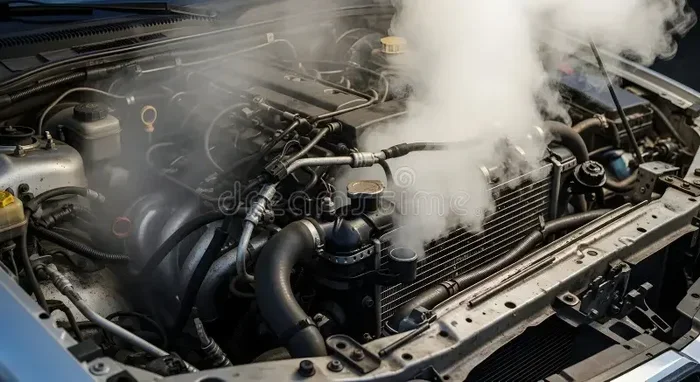
Steam rising from under the hood means coolant is boiling. This is a clear sign that the engine has reached dangerous temperatures. Pull over immediately and turn off the engine. Do not open the hood right away. Hot coolant can cause severe burns.
Unusual Smells
Your nose can detect overheating before any gauge tells you. A sweet smell often means coolant is leaking and hitting hot engine parts. A burning oil smell suggests the oil has broken down from extreme heat. Both smells mean you need to stop and investigate.
Coolant Leaks Under the Car
Puddles of green, orange, or pink fluid under your car indicate a coolant leak. Check the level in the reservoir. Topping it off temporarily can help you get to a safe spot, but you need to find and fix the leak.
Whining or Ticking Noises
Unusual sounds from the engine bay often accompany overheating. A ticking noise can mean the oil is too thin to lubricate properly. A whining sound might indicate a failing water pump or fan belt.
What to Do When Your Car Overheats
Finding yourself with an overheating engine on the road is stressful. But staying calm and following the right steps can save your engine from serious harm.
Step 1: Turn Off the AC and Turn On the Heat
This might sound counterintuitive. But turning on the heater pulls heat away from the engine. It acts as a secondary radiator. This small trick can buy you a few extra minutes to find a safe place to pull over.
Step 2: Pull Over Safely and Turn Off the Engine
Find a safe spot to stop. Turn off the engine and let the car idle for a minute before shutting it down completely. This allows the water pump to keep circulating the remaining coolant for a brief period.
Step 3: Do Not Open the Radiator Cap
The cooling system is under pressure. Opening the cap while the engine is hot can cause boiling coolant to spray out. This can cause serious burns. Wait at least 15 to 20 minutes before checking anything under the hood.
Step 4: Check the Coolant Level
Once the engine has cooled, check the coolant reservoir. If the level is low, you can add a mixture of coolant and water. Do not add plain water to a hot engine. Let it cool first.
Step 5: Call for Help If Needed
If the temperature gauge does not drop after you have let the car rest, do not try to drive it. Call a tow truck. Driving an overheating engine can turn a repairable problem into a total engine failure.
How to Prevent Overheating Damage
Prevention is always better than cure. A little maintenance goes a long way toward keeping your engine cool and healthy.
Check Coolant Levels Regularly
Make it a habit to check your coolant level once a month. Look for changes in color or consistency. Clean coolant should be bright green, orange, or pink. Dark or rusty coolant needs to be replaced.
Flush and Replace Coolant on Schedule
Old coolant loses its effectiveness. Follow the manufacturer’s schedule for coolant replacement. Most vehicles need a flush every 30,000 to 50,000 miles. This simple maintenance task keeps the cooling system working at its best.
Inspect Hoses and Belts
Coolant hoses and drive belts take a beating over time. Look for cracks, swelling, or soft spots. Replace any hose that shows signs of wear. A broken hose on the road can lead to sudden overheating.
Keep the Radiator Clean
Debris, bugs, and dirt can block airflow through the radiator. Hose down the radiator fins from time to time. A clean radiator cools more efficiently and helps prevent heat buildup.
Address Warning Signs Immediately
Do not wait for a problem to get worse. If you notice a slight temperature rise, a small coolant leak, or any unusual behavior, get it checked. Early intervention is the best way to avoid expensive repairs.
Quick Tips for Overheating Prevention
- Keep a bottle of coolant and water in your trunk.
- Monitor your temperature gauge on every drive.
- Replace the thermostat every 50,000 miles as a precaution.
- Have the water pump inspected during every oil change.
- Never ignore a temperature warning light, even if it goes away.
Common Mistakes People Make With Overheating
- Adding cold water to a hot engine: This can cause thermal shock and crack the engine block.
- Continuing to drive when the gauge is in the red: Every minute counts. Stop and address the issue.
- Ignoring small coolant leaks: A small drip today becomes a big problem tomorrow.
- Using the wrong coolant type: Mixing coolant types can cause chemical reactions that damage the system.
- Skipping regular maintenance: Most overheating problems are preventable with routine care.
Expert Insight: What Mechanics Wish You Knew
Experienced mechanics will tell you the same thing: overheating is a silent killer of engines. Most drivers ignore the first few warning signs. By the time steam is pouring from the hood, the damage is often already done.
Professional technicians recommend treating any temperature spike as a serious event. Pull over, shut off the engine, and get the car inspected. The cost of a tow truck is nothing compared to the cost of a new engine.
Frequently Asked Questions
Can a car overheat in 5 minutes?
Yes, in extreme cases a car can overheat in just a few minutes. This usually happens when there is a major coolant leak or a complete water pump failure. The engine can reach dangerous temperatures very quickly if the cooling system fails entirely.
How much does it cost to repair heat damage to an engine?
Repair costs vary widely depending on the damage. A minor gasket issue might cost 500 to 1,000 dollars to fix. A blown head gasket can run 1,000 to 2,500 dollars. A seized engine requiring replacement can cost 4,000 to 8,000 dollars or more. The sooner you address overheating, the lower the repair bill.
Is it safe to drive a car that has overheated?
No, it is not safe to keep driving an overheating car. Continuing to drive can turn a repairable problem into a destroyed engine. Pull over, turn off the air conditioning, turn on the heat, and let the car cool down. If the problem persists, call for a tow.
Can overheating cause a blown head gasket?
Yes, overheating is the leading cause of head gasket failure. When the engine runs too hot, the cylinder head warps. The warped surface prevents the head gasket from sealing properly. Once the gasket fails, coolant and oil mix, causing further engine damage.
How do I know if my engine is damaged from overheating?
Signs of heat damage include white smoke from the exhaust, coolant mixing with oil, a warped cylinder head, and reduced engine performance. A mechanic can perform a compression test and inspect the cooling system to determine the extent of the damage.
What should I do if my car starts overheating on the highway?
Turn off the air conditioning and turn the heat to maximum. Find the next exit and pull over safely. Turn off the engine and wait at least 15 minutes before opening the hood. Do not attempt to drive to the next exit if the temperature gauge is in the red zone. Call for roadside assistance if needed.
Conclusion
The answer to how long your car can overheat before damage occurs is shorter than most people think. In as little as 10 to 15 minutes, an overheating engine can sustain permanent harm. The key is understanding the timeline and acting quickly when warning signs appear.
Mild overheating might not cause immediate damage, but it is a red flag that something is wrong. Moderate overheating in the 10 to 20-minute range can blow head gaskets and warp cylinder heads. Severe overheating often leads to catastrophic engine failure that requires a full replacement.
Prevention is your best defense. Regular coolant checks, scheduled maintenance, and prompt attention to warning signs keep your cooling system working the way it should. When overheating does happen, pulling over immediately and shutting off the engine can mean the difference between a small repair and a total loss.
Your car depends on you to notice the signs. Do not ignore the temperature gauge. Do not dismiss the sweet smell of coolant or the hiss of steam. Take action, stay informed, and protect your engine from the devastating effects of overheating. Your wallet will thank you.